
Can G1 or G2 Students Still Go to JC, Poly or ITE in Singapore?
A practical parent guide to what G1 and G2 mean for subject choices and later post-secondary options.
Yes. A student taking G1 or G2 subjects can still progress to JC, polytechnic or ITE in Singapore. Banding alone does not decide the outcome. The bigger factors are the later qualification route, subject levels taken, exam results, and the entry requirements of the specific institution or course.
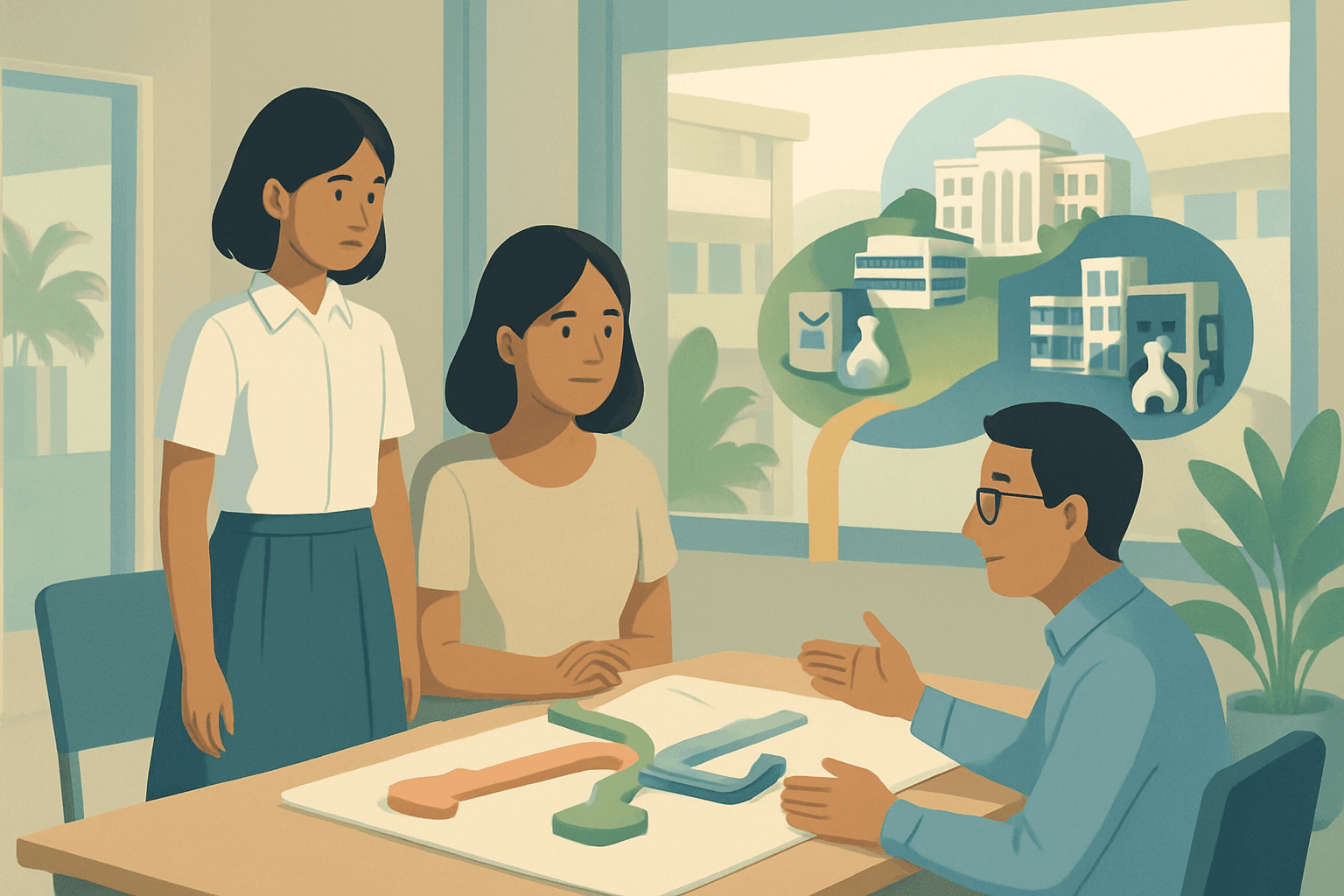
If your child is in G1 or G2, do not assume JC, polytechnic or ITE is already off the table. Under Full Subject-Based Banding, G1 and G2 describe subject levels, not fixed life tracks. The better question is not what band your child is in today, but what qualification route, subject mix and results they are building toward over the next few years.
Short answer: Can G1 or G2 students still go to JC, poly or ITE?
Yes. G1 or G2 does not automatically close the door to JC, polytechnic or ITE.
Yes. A student taking G1 or G2 subjects can still move on to JC, polytechnic or ITE in Singapore.
Under Full Subject-Based Banding, G1 and G2 describe the level of individual subjects, not a permanent stream or final destination. For a broader overview of how the system works, see our guide to what Full Subject-Based Banding means in Singapore.
What matters later is the qualification profile your child presents: which subjects were taken, at what level, how well your child performed, and whether the relevant entry requirements are met. A child who starts with more G2 subjects but improves steadily may still keep polytechnic or even JC in view. Another child may find that ITE is the better fit and thrive there.
Simple way to think about it: banding is about current learning level. Admission is about later qualifications and results.
JC or Poly?
Hmm...from what i know the advantages of JC are that. 1) You have more time to think of what you want to specialize in as JC education doesn't specializes you on a particular industry like Poly does. For example you would be learning the typical science subjects like Physics, Chem and Maths and one contrasting Arts subject if you are in the science stream. For those in the Arts stream you would be taking up subjects like Literature, Geography, History, Economics and also one science subject. So
JC or Poly?
https://www.straitstimes.com/singapore/parenting-education/junior-college-or-polytechnic-how-to-guide-your-child-to-pick-the-right-path There was a ST article a few days ago on whether to pick JC or Poly. It was reported that for 2023 cohort, 43% of the Poly students were actually eligible to pick JC However, about one in three fresh polytechnic graduates (33%) goes on to university, while around four in five A-level graduates (80%) do so. I am not sure how best to interpret these statistics. I
What G1, G2 and G3 actually mean for your child
They show the level of a subject, not your child's overall ability or future ceiling.
G1, G2 and G3 show the demand level of a subject. They are not a ranking of your child.
Under Full SBB, students can take a mix of subject levels, and schools can review those levels as students progress. MOE explains this in its page on the secondary school experience under Full SBB, and Schoolbag's overview of key education initiatives gives useful parent context on why the system has moved in this direction. For a simpler breakdown, see our guide on what G1, G2 and G3 mean in secondary school.
In real life, many children are uneven across subjects. A student may be comfortable with English and Humanities but need a slower pace in Mathematics. Another may take time to settle into secondary school and improve later once routines and confidence are stronger. That is normal. The mistake is to treat one subject level, or even a mixed profile, as a ceiling.
Useful mindset: subject level tells you where support is needed now, not what your child can never do later.
JC or Poly?
Understanding the child’s learning style can help to decide to take JC or Poly route. JC - Students who are strong in language can handle GP well will feel less stressful Poly - Students who love less academic focus will enjoy the learning experience.
JC or Poly?
I gt Eng: B3 CHS: B3 e Maths: B3 a Maths: B3 chem: B3 phy: B3 Poa:A1 B3 and Chinese: B3 I got CCA bonus 2 pts. Net score is 14 and 11. I dunno whether shud I go poly or jc. Becuz poly I dunno what to do and for jc: shud I try to get into srjc(13) or go into tampines jc(14) or any jc that accept my aggregate score? Please advise. Ty. I live toa payoh
Have More Questions?
Get personalized guidance on schools, tuition, enrichment and education pathways with AskVaiser.
Try AskVaiser for Free →Which post-secondary routes are still possible for G1 or G2 students?
JC, polytechnic and ITE can all still be possible, but each route looks at later qualifications and fit, not the G1 or G2 label alone.
JC, polytechnic and ITE can all still remain possible, but they do not look for the same things.
For JC, the key question is whether your child can eventually build a strong enough academic profile across the required subjects. MOE has said the existing JC admission criteria remains relevant and will be retained in its 2024 Committee of Supply response. That means parents should judge JC by later academic readiness, not by the fact that a child is doing some G1 or G2 subjects now.
For polytechnic, fit is more course-specific. The real question is not simply whether your child can go to poly. It is whether the eventual qualification and subject results line up with the diploma area your child wants. MOE has also said it is reviewing polytechnic Year 1 admission criteria to better recognise the different subject levels students take and is expanding pathways more broadly, as noted in its Learn for Life announcement.
ITE is also a mainstream route, not a dead end. For students who learn better through structure, practice and hands-on application, it can be the route where motivation and performance improve fastest.
Parent takeaway: ask which route fits your child's learning profile and likely qualification path, not which label sounds highest. For a broader overview, see How G1, G2 and G3 Subjects Work for O-Levels.
JC or Poly?
If you're keen on medicine, then go the JC route. NUS and NTU medicine are taking in more poly students now but the latest figures are still only 11 poly students and that's for the entire intake for both universities last year. JC life is not too different from secondary school. Just that it's lectures and tutorials, versus classroom setting, and the curriculum is a little more intensive because they have just 18 months to cover the A level syllabus.
JC or Poly?
I've answered this in another thread before. If you're sure you want to do medicine, JC is a better route because more than 95% of med students in our local unis come from JCs. There were all of 11 students from polytechnics in the med facs 1-2 years ago (that's for both NTU and NUS). So even though they're increasing the intake from poly, it is still very very low. And many of these poly students could have qualified for JC anyway.
What matters more than banding: qualifications, subject levels and entry requirements
The later qualification route matters more than the G1 or G2 label itself.
Most parents focus on the band label because it is visible early. But later admissions usually work off the qualification your child presents, not the lower-secondary label history. MOE's post-secondary admissions information is organised by qualification route, which is a good clue to how the system actually works.
So the practical planning questions are these: what exam route is your child likely to be on, which subjects need to stay strong, and what does the target institution or course usually require? If you want the subject-level piece explained, our guide on how G1, G2 and G3 subjects work for O-Levels is the next useful read.
A realistic example helps. If your child keeps talking about business, design or media, start watching English and the subjects that support those areas, instead of worrying only about a broad label. If your child talks about JC, the more important issue is whether they can sustain a broad, theory-heavy academic load over time. If one weak subject is dragging everything down, that is usually the first place to intervene.
The question that keeps options open is not what band is my child in now. It is which subjects and qualifications we are protecting from here. For a broader overview, see Can FSBB Students Go to Junior College? Entry Requirements Explained.
JC or Poly?
If given a choice, I would prefer a modular system. No need to think of those modules anymore once exams are over. Can truly enjoy June/Dec holidays. For A level students who are hardworking, June/Dec holidays may be spent mugging. Poor thing. Regarding self-discipline, be it A levels or Poly, to do well in both courses one needs to have strong self-discipline in order to enter choice courses in local Uni. 80% of A level students proceed to local Uni but to fit the local A level curve with RI/HC
JC or Poly?
As far as I know, if you just want to get into uni (no specific course/faculty indicated), then JC gives you higher chances. Students who go to JC do not aim to just pass A levels; they aim to get into uni because if they only have A levels, they will lose to their peers with poly diplomas. So unis will accept more JC students (but doesn't mean that if you go to JC, you will be guaranteed a place in uni). However, if you have a poly diploma, and you want to enter uni, you need to do very well. B
How to think about JC, poly and ITE based on your child's strengths
Choose based on fit, not prestige.
Choose the route that fits how your child learns best, not the route that sounds most prestigious.
JC usually suits students who can handle abstract content, heavy reading, writing under time pressure and exams across several subjects. A child who reads independently, writes clearly and revises consistently often finds this route more manageable than someone who needs learning to feel concrete before it clicks.
Polytechnic often suits students who learn better when concepts are tied to projects, presentations, labs or industry-style tasks. A student who looks average in broad academic exams may still thrive in the right diploma area because the learning feels more applied and motivating. This is why parents should not talk about poly as one single option. Fit can be very different across diploma clusters.
ITE often suits students who become more confident when they can see, make, test or do something. For some teenagers, this is the first route where school starts to feel relevant, and that change in motivation can matter more than prestige.
Short insight: the best pathway is the one your child can grow in, not the one adults use for status comparison. For a broader overview, see Can FSBB Students Go to Polytechnic? Entry Requirements Explained.
JC or Poly?
the JC route is very academic driven...just like O levels. interest is very important when choosing between jc or poly. both routes are equally tough. ultimately it boils down to interest. if the child cannot face another 2 years of academics, it is meaningless to take the jc route...also GP and MT is very tough.
JC or Poly?
Agree. On the other hand, poly can be very painful for students who are not keen on group work and projects, and who are not ready for the greater independence of poly. We strongly advised one of our daughters, not a strong student, to go to MI rather than poly because we knew she would struggle with the poly environment and expectations. Even though she didn't do particularly well in her A levels, we felt she would cope better in a classroom setting. Not every student can cope with poly at 16.
What should parents ask the school now?
Ask which qualification route your child is on, which subjects matter most and what improvement would keep more options open.
The best school conversations are specific. Bring your child's report book, recent test papers and teacher comments so the discussion stays anchored in evidence instead of fear.
Three questions usually move the conversation forward. First, ask which qualification route your child is currently being prepared for. Second, ask which subjects matter most if you want to keep JC, polytechnic or ITE options open. Third, ask what the school would need to see before considering a move to a more demanding subject level if your child improves.
It also helps to ask for examples instead of general reassurance. A useful question is: for students with a profile like my child's, what post-secondary pathways do you commonly see? Schools may not predict an exact destination, but they can usually tell you whether the current profile points more naturally toward a theory-heavy route, a course-based route or a more hands-on one. To prepare for that conversation, our guides on how to choose between G1, G2 and G3 for each subject and whether taking G1 or G2 limits future options later are good starting points.
What many parents overlook is that one key subject can affect options faster than the overall label does.
JC or Poly?
Hi! I am a Secondary 2 student who is stuck when it comes to choosing jc or poly because my school stresses the importance of planning post-secondary . My subject combination that I will be doing in Secondary 3 is triple science a math and combined humanities and basic subjects . I want to go to jc after my olevels because from what i heard, it is an easier path to pursuing medicine, but i dont have any family members who are familiar with the jc route so they usually have no advice as to where
JC or Poly?
Sorry I can’t advise much about Poly if she doesn’t know which course she likes. What are her stronger subjects? That will give a clue as to which general direction she can go... Have you had a look at the booklet? https://i.postimg.cc/xdZZ5Jhr/FF7-A7-BFD-6613-447-C-A6-D1-5-B3074828148.jpg\"> If u wanna try JC (to keep her area of specialization more open for the next 2 years), she can try CJC (Arts or Science), or Jurong-Pioneer JC (Arts or Science), or Yishun-Innova JC (Arts or Science). For t
Common mistake: treating G1 or G2 as a dead end
The band is not the destination.
The band is not the destination. The bigger risk is not G1 or G2 itself. It is drifting for two or three years without protecting the subjects, study habits and qualification route your child will need later. Parents often overreact to the label and underreact to weak fundamentals.
JC or Poly?
https://www.channelnewsasia.com/commentary/polytechnic-education-journey-decisions-o-levels-jc-3412696?fbclid=IwAR2quj0EKgyvDb6H-Dqh2Ck98h1k_1bgc5QJJv2tlo-jD2MCYr-Ghhjnzfg&mibextid=l066kq Commentary: I gave up JC to go to poly and never looked back Every mid-April when polytechnic students begin the new academic year, CNA’s Grace Yeoh is reminded of the decision that altered her education path - and how going against the grain at a young age set her up for life.
JC or Poly?
1) if go (choose) Poly, a) you need to be consistent in your study. The key word is consistency, and this requires self discipline. Because if say, for example, u did not do well in Term 1 and come Term 2, try to catch up, you will feel more stressed ! Thus, it is better (safer) to maintain your own academic standard regularly every Term, in every Trimester, instead of try to do " catch up". Why ? Because your GPA score (Polytechnic) is accumulative, from the very first day you stepped into a Po
If your child is in G1 or G2 now, what should you focus on this year?
Keep options open by strengthening key subjects early and reviewing the pathway plan regularly.
- ✓Ask this term which qualification route your child is currently being prepared for.
- ✓Identify the two or three subjects that matter most for that likely route and prioritise support there.
- ✓If one weak subject is pulling down confidence or options, get help early through teacher consults, school support or a steady home study plan.
- ✓Check whether the school may review subject levels later and what evidence of improvement they usually look for.
- ✓Start exploring likely next-step routes now so JC, polytechnic or ITE decisions are not rushed later.
- ✓Revisit the plan after each major exam instead of waiting for year-end surprises.
My child is in G2 now. Can they still apply to poly or JC later?
Yes, they may still be able to. G2 does not block later applications, but entry depends on the later qualification profile, subject mix and results.
Yes, possibly, but not because the G2 label gives direct entry. What matters is the qualification your child later presents, the subjects taken, the results achieved and the requirements of the JC or diploma course.
In practical terms, a student who is in G2 for some subjects now but improves steadily and keeps key subjects strong may still be in a realistic position for some routes later. Another student may discover that a particular polytechnic diploma or an ITE course is the better fit and stronger next step. For JC, parents should be especially realistic because it is an exam-heavy route that usually requires a strong academic profile across multiple subjects.
If JC or polytechnic is in view, the most useful next step is to read the route-specific explainers on Can FSBB Students Go to Junior College? and Can FSBB Students Go to Polytechnic?.
JC or Poly?
If things haven't changed in the past 5 years, that's true. My daughter had several classmates who started in MI in Feb, then switched to poly in Apr. But I don't know how they went about getting those places in poly - maybe they had to appeal? And it would be dependent on whether there was a vacancy in that course. Some did 1 year in MI, then switched during the 2nd year - presumably they applied to poly during their 1st year.
JC or Poly?
The numbers are true, but not all students and schools are the same. Since more of the higher-scoring students opt for JCs, it's not surprising that a higher percentage go to university. It doesn't mean that if the grades of the students were the same, some magic happens in JCs that makes it more likely for the student to qualify for university. Even between JCs, some (where the students enter with better grades) generally have higher proportions of students going to university. There are a coup
Have More Questions?
Get personalized guidance on schools, tuition, enrichment and education pathways with AskVaiser.
Try AskVaiser for Free →