
Does a Long Secondary School Commute Affect Performance?
What Singapore parents should weigh about sleep, homework time, punctuality, and CCA before choosing a school farther from home.
Yes. A long commute can affect secondary school performance indirectly by cutting sleep, reducing homework and revision time, increasing lateness risk, and draining energy for lessons, CCA, and other after-school commitments.
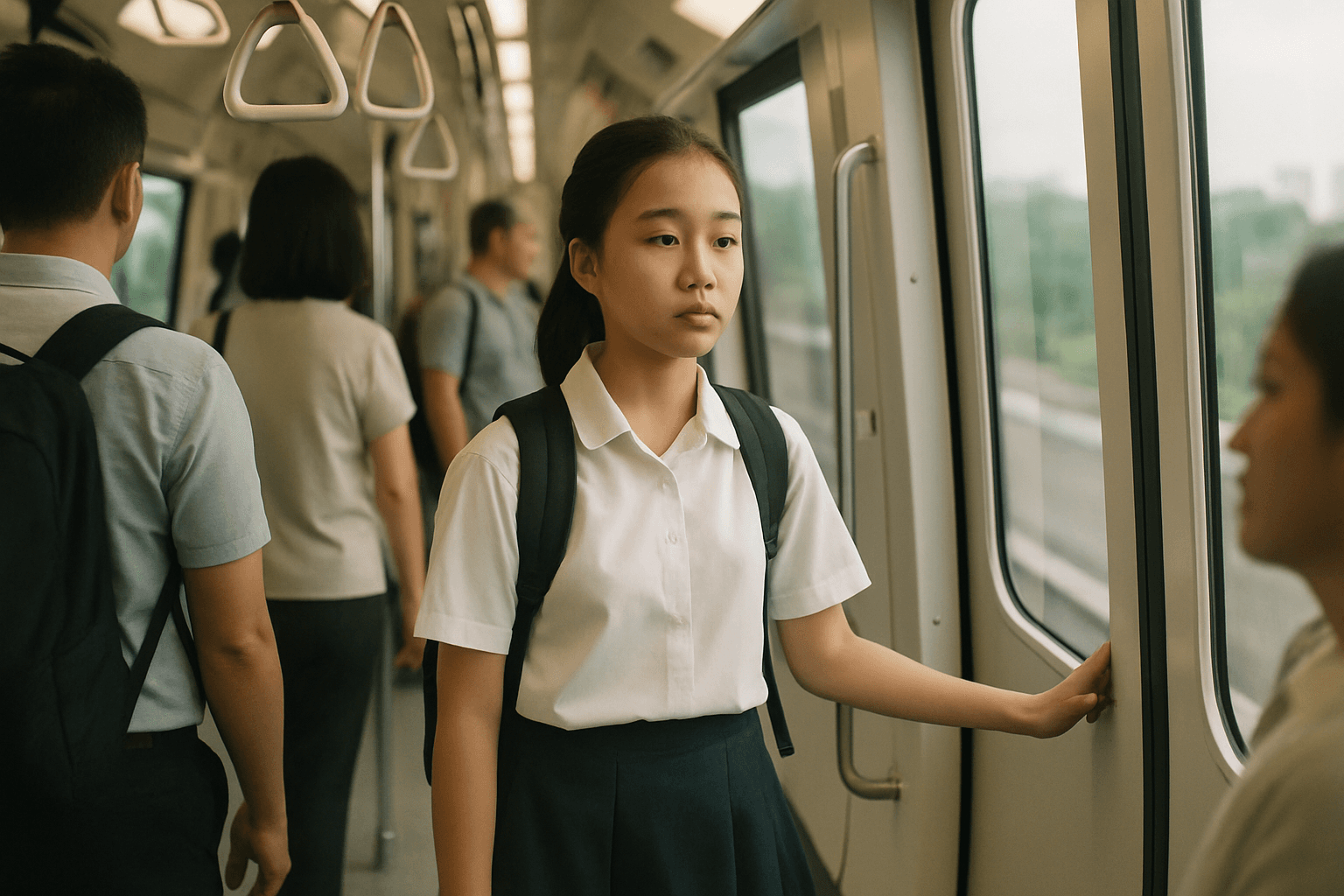
Yes, a long secondary school commute can affect performance, but usually through routine strain rather than marks alone. The main costs are earlier wake-ups, later evenings, less flexible time for homework, and lower energy on CCA or remedial days. The real question is not whether a farther school is "bad". It is whether your child can keep the weekday routine steady, including late days, over a whole term.
Does a long commute affect secondary school performance?
Yes. A long commute can affect performance indirectly through fatigue, less sleep, reduced homework time, and lower readiness for lessons or after-school activities.
Yes, it can, but usually indirectly. A long secondary school commute rarely lowers grades by itself. What it more often does is wear down the routine around school: the child wakes earlier, gets home later, starts homework later, and has less energy left for revision, CCA, or simply settling down properly at night.
A useful way to think about it is this: commute time is a daily energy tax. If that tax is small and the child sleeps well, many students cope fine. If it keeps eating into sleep and recovery, the effects usually show up first in habits rather than report books. Parents may notice slower mornings, more rushing before school, weaker focus in the first few lessons, or homework being pushed later and later.
That is what many families miss. The warning sign is not usually an immediate drop in marks. It is a routine that becomes harder to sustain week after week. If you are choosing between schools after PSLE, the better question is not just whether the school is far, but whether the full weekday pattern still looks manageable once lessons, homework, and late days are included. For a broader overview, see PSLE AL Score in Singapore: What It Means, How It Works, and How It Affects Secondary School Choice.
Is going to a better school worth hour long travel times?
I feel that there is a great difference between students with cars and students with no cars studying in schools far away from home If the parents can bring the child to school / home from school , it will be much faster compared to public transport in most cases and the child can really have a rest and have a short sleep on the way to school . This is unlike children who do not have parents who own cars . They would have to wake up earlier , and rush to school as public transport is slower ( ma
What goes into choosing a suitable Secondary School
Saw this being shared in the parents groupchats. https://www.thewackyduo.com/2022/11/how-to-choose-secondary-school-guide.html https://i.imgur.com/fDkJSy6.png\"> https://www.thewackyduo.com/2022/11/how-to-choose-secondary-school-guide.html It's time to choose a secondary school. Choosing a secondary school is a completely different process than primary school. One tends to choose a primary school based on distance or affiliation. Picking a secondary school is a different ball game. Grades play a
Which parts of school life are most affected by travel time?
The main pressure points are sleep, punctuality, homework, revision, and CCA stamina, especially when door-to-door travel is long or tiring.
The main pressure points are sleep, punctuality, homework, revision, and stamina for CCA. Parents often focus on the train or bus ride itself, but the real strain is the full door-to-door routine added together. What matters is not just time spent travelling. It is also the walk to the stop, waiting time, transfers, crowding, weather, and the occasional delay.
This is why two commutes that look similar on paper can feel very different in daily life. A direct train ride may be easier than a slightly shorter journey that needs a feeder bus, a transfer, and a long walk. The child is not just spending time travelling. The child is spending energy navigating the journey.
The evening is usually where the cost becomes most obvious. A student who gets home at a reasonable time may still have space to eat, rest briefly, and start work properly. The same student may struggle on a CCA or remedial day, especially if the journey home is long and fragmented. In practice, long travel time squeezes the parts of the day families rely on most: calm mornings and usable evenings. For a broader overview, see How to Build a Secondary School Shortlist Using PSLE AL Score Targets.
Time schedule & life of Secondary School
It’s very very normal to be stressed out … my worst results in my whole secondary school life was when I was in Sec 1 (looking back, I don’t understand HOW I could have done so badly since everything was much easier then lol) Ahh it’s okay! You’ll get used to it! (and honestly speaking, it really hinges on time management; after a while you’ll realize that you can just do a crap job for certain things and still get by but you’ll need to make sure others are perfect). Anyway, it’s better to be bu
Time schedule & life of Secondary School
I am wondering how is the time schedule of your kids in sec school ? IP and non IP. I am a bit worried and lost. My girl in IP, sec 1 and she is like so busy everyday. Morning she has to wake up at 5:30am and I try to insist her to go to bed at 10pm for sufficient sleep. Every weekdays, she is always so busy, lots of homework and sometimes hardly has time to talk to her because don't want to disturb her. Monday after 3rd language, reach home about 7:45. Tuesday & Friday, after CCA, reach home ab
Have More Questions?
Get personalized guidance on schools, tuition, enrichment and education pathways with AskVaiser.
Try AskVaiser for Free →How does a long commute affect a child’s sleep and morning alertness?
The hidden cost is often sleep. Earlier wake-ups and compressed evenings can leave a child tired before lessons even begin.
Sleep is often the hidden cost of a long secondary school commute. A longer route usually means an earlier wake-up, but bedtime does not always move earlier in the same way. Once homework, projects, CCA, or school events enter the picture, the evening often stretches instead. That is how sleep gradually gets squeezed.
The pattern is common. The child gets home later, winds down later, sleeps later, and still has to wake up early. After a while, mornings become harder. Parents may find themselves giving more reminders, rushing breakfast, or seeing a child who looks tired before the school day even starts. In school, that can mean slower attention in the first few periods, flatter mood, or a child who is physically present but not fully switched on.
This is also why the same commute affects children differently. A child who already sleeps late will usually feel the strain faster than one who naturally settles early. The commute may not create the sleep problem, but it can make an existing weak sleep routine much more obvious. For a broader overview, see How PSLE AL Score Affects Secondary School Posting.
Preparing for Secondary School
Hi parents, For those who have children that are starting secondary school in the upcoming year, we have prepared 2 articles highlighting: How to prepare your child for the transition to secondary school ? How much independence should we allow teenagers / secondary school students in their studies ? Hope this is helpful and feel free to share your thoughts as well. Kind Regards, Educare Tutoring
What goes into choosing a suitable Secondary School
Hi there, Recently a relative asked me how I choosed my kid’s Secondary School and I kind of got a shock, I had no answer. It was simply just based on the results. My relative came then with a list of important factors that he thought would be helpful to help his kid cope with the stresses of school. I thought that I would help him make this post to help him make a better decision (the kid will be going into the Secondary School in next year). So here goes, considering grades what else should he
How does commuting time affect homework and revision time?
A longer commute often cuts into the most usable evening study time, especially on days with CCA, remedial lessons, or a tired child.
A longer journey often shrinks the part of the evening that is actually useful for focused work. The issue is not only total minutes lost. It is the loss of flexible minutes, which are usually the easiest time for homework, review, and preparing for the next day.
For example, a child who gets home earlier may still have time to decompress for a short while and then work with reasonable focus. A child who gets home much later may technically still have study time left, but it may be low-quality time when attention is already fading. That is when homework gets dragged out, revision gets skipped, or weekends start turning into catch-up time.
Some students can use part of the journey for light reading, reviewing vocabulary, or checking flashcards. That can help if the route is stable and the child is seated or comfortable enough to concentrate. But parents should not count every minute of travel as study time. A crowded standing ride or a route with multiple transfers is usually better treated as recovery time, not productive revision time. For a broader overview, see What Happens After PSLE Results Are Released?.
Time schedule & life of Secondary School
Hi ct27, Thanks for the insight into your secondary/JC life. I agree with you about spending less time on unnecessary activities. That is to set the right priorities. Most Sec 1 and 2 students are adjusting to their new environment and peer pressure/influence or even parents interference sometimes clouded their judgement and decision making. I discuss with my son who decided after 3 months to drop his French when he experience difficulties in coping in a couple of his subjects due to his special
How your secondary sch children spend their long sch holiday
secondary school long vacation will soon begin on 1 Nov. It last for as long as 2 months? how do your sec school children usually spend their long school holiday? What have you planned for them? Enrichment? volunteer work? Or tuition for next level :?
Can a child still cope with CCA if the school is far away?
Yes, but late days are the real test. A commute that feels fine after normal lessons may feel very different after CCA or other after-school activities.
Yes, but CCA days are usually the real test of whether a long commute is sustainable. A child may look completely fine on ordinary dismissal days and then struggle once regular after-school commitments begin. That is because the trip home is no longer just a journey after lessons. It becomes the last stretch of an already full day.
This is often where parents first notice strain. The child starts reaching home too tired to eat properly, delaying homework, packing the school bag late, or becoming less enthusiastic about CCA even if the activity itself is enjoyable. Another child may still cope well because the routine is tight, bedtime is protected, and motivation for the school or CCA is strong.
A practical rule of thumb is this: do not judge the commute by the best-case day. Judge it by the late day. If your child can get home after CCA, eat, reset, finish what is needed for the next day, and still sleep at a sensible time, the commute may be workable. If every late day becomes a scramble, the distance is probably costing more than it first seemed.
Secondary School CCA
Some parents worry about time taken for CCA leaving sec sch kids no time for academic. Maybe just share some positive perspectives :- 1. Physical exercises keeps them sweating & maintains good body circulation, brings oxygen thro'out body & up to brains (they studied in primary science). They'll study better with good health & endorphins (esp for those who are happy & enjoys their CCA) 2. It helps build a good active habit, which I believe & hope stays with them lifelong. A sedantory lifestyle b
Secondary School CCA
they will be very tired after a full day of intensive training...the weather doesn't help either. there is homework and tests to study for.
When is a long commute manageable, and when is it a warning sign?
A long commute is manageable when the routine stays steady. It is a warning sign when sleep, punctuality, mood, or homework start slipping.
There is no universal travel-time cutoff that fits every child. A long commute is more likely to be manageable when the child stays punctual, sleeps enough, keeps up with homework, and still has steady energy on late days. It starts to look like a warning sign when tiredness shows up in repeated lateness, chronic morning grumpiness, falling asleep on the way home, unfinished work, skipped meals, or growing reluctance to attend CCA. Watch the routine, not just the minutes.
Time schedule & life of Secondary School
I am watching this space too. My DD is in Sec one this year and she is always back only after 5pm! I am so concern since the workload is still light now. Just wondering how is she going to take it when school has settledown with CCA selection. She tends to switch off her brain after 8pm since primary school - she usually sleep by 9pm so 8-9pm was usually chatting and bonding time. I need to explain to her that she needs to sleep later when workloads are more going forward. Let see how she will c
Time schedule & life of Secondary School
hi mummyjoyce, I am sure your dd would be coping well. Its a transition period they need to go through and adapt.
What should parents look at besides distance when choosing a secondary school?
Weigh school fit, programme fit, child temperament, and family routine alongside travel time. A shorter commute is useful, but it is not the only factor that matters.
Distance matters, but it should not decide the whole choice. A school farther from home may still be the better option if the academic pace, subject combination, school culture, student support, or overall environment fits the child much better. A shorter commute is valuable, but it does not automatically make a school the right match.
A simple way to frame this is: a good school choice should fit the child, not just the map. For one student, a nearby school with the right pace and culture may clearly be best. For another, a farther school may be worth the travel because the child is more likely to stay motivated and thrive there.
The practical task is to weigh both sides honestly: what the school offers, and what the travel will cost every week. If you are still comparing realistic options after PSLE, it helps to start with your child's likely range using our PSLE AL score guide, then narrow choices with this step-by-step article on how to build a secondary school shortlist using PSLE AL score targets.
Transfer to nearby Secondary School
How far away is the school from your new house? My advice is that since your child is in Sec 3 and should be used to the school, why not let him/her completes O level so as to minimize disruption to his/her studies. If the distance is not a real problem, I would suggest that you refrain from transferring school. Moving house is stressful to a child and transferring school will add more stress which may affect his/her study.
What goes into choosing a suitable Secondary School
If Temasek JC is far while Crescent Girls’ Secondary school is nearer your house, then choose Crescent Girls. Travelling time, to and fro everyday, is crucial. I won’t want to tired my child, just because of travelling. Everyday, from Mon to Fri, your daughter has to stay back for Ccas, some Talent development programme or some project group / team work discussion. Thus, travelling distance + time, are important factors. Besides, Crescent Girls is a good Secondary school, too. Plus, u mentioned,
How can families make a long secondary school commute easier?
Make the routine easier, not perfect: earlier preparation, stable sleep, simple breakfasts, and planning for CCA or rainy days usually matter most.
Small routines usually help more than dramatic fixes. If a family is choosing a school with a longer route, the first goal is to reduce friction around the school day. That usually means packing the bag the night before, preparing the uniform early, keeping breakfast simple and dependable, and protecting a consistent bedtime as much as possible.
It also helps to plan around the hardest days, not just the normal ones. Think ahead about dinner timing on CCA days, rainy-day transport, and whether occasional pickup support is realistic. If the route has transfers, test the busiest version of the journey rather than the smoothest version. A child who will travel independently may also need practice before school starts, so the route itself does not become an extra source of stress.
One more useful mindset: do not try to optimise every minute of travel. Some children can read or review light material on the way. Others genuinely need that time to rest. Both are normal. The aim is not to squeeze productivity out of the commute. The aim is to keep the weekday routine sustainable.
If you are balancing distance against likely posting options, you may also want to read how PSLE AL score affects secondary school posting and what happens after PSLE results are released so the shortlist stays realistic as well as aspirational.
All About Preparing For Secondary One
Entry to Secondary One can be quite challenging and tough to many kids out there. Kudos to all parents who continue to motivate and ensure that their children are healthy and happy during this transition. Actually, Secondary One can still be manageable if the student is able to ensure that all assignments are done painstakingly and prepare all the tests well (like duh, I am speaking the obvious right?). Many kids, based on what I heard and encountered, have a tough time in secondary one because
All About Preparing For Secondary One
My eldest child has started secondary school and he is adjusting well. But not me ! I feel clueless and kinda sad and happy and very mixed emotions. To clarify, I am not a over-protective mum at all but now seeing my child travelling beyond a few streets and having longer hours has made me slightly frantic. Is this normal ? Did it get better as days passed or worse as your child becomes more independent ? How did you all parents deal with it ?
What is a sensible way to test whether your child can handle the commute?
Do a realistic trial run. The goal is to test not just travel time, but whether the whole routine still works under normal school-day pressure.
- ✓Try the full route door to door during actual morning peak hours, not just during an open house or an off-peak visit.
- ✓Include the return journey, because the trip home often feels harder than the trip to school.
- ✓If possible, test a later version of the day that reflects CCA, remedial lessons, or delayed dismissal.
- ✓Watch your child's energy and mood at the end of the journey, not just whether the route is technically possible.
- ✓Notice practical strain points such as rushing, missed meals, irritability, or homework starting much later than expected.
- ✓Repeat the trial over a few days if you can, because one smooth day does not show how fatigue builds up across a school week.
- ✓Compare the far-school routine with a nearer-school option so the trade-off is concrete rather than theoretical.
- ✓End each trial with one simple question: "Could we do this calmly every week, including late days?"
Have More Questions?
Get personalized guidance on schools, tuition, enrichment and education pathways with AskVaiser.
Try AskVaiser for Free →