
Maha Bodhi School Singapore: A Practical Parent Guide
What parents should know before shortlisting Maha Bodhi School for Primary 1.
Maha Bodhi School is a government-aided, co-ed, single-session primary school in Ubi. For most parents, the real shortlist questions are straightforward: can your child get there comfortably, does Chinese mother tongue fit your plan, and does the school day work with your after-school arrangements?
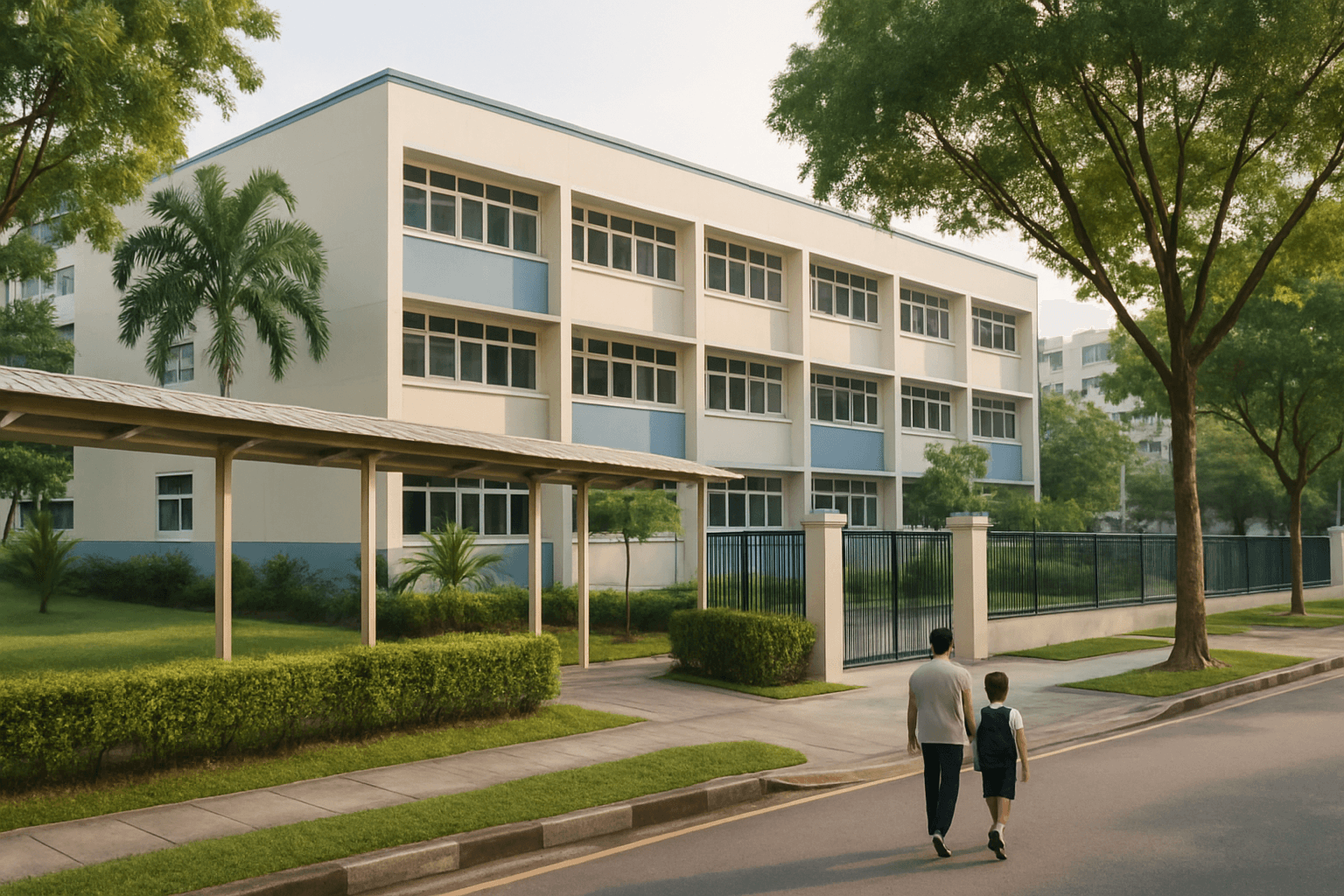
If you are considering Maha Bodhi School for Primary 1, begin with the three checks that affect daily life most: commute, Chinese mother tongue fit, and whether a single-session school day works for your family routine. Maha Bodhi School is a government-aided, co-ed primary school at 10 Ubi Avenue 1, so it is best judged as a practical mainstream option based on fit, not name recognition alone.
What is Maha Bodhi School in Singapore, in one quick summary?
Maha Bodhi School is a government-aided, co-ed, single-session primary school in Ubi.
Maha Bodhi School is a government-aided, co-educational, single-session primary school in the Ubi area. For parents, that means it is a mainstream primary school with a straightforward daily structure, rather than a school that stands out because of a special timetable model.
The practical way to judge it is simple: if the commute is realistic, the language offering fits your child, and the daily schedule matches your family routine, it is worth keeping on the shortlist. For a broader overview, see Primary Schools in Singapore: A Practical Parent Guide.
Where is Maha Bodhi School located, and how easy is it to reach?
Maha Bodhi School is at 10 Ubi Avenue 1, with UBI MRT and buses such as 63, 63M and 137 commonly used for access.
Maha Bodhi School is at 10 Ubi Avenue 1, Singapore 408931. UBI MRT on the Downtown Line is commonly cited as the nearest MRT point, and bus services often referenced for access include 63, 63M and 137. You can verify the address on the school’s official location page.
For parents, the key question is not just whether the school looks close on a map, but whether the door-to-door route is manageable during school peak hours. A child with one direct bus may have an easier morning than a child who needs an MRT ride, a transfer and a long walk, even if both homes appear similarly close on paper. Shortlist the route, not just the postcode. For a broader overview, see Ai Tong School in Singapore: A Parent Guide.
Have More Questions?
Get personalized guidance on schools, tuition, enrichment and education pathways with AskVaiser.
Try AskVaiser for Free →What kind of school is Maha Bodhi School?
It is a government-aided, co-ed, single-session mainstream primary school.
Maha Bodhi School is a government-aided primary school for both boys and girls, and it runs on a single session. In plain terms, it is a mainstream primary school within Singapore’s public education system, with one continuous school day instead of split morning and afternoon sessions.
These labels matter because they affect everyday logistics. Co-ed affects the school environment, government-aided places it within the mainstream system, and single-session is the part that most directly affects dismissal time, student care planning and after-school schedules. For busy parents, that last point is usually the most practical one. For a broader overview, see Anglo-chinese School (primary) in Singapore: A Parent Guide.
Does Maha Bodhi School have SAP, autonomous, or GEP status?
Research points to SAP status, but not autonomous or GEP status.
Current research points to Maha Bodhi School as an SAP school, but the provided source material does not support calling it autonomous or GEP. If SAP status matters to your shortlist, confirm it on the current MOE School Finder and the school’s special programmes page before treating it as final.
The useful parent takeaway: treat SAP as a bilingual-fit signal, not as a reason to skip the other checks.
What mother tongue language does Maha Bodhi School offer?
Chinese is the listed mother tongue offering, so language fit is an early shortlist check.
Chinese is the listed mother tongue language offering for Maha Bodhi School. That makes the school especially relevant for families who already want Chinese as their child’s mother tongue pathway, or who are comparing schools with a stronger English-Chinese profile.
This is one of the fastest shortlist filters. If Chinese fits your family plan, the school stays in consideration. If your child needs a different language track or has a more specific subject arrangement in mind, do not assume that will sort itself out later. Check the current official school profile directly before you commit to a visit or deeper comparison.
What does being a single-session school mean for parents?
It means one continuous school day, which usually makes pickup and after-school planning more predictable.
Single-session means students attend one continuous school day instead of being split into morning and afternoon batches. For most parents, that makes planning simpler because there is only one general dismissal time to organise around.
The main advantage is predictability. It is easier to plan student care, grandparents’ pickup help, enrichment classes or a parent’s workday when the school does not alternate between different session timings. The part many parents overlook is that single-session does not remove the need for after-school planning. It just makes that planning cleaner, especially if both parents work or if siblings attend different schools.
Who is Maha Bodhi School likely to suit best?
It is often a good fit for families who can reach Ubi easily and want Chinese MTL, a co-ed setting and a single-session routine.
Maha Bodhi School is likely to suit families who live in or can travel easily to the Ubi area and want a co-ed, government-aided primary school with Chinese mother tongue and a single-session timetable. It can be a sensible option for parents who value day-to-day practicality over chasing a school name.
A useful real-world comparison is this: a family in the eastern corridor with a direct route may find the school very workable, while a family coming from farther away with multiple transfers may find the same school tiring in practice. The best fit is usually not the family most impressed by the profile, but the family whose daily routine actually works. If you are comparing options more broadly, our Primary Schools in Singapore guide gives a clearer framework for weighing school fit beyond reputation alone.
What should parents check before shortlisting Maha Bodhi School?
Check the commute, Chinese language fit, single-session logistics, nearby alternatives, and the latest official school profile.
- ✓Test the actual door-to-door commute from home during school start and dismissal times, not just the map distance.
- ✓Confirm that Chinese mother tongue fits your child’s needs and your family’s language priorities.
- ✓Check whether a single-session school day works with student care, grandparents’ help, enrichment or your work schedule.
- ✓Compare the school with nearby alternatives based on daily travel effort, not school name alone.
- ✓Verify the latest official school profile, especially if SAP status or subject fit is part of your decision.
How can I verify Maha Bodhi School details before I shortlist it?
Check the official school website, the school’s location page, and the MOE School Finder before you finalise your shortlist.
Use the school’s official website, its location page, and the MOE School Finder. These are the safest places to confirm the current address, contact channels, school profile and any status notes before you finalise a Primary 1 shortlist.
This matters most when you are deciding between a few similar schools. If one school fits better on language but another is easier to reach, verify the basics first and then compare the parts that affect daily life most: commute, timetable and subject fit.
Have More Questions?
Get personalized guidance on schools, tuition, enrichment and education pathways with AskVaiser.
Try AskVaiser for Free →