
Poi Ching School in Singapore: A Practical Parent Guide
A clear, parent-focused guide to shortlisting Poi Ching School in Tampines.
Poi Ching School is a government-aided, co-educational, single-session primary school in Tampines, Singapore. The research set lists 21 Tampines Street 71 as its working address and Chinese as its listed mother tongue offering. For most families, the real decision is whether the commute, daily routine, and language fit work well; any SAP, autonomous, or gifted status should be verified separately before you rely on it.
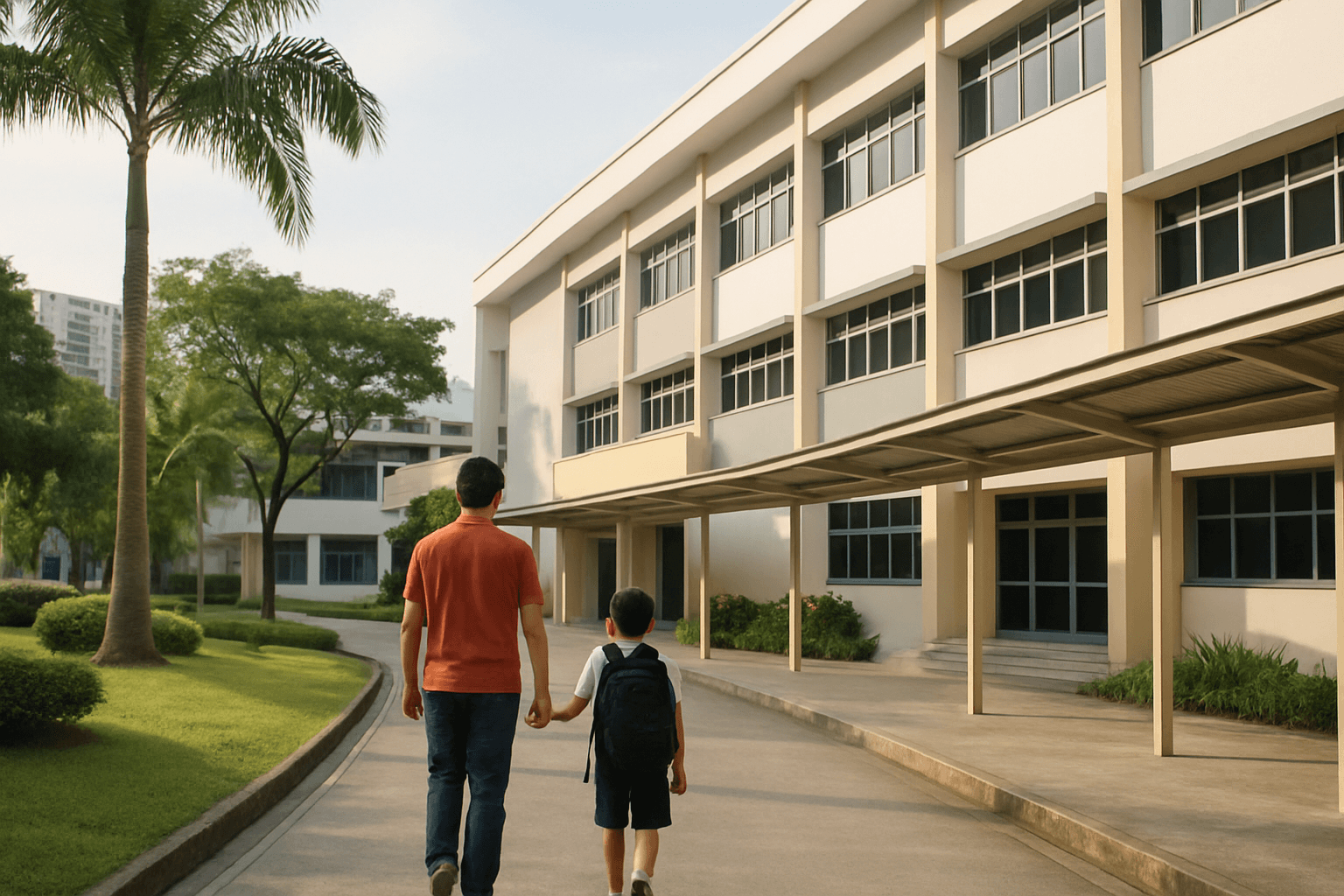
Poi Ching School is a government-aided, co-educational primary school in Tampines. This guide focuses on the points that matter most to parents: where it is, how the daily commute may work, what the school type means in practice, how the listed Chinese language offering may affect fit, and what to verify before adding it to a Primary 1 shortlist.
What is Poi Ching School in Singapore?
Poi Ching School is a primary school in Tampines. Parents should assess it mainly on practical fit: location, school setup, and language profile.
Poi Ching School is a primary school in Tampines, and parents usually look it up when comparing East-side options for Primary 1. The useful starting point is not whether the school sounds familiar or popular, but whether its location, school structure, and language profile suit your child and your family routine. That is the lens this guide uses.
If you are still building a wider shortlist, start with our Primary Schools in Singapore: A Practical Parent Guide. Parents who want a quick sense of the school’s background can also see the MOE Heritage Centre note on Poi Ching School, but for decision-making, commute and fit matter more than history alone.
Where is Poi Ching School located, and how easy is it to get there?
Poi Ching School is listed at 21 Tampines Street 71, Singapore 529067. Treat transport access as a real-life routine check, not just a map check.
The research set lists Poi Ching School at 21 Tampines Street 71, Singapore 529067. Tampines MRT and buses 293, 72, 27, and 168 are commonly cited access points, which makes the school a sensible one to consider for families living in Tampines and nearby East-side areas.
The more useful question is not just how close the school looks on a map, but whether the full weekday route is manageable. A direct bus from home can be easier than a shorter drive that becomes stressful once you add office timings, a younger sibling, or rain. If your child may stay back for CCA, student care, or enrichment pickup, test that route too. Parents often underestimate the second trip of the day, not the first.
Before a visit, use the school’s contact page and the MOE SchoolFinder listing to confirm the latest location and access details. For a broader overview, see Ai Tong School in Singapore: A Parent Guide.
Have More Questions?
Get personalized guidance on schools, tuition, enrichment and education pathways with AskVaiser.
Try AskVaiser for Free →What type of school is Poi Ching School?
Poi Ching School is described as a government-aided, co-educational, single-session primary school.
Poi Ching School is described in the research as a government-aided, co-educational, single-session primary school. In parent terms, co-educational means boys and girls learn together. Single-session means the school does not run separate morning and afternoon shifts, which usually makes the school day easier to picture when you are planning transport, care arrangements, and after-school activities.
The label government-aided tells you the school category, not whether the school is automatically better or worse. It is best read as part of the school’s structure. The practical question is simpler: does this type of setup suit your child’s temperament and your family’s weekday schedule?
What does government-aided mean for parents?
Government-aided is a school category, not a quality score. Parents still need to judge the school by daily fit, not label alone.
For most parents, government-aided is useful as a category label, but not as a shortcut to quality. It does not by itself tell you whether the school will feel warm or strict, whether the workload will feel heavy or balanced, or whether your child will settle in well. Those are separate questions.
A simple way to think about it is this: school labels tell you the structure; fit tells you the day-to-day experience. That is why parents should not stop at the label. The better next checks are whether the commute is sustainable, whether the language profile matches the child, and whether the school day works with the family timetable. What many parents overlook is that a school can look good on paper but still be a poor daily fit if every morning becomes a rush.
What language offering does Poi Ching School have?
The research set lists Chinese as Poi Ching School’s associated mother tongue offering. Parents should judge whether that matches the child’s current comfort level and home support.
In the research used for this guide, Chinese is the listed mother tongue language offering associated with Poi Ching School. For some families, that is a clear positive because it matches the language used at home or the support they want the child to receive from the start of primary school.
The key decision is not whether Chinese sounds attractive in theory, but whether the child has realistic support around it. If your child already hears and uses Chinese regularly, the fit may feel natural. If your child is much stronger in English and currently struggles with Chinese, the right next step is not to assume the school is unsuitable, but to ask how early learners are supported and how much reinforcement is typically expected at home. Parents often miss this point: language fit is a family routine question as much as an academic one.
If Chinese language fit is a major part of your shortlist, it can also help to compare this profile with Ai Tong School in Singapore: A Parent Guide.
Poi Ching
Hi all… am thinking of registering my child in Poi Ching this year for the P1 reg. Any reviews or comments on the sch? (eg: teachers, curriculum, stress level etc) Thanks all in advance.
Poi Ching
This is the Parents' Networking Group for Poi Ching Once you have gotten your child in this school, come introduce yourself to other parents in this school and network with each other. Share tips, on-going news and alerts and discuss issues pertaining to the school.
Does Poi Ching School have SAP, autonomous, or gifted status?
Do not assume SAP, autonomous, or gifted status. Verify any special designation directly on official school or MOE sources.
Do not assume these labels apply just because the school has a strong Chinese profile or is well known in parent discussions. In this guide’s research set, SAP, autonomous, and gifted status are not treated as confirmed facts. If that point matters to your shortlist, verify the school’s current designation on MOE SchoolFinder and the school’s own official pages such as its SAP page before relying on it.
Who is Poi Ching School a good fit for?
Poi Ching School may suit East-side families who want a co-ed, single-session primary school and whose child’s language profile fits the school well.
Poi Ching School is a realistic shortlist for families who want a Tampines primary school, prefer a co-ed single-session setup, and see Chinese language fit as a meaningful factor rather than an afterthought. It is most naturally considered by families living in Tampines or nearby East-side neighbourhoods who can manage the route without turning school mornings into a daily strain.
It may be a weaker fit if you are choosing mainly for a prestige label you have not verified, or if your childcare and enrichment plans depend on a much shorter or simpler commute. A useful rule of thumb is this: if the school fits your weekday life, it is worth deeper consideration; if it only fits an idea you have about the school, keep comparing.
What should parents check before shortlisting Poi Ching School?
Check the school the way you would live it: route, timing, language support, and verified school status.
- ✓Do one realistic weekday route check from home to school instead of relying only on map distance.
- ✓Think through both morning drop-off and afternoon pickup, especially if you have siblings, student care, or enrichment plans.
- ✓Make sure a single-session school day fits your household schedule rather than assuming it will be easy by default.
- ✓Ask whether the child’s current Chinese ability and your home language support are a comfortable match for what you want from primary school.
- ✓Verify any special status you care about on official school or MOE sources before treating it as a reason to choose the school.
- ✓Use an enquiry or open house to ask about routines and support, not just about reputation.
How can I contact Poi Ching School?
You can contact Poi Ching School at 6785 6420 or contact@poiching.moe.edu.sg. The working address is 21 Tampines Street 71, Singapore 529067.
The working contact details in the research set are: 21 Tampines Street 71, Singapore 529067; telephone 6785 6420; email contact@poiching.moe.edu.sg; and website Poi Ching School. These details are most useful if you want to plan a visit, clarify an enquiry, or double-check directions before going down.
For the latest contact information, start with the school’s official contact page and cross-check with MOE SchoolFinder. That extra step is worth it because operational details can change, and parents often only realise this after planning a visit.
Have More Questions?
Get personalized guidance on schools, tuition, enrichment and education pathways with AskVaiser.
Try AskVaiser for Free →