
PSLE Special Consideration for Illness or Emergency: What Parents Should Do
A practical Singapore parent guide to urgent steps, school contacts, documents, and realistic expectations if illness or an emergency affects PSLE.
If your child is sick or faces an emergency during PSLE, get medical help first if needed, call the school as soon as you know a paper may be affected, and keep same-day evidence such as an MC, clinic memo, or hospital note. PSLE special consideration is a formal exam disruption process. It does not guarantee a retake, a score increase, or a preferred result. In practice, the school usually guides the reporting steps, and the case is assessed based on what happened, which papers were affected, and the evidence available.
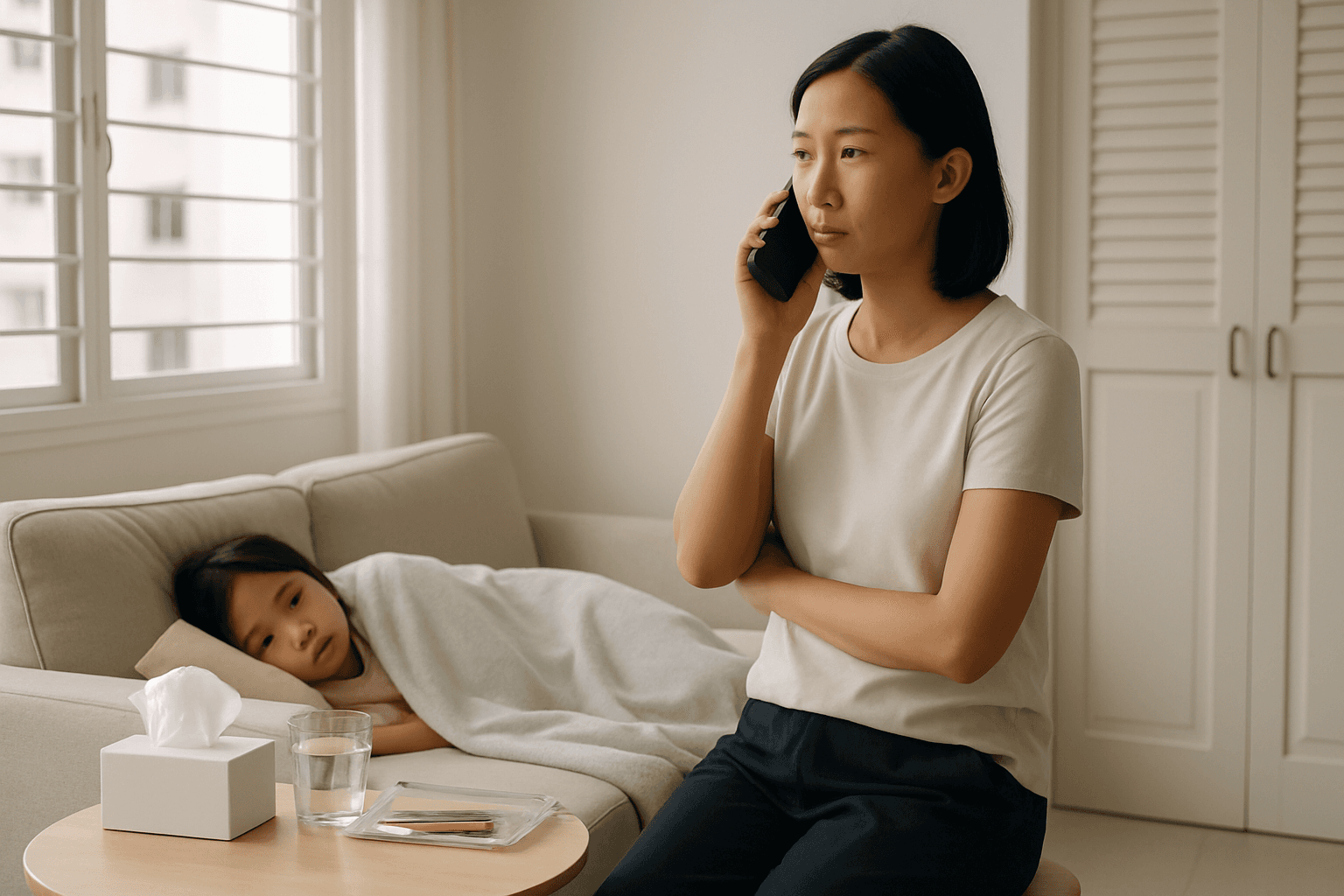
If your child falls sick or faces a serious emergency on a PSLE exam day, the first priorities are safety, fast communication, and documentation. This guide explains what PSLE special consideration usually means, who to contact, what records to keep, and what outcomes are realistic for parents in Singapore.
What does PSLE special consideration usually cover for illness or emergency?
PSLE special consideration is a formal response to an exam disruption, not a way to ask for extra marks after the fact.
PSLE special consideration usually refers to a formal review when an unexpected illness or emergency disrupts a child's ability to sit or perform in an exam. The key issue is not only whether something went wrong, but whether it affected attendance, timing, or performance in a way that can be documented and reported properly. A useful way to think about it is this: it is an exam disruption process, not a score appeal.
The clearest public examples in the source material came from the COVID period. MOE set out national exam arrangements, and The Straits Times explained how reporting and exam access worked for affected candidates. Those sources show that PSLE disruption cases are handled through structured procedures. They do not provide a complete current checklist for every ordinary illness, injury, or family emergency case.
In real life, the situations parents usually worry about are familiar: a child wakes up with high fever, starts vomiting before a paper, gets injured on the way to school, or is pulled into a serious family medical emergency. The practical response is the same in each case: handle the immediate problem safely, inform the school early, and keep records from the same day. For a broader overview, see PSLE AL Score in Singapore: What It Means, How It Works, and How It Affects Secondary School Choice.
How To Prepare For PSLE
On the day of PSLE exam, I think there will be temperature checks before you enter the examination hall (which is air-conditioned). Last year, my dd's friend was found to have fever and was put in a \"special classroom\" where all the other \"sick\" students were, away from the examination hall. They were given masks and have to do exam there without the comfort of air-cond! It was quite uncomfortable. Therefore do try to keep your hygiene standards & immune system \"high\"before exam. Poor gal'
What if medical problems arises during PSLE
If child is down with sore throat or cough during psle oral, get letter from doctor and give it to the oral examiners. If fall sick during the written exam, get doctor’s letter, go to sch and check with tr-in-charge, they will decide whether to put candidate in private room or not. I think can get some ‘compassion’ marks… markers will take into account the candidate’s medical conditions.
What should parents do in the first 30 minutes if a child is sick on PSLE day?
Act quickly: assess safety, get medical help if needed, inform the school immediately, and keep same-day records.
- ✓Check whether your child is well enough to travel and sit the paper, or whether symptoms such as fever, vomiting, breathing difficulty, severe pain, faintness, or injury mean medical care should come first.
- ✓If the child clearly needs a doctor or hospital, seek medical help immediately instead of waiting to see if the child can push through the paper.
- ✓Contact the school as soon as you know the paper may be affected, even if you do not yet have every detail.
- ✓Tell the school when the symptoms or emergency started, which PSLE paper is affected, and whether your child is likely to be absent or late.
- ✓Keep every document issued that day, such as an MC, clinic memo, hospital note, or discharge summary, and take a photo of it straight away.
- ✓Note the time you informed the school and the name of the staff member who received the message so you have a clear record later.
Have More Questions?
Get personalized guidance on schools, tuition, enrichment and education pathways with AskVaiser.
Try AskVaiser for Free →Who should parents contact in school, and what information should they give?
Contact the school first, or the designated PSLE or exam contact if one was given. Share a short, factual update and keep a time-stamped record of the contact.
Start with the school. If the school has already given a designated PSLE or exam contact, use that first. If not, call the school office and ask to be directed to the staff member handling exam matters. Some parents only message the form teacher, but during the exam period the school office or named exam contact is usually the faster route.
Keep the message short and factual. Give your child's name and class, which paper is affected, what happened, when the symptoms or emergency started, whether your child has seen a doctor or gone to hospital, and whether the child is likely to miss the paper or arrive late. If you are still on the way to a clinic or emergency department, say that clearly and update the school once you have medical documents.
A simple rule helps here: call first, explain clearly, keep it short, and keep a record. If you have to use WhatsApp or email because you cannot get through by phone, save a screenshot showing the time. That small step can prevent confusion later about when the school was informed. For a broader overview, see PSLE AL Score Explained: What It Means and How the System Works.
What if medical problems arises during PSLE
Hi, Would like to find out what happen if a student in the middle of a PSLE exam paper has some medical problems, what will they do? If the student can still take the exam but need longer time, will they allow? Thks
Coping with PSLE for parents
As parents no matter how much anxiety, we must avoid nagging our kids. This is the last thing they need. Instead, it pays to encourage, motivate, emphatise and talk to them. I have observed over the years that parents who remain cool, confident and communicate daily with their kids, the latter perform way above their parents’ expectations during PSLE. Two weeks prior to PSLE, kids should be ready. Prefably, they should finish their revision by 9.30pm and parents can take the opportunity to spend
What counts as a valid illness or emergency case in real life?
Examples can include fever, vomiting, injury, asthma flare-up, hospitalisation, or a serious family emergency, but the main question is whether the problem significantly affected the child's exam and can be supported with evidence.
There is no single public checklist in the source material for every ordinary PSLE illness or emergency case, so parents should focus on seriousness and impact. A case is more likely to matter if it clearly affects the child's ability to attend the paper safely or perform normally, and if there is reasonable evidence from the same day.
Common real-world examples include high fever, repeated vomiting, diarrhoea, an asthma flare-up, sudden severe pain, an injury, a hospital admission, or a serious family crisis that directly disrupts exam attendance. These are examples, not automatic approvals. A mild sniffle is different from repeated vomiting before the paper. Feeling off is also different from being medically unwell enough to need assessment or rest.
What many parents miss is that the label matters less than the impact. A child with a doctor-documented migraine, weakness, and nausea may have a clearer case than a child who simply says they do not feel well but has no same-day review and no prompt report to school. If you are unsure, do not self-reject the case. Inform the school anyway, explain the facts, and keep whatever evidence you can reasonably obtain. For a broader overview, see What Happens After PSLE Results Are Released?.
All About Preparing For PSLE
Might be an old thread, but here is sharing from other parents whose child was sick, during Psle. They shared that your child's Prelim results are important :- https://www.kiasuparents.com/kiasu/forum/viewtopic.php?f=48&t=21413
All About Preparing For PSLE
One of the best way to prepare your child PSLE is to re-create the exam experience before the actual PSLE Exam. Doing through the past year PSLE Exam and other schools Prelim Exam help your child to have an idea what sort of questions that have been asked in the examinations. Then take a practice exam under testing conditions, with the appropriate time limit and have somebody else to mark the exam papers. This is the most effective way to prepare for the PSLE Exam as you will know where your chi
What documents should parents keep for a PSLE special consideration request?
Keep documents that show what happened, when it happened, and who assessed the child. Typical examples are an MC, clinic memo, hospital note, discharge summary, or another official record tied to the emergency.
Keep anything that shows what happened, when it happened, and who assessed the child. Common examples include a medical certificate, clinic memo, hospital letter, emergency department discharge note, admission record, or another official medical summary issued that day. If the case involves a family emergency, supporting records such as a hospital note for the affected family member or a police report in a serious incident may help, but these are examples rather than guaranteed requirements.
Timing matters. A same-day clinic memo showing fever and vomiting before a paper is usually stronger than a later explanation with no medical record. If the child sat the paper first and saw a doctor afterwards, keep the consultation timing as well, because it helps show that the illness was close to the exam and not raised much later.
Practical detail matters too. Photograph or scan every document on the same day, keep the originals if possible, and save any message from the school acknowledging your report. Families often lose paperwork in the rush. A clear photo on your phone is usually the simplest backup. For a broader overview, see How PSLE AL Score Affects Secondary School Posting.
All About Preparing For PSLE
Hi smartmummy, You can bring the usual stationery into the examination venue but they must in a clear zip-lock bag; not in your usual opaque pencil case. Can also bring calculator (for maths) and correction tape but not liquid paper. For CL compo exam, can bring an approved dictionary or e-dictionary. Definitely NO hand phones allowed! Not even in your bag. Dunno about other schs, but DD's sch start using pens in P3 after teacher checked her handwriting and gave the green light to use pen.
Importance of PSLE
Getting back to the main issue started by ppnqq WHY is PSLE so important? A good PSLE score opens doors to a good schools ( dream schools, schools of choice) What is the significance of it? A good school leads often to better environment and learning leading to hopefully better prospects in life. What is PSLE all about? It is about insense pressure felt from schools and peers by both the child and parents. :scared: It is about worying that child too sensitive abt results or about child doesnt ca
What if my child sat the paper while sick?
Yes, it can still matter. If your child was clearly unwell during the paper, report it quickly and keep same-day medical evidence.
Sitting the paper does not automatically close the issue. A child may still have been significantly affected by illness and the case may still need to be reported.
For example, a child might sit the paper with fever and nausea, or complete the paper after an asthma episode and then see a doctor later that day. In those situations, parents should still inform the school promptly and keep the medical documents. The safest rule is simple: if your child was clearly unwell during the paper, report it early rather than deciding on your own that it is too late.
All About Preparing For PSLE
PSLE is both stressful for parents and the child. Just bear in mind that whatever the outcome is is not a measure of success or failure. Sometimes no matter how much preparation and hardwork is put in the result may not be within expectation. Really depends also on the performance on the day of exam. Doing the practice papers helps to prep them for the actual paper in terms of time management. All e best to those sitting for 2016 PSLE. BTw I have some ( about half set) 2015 prelim papers to clea
2010 PSLE Discussion
Good time management is critical for success in doing the PSLE exams well. Do review with your son if he manages to complete his routine exams on time and check if he left out pages not completed in the marked scripts. Good students have to balance with being neat, doing correctly and complete all questions in the exam. Any questions left blank in the exam equals 0 marks for those questions, whether the student cannot do them or has no time to attempt them.
What if the child misses one paper, several papers, or the whole PSLE period?
One missed paper, several missed papers, and missing the whole exam period are handled differently in practice, but all of them need prompt reporting and clear evidence.
The practical next step usually depends on how much of the exam was affected. If one paper is missed because of a sudden illness that morning, the immediate priorities are quick reporting and same-day documentation. If several papers are affected because the child is hospitalised or unwell across multiple days, parents should expect a more serious review and should keep fuller records from the clinic or hospital. If the whole PSLE period is affected, close communication with the school becomes even more important.
Parents often focus too early on whether there will be a replacement paper. A better question is what the school needs now to record the disruption properly. The more papers affected, the more important it is to keep the timeline clear, provide stronger supporting documents, and avoid gaps in communication.
A useful way to think about it is this: one missed paper is usually about documenting a specific incident. Several missed papers are about showing continuity and seriousness. Missing the whole period is about maintaining close contact with the school and making sure the full medical or emergency picture is captured clearly.
All About Preparing For PSLE
Other than practising on past year school prelim exam papers for Science and Math PSLE , what are the ways to make the kid more equipped to handle coming PSLE exams. And I am to sure how to revise the CL and EL Paper 2 other than getting them to keep doing paper after papers. Any advice on this?
All About Preparing For PSLE
As a student taking PSLE this year, i think that your parents can remind your brother the fact that what school he is going will affect his future. Also, he can play 24/7 after PSLE,so why not study hard and not worry about the score?
What outcome should parents realistically expect from PSLE special consideration?
Expect a case-specific review of the disruption, not a guaranteed score change or replacement paper. The main things parents control are speed of reporting and quality of evidence.
Parents should expect a formal review of the disruption, not a guaranteed mark increase, retake, or rescue outcome. PSLE special consideration is meant to handle a disrupted exam fairly. It is not a strategy for improving results after a bad paper.
The COVID period is useful mainly because it shows how structured these cases can be. Public reporting noted that candidates in quarantine had to inform their schools by noon, and hundreds of pupils took leave from quarantine to sit the first PSLE paper. Parents should not copy those quarantine-specific rules onto ordinary illness cases today, but the bigger lesson still applies: timing and evidence matter.
The most useful mindset is this: your job is to protect your child, report promptly, and keep the paperwork. The school's job is to guide the process. If you want the bigger picture on how PSLE results later affect posting, our PSLE AL score guide, PSLE AL score explained, and what happens after PSLE results are released can help once the immediate exam issue is settled.
Importance of PSLE
Having a DD who completed her PSLE last year, now I realise why the fuss over this first national exam taken by school going kids. My DD, together with her 2 cousins, took their PSLE last year and the 3 of them got very different results. DD and another cousin, who were ranked higher in terms of PSLE t-score, were given their first choice secondary schools which are quite popular in Singapore. The remaining cousin, though still qualified for Express stream, was posted her 4th choice school. On R
All About Preparing For PSLE
Let the child know that there is no need to be disheartened by SA1 results. If the child puts in extra effort to catch up before PSLE, a C grading can turn into B or even A grading. Use positive encouraging phrases such as “I would like you to be more careful with calculation in future.” Instead of saying “You are so careless and lose marks.” Praise the child for the efforts put in even if you do not see the marks improving. Some children really have a very weak foundation in their subjects. Tra
What mistakes can hurt a PSLE special consideration case?
Late notification, weak paperwork, and assuming approval is automatic are the biggest mistakes. A short, time-stamped timeline and same-day documents usually help more than a long explanation later.
The most common mistakes are informing the school too late, keeping weak records, and assuming that any doctor visit guarantees approval. Some parents wait until the paper is over before reporting the problem, even though the school should usually be told as soon as it becomes clear that attendance or performance may be affected. Others rely on a verbal explanation and then cannot produce the MC, clinic memo, discharge note, or screenshots showing when the school was informed.
Another common mistake is deciding too early that the case does not matter because the child still sat the paper. If the child was visibly unwell and the illness affected focus, stamina, or timing, it is still worth reporting promptly with the available evidence. Parents also sometimes reuse old COVID-era details and assume they apply to every ordinary illness case. They may not.
One simple habit prevents many problems: write down when symptoms started, when the school was informed, who took the call, and what documents were issued that day. That short timeline is often more useful than a long emotional explanation. If you are planning ahead for the next stage after the exam period, you can also read what happens after PSLE results are released.
Advise for 2011 PSLE parents
1. Consistent daily work 2. Positive thinking i.e. If u think u can, u can! 3. Make study time-table around school, home n cca commitments 4. Do past year test papers for a firm foundation 5. Make your own notes or use mindmaps 6. Read widely to get good general knowledge e.g watch informative tv programs, daily news on tv n newspapers n good selection of fiction n non-fiction books 7. Revise p3 science as early as possible then go on to p4,p5 etc 8. Start preparation at beginning of p5 9. Make
Coping with PSLE for parents
lots of encouragement, love, care and support for your child. explain the importance of psle, tell them if they had not done well in the past, it’s fine and not too late to catch up cos it is that 4 or 5 days, cum oral exam and listening compre days that matter. not the past years of glory of their SA1 or SA2… in short, to the weaker ones, encourage and let them believe in themselves… and to the stronger ones (all along good with results), encourage them and tell them they may top the schools.!!
Have More Questions?
Get personalized guidance on schools, tuition, enrichment and education pathways with AskVaiser.
Try AskVaiser for Free →