
Punggol Primary School in Singapore: A Practical Parent Guide
A quick parent guide to the school’s address, commute, school type, mother tongue options, and shortlist fit.
Punggol Primary School is a government, co-ed, single-session primary school at 61 Hougang Avenue 8, Singapore 538787. It offers Chinese, Malay, and Tamil. Practical routing sources commonly point to Hougang and Buangkok MRT, with bus services such as 62, 74, 88, 113, 147, and 325 often used for access. Available sources reviewed do not indicate SAP, autonomous, GEP, or affiliated status, so parents should assess it mainly on commute, language fit, and daily logistics.
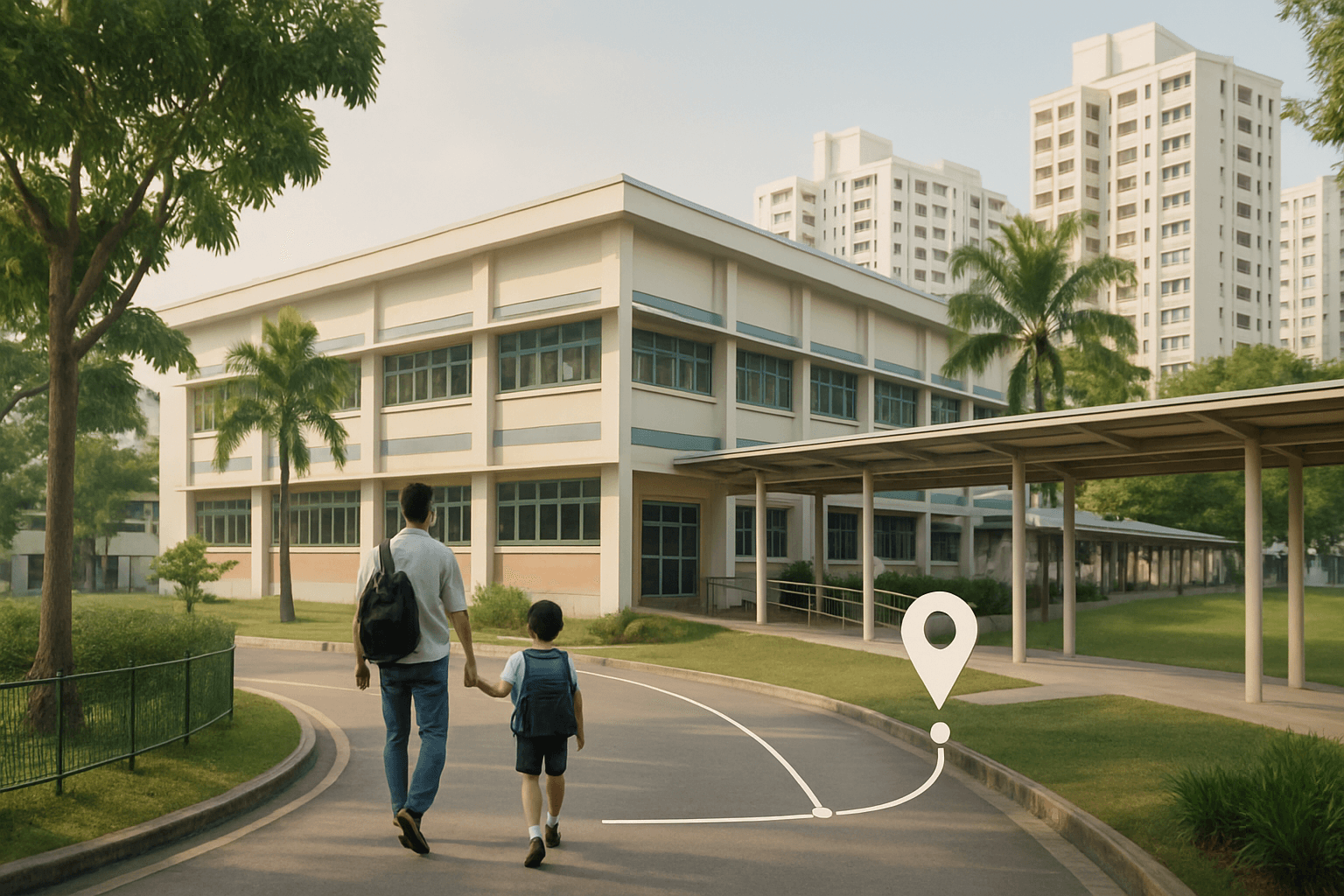
Punggol Primary School is a government, co-educational, single-session primary school in Singapore. For most parents, the useful first checks are simple: where the school actually is, whether the morning trip is realistic, what mother tongue languages are offered, and whether the school fits the family’s daily routine. This guide focuses on those decision points, not school marketing.
What is Punggol Primary School in Singapore?
Punggol Primary School is a government, co-ed, single-session primary school in Singapore. For parents, the first real filters are commute, language options, and daily routine fit.
Punggol Primary School is a government, co-educational, single-session primary school in Singapore. That tells parents most of the basics they need upfront: it is a mainstream MOE primary school, boys and girls study together, and the school day is generally organised in one session rather than split across morning and afternoon groups.
If you are only doing a first shortlist, do not overcomplicate it. The main checks are whether the location works for your family, whether the mother tongue options fit your child, and whether the school routine is manageable day after day. For a broader comparison framework, see our Primary Schools in Singapore: A Practical Parent Guide and MOE’s Primary school overview.
[Punggol] Primary Schools
Published on Jun 19, 2015 Oasis of learning in Punggol, to fill young minds source http://mypaper.sg/top-stories/oasis-lea ... s-20150619 THREE new primary schools will open in Punggol next year to help meet the growing demand in the area. The schools - Oasis Primary in Edgefield Plains, Punggol Cove Primary in Sumang Walk and Waterway Primary in Punggol Drive - will be able to take in 210 pupils each . They are located near a number of housing projects. Waterway Primary, for instance, is locate
Punggol Primary
This is the Parents' Networking Group for Punggol Primary Once you have gotten your child in this school, come introduce yourself to other parents in this school and network with each other. Share tips, on-going news and alerts and discuss issues pertaining to the school.
Where is Punggol Primary School located, and how do families usually get there?
The school is at 61 Hougang Avenue 8, Singapore 538787. Parents usually look at Hougang or Buangkok access and nearby bus routes, but the real decision point is the actual morning commute from home.
Punggol Primary School is at 61 Hougang Avenue 8, Singapore 538787. One detail parents often overlook is that, despite the school name, the address is on Hougang Avenue 8, so it is worth mapping the actual route instead of assuming it will be your closest "Punggol" option.
Practical routing sources commonly point to Hougang and Buangkok as MRT reference points, and bus services such as 62, 74, 88, 113, 147, and 325 are often mentioned for access. Treat those as planning clues, not a permanent transport guarantee. The useful test is door-to-door time on a weekday morning. A school that looks near on a map can still be tiring if your child needs a long walk, a crowded transfer, or two buses before assembly.
For the most reliable school contact details, use the school’s contact page. If you are checking school-side transport information, the school’s bus service page is the best place to start. For a broader overview, see Anchor Green Primary School in Singapore: A Parent Guide.
Punggol Green Primary
This is the Parents' Support Group for Punggol Green Primary Once you have gotten your child in this school, come introduce yourself to other parents in this school and network with each other. Share tips, on-going news and alerts and discuss issues pertaining to the school.
Punggol Secondary School
This is the Parents' Networking Group for Punggol Secondary School. Once you have gotten your child in this school, come introduce yourself to other parents in this school and network with each other. Share tips, on-going news and alerts and discuss issues pertaining to the school.
Have More Questions?
Get personalized guidance on schools, tuition, enrichment and education pathways with AskVaiser.
Try AskVaiser for Free →Is Punggol Primary School a government, co-ed, single-session school?
Yes. It is a government, co-ed, single-session school, which usually makes the school day more predictable but still requires a clear after-school plan.
Yes. Punggol Primary School is government-run, co-educational, and single-session. In practical terms, government means a standard MOE curriculum, co-ed means boys and girls learn together, and single-session usually gives families a more predictable school day.
The part many parents miss is that single-session helps with scheduling, but it does not solve after-school logistics by itself. If both parents work, you still need a realistic plan for pickup, student care, or supervision at home. Insight line: single-session is not just a timetable detail. It is a family routine decision. For a broader overview, see Ang Mo Kio Primary School in Singapore: A Parent Guide.
What mother tongue languages are offered at Punggol Primary School?
The school offers Chinese, Malay, and Tamil. If your child has a non-standard language situation, confirm the placement details early rather than assuming the basic list is enough.
Punggol Primary School offers Chinese, Malay, and Tamil. For many families, this is not a minor detail. It is a shortlist gatekeeper. If the mother tongue option does not match your child’s needs, the school may not be practical no matter how good the commute looks.
If your child has a less common language background, needs a specific support arrangement, or may not follow the usual mother tongue pathway, confirm the details early instead of assuming the standard list answers everything. The school’s Mother Tongue Language page is a useful starting point, and MOE’s overview of learning mother tongue in primary school gives the broader context.
Does Punggol Primary School have SAP, autonomous, gifted, or affiliated status?
Available sources reviewed do not indicate SAP, autonomous, GEP, or affiliated status. If those labels matter to you, verify them first instead of assuming they apply.
Based on the available sources reviewed, Punggol Primary School is not indicated as SAP, autonomous, GEP, or affiliated. The key point is not to treat that as praise or criticism. It simply means parents should evaluate the school on fit rather than on a label that is not clearly stated.
This matters because many parents quietly use status labels as a shortcut. That shortcut can be misleading. If SAP, affiliation, or a specific programme pathway is central to your decision, verify it first on official pages such as MOE SchoolFinder) before spending time comparing softer factors like school branding or hearsay. The safer rule is simple: if a special status matters, look for the status stated clearly, not inferred from the name.
What is the school experience like at Punggol Primary School?
Schoolbag describes students moving between classrooms for different subjects, which suggests a flexible and practical classroom setup. Treat that as a useful example of school life, not a complete description of every class.
A Schoolbag feature describes students moving between classrooms for different subjects, with grouping and classroom use adjusted to subject and learning needs. For parents, the practical takeaway is that the school appears to use a flexible classroom arrangement rather than a rigid one-class-one-room model all day.
That is useful context, but it should be read as an example of school life, not a full current programme summary. Schools evolve, and one article cannot tell you everything about teaching style, support structures, or how every class is organised. The sensible takeaway is narrower: the school has been presented as willing to organise learning in a practical, adaptable way.
Who is Punggol Primary School likely to suit best?
It is likely to suit families who want a mainstream government primary school and can make the Hougang Avenue 8 commute work comfortably every day. The best fit is usually a simple route, not an impressive school profile on paper.
Punggol Primary School is likely to suit families who can manage the Hougang Avenue 8 commute without daily strain, especially those living in the north-east or along a route with a straightforward bus or MRT connection. It is also a sensible fit for parents looking for a mainstream government primary school with the standard mother tongue options of Chinese, Malay, and Tamil.
A realistic good-fit example is a family that can get there with one direct bus or a short, simple transfer and already has a workable after-school routine. A weaker-fit example is a family attracted by the school name, but facing a long trip with multiple changes and no clear student care plan. Insight line: a school you can sustain usually beats a school you only admire from afar.
If you want a general MOE decision framework, the guide on how to choose a school is a good cross-check.
What should parents check before shortlisting Punggol Primary School?
Check the real commute, mother tongue fit, single-session logistics, and whether you are choosing the school for the right reasons.
- ✓Test the full home-to-school trip on a weekday morning, not just the map distance.
- ✓Check whether the Hougang Avenue 8 location is actually convenient for your family despite the school name.
- ✓Confirm that your child’s mother tongue option is available and suitable.
- ✓Make sure the single-session timetable works with pickup, student care, or home supervision.
- ✓If you care about SAP, affiliation, or other special-status labels, verify those separately instead of assuming them.
- ✓Keep the school’s official contact details handy before making a Primary 1 or transfer decision.
What should parents not assume from the school name alone?
Do not infer commute convenience or special status from the name alone. Verify the route and the official school profile separately.
Do not assume the school is the most convenient "Punggol" option just because of its name, and do not assume special status such as SAP, affiliation, or GEP unless you see it stated clearly. School names are identifiers, not commute plans or status labels.
How can I quickly tell if Punggol Primary School is worth putting on my shortlist?
Check three things first: commute, mother tongue, and whether the single-session government-school setup fits your routine. If all three work, it is worth shortlisting.
Use a simple three-part screen. First, the commute must be manageable on an ordinary school morning. Second, the mother tongue option must fit your child. Third, the government, co-ed, single-session setup must work with your family routine.
If all three line up, the school is worth keeping on your shortlist. If one fails, that is usually a sign to compare it with other options before investing more time. For parents doing a wider comparison, our Primary Schools in Singapore: A Practical Parent Guide can help you assess schools more systematically, and nearby comparisons such as Anchor Green Primary School in Singapore: A Parent Guide may also be useful.
Have More Questions?
Get personalized guidance on schools, tuition, enrichment and education pathways with AskVaiser.
Try AskVaiser for Free →