
Are GEP Prep Classes Worth It in Singapore?
When they help, when general enrichment is enough, and how to judge real value.
GEP prep classes can be worth it when they strengthen real thinking skills and suit the child, but they are not a proven shortcut into GEP. If a class mainly drills formats, adds stress, or replaces reading and balance, it is usually poor value.
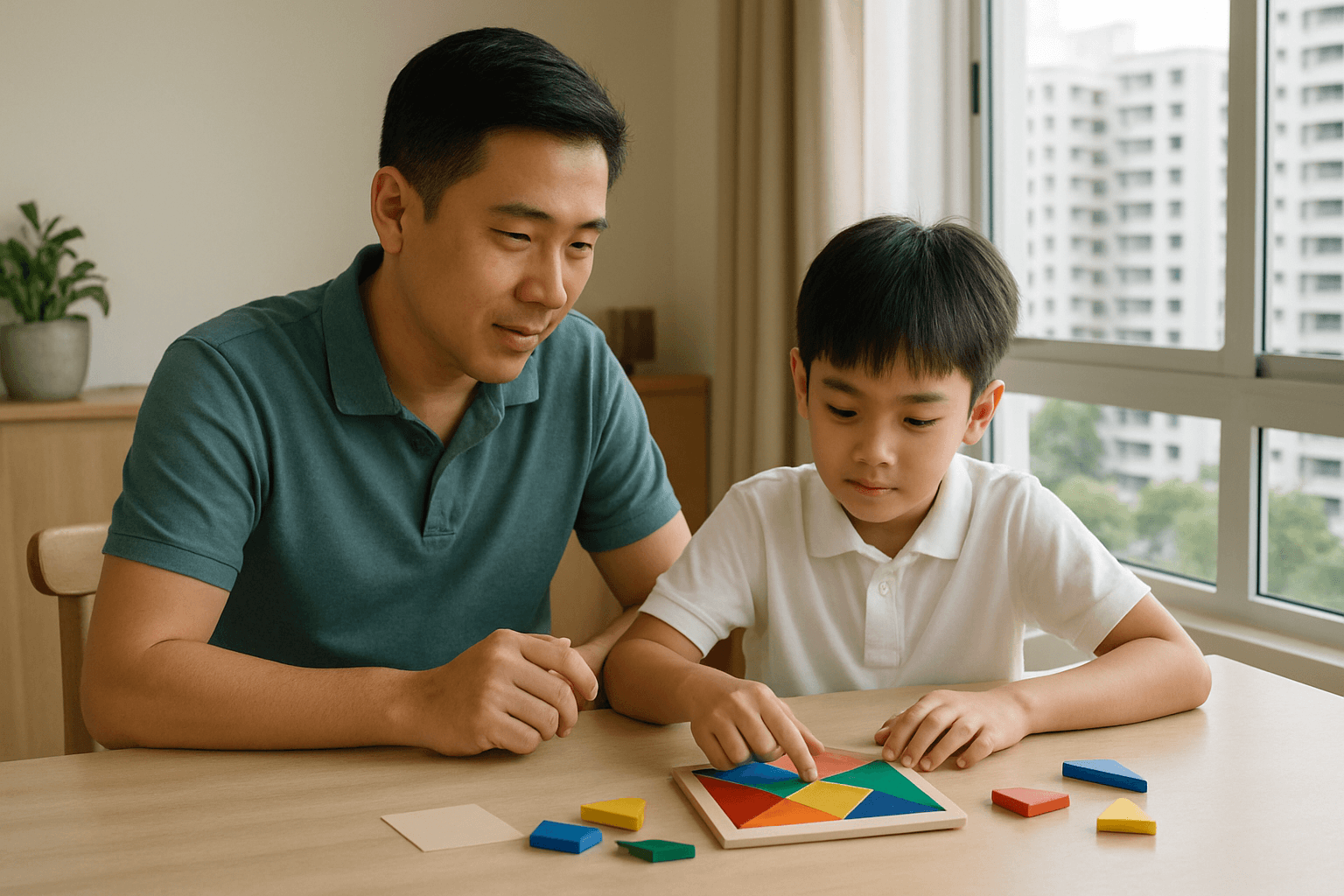
Yes, sometimes — but only if the class improves how your child thinks, reads, and handles challenge. GEP prep classes are worth considering when they build real reasoning and confidence, not when they mainly drill question formats or create pressure too early. For parents, the real question is not whether a class sounds impressive. It is whether it gives your child a better learning fit and useful skills even if GEP does not happen.
What is GEP in Singapore, and why do parents care about it?
GEP is a high-ability primary-school pathway for children who need more stretch, and parents care because it can be a better learning fit for some children, not because it is automatically “better.”
GEP is a high-ability pathway for primary school children who may need more depth, pace, and stretch than mainstream lessons usually provide. Parents care because, for the right child, it can mean harder questions, richer discussion, and learning with peers who also enjoy challenge. If you want the broader picture first, start with our main guide to the Gifted Education Programme in Singapore and our explainer on what the Gifted Education Programme is.
The most useful mindset is to treat GEP as a fit question, not a status question. Many parents start looking at GEP prep classes because their child finishes work quickly, seems bored, or asks unusually deep questions. Those can be signs that a child needs more stretch, but they do not automatically mean a child should be pushed into specialised prep. MOE’s broader framing of high-ability education is about deeper interest and growth, not just performance, as seen on its page on GEB special programmes and in its 2024 Committee of Supply response.
GEP Preparatory Program
When investing parent’s money and child’s time in prep classes, why go for GEP prep instead of regular mainstream syllabus prep? The child’s education path and “their future” is determine by the performance in the latter and not the formal. Which make a better investment? Some parents may say being selected for GEP enhances a child portfolio. But the academics achievement still matter more than curriculum the child went through. If the child is already very steady in exam results in P1 and P2 an
GEP Preparatory Program
Having checked with parent chatgroups, here is my humble assessment of the TOP 3 GEP Preparatory Program specialists . EduCHAMPS academy https://www.theeduchamps.com/gep-preparation-class-2/ • 2 branches – Novena and Katong. • 6 to 10 students per class • Known for following a patented Advanced Brain Training and 5 ‘A’s Method to bring out the full intellectual potential in students • 100% passed the GEP Screening test (1st round). 68% passed the GEP Selection test (2nd round) and got into the P
How does GEP selection work in simple terms?
GEP selection is meant to identify reasoning, learning potential, and readiness for stretch, not just coached performance.
At a high level, GEP selection is trying to identify children with strong reasoning, learning potential, and readiness for unfamiliar challenge. It is not simply looking for children who are fast at routine school work or well coached on one question style. A child who notices patterns, explains thinking clearly, and stays engaged when a question is not obvious is often showing the kind of readiness parents should watch for.
That is why GEP prep should not be treated like ordinary exam tuition. Prep may help a child feel less surprised by unusual questions, but it cannot manufacture deep curiosity or flexible thinking overnight. A practical way to think about it is this: prep can reduce surprise, but it cannot create fit. If you want a fuller overview of the process, see our guide to the GEP selection process in Singapore.
GEP Preparatory Program
Advisory from MOE on preparation for GEP selection test: https://postimg.cc/Wdvkv3jy Assuming prep class (and not innate talents) works for getting selected into the GEP. But to handle the demands of the programme does it mean the child has to continue GEP enrichment classes? Or any parent can share of significant numbers of cases where students got into GEP due to prep school and still managing demands of GEP well without continuing GEP enrichment classes? Or could it be those students that asp
GEP Preparatory Program
Some parents have the time and resources to expose their kids at home to prepare for gep. Other parents prefer to put their kids in gep preparation classes and let them blossom on their own or etc. From my own observation, I realized many kids who constantly do very well in Eng and Math at schools and also attended short/long duration preparation classes were not selected for Gep. Some were shocked they did not even pass round one. Some of my friends' children did not attend any of these prepara
Have More Questions?
Get personalized guidance on schools, tuition, enrichment and education pathways with AskVaiser.
Try AskVaiser for Free →What do GEP prep classes usually teach?
They usually teach reasoning, comprehension, problem-solving, and exposure to unfamiliar question types rather than normal school revision.
Most GEP prep classes focus less on standard school content and more on thinking tasks. Common examples include verbal reasoning, inferential comprehension, non-routine maths, pattern spotting, logic puzzles, critical reading, open-ended discussion, and timed exposure to unfamiliar questions. These are examples of what many providers teach, not official MOE requirements or a guaranteed checklist for admission.
What matters most is the teaching method. A stronger class usually slows down to ask why an answer works, compares different approaches, and helps a child get comfortable with uncertainty. A weaker class often turns everything into speed drills, answer templates, and format memorisation. If two classes cover similar material, the more useful one is usually the one that improves reasoning habits rather than one that only trains recognition of a question pattern. For a broader overview, see GEP vs High Ability Programme in Singapore: What’s the Difference?.
All About GEP
Perhaps you have missed out alot of discussion on this. Most people will not advocate training for GEP tests. Reason being if they can prepare themselves to get into the program, they may not be prepared to stay on in the program. Most times, getting in is a smaller issue than staying inside the program. So if you are confident about your kid, then don’t prepare your kid. But if you really want to, there are a few schools in SG touting that they trained children for GEP and they charge a premium
All About GEP
Personally I think if your child qualify for GEP, then why not? I am skeptical about the effectiveness of the prep program for GEP but let’s say your child qualify for GEP without any prep program, the more you should let he or she undergo the GEP program. My reason is simple and straightforward. I think the ability and potential of each child is different. That is why not everyone can achieve the same results in any given examination. Some will score better than the rest no matter how. The GEP
Are GEP prep classes worth it?
Sometimes, but only when the class builds real thinking habits and clearly benefits the child beyond GEP selection itself.
Sometimes, but only under the right conditions. GEP prep classes are worth it when they help a child read more carefully, think more flexibly, and stay calmer with difficult or unfamiliar questions. They can also be useful when a child already enjoys challenge but needs structured stretch, or when parents want one steady place for reasoning practice instead of assembling enrichment on their own.
They are usually not worth it if the family is mainly buying hope. There is no evidence in the source material that paid prep classes reliably improve selection odds in a way parents can count on. A practical test is this: if your child would still benefit from the class even if GEP never happened, the class may be worth considering. If the value disappears unless it leads to selection, it is probably the wrong purchase. After a term or two, you should be able to point to real gains such as better explanations, stronger reading attention, or less panic with hard questions. If all you see is more worksheets and more stress, the class is not doing its job. For a broader overview, see How Do I Know If GEP Is a Good Fit for My Child?.
All About GEP
Parents that pay thousands of dollars to try to get their children into GEP: Yes, GEP is a coveted programme. Yes, GEP allows your dd/ds to be able to have a higher chance of getting into an IP school. But bear in mind that the programme is immensely challenging. Your child will have to juggle tonnes of projects and lots of HW and at the same time prepare for the all-important PSLE. And if you PUSH for your child to get into GEP by loads of tuition classes, ask yourself: Will he/she be cope? Wil
Is GEP really necessary?
Is GEP really necessary? If it’s designed to cater to kids with special needs, yes. If the intention is to groom leaders or specialists in a developing country to raise the quality of the human resource, yes. But Singapore has progressed beyond this need. Unfortunately, the GEP is used as a guaranteed passport to an elite education. This is the grand prize that pushes all parents to overdrive. So much is invested in so few, and these few are given the best tools and resources. And at the end of
The biggest mistake parents make is treating GEP prep like PSLE tuition
The goal is readiness for challenge, not a guaranteed outcome.
PSLE-style tuition is usually about syllabus mastery, familiar question types, and score efficiency. GEP-style readiness is different. It leans more on curiosity, careful reading, flexible thinking, and the ability to stay engaged when the path is unclear. A child trained only to spot tricks may look prepared on paper but still struggle with the kind of thinking the programme is meant to identify. More prep is not automatically better, especially if it replaces sleep, reading time, play, or emotional breathing room. For a broader overview, see What Is the GEP Workload Like?.
All About GEP
Extract from The Sunday Times 3 June 2012 Should you prepare for the GEP test? But is preparing for the GEP test necessary or beneficial to the child? The Education Ministry, schools and experts say no. A ministry spokesman advised parents against sending their children for special preparatory classes. 'A child who gains admission into the GEP through intensive coaching may not be able to cope with the programme's demands, and this could cause the child unnecessary stress and could lead to loss
GEP Preparatory Program
Class size is only slightly smaller but the teachers and resources available are superior. The often-cited point about PSLE prep is overrated, because the vast majority of GEP kids breeze through PSLE (especially for math and science) . They are doing things that are way more advanced than the PSLE itself during the GEP curriculum, why would they need to worry about cramming late?? When they say that GEP has to cram, they really mean that they are just worried about not getting AL4D for all subj
When are GEP prep classes useful, and when are they probably not worth it?
They help most when a child already enjoys challenge and needs structured stretch, and they are poor value when a child is overloaded, anxious, or not ready.
They are most useful for children who already show a real appetite for challenge. In practice, that often means a child who reads beyond assigned books, asks unusual questions, enjoys puzzle-like tasks, and can sit with a hard problem without shutting down immediately. For that child, a good class can provide rhythm, intellectual company, and harder material than what school usually offers. Even then, moderate is usually better than intense.
They are probably not worth it when the child is already overloaded, anxious, or resistant to extra academic pressure. A Primary 1 or Primary 2 child with school work, two tuition classes, weekend activities, and little downtime may not need another specialised class. A bright child whose main issue is shaky confidence may also respond better first to enjoyable reading, conversation, and a slower buildup. Even tuition-oriented advice often acknowledges that not every child needs GEP tuition, as reflected in this article on how to tell if your child really needs GEP tuition. If extra prep makes your child dread learning, it is solving the wrong problem.
All About GEP
Sigh. There are lots of \"GEP preparatory courses\" out there but they are merely preying on the parents' inherently yearning that their kids are out to do \"big\" things. We regularly monitor these threads to ban anyone that tries to promote such services. Such courses are bad because they may actually cause the GEP team to upscale their questions to really find truly gifted children! If your child is really gifted, her natural curiosities and talents should stand out clearly. There should be n
All About GEP
Hi millan, how to help them revise when you don't even know what kind of questions they will be asking? And if you do the extra bit by signing your kid up for the many GEP preparatory classes out there, ask yourself if you are really helping your child hone his gifted abilities, or if you doing it because you think it is good for him to be in the GEP. Most Singaporean parents are educated enough to know if their kids are really gifted in languages and math. If we think our child is gifted and si
What is the difference between GEP, the High Ability Programme, and mainstream primary school?
GEP is the older high-ability pathway, the broader high-ability landscape is evolving, and mainstream primary school remains the base pathway for most children.
At a broad level, GEP has traditionally referred to a distinct high-ability pathway, while the newer high-ability direction is wider and less tied to one label. Mainstream primary school remains the default setting for most children and is designed for a broad range of learners. High-ability options, whether under the older GEP model or the broader High Ability Programme direction, are meant for children who need more pace, depth, or intellectual stretch than mainstream lessons usually provide. Our comparison of GEP vs High Ability Programme explains this in more detail, and MOE’s 2020 education speech gives helpful context on the broader direction of support for high-ability learners.
For parents, the most useful comparison is the learning experience, not the label. GEP- or HAP-style provision usually means deeper tasks, less routine practice, more independent thinking, and sometimes a heavier mental load even when homework volume is not dramatically higher. Mainstream classes can still be excellent, and many bright children do very well there with the right enrichment outside school. If you are deciding between environments, our guide to GEP vs mainstream primary school can help. The better question is not which name sounds stronger, but which setting matches your child’s pace, temperament, and need for challenge.
All About GEP
GEP curriculum covers the same content areas as those in mainstream but is extended in breath and depth. And GEP students will sit for the same PSLE and proceed to IP or O level, just like mainstream students. Sounds quite like IP, where students are exposed to an enriched curriculum but also learn the same syllabus and sit for the same A level exam as mainstream students. Or A level students taking H3 subject with extended contents but only the standard syllabus H2 content results will count to
Is GEP really necessary?
My child was in a HA (High Achiever) class in P3 and I did not send him for any GEP prep course. Later on in the year, he told me that many of his classmates went for prep courses, and out of the kids who went to GEP in his class, at least half attended prep courses. Other than 1 kid who is recognised as definitely gifted, the others are regular HA kids who neither scored better in NSW EL test nor challenging Maths Qns than my son or other HA kids who are the top few in class. In the end, my chi
What kind of child is GEP actually suitable for?
A good fit is usually curious, independent, comfortable with challenge, and emotionally able to cope with stretch.
A child who fits GEP well is usually not just clever, but also ready for stretch in a way that matches the child’s temperament. At home, this often looks like strong curiosity, enjoyment of reading or ideas, willingness to explain thinking, and the ability to stay with a problem even when the answer is not immediate. These children are often energised by challenge rather than flattened by it. They may still get frustrated, but they usually recover and try another approach.
The other side matters just as much. A bright child who is highly pressure-sensitive, needs constant hand-holding, or shuts down when work becomes ambiguous may not enjoy a more demanding environment, even if the child is capable of qualifying. That is why parents should separate ability from suitability. If you are unsure, our guides on how to know if GEP is a good fit for your child and whether your child is gifted or just advanced can help you think beyond marks alone. Being able to enter a programme and being likely to thrive in it are not the same thing.
All About GEP
I confess I'm really a kiasu-mum, I also want to know more views from other parents on GEP preparation class. As I know, many GEP students are sent for such pre class, and can have the chances to go in GEP classes, which will be more benifit both for kids and parents. Who knows where can find such good GEP pre class... :oops:
All About GEP
I read many interesting concerns on the GEP ... Let me share some of my thoughts on these ... Why force your kids to a GEP if she /he is meant for it. Don't believe those crap training centre ..Let nature take it course My daughter is in P6 GEP at RGPS and had just completed her PSLE like all other 50K kids in her cohort. She is now enjoying herself with her fellow P6 GEP at the Sentosa UnderWater World. She was posted to RGPS from CHIJ Pri (Toa Payoh) in 2008. As a child , she was always more s
What can parents do to support a child without over-prepping?
Use low-pressure enrichment such as reading, discussion, puzzles, and a balanced routine instead of stacking more prep too early.
The most helpful support is often low-pressure and consistent. Read widely with your child, including stories, non-fiction, and articles that invite discussion. Ask questions without one neat answer, such as why a character made a choice, what evidence supports an idea, or how else a problem could be solved. Encourage your child to explain thinking aloud, because that builds clarity and confidence. Puzzles, logic games, and open-ended maths problems can help too, but they work best when they still feel interesting rather than heavily assessed.
Just as important, protect the conditions that make good thinking possible. A child who is rested, not overbooked, and still enjoys learning usually benefits more than a child pushed from one specialised class to another. If you are choosing between one more prep class and more room for reading, play, and conversation, do not underestimate the second option. For many children, a calm reading habit does more than another branded worksheet pack.
GEP Preparatory Program
In SG, how many can truly say the kid is never prepped at all. Just because a kid has zero tuition also does not mean the child is not prepared at all for GEP. If you start at age 2, nurturing with the right method consistently… up till 9, the kid cannot be too lousy either. But whether top 1% or not, hard to say. Depends what you do. Some real cases I know - A P4 GEP kid’s mum is English teacher at a GEP centre. A 27 year old boy GEP graduate admitted his mum used to make him do very difficult
GEP Preparatory Program
The last part made me laugh. If a gep prep course is like what you'd mentioned, wouldn't it be just another enrichment class? My idea of a gep prep class is one that exposes children to general ability questions that seem to be more crucial to the selection process. I thought it's such questions that put kids that are never prepared for the test at a disadvantage. I agree that it does not matter whether a child attends classes or receives parental coaching as long as he is keen on learning. A fr
What happens after primary school if a child enters GEP?
The real issue is whether the child continues to thrive after entry, not whether the label itself looks impressive on paper.
The main thing to understand is that entry is not the finish line. What matters after primary school is whether the child keeps thriving in a more demanding environment and continues to enjoy learning. Some families value the intellectual stretch, stronger self-direction, or access to like-minded peers, but those benefits depend on the child, not the label alone. Secondary school choices still require fresh decisions about fit, school culture, and the child’s developing interests. MOE’s secondary school overview is a useful place to reset your thinking at that stage.
This is why it helps to take a long view before spending heavily on prep. A more useful question is whether the experience is helping your child become more thoughtful, more independent, and more resilient. If yes, that value carries forward whether or not the pathway looks impressive on paper. If no, selection alone will not solve the underlying issue. For broader context on how the high-ability landscape is changing, our post on why Singapore is moving from GEP to HAP is a helpful next read.
GEP Preparatory Program
no. screening tests are only held once in the child's time in primary school. getting through the screening tests is one thing, remember there is another 2.5yrs of gep work and the inevitable psle for which they only start preparation after june of p6.
All About GEP
Those who are not naturally gifted and somehow get into GEP through extensive training will suffer doing the GEP syllabus. My child was in GEP and from what I saw of her classmates, the ones who entered via GEP prep courses struggled throughout their three years and were always bottom of the cohort. These were also the ones who weren’t offered DSA. And while they did well at the PSLE compared to mainstream students, they were still the bottom few among the GEP students. So really, what’s the poi
Have More Questions?
Get personalized guidance on schools, tuition, enrichment and education pathways with AskVaiser.
Try AskVaiser for Free →