
Do Different Secondary Schools Offer Different FSBB Subject Combinations?
Yes. Full Subject-Based Banding gives more flexibility within a school, but schools can still differ in the subject combinations they can actually run.
Yes. Even under Full Subject-Based Banding, secondary schools can differ in the subject combinations they are able to run. FSBB allows more flexible subject levels, but each school still works within its own staffing, timetable, cohort size, and student demand. Parents should check the school's current subject handbook, open house materials, and typical upper secondary combinations before assuming a preferred mix will be available.
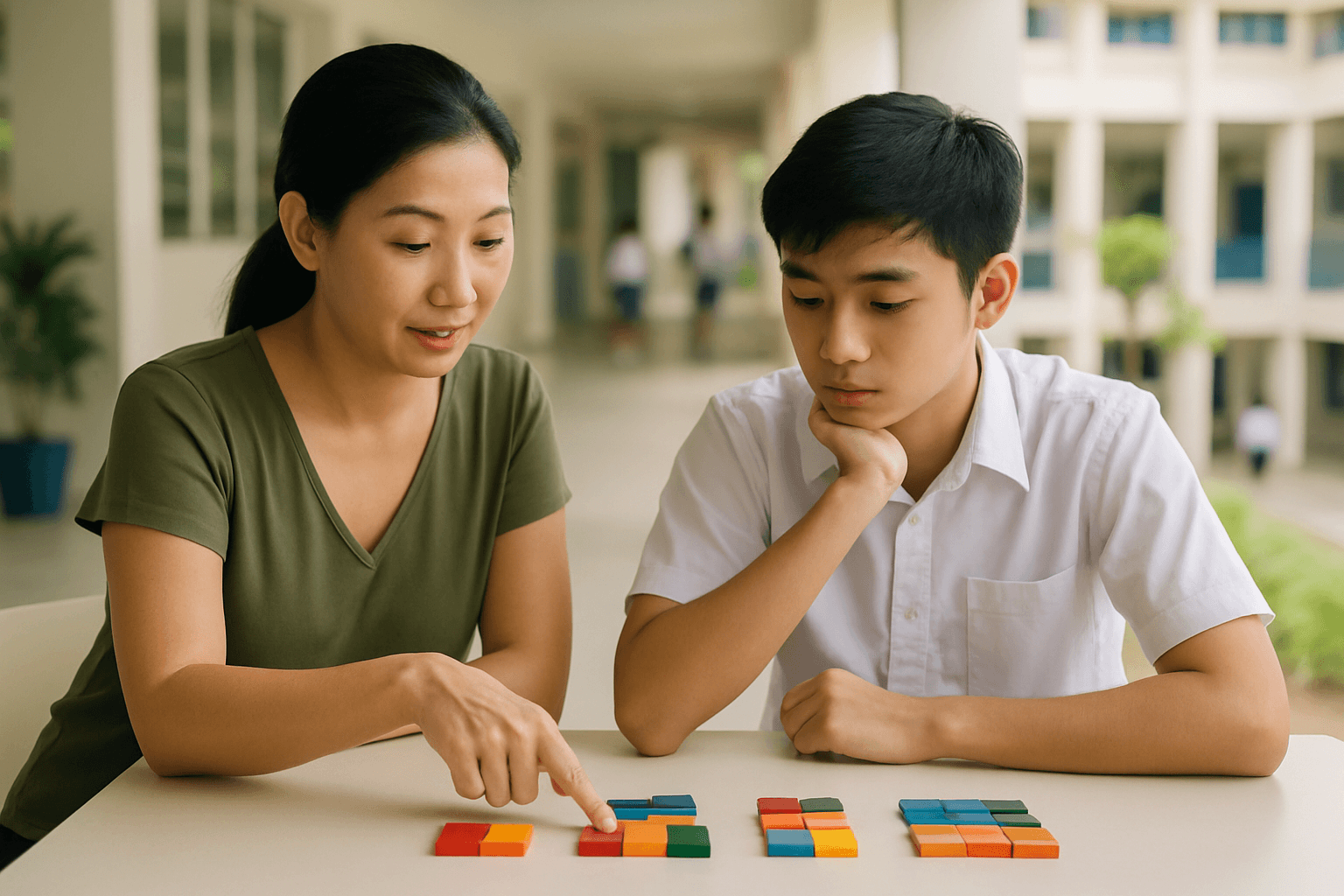
Yes. Different secondary schools can offer different FSBB subject combinations. Full Subject-Based Banding gives students more flexibility inside a school, but it does not make every school's subject menu the same. If your child already seems likely to want a certain subject mix later on, school choice still matters.
Short answer: do different secondary schools offer different FSBB subject combinations?
Yes. FSBB gives more flexibility, but it does not mean every secondary school offers the same subject combinations.
Yes. Different secondary schools can offer different FSBB subject combinations, even though they are all operating within the same Full Subject-Based Banding framework. FSBB gives students more flexibility to take subjects at levels that suit their strengths, but it does not create one identical subject menu across every school.
In practice, one school may be able to run a broader set of combinations, while another may offer a smaller or more standard set. So if your child already has a likely preference later on, such as wanting more choice in humanities or needing a school that can support mixed subject levels smoothly, do not assume every school will handle that equally well.
A useful way to think about it is this: FSBB is a more flexible framework, not a fixed national menu. For a broader overview, see What Is Full Subject-Based Banding in Singapore? A Parent's Guide to Secondary School Subject Levels.
Time to ponder -- Subject-Based Banding (SBB)
Time to ponder -- Subject-Based Banding (SBB) Subject-Based Banding (SBB) will be implemented from the 2008 P5 cohort. It will replace the merged and EM3 stream. Depending on their performance in P4, students will be streamed into classes taking 4 standard classes with Higher Mother Tongue(HMT) , 4 standard subjects or a combination of standard and foundation subjects. Are these equivalents to the earlier EM1, EM2 and EM3? 4S + HMT --> EM1 4S --> EM2 Combination of standard and foundation subjec
Subject Based Banding
Hi, Anybody knows what is Subject Based Banding? My boy is in P4 Maris Stella. Any parents who has done this option thingy before in Maris Stella? Pls share… Thanks.
What does FSBB change, and what does it not change?
FSBB changes how subjects are grouped and taught, but it does not make every school's subject menu the same.
FSBB changes how students can be grouped for learning. Under the system, students may be in mixed form classes and then attend some subjects at different levels based on where they are stronger or need more support. MOE's student-facing coverage on providing more flexibility with subject-based banding and mixed form classes explains this shift clearly.
What FSBB does not change is the need for each school to run a workable timetable. Schools still have to decide what combinations they can support with their teachers, class sizes, and lesson slots. That is why two schools can both be doing FSBB and still look different in practice.
If you want the bigger picture first, see What Is Full Subject-Based Banding in Singapore?. The short version is simple: FSBB increases flexibility within schools, but it does not erase school-to-school differences. For a broader overview, see Can Students Take Mixed Subject Levels Under FSBB?.
BANDING Of Secondary School.
Don't think the banding of secondary schools will be publicly available from 2012 onwards. As a guide, parents can refer to the last published banding in 2011. Here is the link http://www.moe.gov.sg/media/press/2011/09/recognising-best-practices-of-schools.php For ease of reference, the Express and NA banding of schools are in Annex F1 and F2 respectively. Can check out the rest of the annexes for other information relevant to your child's edu needs
FSBB (Full Subject-Based Banding)
During lower sec. my children school offers quite a wide spread of subjects at basic level. I suppose that is when students get to have a taste of different domains, and then decide their preferences at the end of Sec 2, before stream selection in Sec. 3? The subjects includes the basics like math, Chem, physics and bio; literature Eng and Chinese , Geo, history, basic music, art, Malay language, design technology. Not sure about other schools, but this is an existing model to expose students at
Have More Questions?
Get personalized guidance on schools, tuition, enrichment and education pathways with AskVaiser.
Try AskVaiser for Free →Why can subject combinations still differ across schools under FSBB?
Because schools still work within staffing, timetable, cohort size, and student demand.
Because schools still need enough teachers, enough timetable space, and enough student demand to run a subject or a particular pairing. FSBB improves flexibility, but it does not remove these practical limits.
A simple example helps. A school may be able to offer two subjects separately, but not every possible combination of those two subjects together because the lessons clash on the timetable. Another school may have enough demand to run two humanities pairings, while a smaller cohort may only be able to support one. Sometimes a school can support mixed subject levels well in one area, but has less room to do so across many subjects at once.
This is the part many parents miss. Subject choice is not only about what is allowed. It is also about what the school can realistically run well for that cohort. For a broader overview, see How G1, G2 and G3 Subjects Work for O-Levels.
BANDING Of Secondary School.
Banding of Sec schools have been scrapped. For the benefit of Pri 6 parents keen to know the LATEST Schools’ Banding thus year ( the lists are non-exhaustive ) Band 1: -XinMin -Bukit Panjang Gov High Tha rest of last yr Band 1 Sch more or less remain in Band 1… Band 2: -TKGS -Zhong Hua -Nan Chiau -Chung Cheng High (Main) Band 3: -Temasek Sec -Maris Stella -Kranji Sec -Dunman Sec Band 4: -CHIJ Toa Payoh Band 6: -Fairfield Methodist Sec -Paya Lebar Methodist Girls’ Band 7: -CHIJ St Joseph Convent
BANDING Of Secondary School.
U mean based on latest Banding 2012? MOE has removed Banding of schools. If not, which Sec Schools are u keen to find out?
What kinds of subject differences should parents expect between schools?
Expect differences in which subjects are available, how they are paired, and how much level flexibility the school can support.
The main differences are usually in subject availability, how combinations are paired, and how much flexibility the school has in supporting different subject levels together. These are common real-world examples, not an official checklist.
For example, one school may commonly run a broader range of upper secondary humanities combinations, while another keeps to a smaller standard set. One school may be better able to support a student taking a stronger level in Mathematics while taking some other subjects at a different level. Another may organise mother tongue or elective-style options in a way that gives less room for certain pairings.
This usually matters more from Secondary 2 onward than parents first expect. Two schools can feel similar in Secondary 1, but look quite different by the time students choose their upper secondary subjects. If your child already has a strong interest pattern, compare the likely Secondary 3 to 4 pathway, not just the first-year experience. For a broader overview, see Can G1 or G2 Students Still Go to JC, Poly or ITE?.
How do schools decide which FSBB subject combinations to offer?
Schools usually decide based on student demand, staffing, and what the timetable can realistically support.
Schools usually balance three things: what students want, what the school can staff, and what the timetable can support. That explains most of the variation parents see.
A school brochure or open house slide deck is useful, but it is usually a menu of what the school aims to offer, not a promise that every cohort will get every combination in the same way. If only a small number of students choose a subject, the school may need to run fewer pairings, combine classes differently, or prioritise the more common combinations. If teacher deployment changes, the range may also shift.
The better parent question is not just, "What do you offer?" It is, "What combinations do students in your school usually get to take?" That often produces a more honest and useful answer.
Secondary 3 Subjects
Only your school principal and teachers can advise you on this. as different schools have different practices. Have you checked with them? I know some schools allow their students to appeal after the initial posting is out. Do your school has such appeal process and have you try appealing?
How Do Secondary Schools Choose Their Students
Hi angel2005, Have you read the MOE booklet on choosing your secondary school that’s distributed to all P6 students? The booklet describes very clearly the process the S1 Central Posting Exercise. In brief, all P6 students will be ranked according to their PSLE scores. Each student has 6 choices. The MOE computer will consider the student ranked #1 first. They will give Student #1 the school of his choice. Next they will consider the student who’s ranked #2. And so on and so forth all the way to
What should parents check when comparing schools for subject choice?
Check the actual subjects, the level flexibility, and what the school usually runs in upper secondary for a real cohort.
- ✓Read the school's current website, open house deck, and subject handbook if available. Older blog summaries are often too general.
- ✓Ask which upper secondary combinations are commonly run, not just which subjects are theoretically offered.
- ✓Ask which options depend on enough student demand in that year's cohort.
- ✓Ask how the school supports students taking different subject levels across core subjects, and whether timetable clashes limit some combinations.
- ✓Ask what usually happens if a child wants a combination that cannot be run exactly as requested.
- ✓Compare the likely Secondary 3 to 4 subject path with your child's interests and possible JC, polytechnic, or ITE plans.
- ✓If you are visiting an open house, adapt practical prompts from The Straits Times' guide to secondary school questions and make subject combinations one of your main topics.
What happens if a school does not offer the exact subject mix my child wants?
Your child may need to take a different available combination, or you may decide another school is a better fit.
Usually, your child will need to choose from the combinations the school can actually run. Sometimes the adjustment is small, such as taking a different humanities pairing from the one originally preferred. In other cases, the gap may matter more, especially if the family already knows a certain subject profile is important.
This is where priorities matter. If your child is still exploring and has no strong subject preference yet, a nearby school with a solid but narrower menu may still be a very good fit. If your child already shows a clear academic pattern, such as needing more flexibility across subject levels or wanting a broader upper secondary mix, then a school with stronger subject breadth may be the safer choice.
The mistake to avoid is assuming the school can always customise the combination later. Sometimes it can. Sometimes it cannot. It is better to choose with the school's usual practice in mind than to depend on an exception.
Choosing Secondary school
Hi, Wonder if anyone knows what happens in this Secondary School selection scenario : If there are 10 places left in School A and 20 pupils with EXACTLY the same PSLE score apply, how does MOE decide which 10 to take into the school. Does it matter in this case whether the child had put School A as the first choice? This impacts what schools to put as 1st and 2nd choice - whether the common advise of putting the dream school which is just out of range of the child’s mark is a wise thing to do. P
Which subject combination?
As parents, how do you decide on the course of study and subject combination for your child? Or do you simply let them decide for themselves?
How does subject choice under FSBB affect O-Levels?
Subject choice still matters because it shapes the exam profile your child will take into the O-Levels.
It matters because the subjects and levels your child takes in upper secondary shape the exam profile they will eventually build toward. FSBB gives flexibility, but it does not make subject choice less important. If anything, it makes fit more important because students can end up with more individualised profiles.
A child whose school can support a suitable combination is more likely to study subjects that match strengths and sustain confidence. A child in a school with a narrower menu may still do well, but may have fewer ways to align school subjects with interests or future plans. That is why parents should look past the Secondary 1 label and ask what happens by Secondary 3 and 4.
If you want a clearer explanation of how subject levels connect to national exams, see How G1, G2 and G3 Subjects Work for O-Levels and What Do G1, G2 and G3 Mean in Secondary School?. A good rule of thumb is this: do not choose a school only because the first year seems flexible. Choose it because the later exam pathway still makes sense.
Subject selection in Secondary / Marking system at O level
I wish to understand how subject combinations are selected. I just know that it depends on whether the child prefers maths, Science or Humanities. However, I need to know how the combinations works for each. Also, at O levels, what is the marking system. e.g 5 points, 6 points some say 9 points, 15 points…no idea at all what all this means. Thanks a ton…
SUBJECT OPTIONS IN SECONDARY SCHOOL
My dd also just had to select her subject combi. Our discussion on it was based on what subjects she liked and had an inclination towards and her career aspirations (or rather what she thought she didn’t think she aspired to be). She said she didn’t enjoy Physics and History, altho she has done well in them so far. She enjoyed Biology, Chemistry, Geog and Literature, and wanted to continue pursuing those subjects. We finally settled on going with the subjects that she enjoyed. So I wld say in dd
How can FSBB subject combinations affect JC, polytechnic, or ITE pathways?
Subject choices can affect which post-secondary pathways stay realistic and competitive later on.
Subject combinations can matter later because post-secondary routes look at a student's academic profile, not just the name of the school. MOE has said the system needed to fairly consider students taking mixed G1, G2, and G3 subjects, rather than treating everyone as if they came from the old streams. That policy direction was explained in the 2019 MOE Committee of Supply speech and the earlier MOE press release on one secondary education with many subject bands.
For parents, the practical lesson is not to chase the highest level for every subject. It is to build a profile that is realistic and keeps suitable routes open. If JC is a serious possibility, ask whether the school commonly supports stronger upper secondary academic profiles. If polytechnic is more likely, think about whether the available subject mix fits your child's strengths and course interests. If ITE may be the better path, a confidence-building combination is usually more valuable than forcing a weak fit.
For route-specific guidance, see Can G1 or G2 Students Still Go to JC, Poly or ITE? and Can FSBB Students Go to Junior College? Entry Requirements Explained. Think of subject choice as pathway planning, not just timetable planning.
For JC Students: Unsure of how to choose your subject combi?
Hello, this compilation is for JC1 2013 students. In early 2012, I have given a seminar on how JC1 students should choose their subject combination. In essence, plan from what you want to work, to what you want to study in university, to JC subject combinations. Why? I have had students who chose subject combinations based on what their friends or parents or teachers say. In the end, after A levels, they realised they could not get into the university course of their choice because they did not
Combination of subjects for secondary three
Hi, my daughter plans on taking 3 humanities (including Higher Music) and 1 science subject only (Bio). 1 Science only! Please please tell me how will this affect her badly? In terms of entry to top JCs and Universities. She’s keen on ACSI or Raffles, and she aims for US Universities like UCLA. She hopes for a career in Music (an unstable career though), if not she hopes to venture into journalism or business (that’s why she wants a stable education background). Please reply soon!
What is the biggest misunderstanding parents have about FSBB school choice?
That FSBB means every secondary school now offers the same subject menu.
The biggest misunderstanding is thinking FSBB means every secondary school now offers the same subject menu. It does not. FSBB gives more flexibility, but school offerings are still shaped by staffing, timetable design, and cohort demand. A simple reminder helps: FSBB is a framework, not a guarantee. Subject fit still matters when choosing a school.
Have More Questions?
Get personalized guidance on schools, tuition, enrichment and education pathways with AskVaiser.
Try AskVaiser for Free →