
DSA Sports Singapore: What Schools Look For
A practical guide to how Singapore schools usually assess sports DSA applicants beyond medals and raw talent.
For DSA sports in Singapore, schools usually assess the whole sporting profile, not just raw ability. They often look at competition level, consistency, coach feedback, discipline, teamwork, coachability, and whether the child can realistically contribute to the school's sports programme. A stronger application usually shows credible performance in real competition, clear progress over time, and a good match with the school's training culture and expectations.
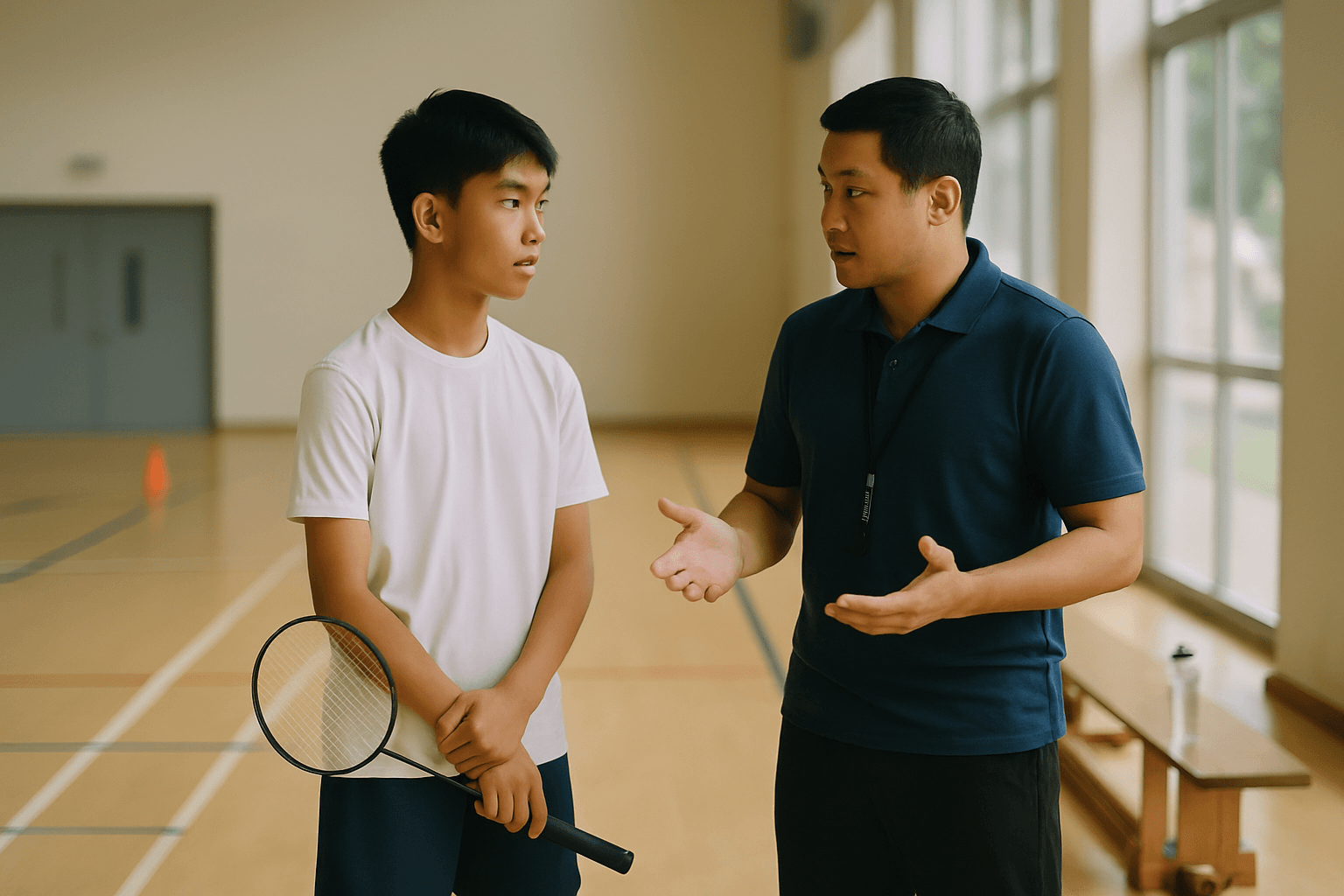
In practice, most schools do not shortlist sports DSA applicants just because they enjoy a sport or train regularly. They usually want evidence that the child can perform in real settings, has a level that is credible for the target programme, and is likely to respond well to coaching over time. For busy parents, the key questions are straightforward: how strong is my child compared with similar peers, what evidence actually helps, and is this school a genuine sporting fit rather than just a well-known name?
What is sports DSA in Singapore, in practical terms?
Sports DSA is an early admission route for students with clear sporting ability and growth potential. It is meant for students who can contribute to a school's sports programme and are willing to commit to that school if offered a place.
Sports DSA is an early admission route that lets a student apply to a secondary school based on sporting talent and potential, instead of relying only on PSLE results. In practical terms, schools use it to identify students who can contribute to their teams and continue developing in that environment. If you want the full process overview, start with our guide to Direct School Admission Singapore and our explainer on what DSA is in Singapore.
It helps to think of sports DSA as an early talent-and-fit decision, not a prize for collecting certificates. It is not only for national-level athletes, and it is not meant for children who simply like a sport. A school is usually asking whether this student already has a credible level and whether the programme can develop that student further.
The commitment matters as much as the application. If a student accepts a DSA-Sec offer, the student commits to that school and does not join the normal Secondary 1 posting exercise, as stated on MOE's DSA eligibility page. MOE also allows families to indicate up to 3 school choices and up to 3 talent areas, with up to 2 talent areas for the same school, through the process described in the MOE FAQ. That is why parents should ask two practical questions before applying: would my child genuinely want this school even without the DSA label, and is my child ready for the sport commitment that usually comes with it?
2009 DSA(Direct School Admission)
I’d rather not say which school but it is one of the top schools in Singapore. If you’re really strong in the sports the school is keen on, it is much easier to get in via sports than through academics for DSA. I have a few friends whose children all got in via Sports DSA.
2008 DSA(Direct School Admission)
[quote]How will we be able to tell which sports is favored by a particular school under DSA? Is such info published?[/quote] Yes, each school has its own preference and they are normally published on the schools' websites. DSA is not only for Sports or Music talents, if your child is good academically throughout the years (esp P4 - P6), then, you can also try for DSA at some of the top schools. Each school has their own entrance tests and interviews. Independent schools can take in up to 50% of
What do schools usually look at first in a sports DSA application?
Schools usually look first for credible evidence that a child can perform in the sport. Interest, effort, and regular training help, but they are usually not enough on their own.
Most schools first look for proof of real sporting ability, not just interest. They want to know what sport the child plays, how long the child has trained, what level has been reached, and whether there is evidence of performance outside casual lessons or weekly practice.
In real terms, schools are trying to answer one question quickly: can this student realistically strengthen or grow within our programme? That is why regular training alone is rarely enough. A child who attends weekly sessions but is never selected for matches or competitions usually looks very different from a child who is regularly fielded in stronger line-ups, competes externally, or has a clear role in a school or club team.
Parents often miss this first filter. Being in a school team can help, but it does not automatically make a child competitive for DSA. Schools are usually looking for signs that the child stands out within that setting. Schoolbag's overview of DSA reflects the broader purpose of recognising strengths beyond exam results, but for sports, that strength still has to look credible when compared with peers.
A useful shortcut is this: schools do not shortlist interest, they shortlist evidence. For a broader overview, see How to Apply for DSA in Singapore.
2010 DSA(Direct School Admission)
DSA means direct school admission via special talents such as sports and music. Gep also consider a talent, if a mainstrem child do very well in any of the academic subject, participates in various activities or competition also consider a talent. keep the record well, you need them to fill up the forms. there are children apply dsa thru Eng, Maths, Science, Chinese. Maths is the popular one, the chances is slim. Sports and music talents, you should participated in school cca, join competitions,
2009 DSA(Direct School Admission)
Hmmm...S'pore Sports School is confirmed to b one of them if i'm not wrong. I know RV is tough even for sports domain because if u look at the website...they have many tests including EMS. The child must be shortlisted after EMS tests before child can go on for sports selection or special talent in Chinese lang. test depending on sports or chinese lang domain. Just a feedback based on what i know. My girl's classmates tried RV DSA... didn't get thru the EMS
Have More Questions?
Get personalized guidance on schools, tuition, enrichment and education pathways with AskVaiser.
Try AskVaiser for Free →A useful reminder: there is no single public scoring formula for sports DSA
Do not assume every school weighs medals, results, coach reports, or training records in the same way.
There is no universal points system for sports DSA. One school may care more about competition level, another may weigh coach feedback more heavily, and another may be looking closely at long-term potential and programme fit.
So do not treat sports DSA as a simple count of medals, certificates, or training hours. Strong evidence helps, but schools are still making a whole-profile decision rather than applying one fixed formula. For a broader overview, see What Happens During a DSA Interview in Singapore?.
2010 DSA(Direct School Admission)
Take a look at this web-site: http://www.moe.gov.sg/education/admissions/dsa-sec/participating-schools/ If you look at the list of secondary schools participating in the DSA for 2011 Sec 1 intake, you will see that some schools offer only 'Express' stream and other offer 'Normal Technical' (NT) , 'Normal Academic' (NA) and 'Express'streams. So if you have CO from a school that offers only 'Express' stream, then you must have a PSLE t-score that is above the COP for 'Express' stream to be joining
2009 DSA(Direct School Admission)
Hi, I am new. Just want to share with my observation on sport DSA. For tennis, RI only accepts top 4 players in Singapore age group competition. But do remeber that not all top players want to go to RI to ‘suffer’. Another top school can not attact top players, so it has lower the requirement. The coach approached almost whole my son’s primary school team and promise them a place in the school. But few takers as some want to go to the schools strong in Tennis. My son selected RI to apply DSA thr
How important are competition results and level of play?
Competition results matter because they show real performance, but schools usually read them in context. Consistent results at a credible level are often more persuasive than one standout achievement.
Competition results usually matter because they show how a child performs when the sport becomes real. Training shows exposure. Competition shows execution under pressure, against peers, in conditions that are harder to control.
The context of the result matters as much as the result itself. Common real-world examples parents often include are inter-school, zonal, club, district, or other external competition records. These are examples rather than official requirements, but they help schools place the child's level in a recognisable setting. For an individual sport, useful evidence may include timing trends, rankings, or event placings across a season. For a team sport, schools may care about whether the child was regularly selected, what role the child played, and whether the child was trusted in tougher match situations.
A medal on its own is not always the strongest evidence. A child who won one small event but has little other match exposure may look less convincing than a child who has been consistently selected and has performed steadily in stronger competitions over time. Schools are often reading for level, consistency, and field strength, not just a highlight. In simple terms, a bronze in a strong field can sometimes say more than a gold in a weak one.
Insight line: one impressive result gets attention, but repeated performance builds trust. For a broader overview, see How to Build a Backup Secondary School List When Applying for DSA.
2010 DSA(Direct School Admission)
Thanks but I don't see there the list of Niche program that top school offer In DSA sports or music, not every kind they will acept right? Eg, if your represent badminton and have won competition etc but if the school does not need that and it cannot be use to enroll through that school DSA Am I correct?
Sports DSA 2009
If you are in school team, and manage to win some national or international competitions, then you can try DSA (sports). Otherwise, chances are not that high.
How much do coach comments and recommendations matter?
Coach comments often matter because they show discipline, trainability, and potential. Specific, credible feedback is usually more useful than generic praise.
Coach feedback can matter a lot because it explains what results alone cannot show. A school may learn from a coach whether the child trains seriously, listens well, responds to correction, works with teammates, stays composed during competition, and improves over time. Those details often matter when two applicants look similar on paper.
The most useful recommendation is usually specific, not flattering. A short note saying that a player attends training consistently, resets quickly after mistakes, and has improved in decision-making over the past year is often more credible than a generic letter saying the child is talented and outstanding. Schools are more likely to trust comments that sound like real coaching observations rather than polished praise.
Parents should also treat coach input as supporting evidence, not rescue evidence. A strong recommendation can strengthen a solid application, but it usually does not make up for a weak competition record or an obvious mismatch with the school's level. It is better to submit a modest but believable comment from a coach who knows the child well than an exaggerated endorsement that does not match the rest of the profile.
This is one reason parents are often advised to let the child take real ownership of the process. Schoolbag's parent perspective on DSA captures this well. Schools are not just reading documents. They are also judging whether the child is serious enough to be coached for several years. For a broader overview, see Is a DSA Offer Binding? What Parents Commit To.
2008 DSA(Direct School Admission)
Hi Sally, You can check all about DSA via this website. http://www.moe.edu.sg/education/admissions/dsa-sec/ One advice is to start working on your child's portfolio detailing his academic achievements, CCA involvement, certificates attained (NSW, Math Olympaid), proof of community involvement, leadership positions etc.... All the best!
2009 DSA(Direct School Admission)
For Sports DSA, it’s important to check if your child’s CCA is in the DSA list of sports of the school you’re applying for. I had a friend whose daughter was an athlete and she intended to apply through athletics DSA. However that year, the school of her choice was NOT looking to take in athletes via DSA, although they had done so in previous years. Something to take note of.
What do schools value beyond raw sporting ability?
Beyond skill, schools often look for coachability, discipline, teamwork, resilience, and commitment. These traits affect whether a student will fit and grow in the programme.
Schools often value attitude almost as much as technique. For sports DSA, they are usually not just choosing the child with the flashiest skills. They are choosing someone who can train inside a team culture, handle setbacks, and keep improving under structured coaching.
The traits that commonly matter are coachability, discipline, resilience, teamwork, humility, consistency, and commitment. In real life, these traits look quite ordinary. A coachable player takes correction without sulking. A disciplined athlete turns up on time and trains properly even when selection is not guaranteed. A resilient student recovers after a poor match instead of blaming teammates or losing focus. These habits matter because school sport is a long game, not a one-day trial.
Many parents underrate this part. A highly talented player who is often late, argues with coaches, or switches off after mistakes may be less attractive than a slightly less gifted player who is dependable and easy to develop. Schools know that one student can strengthen a training culture while another can disrupt it.
Insight line: schools recruit teammates, not just highlight reels.
2009 DSA(Direct School Admission)
DSA is not equivalent to IP. IP is a prog offered in certain sec schs which do not require its students to sit for O levels, ie it is a “thru train prog” from Sec 1 to JC2 where they then sit for A levels. That is not to say that it’s automatic promotion to each level regardless, they still hv sch based exams etc with minimum pass requirements etc. DSA is offered by several sec schools, where diff schools will have diff areas of “talent” they are looking for. Generally if the DSA offer received
Singapore Sports School
Here is a bit of a news for secondary 4 students and parents. The sports school is taking part in the DSA-JC. http://www.sportsschool.edu.sg/GeneralPageDetails.aspx?id=93 2013 Direct School Admission (DSA) - JC Exercise For Admission to IBDP Year 1 in January 2014 From 2013, the Singapore Sports School is taking part in the MOE DSA-JC Exercise. The Sports School offers the International Baccalaureate Diploma Programme (IBDP) which is an academically challenging and balanced pre-tertiary programm
What evidence should parents prepare for a sports DSA application?
Prepare clear, credible evidence that shows performance, progression, and coach support. Examples may include competition records, awards, coach notes, training history, and short gameplay videos.
Parents usually do best with a simple evidence pack that shows performance, progress, and coach support. Common real-world examples include competition records, awards, team selection notes, coach testimonials, training history, and short video clips showing gameplay or sport-specific skills. These are examples, not guaranteed requirements, and different schools may ask for different materials or emphasise different parts of the application.
What matters most is organisation and relevance. A tidy set of documents that shows the child's sport, season, role, competition exposure, and improvement over time is usually more useful than a thick pile of certificates with no explanation. If you include video, short clips of real gameplay or actual execution are generally more helpful than heavily edited montages. If you include results, add enough context for the school to understand what the event was and how competitive the field was.
It often helps to build a clear story. For example, a parent might show that the child trained steadily for two years, moved into a stronger squad, then competed regularly and improved in match performance. That tells a school much more than ten unrelated documents. Some families find it useful to prepare a one-page summary first, then attach supporting evidence behind it. If you need process help, our guide on how to apply for DSA in Singapore can help you organise the application side properly.
Insight line: the best portfolio is not the biggest one. It is the clearest one.
2010 DSA(Direct School Admission)
Hi, I would like to know any parents here having their children going to apply DSA via sports? I would like to know what to expect for in the interview after the trial? Thank you. Cheers!
2010 DSA(Direct School Admission)
Hi, does anyone knows which school offers Basketball DSA. My daughter is representing her school for basketball and we are really keen to apply for DSA. Do you have any other advices of what to look out for in our application and selection of school. Thanks so so much in advance.
How can parents tell if their child is realistic for sports DSA?
Use coach feedback, peer comparison, and competition exposure to judge whether the application is credible. Strong commitment alone does not always mean a child is yet competitive for sports DSA.
The most reliable test is comparison, not hope. Ask the child's current coach for an honest view of where the child stands within the age group or training squad. Then look at whether the child has been selected for stronger teams, trusted in meaningful competition, or performed in inter-school or external settings. After that, compare that level with the likely standard of the schools you are targeting.
A few parent scenarios make this clearer. A swimmer with regular meet times, steady improvement, and credible competition exposure may have a realistic case even without being a champion. A team-sport player who trains often but is rarely selected for matches may still need more development. A child who is committed and athletic but has little formal competition experience may be better treated as an emerging prospect than a strong current DSA applicant.
School fit matters just as much as child ability. A child can be good at a sport and still be a weak DSA match if the target school does not offer that sport, has a much stronger programme, or expects a level of commitment the child is not ready for. Since school offerings can change, parents should verify the current talent areas instead of assuming last year's list still applies. Even parent guides such as this KiasuParents piece on changing DSA offerings point to the same lesson: compare your child's profile against the actual school and actual programme, not a general idea of DSA. If a school seems open to broader sporting profiles or related sport backgrounds, treat that as something to verify directly, not something to assume.
If you are still unsure, do not guess. Ask the coach for a frank ranking, review the child's competition record over the past year, and build a school list with both stretch and realistic options. Our guide on how to build a backup secondary school list when applying for DSA can help with that part.
2009 DSA(Direct School Admission)
Give your child the opportunity to try DSA but ensure they have realistic expectation and not to depend on DSA to gain entry into the choice school. From my understanding with parents who tried DSA CCA with various school, each school has its own criteria, expectation and preferred sports for DSA application including quota. The competition among students depends on the number of applications. If the student was awarded medal in National Level sports and the sport is a niche or preferred sport o
2010 DSA(Direct School Admission)
Wow! He must have outstanding performance in his sport. But I wonder how will kids who are slightly above average cope in IP schools. Wouldn't they be overwhelmed by the academics? Even school-going kids get \"head-hunted!\" Singapore Sports School recently invited ACSP top bowlers to try out too. Though I believe these ACS bowlers are probably vying for a place in ACSI instead.
What are common mistakes parents make when applying for sports DSA?
The biggest mistakes are overclaiming, chasing school prestige instead of sports fit, and assuming training hours prove competitiveness. Schools usually respond better to a realistic, well-matched application.
One common mistake is overclaiming. Schools can usually tell when a portfolio describes a child as elite or high-potential but the evidence shows mostly recreational participation. Another mistake is confusing effort with competitiveness. Training often is valuable, but by itself it does not show how the child compares with others at the same age and level.
A second mistake is choosing schools mainly for reputation rather than sports fit. Parents sometimes target only brand-name schools without asking whether the child's sport is offered, whether the programme level matches the child's current standard, or whether the child would realistically thrive there. A slightly less famous school with a better-fit programme can be a much stronger DSA choice.
A third mistake is treating DSA as a parent project when the child is not genuinely committed. This often shows up later in trials, interviews, or conversations about training expectations. It also matters because accepting a DSA offer is a real commitment, which is why it helps to understand what parents commit to when a DSA offer is accepted, what happens during a DSA interview in Singapore, and how DSA compares with the regular route in our guide to DSA vs PSLE.
A quieter mistake is sending too much weak evidence. Twenty certificates from loosely related activities do not help if none of them show current sporting level. Parents also sometimes assume that a similar athletic profile will automatically count for a different school sport. Unless the school clearly signals that, it is safer not to build the application on that assumption.
The practical fix is simple. Be accurate about the child's level, choose schools that make sporting sense, and submit evidence that matches the claim you are making. A grounded application usually looks stronger than an ambitious one that stretches the truth.
How many DSA schools did you apply to?
You may look at the All About DSA thread http://www.kiasuparents.com/kiasu/forum/viewtopic.php?f=48&t=157 or http://www.moe.edu.sg/education/admissions/dsa-sec/ While for the intention and selection criteria, you may look up secondary schools that offer DSA as each of them has a different one. List of schools offering DSA http://www.moe.edu.sg/education/admissions/dsa-sec/participating-schools/
2009 DSA(Direct School Admission)
You can apply for DSA via Academic or Sports domains. Obviously, if you apply under Academic, they would need to see your performance and certificates in order to gauge your ability. Students who apply under Sports DSA are asked very different questions.
Have More Questions?
Get personalized guidance on schools, tuition, enrichment and education pathways with AskVaiser.
Try AskVaiser for Free →