
How to Choose Backup Secondary Schools for DSA
A practical guide for Singapore parents to build a real Plan B before DSA outcomes are known.
To choose backup secondary schools for DSA, start with schools that seem realistically within reach through the normal Secondary 1 route, then filter for daily fit. The strongest backup list is usually a shortlist of about 3 to 5 schools that balance academic realism, commute, school culture, and programme fit, with at least one option your child would genuinely accept.
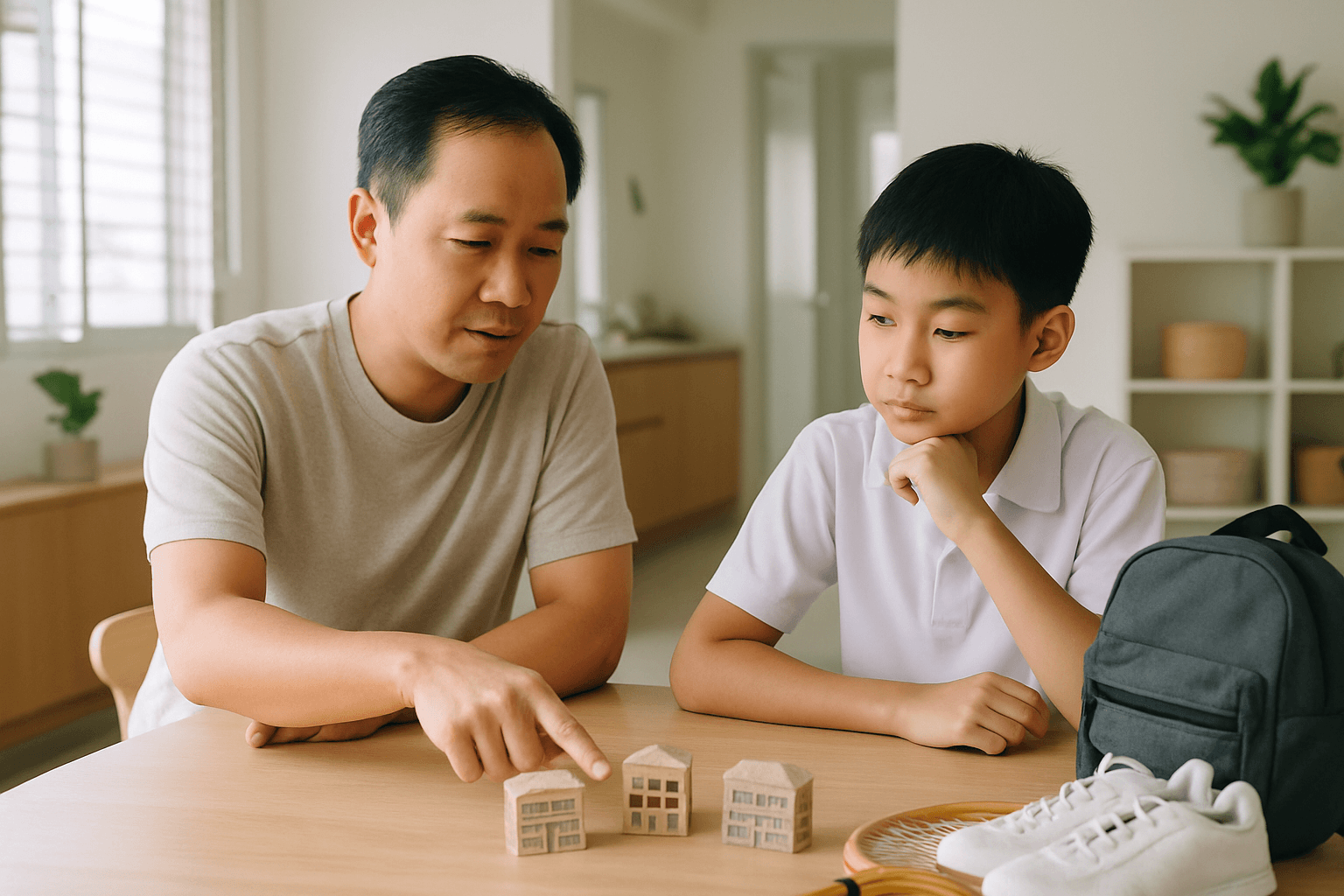
If your child is applying through DSA, build the backup list early. The goal is not to collect school names. It is to choose a small number of secondary school options your child could still enter through the normal Secondary 1 route and would honestly be willing to attend. This guide shows how to do that without overcomplicating the process.
What is a backup secondary school list in a DSA application?
A backup secondary school list is your family’s real Plan B. The schools on it should be ones your child could still enter through the normal Secondary 1 route and would genuinely be willing to attend.
A backup secondary school list is your family’s real Plan B if the DSA route does not work out. It is not a comfort list or a few respectable names added at the last minute. It should contain schools your child could plausibly enter through the normal Secondary 1 posting route and would still be prepared to attend.
That matters because DSA is only one route into secondary school. Even if your child is aiming for a preferred school through sports, music, leadership, or another talent area, daily life after posting still has to work. If a school looks acceptable only on paper, but your child would resist going there from Day 1, it is not a true backup.
A useful way to think about it is simple: a backup school should still feel workable when the emotions settle. If you want the bigger picture first, start with Direct School Admission Singapore: A Practical Parent Guide. If you are worried that an unsuccessful attempt might hurt the normal route, see Does a DSA Rejection Affect Normal Posting?.
How many DSA schools did you apply to?
You may look at the All About DSA thread http://www.kiasuparents.com/kiasu/forum/viewtopic.php?f=48&t=157 or http://www.moe.edu.sg/education/admissions/dsa-sec/ While for the intention and selection criteria, you may look up secondary schools that offer DSA as each of them has a different one. List of schools offering DSA http://www.moe.edu.sg/education/admissions/dsa-sec/participating-schools/
Singapore Secondary School short listing for DSA
This is an online workbook to help you shortlist secondary schools for DSA. You may shortlist secondary schools by DSA, location and more: https://public.tableau.com/app/profile/sg.parent/viz/SingaporeSecondarySchoolSearchDSA/Search Please view these workbooks from a computer and not mobile device (may not not display in full). Will work towards updating them yearly.
How many backup schools should parents shortlist?
There is no fixed official number, but many families can compare 3 to 5 schools properly. The goal is a short list that still gives real choices if DSA does not work out.
There is no fixed official number in the source guidance, so the practical answer is to keep the list small enough to compare properly and wide enough to avoid panic later. For many families, about 3 to 5 schools is a sensible working shortlist.
That is usually enough to cover a balanced mix: one school that feels a bit more ambitious but still plausible, one or two schools that look broadly realistic, and at least one option your child would accept without daily resistance. If you shortlist only two schools and both are highly aspirational, the backup plan is weak. If you shortlist eight or nine but nobody has properly checked commute, school type, or culture, the list becomes noise.
A good rule is this: choose the smallest list that still gives your family real choices. Parents often feel safer with a long list, but in practice a shorter list that has been genuinely researched is far more useful. For a broader overview, see How DSA Fits Into the Secondary 1 Posting Process.
What goes into choosing a suitable Secondary School
Saw this being shared in the parents groupchats. https://www.thewackyduo.com/2022/11/how-to-choose-secondary-school-guide.html https://i.imgur.com/fDkJSy6.png\"> https://www.thewackyduo.com/2022/11/how-to-choose-secondary-school-guide.html It's time to choose a secondary school. Choosing a secondary school is a completely different process than primary school. One tends to choose a primary school based on distance or affiliation. Picking a secondary school is a different ball game. Grades play a
How many DSA schools did you apply to?
Why go the DSA route if kids are definitely going to do well in psle? Is DSA about using cca to get to the sec school? Am I missing something here?
Have More Questions?
Get personalized guidance on schools, tuition, enrichment and education pathways with AskVaiser.
Try AskVaiser for Free →What makes a good DSA backup school choice?
A good backup school is one your child could plausibly enter and would still be comfortable attending. It needs to make sense academically, practically, and emotionally.
A good backup school is realistic to enter and realistic to live with. Both parts matter. A school is not a good backup just because it seems easier to get into, and it is not a good backup if your child would reject it the moment DSA fails.
Start with likely posting realism, then test daily fit. MOE’s parent-facing guidance and Schoolbag’s secondary school choice considerations both push parents to look beyond reputation and consider whether the school suits the child’s learning, development, interests, and needs. In practical terms, that means checking whether the school environment fits your child, whether the journey is manageable, and whether the school still supports one or two important interests if DSA does not happen.
For example, one school may sound stronger in conversation but require a long commute and early reporting for CCA. Another may have a less talked-about name but be nearer home, more comfortable in culture, and still offer a solid sports or arts environment. For many children, especially those already balancing studies and a demanding talent area, the second school is the better backup.
Insight line: the best backup school is not the most impressive one. It is the one that still works in real life. For a broader overview, see Does a DSA Rejection Affect Normal Posting?.
2010 DSA(Direct School Admission)
What schools is your child aiming for? Remember, your child MUST want to do the DSA and go thru the process. Do not force your child to go for certain schools. Respect your child. That's v important, so that you don't waste time in an already very busy PSLE year - apply for a school, get offer, then in the end, your child don't really want it? I've heard many of such.
2008 DSA(Direct School Admission)
[quote]How will we be able to tell which sports is favored by a particular school under DSA? Is such info published?[/quote] Yes, each school has its own preference and they are normally published on the schools' websites. DSA is not only for Sports or Music talents, if your child is good academically throughout the years (esp P4 - P6), then, you can also try for DSA at some of the top schools. Each school has their own entrance tests and interviews. Independent schools can take in up to 50% of
Should backup schools be safer choices or schools similar to the dream school?
Neither extreme works well. The strongest backup list usually mixes at least one safer, workable option with one or two schools that still share important features with the child’s preferred environment.
Use a mix. If every backup school is chosen only because it seems safer, the list may reduce admission risk but create a fit problem. If every backup school is basically a copy of the dream school, the list may still be too risky to rely on.
A stronger shortlist usually includes at least one more secure, clearly workable option and one or two schools that preserve what matters most about the preferred school. That shared feature might be a co-ed or single-sex setting, a strong culture in the child’s interest area, a similar pace of school life, or simply a commute your child can handle.
For example, if your child is applying through DSA to a school known for sports, one backup school might still have an active sports culture, while another might be chosen because it is close to home and easier to manage if school life becomes demanding. You do not need to recreate the dream school. You do need to protect the things your child cares about most.
Insight line: backup schools should lower risk without destroying fit. For a broader overview, see Is a DSA Offer Binding? What Parents Commit To.
What goes into choosing a suitable Secondary School
Hi there, Recently a relative asked me how I choosed my kid’s Secondary School and I kind of got a shock, I had no answer. It was simply just based on the results. My relative came then with a list of important factors that he thought would be helpful to help his kid cope with the stresses of school. I thought that I would help him make this post to help him make a better decision (the kid will be going into the Secondary School in next year). So here goes, considering grades what else should he
How many DSA schools did you apply to?
DSA interview & tests are held during Prelim period, apply for too many schools might give the kids a lot of stress.[/quote]Thanks for advise. My ds apply under sport domain ... interview & tests finish quite early .... he seem to enjoy DSA as he got excuse to play more time...
How do you compare secondary school options without getting fixated on brand names?
Shift the comparison from prestige to daily fit. School type, culture, commute, and suitable pathways usually matter more than brand name once your child is actually enrolled.
Compare the school your child will actually attend every day, not just the name people recognise. Reputation can be one factor, but it should come after you have checked fit.
A practical comparison looks at school type, culture, travel time, and whether the child still has access to pathways or activities that matter. Is the school co-ed or single-sex? Faith-based or secular? Does the atmosphere feel highly competitive, more balanced, or more structured? Can your child imagine settling there? Schoolbag’s guide on choosing a secondary school is useful because it shows how open houses and first-hand impressions often reveal more than reputation alone. Schoolbag’s piece on different pathways is also a good reminder that there is no single “best” route to success.
What many parents overvalue is brand. What they often undervalue is whether the child will settle, cope, and participate. If two schools seem broadly similar on paper, the better backup is usually the one your child can picture belonging to more easily.
Insight line: parents compare reputations, but children live the routine.
What goes into choosing a suitable Secondary School
Yes. (SJI and ACSI ) IB schools also offer IB to Sec 4 students, after their O-level. In fact, both SJI and ACSI already started inviting DSA applications to Sec 4 students, who are interested in joining them in IB (Year 5). The DSA exercise application is already open. We have reached towards the end of May. Time passes by so fast ! Take note of the closing date due, all 2023 Sec 4 students interested in DSA. If u are really interested in IB schools, not so much keen on the A-level Junior Colle
2011 Request for Advice on Selecting Secondary Schools
SCGS DSA via balletvery strong & powerful. CGS got ballet ? given a choice, i will choose SCGS over CGS Secondary, due to privilege for future granddaughter to enter SCGS Primary school - 30 yrs later down the road. Bypass all those sweating in ballot < 1km. 30 yrs later - anything can happen. Things keep on changing. 30 yrs from now, may not even have phase 2B nor phase 2C anymore… can enter only via Phase 1 and 2. Some schools already happening. example: Ai Tong don’t need PV, no phase 2B. CGS
What practical factors should go into a backup list besides academics?
Besides academics, check commute, school type, school culture, and whether the school still supports the subjects, programmes, or routines your child would care about.
Commute is usually the first factor families underestimate. A school can look good on paper but become draining if the child is travelling a long distance every day, especially with early assemblies, afternoon programmes, or demanding CCA schedules. If a commute looks borderline, test the actual journey during school-travel hours rather than guessing from a map.
School type also matters more than parents sometimes admit. Some children are clearly more comfortable in a co-ed setting, while others respond better to a single-sex environment. The same goes for faith-based versus secular schools. These are not minor details if your child may spend four or five years there.
Programme and subject fit should be checked early too. School offerings differ, so look at school websites and relevant MOE pages such as MOE’s information on electives to get a sense of how options can vary, then confirm what a specific school actually offers. You are not trying to find every possible programme. You are checking whether one or two important interests can still be supported if DSA does not happen.
A useful parent test is this: if this becomes the final school, will daily life feel workable from Term 1 onward?
How should parents talk to their child about backup schools?
Talk about backup schools as sensible options, not second-best outcomes. Children are more likely to accept the process when they feel these schools were chosen for fit, not as punishment.
Present backup schools as real choices, not consolation prizes. Children usually resist backup planning when the message sounds like, “This is where you go if you fail.” They respond much better when parents frame the list as sensible planning and a way to keep good options open.
The wording matters. Instead of saying, “This is just in case you do not get in,” try, “We are choosing schools where you could still learn well and have a good school life.” That shifts the conversation from status to fit.
It also helps to involve your child in the comparison. Visit open houses if possible, read school materials together, and ask practical questions after each school: Can you imagine yourself there? What feels tiring? What feels comfortable? What would make school life better or harder? If your child strongly rejects a school after a serious look, do not dismiss that too quickly. It may still stay on a longer discussion list, but it is a warning sign that it may not work as a final backup.
Insight line: a backup school should feel like an alternative path, not a downgraded identity.
What mistakes do parents commonly make when choosing DSA backup schools?
The biggest mistakes are choosing only by prestige, delaying backup planning, ignoring commute and daily routine, and listing schools the child would never willingly attend.
The most common mistake is choosing by prestige first and fit later. That often produces a list of schools adults admire but the child may not realistically enter or willingly attend. Another common mistake is treating DSA as likely enough that backup planning can wait. By the time outcomes are known, emotions are higher and rushed choices feel bigger than they need to.
Parents also regularly underestimate daily logistics. A school may sound attractive until you factor in a long commute, early reporting times, a demanding CCA culture, or a school environment the child does not warm to. Another trap is choosing schools that satisfy adult expectations more than the child’s real needs. That is especially risky for children who are sensitive to transitions or very attached to one dream school.
Some families also overfocus on old entry reputation and undercheck present-day suitability. A better order is to use realism as a first filter, then make the final comparison based on fit. This KiasuParents article is not official guidance, but it reflects a useful parent truth: children cope better when adults keep perspective and do not tie their worth to one school outcome.
Insight line: a backup school only works if your child can picture walking through its gates.
2010 DSA(Direct School Admission)
How are you going to prepare for DSA,what schools are you going to apply for?Write your plans here
2010 DSA(Direct School Admission)
DSA is not that time consuming. Essentially there are just the following steps, for most schools: 1. Online application: Have your results and awards on hand for easy reference. 2. Preparation of portfolio: Photocopy and certify your results, awards, certificates etc as required by the school. Check with the school for their requirements. 3. Submission of portfolio to school: Some schools ask you to bring it with you during the interview, some schools require you to submit it before the intervie
What if my child gets a DSA offer and also a school through Secondary 1 posting?
Do not assume both options can be held automatically while you decide. Read the official instructions on the DSA and Secondary 1 posting outcomes carefully and clarify any uncertainty immediately.
Do not assume both options can simply be kept open while you decide later. DSA and Secondary 1 posting are separate pathways, so the right next step is to read the instructions and timelines on your child’s outcome documents very carefully before responding.
Start with MOE’s explanation of how Secondary 1 posting works, then compare that with the DSA outcome letter and any instructions from the school. If anything is unclear, such as whether accepting one route affects the other or what action is needed by when, clarify it immediately with the relevant party instead of relying on hearsay from chats or forums.
If you want a fuller explanation of how the routes interact, the most useful follow-ups are How DSA Fits Into the Secondary 1 Posting Process and Is a DSA Offer Binding? What Parents Commit To. This is one stage where being very literal with the paperwork matters.
2009 DSA(Direct School Admission)
If your child is waitlisted or has a confirmed place in a school during DSA, he will be given a DSA School Preference Form in October, during which he can indicate his choice of school. Say for example your son was offered waitlist in School A and has no other confirmed offers. He can then indicate School A in his Form if he chooses to. This form must be submitted in October. When his PSLE results are released, he will be informed if he was successful in getting a place in School A. If he is not
2010 DSA(Direct School Admission)
Hi, my child is thinking of not continuing her secondary education in a secondary school affiliated to her primary school, and she want to apply DSA via sports in other schools. For example if she is not successful in the DSA application, will she be given the priority for admission to her affiliated school in S1 posting? Many thanks! Cheers!
Have More Questions?
Get personalized guidance on schools, tuition, enrichment and education pathways with AskVaiser.
Try AskVaiser for Free →