
How Far Is Too Far for a DSA School? Commute, Travel Time and Training Load
A practical guide for parents weighing daily travel, after-school commitments, and whether the routine will stay manageable over time.
There is no official distance or travel-time rule for a DSA school commute in Singapore. What matters is whether your child can manage the whole routine of travel, school, training or CCA, homework, meals, and sleep without chronic fatigue, repeated rushing, or a steady drop in energy and performance.
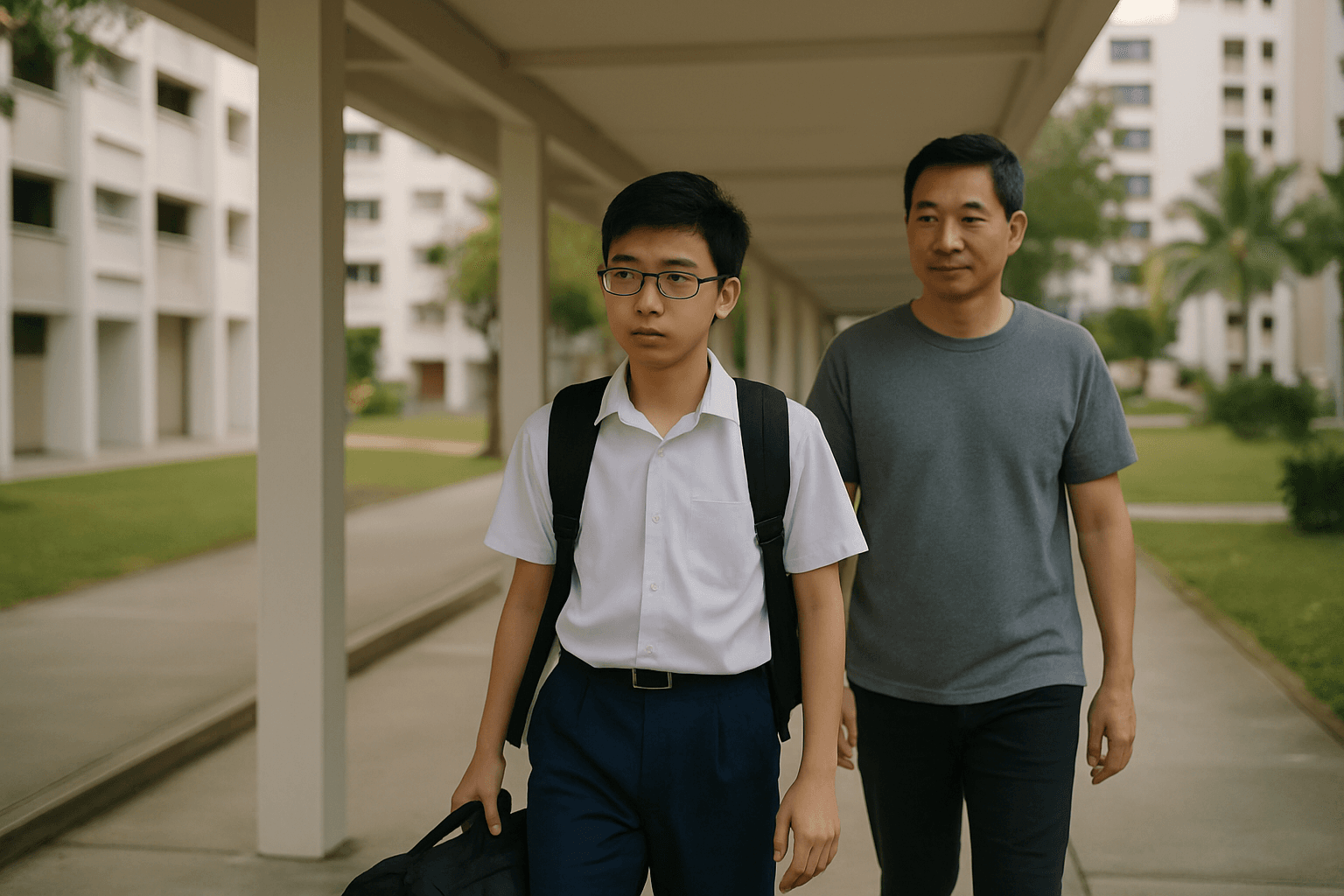
A DSA school is not automatically too far because it is across Singapore. It is too far when the full routine stops being sustainable. For most families, the real test is not the first few enthusiastic weeks. It is whether the child can still manage the commute, schoolwork, training, sleep, and family logistics months later without becoming constantly tired or rushed.
What is the real question parents should ask about a DSA school commute?
Ask whether your child can sustain the whole routine of travel, school, training, homework, and sleep, not just whether the school looks far on a map.
The real question is not "How many kilometres away is the school?" It is "Can my child live this full day, repeatedly, without burning out?" That means judging the commute together with school hours, training or CCA, homework, meals, bedtime, early reporting, and what happens when the day does not go smoothly.
This matters because DSA is not just about gaining entry to a preferred school. It also involves a real commitment to develop the child's talent, which is why parent discussions about fit and commitment matter so much. If you want a broad refresher, see our guide to Direct School Admission Singapore. If you are already close to a decision, it also helps to read Is a DSA Offer Binding? What Parents Commit To. External explainers such as this KiasuParents DSA Q&A and this SmileTutor article on deciding whether to opt for DSA make the same broad point: the child must be ready for the commitment, not just attracted to the school name.
A useful rule of thumb is this: judge the whole day, not the map distance. A school can look ideal on paper and still be the wrong fit if every weekday becomes a race against time.
2010 DSA(Direct School Admission)
DSA is not that time consuming. Essentially there are just the following steps, for most schools: 1. Online application: Have your results and awards on hand for easy reference. 2. Preparation of portfolio: Photocopy and certify your results, awards, certificates etc as required by the school. Check with the school for their requirements. 3. Submission of portfolio to school: Some schools ask you to bring it with you during the interview, some schools require you to submit it before the intervie
How many DSA schools did you apply to?
Why go the DSA route if kids are definitely going to do well in psle? Is DSA about using cca to get to the sec school? Am I missing something here?
How much travel time is usually manageable for a DSA school commute?
There is no official cutoff, but shorter, simpler, and more predictable journeys are usually easier to live with than longer or more complicated ones.
There is no official minute-based cutoff in the available guidance. In real life, shorter and more predictable journeys are usually easier to sustain, especially for younger children, students who still need close supervision, or children whose DSA area comes with frequent after-school sessions.
What many parents miss is that distance and difficulty are not the same thing. A direct 25-minute bus ride may be quite manageable because the child boards once and arrives. A 35-minute route with two transfers, a long walk, crowded platforms, and no seat can feel much heavier by Friday. A 45-minute one-way trip may still be workable for an older, independent child if the route is straightforward and training is not too frequent. But even a 30-minute trip can become draining if the child must leave home very early, carry bulky sports gear or an instrument, and return during the evening peak.
Predictable usually beats short-but-chaotic. When comparing schools, do not ask only how long the route looks in an app. Ask how it will feel on a rainy school day, with a tired child and a heavy bag. For a broader overview, see Is Direct School Admission Worth It For My Child?.
2009 DSA(Direct School Admission)
Any one needs to know more about DSA school preference exercise can go moe web, dsa. Can read up the frequent-ask question, it explains very clearly.
2010 DSA(Direct School Admission)
It depends on the sec school to set the points. For most schools, just making the express stream cut-off points will do (for some schools, this is 188, for some, they take 200). But there are schools that set their own requirement. eg, a friend's son was asked to make 220 as a condition for his dsa offer under sports. And another was given the condition of 225 under chinese orchestra(this child actually didn't make that 225 in the end and had to apply for another school under s1 posting).
Have More Questions?
Get personalized guidance on schools, tuition, enrichment and education pathways with AskVaiser.
Try AskVaiser for Free →How does a longer DSA school commute affect sleep, homework, and energy?
Longer travel quietly takes time and energy away from sleep, homework, meals, and recovery, especially on training days and late-dismissal days.
A long commute usually does not cause one dramatic problem. It creates small daily losses that add up. The child wakes earlier, leaves with less margin, gets home later, eats later, starts homework later, and sleeps less. One late day may seem fine. Five days of the same pattern can feel very different.
For example, imagine a child who leaves home before 6.30am for a distant school, stays for lessons, then has training, and reaches home around 7.30pm. Dinner, shower, and homework then happen in a narrow window. If there is revision, project work, or even simple downtime needed to settle, bedtime gets pushed later. That is often when parents start noticing slower mornings, irritability, and weekend crash-outs.
What parents often underestimate is the evening squeeze. They budget mentally for the morning trip, but the harder part is what is left of the day after the child gets home. If the routine works only by cutting sleep, rushing meals, or doing homework while exhausted, it is usually not a stable routine. For a broader overview, see Is a DSA Offer Binding? What Parents Commit To.
Should DSA be scrapped?
I think it is a matter of: 1. How much you really want to enter that institution? 2. How much you like that CCA in order to perform well all the time? If you really want something, you will make it happen for yourself despite all trials along the way. If you are really good in the CCA, it should be a breeze to be contributing. If you cannot answer the above 2 questions sufficiently to convince yourself, do not DSA, it means commitment and this requires one to put in great responsibilities.
2010 DSA(Direct School Admission)
How are you going to prepare for DSA,what schools are you going to apply for?Write your plans here
Why does training load often matter more than distance alone?
Training load often matters more than distance because repeated late sessions, rehearsals, and competition periods are what usually make the routine hard to sustain.
Because for many DSA students, the hardest part is not getting to school in the morning. It is the repeated after-school commitment. In some schools, DSA students are placed in a related CCA or programme, with opportunities for further development, performances, competitions, leadership activities, or other structured enrichment. You can see this reflected in student-facing explainers such as Schoolbag's article on lesser-known DSA areas and its DSA Q&A article.
That is why a school that seems "not too far" can still become very hard to manage. A sports DSA student may have several training days a week, plus competition periods. A performing arts student may face extra rehearsals before a show. A leadership or special programme student may need to stay back for additional sessions or events. In those cases, the strain usually comes from repeated late finishes, not from map distance by itself.
A practical comparison helps here: a 25-minute commute with four late training days can be tougher than a 45-minute commute with only one lighter CCA day. When parents judge only the route, they often miss the schedule that actually drives fatigue. For a broader overview, see How to Build a Backup Secondary School List When Applying for DSA.
2010 DSA(Direct School Admission)
By the way, if any of you want to know about DSA to any specific schools, just ask here, lah - everyone can share.
2010 DSA(Direct School Admission)
Anyone has update on DSA tea sessions from the various schools? What did you hear from these sessions and do you think they were useful in helping you making your decision?
What should parents check in the school's actual schedule before deciding?
Check the programme's real weekly pattern, including late days, extra sessions, peak periods, and how often your child is expected to stay back beyond normal dismissal.
Look for the real weekly rhythm, not just the school's official start and end times. Ask how often students in that talent area usually stay back, how late they tend to finish, and whether there are heavy periods in the year when the load increases. The published timetable may show lesson hours, but it may not fully reflect training blocks, rehearsal seasons, competition preparation, or off-site events.
In practice, parents usually want to clarify whether Sec 1 students in that DSA area are expected to join a specific CCA, whether extra sessions are common before major events, whether early reporting happens, and whether students may need to travel to external venues. These are not official checklist items from MOE. They are simply the details families commonly compare when deciding whether the arrangement is workable.
This is also where family logistics become real. A schedule that looks manageable in a normal week may become difficult if one parent travels for work, there are younger siblings to fetch, or there is no realistic backup plan for rainy days and late dismissals. The question is not whether the school has a timetable. It is whether your family can live with that timetable consistently.
2009 DSA(Direct School Admission)
[Moderator's note: Topics merged.] Hi there, I am wondering if anyone out there has kids who have gone thru DSA via sports? My P5 son is in his pri school table tennis school team. I am thinking whether to let him try DSA next yr as I heard it can be quite taxing to cope with both school work and training. Pls advise. Thanks!
How many DSA schools did you apply to?
You may look at the All About DSA thread http://www.kiasuparents.com/kiasu/forum/viewtopic.php?f=48&t=157 or http://www.moe.edu.sg/education/admissions/dsa-sec/ While for the intention and selection criteria, you may look up secondary schools that offer DSA as each of them has a different one. List of schools offering DSA http://www.moe.edu.sg/education/admissions/dsa-sec/participating-schools/
What practical questions should parents ask the school, teacher, or coach?
Ask questions that uncover the real weekly burden, especially usual finishing times, extra-session patterns, early reporting, and busy-season changes.
Ask questions that reveal what a normal week actually feels like. Parents often learn more by asking, "What time do Sec 1 students usually leave school on training days?" than by asking, "What are your school hours?" In the same way, "How does the schedule change before competitions or performances?" is usually more useful than simply asking whether extra sessions exist.
Other useful questions include how many days a week students usually stay back, whether attendance at extra sessions is generally expected, whether there are early-morning reporting times, and whether students need to travel for external events. If transport is a concern, ask how students usually get home after late sessions and whether there is any realistic support if dismissal runs late. These are example questions, not formal DSA requirements, but they help move the conversation from brochure language to lived reality.
If you are close to accepting an offer, pair these questions with the commitment angle discussed in Is a DSA Offer Binding? What Parents Commit To. Families rarely regret asking for a clearer picture before committing. They do sometimes regret assuming the published schedule tells the whole story.
2009 DSA(Direct School Admission)
For Sports DSA, it’s important to check if your child’s CCA is in the DSA list of sports of the school you’re applying for. I had a friend whose daughter was an athlete and she intended to apply through athletics DSA. However that year, the school of her choice was NOT looking to take in athletes via DSA, although they had done so in previous years. Something to take note of.
2009 DSA(Direct School Admission)
Give your child the opportunity to try DSA but ensure they have realistic expectation and not to depend on DSA to gain entry into the choice school. From my understanding with parents who tried DSA CCA with various school, each school has its own criteria, expectation and preferred sports for DSA application including quota. The competition among students depends on the number of applications. If the student was awarded medal in National Level sports and the sport is a niche or preferred sport o
What warning signs show the DSA commute may be too much?
Repeating signs such as chronic tiredness, rushed meals, irritability, lateness, falling focus, or dread of the routine usually mean the load is too high.
Look for a pattern, not one bad week. If your child is regularly exhausted, rushing or skipping meals, becoming more irritable, falling asleep on the journey, arriving late more often, or struggling to finish homework without cutting sleep, the routine may be too tight.
Parents also sometimes miss the softer signs. A child who used to enjoy the talent area may start dreading school because the travel feels endless. Weekend recovery may become unusually heavy. Motivation problems are not always motivation problems. Sometimes they are fatigue problems.
Do non-GEP student has much chance with DSA
Side track … but since we are talking about coming DSA . Is there any parents sending his/her child for DSA preparation course or have ever sent their kids for such course in the past? Any school to recommend and how much do they charge? Is it adviseable to attend such course?
2010 DSA(Direct School Admission)
My personal experience on DSA, think twice before you accept. We decided to try DSA route because our daughter’s performance is not consistent and she is in the range of above average. We gathered that should would get anywhere between 240-260. We saw our niece went through a bad experience when she got 240+. Where the girl can only be happy to be in the next best range, as the top ranges 255++. And staying in Bt Timah and wanting her to waste little in travel time means that her risk is high to
When can a faraway DSA school still be a good choice?
A faraway DSA school can still be a good choice if the programme is a strong fit, your child is committed, and the weekly routine remains realistic.
A farther school can still be the right choice when the talent fit is genuinely strong and the daily routine is still realistic. That usually means the child truly wants the programme, the route is reliable, the family can support the arrangement when needed, and the weekly load still leaves enough room for sleep and schoolwork. Distance alone should not automatically rule out a school.
For example, a direct MRT route to a school that strongly matches the child's sport, music, or leadership profile may be worth it if the child is motivated and the programme demands are manageable. The same distance may be a poor fit if the child is lukewarm about the talent area, still needs an escort both ways, or already struggles with long days. That is why this decision links closely to the broader question of whether DSA is the right path at all, which we cover in Is Direct School Admission Worth It For My Child?.
A simple way to think about it is fit versus friction. Fit is how strong the programme match is for your child. Friction is the weekly cost of getting through the routine. A faraway DSA school can work when the fit clearly outweighs the friction in ordinary weeks, not just ideal ones.
2010 DSA(Direct School Admission)
Hi, I hope someone can enlighten me on DSA. I've completely no idea what it is. :? How does it work and is it related to CCA ? My boy is in P4. Thanks in advance.
2009 DSA(Direct School Admission)
DSA students have always had to meet the Express requirements of the school from when the scheme was first started. The Express requirements of most schools is 200.
How can families test whether the DSA commute and training load are realistic before committing?
Test the full routine in real conditions, including peak-hour travel and a likely late day, so you can judge the schedule as your child would actually live it.
A trial run is one of the best ways to turn guesswork into a real decision. If possible, do the journey at the actual reporting time, not at a convenient hour. Then imagine a late training day as well. Include the walk to the bus stop or MRT station, peak-hour crowding, and what the child would be carrying. If the DSA area involves sports gear, an instrument, or project materials, test with something similar.
After the trip, keep going with the simulation. Ask what time your child would realistically reach home, eat dinner, shower, start homework, and sleep. If one parent usually handles pickups, think through what happens when that parent is unavailable. If the family depends on public transport, picture rainy days, delayed trains, and the evening rush. Maps show distance. Trial runs show friction.
If the trial already feels tight, the real school term will usually feel tighter. That does not automatically mean the school is impossible. It means the strain should be taken seriously before you commit. If you want a parallel plan in case the logistics do not add up, our guide on how to build a backup secondary school list when applying for DSA can help.
Should DSA be scrapped?
No real data, this is my estimation (from my point of view, it’s very conservertive). Guess how many students apply for DSA every year, they need go through different tests and interview for each school they apply for. All these need a lot manpower/material involvement , it’s not free. After PSLE, many parents find their children actually can go into better school,then raise many appeal cases (you can refer to the forum), all these need manpower to handle as well.No need to mention how much mone
2010 DSA(Direct School Admission)
Invariably at each year's open houses, such questions are asked and answered wrt vacancies By the way, the admission is based on merit and exceptional ability demonstrated, not to fill a quota Each independent schools has their own selection criteria, a desire to maintain a certain type of culture and environment, hence each school is unique and all their vacancies will be filled by the time of S1 posting. The DSA process can be viewed as a form of training for the kids - go strive for what you
Have More Questions?
Get personalized guidance on schools, tuition, enrichment and education pathways with AskVaiser.
Try AskVaiser for Free →