
Is It Worth Travelling Farther for a GEP School in Singapore?
How to weigh learning fit against sleep, travel strain, and everyday family life.
A farther GEP school can be worth it if your child genuinely needs that learning environment and the routine remains manageable over time. If the commute regularly harms sleep, mood, concentration, or family life, a nearer mainstream or higher-ability option is often the better decision.
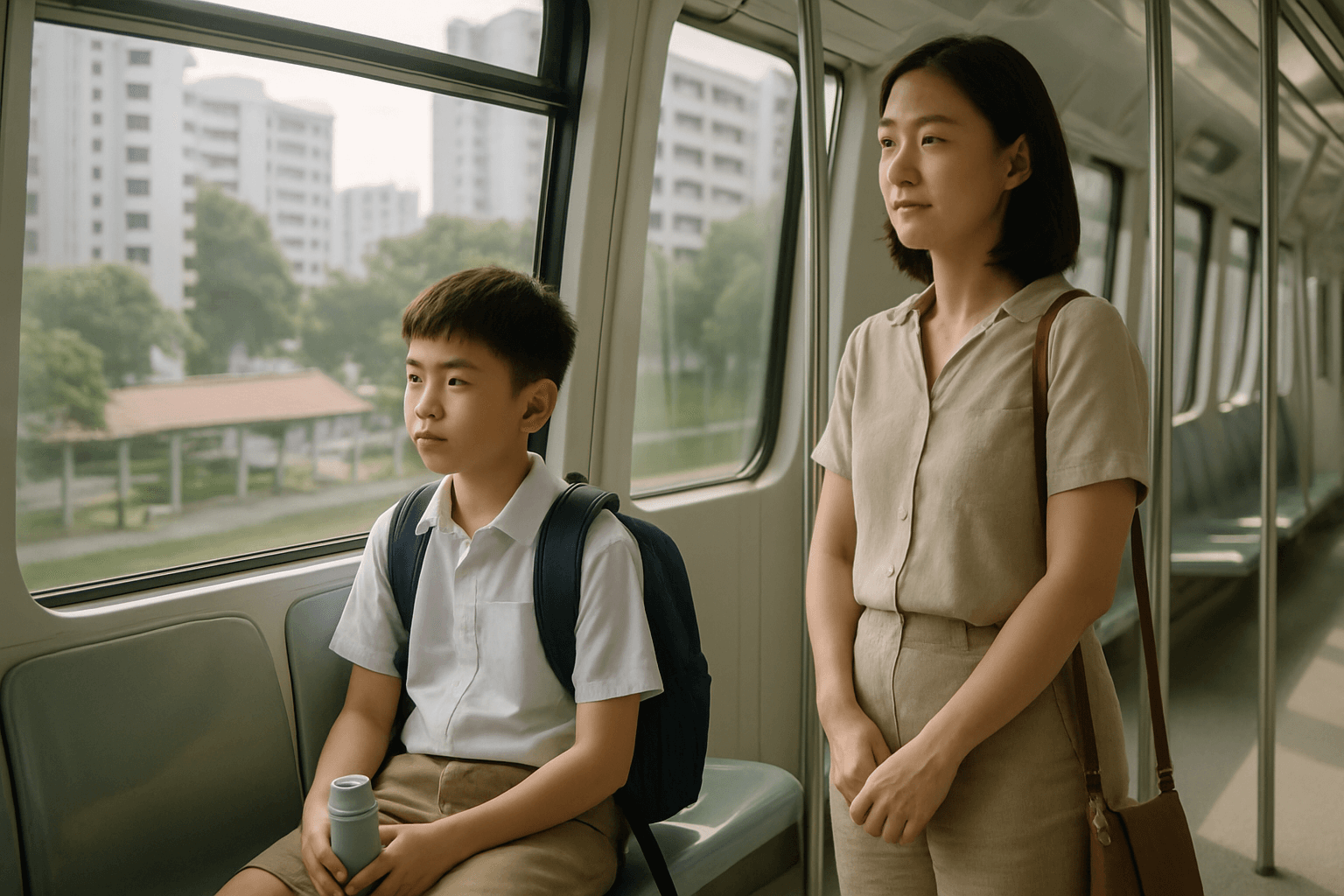
Sometimes, yes, but only if the learning fit is clear and the commute is sustainable day after day. If the extra travel regularly costs your child sleep, calm mornings, recovery time, or family stability, a nearer school is usually the better choice.
The real question is not "How far will we go for a more prestigious school?" It is "Will this child benefit enough from this environment to justify the strain of getting there every day?" That matters even more now that MOE is widening support for higher-ability learners across primary schools.
What is the GEP, and why do some parents consider travelling farther for it?
Parents consider a farther GEP school because they want a better learning fit for a child who may need more stretch, not because distance or school name automatically means better education.
The Gifted Education Programme, or GEP, is MOE's specialised provision for intellectually gifted students. In practical terms, it is meant for children whose learning needs may not be well met by the usual classroom pace. MOE describes it as an enriched programme, not simply a faster one. That means more depth, more breadth, more inquiry, and a learning environment designed around higher-ability learners rather than just extra worksheets. If you want the basics first, start with our parent guide to the Gifted Education Programme in Singapore or MOE's own GEP overview.
Parents consider travelling farther because GEP has historically been offered in only a small number of primary schools. If a child is selected, the nearest suitable school may not be near home. That is why distance becomes part of the decision.
The most useful way to frame this is simple: GEP is not automatically a "better school" option. It is a different learning environment. A farther GEP school may be worth discussing when a child is consistently under-stretched, enjoys complex discussion, and responds positively to deeper work. If your child is already thriving in a strong nearby school, the case for a long commute is much weaker.
A common mistake is to treat the extra distance as proof of quality. It is not. The only reason to accept more travel is if the environment itself is meaningfully better suited to your child.
All About GEP
Parents that pay thousands of dollars to try to get their children into GEP: Yes, GEP is a coveted programme. Yes, GEP allows your dd/ds to be able to have a higher chance of getting into an IP school. But bear in mind that the programme is immensely challenging. Your child will have to juggle tonnes of projects and lots of HW and at the same time prepare for the all-important PSLE. And if you PUSH for your child to get into GEP by loads of tuition classes, ask yourself: Will he/she be cope? Wil
Is GEP really necessary?
Is GEP really necessary? If it’s designed to cater to kids with special needs, yes. If the intention is to groom leaders or specialists in a developing country to raise the quality of the human resource, yes. But Singapore has progressed beyond this need. Unfortunately, the GEP is used as a guaranteed passport to an elite education. This is the grand prize that pushes all parents to overdrive. So much is invested in so few, and these few are given the best tools and resources. And at the end of
How does GEP compare with mainstream primary school and MOE's broader higher-ability support?
GEP offers a more specialised learning environment, but MOE is widening higher-ability support across primary schools, so a farther GEP school is not the only way to stretch a strong learner.
GEP is a more specialised environment, but it is no longer the only way for a strong learner to be stretched. Under the older model, selected pupils learned in an enriched setting with more depth, more open-ended work, and peers with similar learning profiles. MOE makes the important point that this is not just acceleration through the same syllabus. If you want a fuller comparison, see GEP vs Mainstream Primary School and GEP vs High Ability Programme.
Mainstream school can still be the right choice for many bright children. Some children are advanced but do well with a more balanced pace, a familiar school community, and shorter travel. A strong local school with teachers who can extend the child appropriately may meet the need well enough without the cost of a long daily commute.
This matters even more now because MOE has announced broader support for higher-ability learners across primary schools, including school-based programmes and after-school modules from Primary 4 to 6. You can see that direction in MOE's press release on strengthening support for higher-ability learners and its enrichment model page. In plain language, that means some children may be able to get more challenge closer to home than parents used to assume.
A useful parent lens is this: specialised schooling plus chronic fatigue is not automatically better than mainstream schooling plus healthy energy. The better option is the one that gives your child enough stretch without making everyday life unworkable. For a broader overview, see How Do I Know If GEP Is a Good Fit for My Child?.
All About GEP
Not sure if this is the case. My daughter was from a non-GEP school and upon receiving the GEP acceptance letter last year I went for a briefing by MOE and principals of the 9 GEP schools. In order to assess my daughter's chance of getting into 2 of the schools I actually enquired the number of their own students who got into the programme as places are offered to their own 1st. My daughter's school didn't fare too badly as compared to the 2 GEP schools...15 against 17 and 18. Considering the sm
All About GEP
Hi parents I had a look at MOE site on GEP. It seem to me GEP is rigorous, much more than IP. If I may, IP= academics + aptitude GEP = academics++ + aptitude The 2 academic pluses in GEP are: + width and + depth in the subjects studied. IP has 1 additional +, GEP has 3 additional +.
Have More Questions?
Get personalized guidance on schools, tuition, enrichment and education pathways with AskVaiser.
Try AskVaiser for Free →How does GEP selection work, and how hard is it to get in?
GEP selection has historically been highly selective, so parents should treat it as a possible option to evaluate later, not a family plan to build around in advance.
Historically, MOE has identified pupils for GEP through a 2-stage exercise in Primary 3, with selected students joining in Primary 4. That is the core structure parents should know, but it is best understood as the older model rather than a promise that every future cohort will follow identical details during the transition period. For the legacy process, you can read our explanation of the GEP selection process alongside the MOE overview.
It has also been highly selective. Reporting has commonly put the intake at around 370 to 400 pupils, roughly 1 percent of a cohort, under the older system, as noted in TODAY's timeline of how the GEP evolved. The practical takeaway is that families should not build transport plans, tuition schedules, or school-switch assumptions around an expected offer.
Parents often ask how to "get in". The more useful answer is that this has historically not been a parent application pathway driven by school branding. Identification has come through the national exercise. What helps more than prestige-chasing is a child who reads widely, thinks independently, and can perform naturally under normal school conditions.
One mistake parents make is letting the possibility of GEP dominate too many decisions too early. A good family plan should still work if no offer comes. If an offer does come, that is the point to evaluate the actual school, the actual route, and the actual cost to daily life.
All About GEP
Based on the following criteria: 1. Are you already in that GEP school; 2. Do you already have a sibling in that GEP school; 3. Distance from the GEP school; 4. The type of school the child was from (SAP, mission, or single-gender school) which is similar to the GEP school; The large majority gets their first choice. You yourself have to decide whether HCL is for your child. I think there are some schools that cannot drop HCL. Not sure whether this is still true. All the GEP schools now practice
Is GEP really necessary?
GEP is not a guaranteed passport to an elite education. There have been cases of students ending up in neighbourhood secondary schools. Also those who have not had their GEP status renewed and hence are not awarded EESIS. It is true though that there’s an unhealthy frenzy by parents to get into GEP thinking that it’s a guaranteed pathway to success in life. There was even a post by a forummer who thought being a GEPper guaranteed the student Officer status in the Army and a good career. It is th
What are the real advantages of GEP when a child is a strong fit?
The real advantages are better intellectual fit, deeper work, and a more matched peer group, but those benefits matter only if your child genuinely thrives in that kind of environment.
When the fit is right, the main advantages are better intellectual match, deeper classroom work, and classmates who may feel more naturally aligned. MOE describes the curriculum as enriched, which matters because the benefit is not simply "more difficult work". It is more depth, more breadth, more independent inquiry, and more room for unusual questions and ideas.
For some children, this removes a real mismatch. A child who finishes routine work quickly and disengages may become more interested when tasks are less repetitive and discussion is more challenging. Another child may not be especially fast, but may thrive on research, writing, problem-solving, and making connections across subjects. In those cases, the benefit is not just academic performance. It can also be relief, engagement, and a stronger sense of belonging.
But parents should be honest about what kind of child tends to benefit. A child who mainly enjoys getting top marks may not automatically enjoy a more open-ended environment. A child who is already anxious, perfectionistic, or easily drained may find the deeper workload harder than expected. For more context, see What Is the GEP Workload Like? and Is GEP a Better Fit Than Mainstream for My Child?.
A simple way to think about it is this: GEP is most valuable when it solves a learning mismatch. If there is no serious mismatch, the extra commute has much less to justify.
All About GEP
Part of the goal of some parents going for GEP schools from Primary 1 is to get their children into the GEP. It is not surprising that there are more kids in GEP schools getting into GEP than not. Some of these kids are drilled on a daily basis to prepare them for GEP since young. The question is, do you think your son is really gifted and deserving of the GEP? If so, then you should transfer him early so that he gets used to that environment sooner than later. If not, then you should consider o
All About GEP
for what it’s worth from the viewpoint of a 过来人, the GEP is not a measure of how smart or successful a kid is… there are just some aspects of GE kids that make them GE kids. if people think getting into GEP means getting a guaranteed ticket to success in life (defined as top universities, high paying jobs) then do think again. there are many from non GEP who do better, and get paid better. there are many in GEP who live very alternative lives. i think the main difference in GEP cohorts (in the p
What does a longer GEP commute usually change in everyday family life?
A longer commute usually squeezes sleep and flexibility, and it often adds friction to mornings, homework, meals, after-school activities, and family evenings.
A longer commute usually changes much more than the trip itself. It often means earlier wake-ups, less margin for delays, later arrival home, and a tighter evening for homework, meals, rest, and family time. What looks manageable on a map can feel very different when a primary school child has to repeat it five days a week.
For example, a child who used to wake at 6.30am for a nearby school may need to wake much earlier for a farther one. That can shorten sleep unless bedtime also shifts earlier. If the child reaches home later, dinner moves later, homework starts later, and the day can begin to feel like a race. Even if the child likes school, the routine may become noticeably more fragile.
Family logistics matter too. One household may cope well because the route is direct, a parent has flexible work hours, and evenings are kept simple. Another household may struggle with the same travel time because it involves multiple transfers, younger siblings, fixed office reporting times, or no reliable backup adult. The travel time alone does not tell the full story. The friction around the travel is often what wears families down.
This is what many parents underestimate. The question is not whether your child can survive the commute. It is whether your child can still enjoy school, learn well, and have enough energy left for ordinary family life because of it. For a parent-eye view of how GEP life can feel beyond the classroom, this KiasuParents article on common challenges is a useful secondary perspective. For a broader overview, see Why Singapore Is Moving from GEP to HAP.
All About GEP
Though we understand that it’s good to try… but the nearest GEP school from our home is Nanyang and the travelling time is approx an hour. The school bus will fetch her at 6am. We explained to her the pro and cons., and told her to make her decision.
All About GEP
I read many interesting concerns on the GEP ... Let me share some of my thoughts on these ... Why force your kids to a GEP if she /he is meant for it. Don't believe those crap training centre ..Let nature take it course My daughter is in P6 GEP at RGPS and had just completed her PSLE like all other 50K kids in her cohort. She is now enjoying herself with her fellow P6 GEP at the Sentosa UnderWater World. She was posted to RGPS from CHIJ Pri (Toa Payoh) in 2008. As a child , she was always more s
How much commute is too much for a Primary school child?
The commute is too much when it regularly harms sleep, mood, punctuality, focus, or family stability, even if the travel time sounds reasonable on paper.
There is no official distance rule that works for every child. The better test is whether the journey is sustainable over a full school term without hurting sleep, mood, punctuality, concentration, or home life. A 30-minute direct ride can be easier than a shorter trip with stressful transfers. A longer ride may be manageable for one child but draining for another.
Parents should look for repeated warning signs, not just one tiring day. If mornings are rushed almost every day, bedtime keeps slipping, the child becomes more tearful before school, or weekends are spent recovering from weekday fatigue, the commute is probably too heavy. Another red flag is when there is no time left to decompress after school and the child starts resisting homework, enrichment, or school itself.
It also helps to compare the child with their own baseline. If your child is already tired after a normal day in a nearby school, adding much more travel rarely improves life. If your child is energetic, independent, and clearly happier in a more challenging environment, a longer trip may still be workable. What matters most is not the kilometres. It is the child's daily energy budget.
A good rule of thumb is this: when the commute starts consuming too much of the energy needed for learning and recovery, it is too much, even if it still looks acceptable on paper.
All About GEP
Take 1 way school bus, ie only the home journey so you can still send them to school and they can sleep a little more. That's what we do. 1 way school bus cost almost same as 2 ways but sleep more important lah.
All About GEP
To me travelling distance is very important. I would prefer my kid to spend less than 20 min per trip is possible. For people who stay in the west, if you want to let a GEP boy continue SBGE in secondary school, the options are only NUHS and ACSI. HCI in Bukit Timah is still not as far as RI. But for ACSI I have some reservation about the influence of the rich kids…
How can parents make a far GEP school sustainable?
To make a far GEP school work, test the real journey, protect sleep, simplify the week's commitments, and set up backup transport plans before problems appear.
If you choose a farther school, treat the commute as a long-term routine to design carefully, not a short-term challenge to push through. Before accepting, do the real journey at school timing if possible. The route that seems fine on an app can feel very different when a child has to walk, wait, transfer, and arrive during the morning rush.
Once school starts, protect the basics first. Sleep usually matters more than keeping every enrichment class. If the first term feels tight, it may be smarter to trim non-essential activities and rebuild slowly than to keep an overloaded schedule out of habit. Families often discover that the school is manageable only after they simplify the rest of the week.
It also helps to build backup plans early. Ask practical questions before a problem happens. Who handles the trip if one parent has an early meeting? What if the child is unwell but not severely sick? What if the usual pick-up arrangement falls through? A routine that works only when everything goes perfectly is usually too fragile for a primary school child.
Check in with the child using concrete questions. Ask whether the trip feels tiring, whether there is enough time to eat and unwind, and whether mornings feel rushed. A child may love the classes but still be quietly exhausted by the logistics. The goal is not zero inconvenience. It is a routine that still leaves room for learning, rest, and normal family life.
All About GEP
I think that if she is keen then she should try. If she does not like it, can transfer back to mainstream. Heard that a GEP kid in DS school did transfer back to P5 mainstream early this year. For DS, it has been a difficult though enriching journey. In P4, he failed a test for a particular subject (which was alarming) and was not doing as well in another subject. We ended up enrolling him for enrichment classes, something that we might not have done if he had remained in mainstream. Fortunately
All About GEP
Perhaps you have missed out alot of discussion on this. Most people will not advocate training for GEP tests. Reason being if they can prepare themselves to get into the program, they may not be prepared to stay on in the program. Most times, getting in is a smaller issue than staying inside the program. So if you are confident about your kid, then don’t prepare your kid. But if you really want to, there are a few schools in SG touting that they trained children for GEP and they charge a premium
What are the common myths and misconceptions about GEP?
Farther is not automatically better, and a GEP offer is not automatically the right choice. Fit, sustainability, and wellbeing matter more than prestige.
Farther is not a quality signal. A longer trip only makes sense if it brings a meaningfully better learning fit that the child can sustain.
An offer is not an instruction to accept. Some children do just as well, or better, in a strong local school with a healthier routine. GEP is also not only for a narrow social elite. MOE has said pupils have come from a wide range of schools and backgrounds, and reporting has noted that about 45 percent of pupils in the programme over the past five years lived in HDB flats, as reported by The Straits Times.
The clearest correction is this: choose for fit, not fear of missing out. A school label cannot compensate for a routine that leaves a child tired, rushed, and unhappy.
All About GEP Schools
Which is better? Why? What do you think should be the selection criteria when choosing a GEP school? Appreciate your feedback
All About GEP
Thanks for your reply. I initially thought GEP is the shortest route to get into the Rafflesian schools as I know many Geppers are there.
What happens after Primary school for GEP students?
After Primary school, there is no simple guaranteed pathway. What matters most is whether the child has benefited enough from the environment to justify the years of travel.
Parents should think beyond Primary school, but not in a simplistic "GEP now, advantage forever" way. There is no single automatic path that makes every later decision easy. The more useful question is what your child will actually carry forward from the experience: stronger habits of inquiry, more confidence among similar peers, better self-understanding, or, if the fit was poor, fatigue and pressure.
Because primary gifted education is changing, it is especially unwise to justify a difficult three-year routine only on the assumption of future payoff. A child's next-step options will still depend on the child's strengths, interests, readiness, and overall Primary school experience. A child who thrives in a more intellectually demanding environment may continue to seek that later. A child who is bright but drained by the routine may need a better balance at the next stage.
The long view helps keep the decision honest. If the commute supports real growth without eroding wellbeing, it may have been worth it. If it turns the Primary school years into constant rushing and recovery, the school label alone will not make up for that. For broader context on where policy is heading, see Why Singapore Is Moving from GEP to HAP and MOE's announcement on strengthening support for higher-ability learners.
A good final question is this: when Primary 6 ends, what do you want your child to have gained besides a school name? The answer usually clarifies whether the commute is truly worth it.
All About GEP
If your child is selected for the Primary school GEP, I strongly recommended to go for it becos the selection process is very stringent n your child is deemed to be suitable for the program. The syllabus is also more challenging (initially its a bit tough but you will adapt to it) n it has a lot of advantages when you go up to Sec School. I also understand that Pri School GEP students have priority to enter top Sec Schools based on their GEP status via DSA.
All About GEP
Hi thmejlfm, it will help in term of her learning and skill-set pick up e.g. how to go about doing research etc... and topics are deeper and expose to more other challenging programs. This will stretch the kid further in their learning. As for posting to sec school, they do take GEP kid into consideration in their selection... e.g. RI criteria already ask whether the kid is in GEP? But that doesn't means he/she can relax on PSLE, still must work hard hor. Just GEP looks good in their portfolio w
Have More Questions?
Get personalized guidance on schools, tuition, enrichment and education pathways with AskVaiser.
Try AskVaiser for Free →