
DSA Weekly Schedule in Singapore: What It Means for Your Child’s Routine
What training days, homework, meals, sleep, and transport usually look like in real family life.
In Singapore, a DSA weekly schedule usually means recurring after-school commitments on certain weekdays, with knock-on effects on homework, transport, dinner, and bedtime. Because schools set their own DSA programmes, there is no single standard timetable, so parents should judge fit by the full weekly routine, especially during heavier periods.
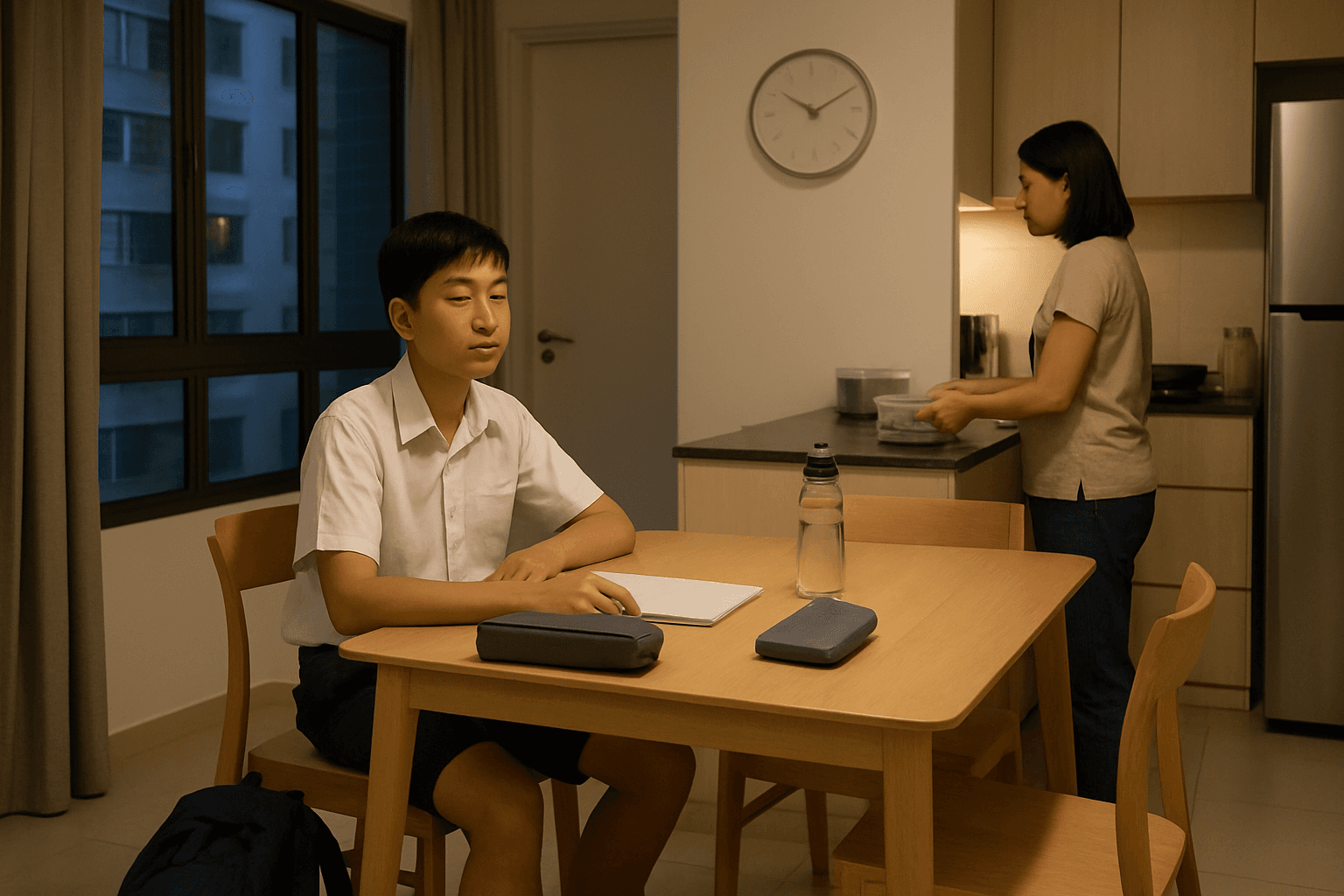
A DSA weekly schedule is usually not just "one more activity". For many families in Singapore, it creates fixed after-school blocks that reshape the whole evening. The real question is not only whether your child can attend the session. It is whether your child and household can sustain everything around it: travel, changing, meals, homework, rest, and sleep.
What does a DSA weekly schedule usually involve?
A DSA weekly schedule usually means fixed after-school commitments that repeat each week, not just a one-off application process. There is no universal timetable because each school and talent area runs its programme differently.
A DSA weekly schedule usually means recurring after-school commitments tied to the talent area, not just the admissions exercise itself. MOE’s DSA-Sec framework lets students apply to certain secondary schools based on interests, aptitude, and potential, but schools run their own talent programmes and selection processes. That is why there is no single official DSA training timetable across Singapore.
In real life, this usually means protected time on certain weekdays. A sports applicant may have training plus recovery time. A performing arts student may have rehearsals that become heavier before a show. A student in a STEM, leadership, or academic talent area may not be physically tired in the same way, but can still lose homework time to enrichment, project work, or school-based sessions.
The useful parent mindset is this: DSA is not just a route into a school. It is often a route into a weekly routine. Because a successful DSA outcome leads to a real school commitment, families should judge the routine as seriously as the application itself. If you want the wider context first, see our guide to Direct School Admission Singapore and our explainer on what Direct School Admission is in Singapore.
2008 DSA(Direct School Admission)
You have to check the individual’s school websites for the DSA exercises. Most of the time, it will start between May - June. But NJC and NUS High School are already opened for application. DSA comes in 2 phases for the top schools. Phase 1 meant for GEP, Maths Olympaid award winners and sports talents. Phase 2 for rest of the students. Different schools have their DSA at different time. So just need to look out for the dates so as not to miss them.
2008 DSA(Direct School Admission)
Hi Sally, You can check all about DSA via this website. http://www.moe.edu.sg/education/admissions/dsa-sec/ One advice is to start working on your child's portfolio detailing his academic achievements, CCA involvement, certificates attained (NSW, Math Olympaid), proof of community involvement, leadership positions etc.... All the best!
Which days usually get affected the most?
Weekday afternoons and evenings usually take the biggest hit. On DSA days, the fixed session often makes the whole evening less flexible.
Weekday afternoons and evenings usually feel the biggest impact. That is when school ends, the child moves into training or rehearsal, and the rest of the household starts adjusting around transport, meals, homework, and sleep.
Some families can absorb one or two busy afternoons. The strain is different when several afternoons become fixed every week. At that point, the week stops feeling flexible, especially if there are siblings, tuition slots, long commutes, or parents with inflexible pickup times.
What many parents miss is the difference between a normal week and a heavy month. Competition periods, performances, auditions, or selection phases can turn a manageable routine into a packed one. When you ask about schedule fit, ask two questions: what does an ordinary week look like, and what changes in the busiest month? School open houses and DSA briefings are often the best places to ask this, and parent-facing resources such as Schoolbag’s DSA Q&A and KiasuParents’ open house guide can help you prepare better questions.
The core insight is simple: DSA rarely affects only the activity hour. It usually takes over the whole evening attached to it. For a broader overview, see Is Direct School Admission Worth It For My Child?.
2010 DSA(Direct School Admission)
Hi, I hope someone can enlighten me on DSA. I've completely no idea what it is. :? How does it work and is it related to CCA ? My boy is in P4. Thanks in advance.
2008 DSA(Direct School Admission)
One of the reasons why we decided to apply for DSA is because the independent schools can admit up to 50% of cohort through DSA. The remaining 50% vacancy are left for students going in through PSLE scores. So as a \"kiasu\" parent, want to maximise the chance. My son felt the DSA tests and interview \"drained up all his brain juices\". After spending 6 hours on all the tests and interview, he went home so tired and slept for the whole day. :lol:
Have More Questions?
Get personalized guidance on schools, tuition, enrichment and education pathways with AskVaiser.
Try AskVaiser for Free →How much time should parents expect to lose to travel, changing, and waiting?
Expect the real time cost to be larger than the official session itself. Travel, changing, waiting, and recovery can make one activity block take up most of the afternoon and evening.
The real time cost is usually bigger than the printed session length. A training, rehearsal, or enrichment block may sound manageable on paper, but the day often expands around it with changing, snack time, travel, waiting, pickup, and the time a child needs to settle back into homework.
A common parent shock is this: the official session may not look very long, yet the child still gets home late enough that dinner, shower, and schoolwork all feel compressed. For example, a child may leave class, change, move to the venue, finish the session, wait for pickup, and only get home when the rest of the evening is already delayed. This is especially true when the activity is off-site or when the school is far from home.
Before deciding between schools, map the route as if it were already part of your week. Check whether sessions happen on the main campus or at another venue, whether public transport is realistic, and who handles each affected pickup. A programme that looks manageable on paper can feel very different once the commute is real. If you are still deciding whether the trade-off makes sense at all, our article on whether Direct School Admission is worth it for your child may help you weigh the time cost more clearly. For a broader overview, see How DSA Fits Into the Secondary 1 Posting Process.
2010 DSA(Direct School Admission)
DSA is not that time consuming. Essentially there are just the following steps, for most schools: 1. Online application: Have your results and awards on hand for easy reference. 2. Preparation of portfolio: Photocopy and certify your results, awards, certificates etc as required by the school. Check with the school for their requirements. 3. Submission of portfolio to school: Some schools ask you to bring it with you during the interview, some schools require you to submit it before the intervie
Re: DSA 2025
Making DSA accessible may involve enhancing school-based talent programs, partnering with community centers for affordable training, and focusing assessments on potential rather than polished skills. Subsidies for external training could support underprivileged students. https://www.straitstimes.com/singapore/direct-school-admission-must-be-accessible-to-all-students-chan-chun-sing https://basketballstars-game.io Delays in the DSA 2026 thread might reflect efforts to refine policies and prioriti
How does DSA affect homework and revision time?
Homework usually shifts later on DSA days, and the bigger problem is often weaker focus rather than unfinished work. Busy evenings become harder when the child is already tired before schoolwork starts.
DSA usually pushes homework later, and homework quality often drops before homework quantity does. A child may still finish the worksheet, but with poorer focus, more mistakes, or more conflict at home because the hardest schoolwork is being attempted after a tiring afternoon.
That is why parents should track more than completion. Ask whether your child can still read carefully, write neatly, revise meaningfully, and stay calm after the session. A child who already needs a quiet reset after a normal school day may struggle much more when training or rehearsal sits in the middle of the evening.
In practice, many families do better when training days become lighter academic evenings rather than forced late-night catch-up days. Some children handle a short, focused homework block after a snack and shower. Others cope better when the hardest thinking work is reserved for earlier in the day or lighter afternoons. The aim is not to squeeze every minute. It is to keep schoolwork consistent enough that busy days do not turn into chronic sleep loss.
This matters because DSA is not a short trial. If your child is admitted through DSA, the commitment affects the wider Secondary 1 path too. Our guides on how DSA fits into the Secondary 1 posting process and whether a DSA offer is binding explain that bigger commitment.
Should DSA be scrapped?
Ykiasu.. What makes you think that DSA does not involve hardwork? Have you or your DS/DD been through DSA before?[/quote]DSA is just a different acceptance into the school. For PSLE, you study hard and you do well in your academic performance. But some pupils may not do well in exams but excel in competitions, Olympiads, Sports, Aesthetics, which DSA provides as a platform to enter the school. Plus, to go through DSA is not an easy process, you have to sort out the necessary certs etc. and prepa
2010 DSA(Direct School Admission)
Invariably at each year's open houses, such questions are asked and answered wrt vacancies By the way, the admission is based on merit and exceptional ability demonstrated, not to fill a quota Each independent schools has their own selection criteria, a desire to maintain a certain type of culture and environment, hence each school is unique and all their vacancies will be filled by the time of S1 posting. The DSA process can be viewed as a form of training for the kids - go strive for what you
What happens to dinner and bedtime on training days?
Dinner often becomes later or more rushed on training days, and bedtime can slip soon after. In most families, sleep is the first routine worth protecting.
Dinner and bedtime are often where schedule strain becomes visible. On training days, dinner may shift later or become more improvised, and that delay can quietly push back showers, homework, and lights-out.
Most families end up using some version of three patterns: a packed meal or substantial snack before the session, a quick meal fitted between school and pickup, or a later supper after getting home. Each can work, but each has a trade-off. Too little food means poor focus and poor recovery. A very late meal can make it harder for the child to settle. Repeatedly delaying dinner often means bedtime slips even when nobody planned it to.
A useful rule is to protect sleep first. Tired children do not sustain DSA well. If your child is losing sleep on multiple weekdays, the issue is no longer just one busy afternoon. It is a routine problem. Simple habits usually help more than heroic ones: keep a reliable snack in the bag, plan dinner earlier on fixed training days, and agree on a realistic lights-out time that the family can actually keep. The goal is not a perfect evening. It is an evening you can repeat without a fight.
2010 DSA(Direct School Admission)
Anyone has update on DSA tea sessions from the various schools? What did you hear from these sessions and do you think they were useful in helping you making your decision?
2010 DSA(Direct School Admission)
Hi, I would like to know any parents here having their children going to apply DSA via sports? I would like to know what to expect for in the interview after the trial? Thank you. Cheers!
How do families usually handle weekday logistics for DSA?
Families usually cope by building repeatable systems for transport, meals, gear, and pickups. The routine works best when the whole household can support it calmly each week.
For many parents, weekday logistics decide whether DSA is practical. Talent and motivation matter, but routines usually break at the handoffs: missing gear, uncertain pickup plans, no snack, a sibling’s class overlapping, or one parent getting stuck at work.
Families who cope well usually turn the week into a system. That might mean bags packed the night before, one shared calendar, a standing pickup arrangement, clear responsibility for meals, or a backup transport plan when one adult cannot make it. Some families coordinate with other parents where appropriate. Others deliberately avoid schools whose timetable only works with constant last-minute adjustments.
It is also worth testing the household impact, not just the child’s. One child’s DSA training day can shift another child’s tuition, dinner, or bedtime. That does not mean DSA is a bad idea. It means the real question is household repeatability, not whether the activity itself looks impressive.
When you speak to schools, ask practical questions before prestige questions. Parent guides such as KiasuParents’ article on whether your child is ready for DSA can help you think through readiness, but your own transport map and dinner plan will usually tell you more than a brochure does.
2010 DSA(Direct School Admission)
What schools is your child aiming for? Remember, your child MUST want to do the DSA and go thru the process. Do not force your child to go for certain schools. Respect your child. That's v important, so that you don't waste time in an already very busy PSLE year - apply for a school, get offer, then in the end, your child don't really want it? I've heard many of such.
2010 DSA(Direct School Admission)
I was outside the science hub in bukit batok today and i saw that they offer DSA preparation for science (apparently for nus high, methodist girls school (might remembered wrongly\" & school of sci and tech).
What are common signs that the DSA schedule is too heavy?
Warning signs include constant tiredness, rushed homework, more conflict, skipped meals, repeated lateness, and a child who starts dreading sessions. If weekends become recovery-only time most weeks, the load is likely too heavy.
The warning signs are usually repetitive rather than dramatic. Look for a pattern of tired mornings, rushed homework, more irritability, skipped snacks or meals, frequent lateness, or a child who starts dreading sessions they previously enjoyed.
Weekend recovery is another useful clue. It is normal to need rest after a busy week. It is less normal if every weekend becomes pure recovery time because the weekday routine leaves no margin. Parents often notice the mood change before they notice any academic dip: more arguments at dinner, more resistance to getting ready, or a child who seems constantly flat after school.
Two common mistakes make this harder to spot. One is assuming motivation will solve overload. It helps, but it does not replace sleep, recovery, or travel time. The other is blaming attitude too quickly when the real problem is timetable design. If the hardest part of the day always lands at your child’s lowest-energy hour, the schedule may simply be too heavy.
A useful rule is this: do not judge by one bad week. Judge by the pattern. If the same strain shows up most weeks, the routine probably needs rethinking. If you are weighing DSA against academic stability, our article on DSA vs PSLE: which route should parents prioritise can help you think through that trade-off more directly.
2010 DSA(Direct School Admission)
My personal experience on DSA, think twice before you accept. We decided to try DSA route because our daughter’s performance is not consistent and she is in the range of above average. We gathered that should would get anywhere between 240-260. We saw our niece went through a bad experience when she got 240+. Where the girl can only be happy to be in the next best range, as the top ranges 255++. And staying in Bt Timah and wanting her to waste little in travel time means that her risk is high to
Should DSA be scrapped?
and for those who dsa, they may be the head or leader straight away without testing the others (those who did not dsa) abilities. they can perform and enter more competitions than a student who did not dsa but their abilities are about the same. is it very stressful to dsa? do you think that i should dsa into jc/ poly next time?
How can parents test if the routine is sustainable before committing?
Treat DSA like a family trial. Map the full week, test the hidden time cost, and see whether the routine still feels calm and repeatable.
- ✓Put one realistic school week on a calendar, from dismissal to lights-out, instead of looking only at the official activity slot.
- ✓Include the hidden time: changing, snacks, travel, waiting, pickup, showers, and the time your child needs to settle before homework.
- ✓Use your child’s current CCA or enrichment routine as a trial run and watch how they cope after a genuinely busy afternoon.
- ✓Check homework quality, not just completion. A worksheet done badly late at night is a warning sign, not a win.
- ✓Notice what happens to dinner and sleep on busy days. If both slip easily, the weekly load may already be too tight.
- ✓Test the route in real conditions where possible, especially if the school or venue is far from home.
- ✓Ask whether the whole household can repeat this rhythm calmly for months, including sibling pickups and parent work schedules.
- ✓Treat prestige as secondary to repeatability. If the routine works only on paper, it usually will not work for long.
What should parents ask the school or coach about the DSA timetable?
Ask about the real weekly load, peak periods, venue changes, weekend sessions, and exam-season expectations. The goal is to understand the hardest month, not just the normal week.
Ask questions that reveal the real operating timetable, not just the advertised programme. Start with how many afternoons are usually taken up in an ordinary week. Then ask what changes during competition season, performance periods, trials, showcases, or other peak months.
Go further into logistics. Ask whether sessions are always on-site, whether weekends or school holidays are sometimes used, how attendance expectations work during exam periods, and what happens if a child misses a session because of illness or major school commitments. These details matter because the stress often comes from the exceptions and peak periods, not the brochure version of the programme.
Open houses and DSA information pages are useful for this. MOE’s DSA page gives the official framework, while KiasuParents’ article on whether DSA is the right option can help you prepare sharper parent questions before you meet schools. If you are still at the application stage, our guide on how to apply for DSA in Singapore and our article on what happens during a DSA interview in Singapore can help connect the admissions process to the routine that follows.
A very effective closing question is simple: what does this look like in a hard month, not just a normal week? Schools that answer this clearly usually help parents plan more realistically.
2009 DSA(Direct School Admission)
Hi. Maybe put this as a topic in Chit chat? Not everyone comes in here. Eh..what is DSA?
2008 DSA(Direct School Admission)
[quote]How will we be able to tell which sports is favored by a particular school under DSA? Is such info published?[/quote] Yes, each school has its own preference and they are normally published on the schools' websites. DSA is not only for Sports or Music talents, if your child is good academically throughout the years (esp P4 - P6), then, you can also try for DSA at some of the top schools. Each school has their own entrance tests and interviews. Independent schools can take in up to 50% of
Have More Questions?
Get personalized guidance on schools, tuition, enrichment and education pathways with AskVaiser.
Try AskVaiser for Free →