
Does an Affiliated Kindergarten Improve P1 Registration Chances in Singapore?
When a preschool-primary link can help, and why it still does not guarantee a place.
Yes, an affiliated kindergarten can improve your child’s P1 registration chances in some cases, but only when the preschool-primary link is officially recognised in MOE’s framework. Even then, it is a priority advantage rather than guaranteed admission, so oversubscribed schools can still be competitive.
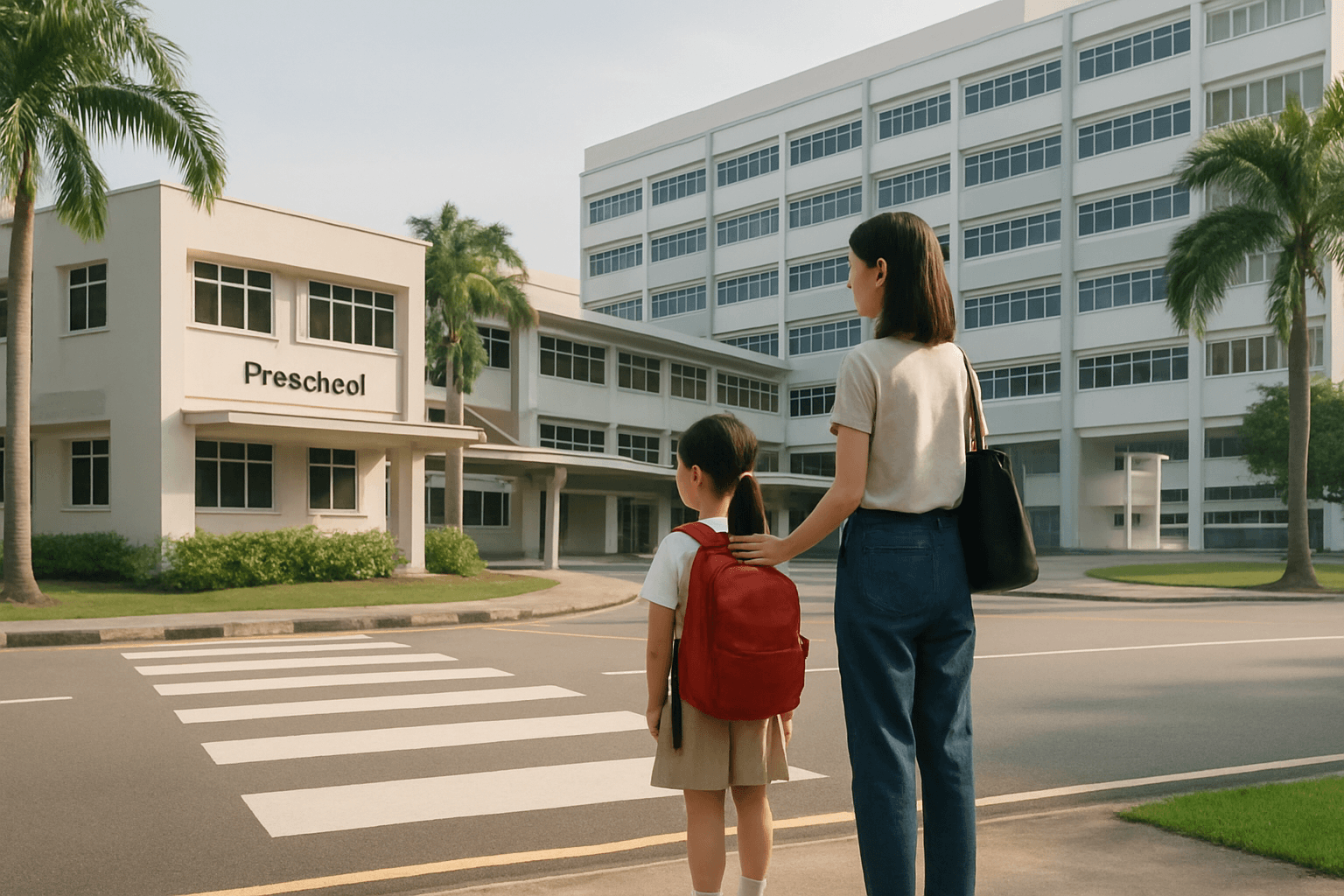
Many parents hear “affiliated kindergarten” and assume it means an easier path into the linked primary school. Sometimes it can help, but only in a specific way. The right way to think about it is this: a recognised preschool-primary link can improve your child’s position in the P1 registration exercise for one named school. It does not reserve a seat, and it does not remove competition if the school is popular.
Short answer: does an affiliated kindergarten improve P1 registration chances?
Yes, it can help, but only when the preschool-primary link is officially recognised for P1 registration. It is an advantage, not automatic entry.
Yes, sometimes. If the kindergarten-primary school link is one that MOE recognises, it can place your child in a more favourable position for that specific primary school. But it is still not direct admission, and it does not guarantee a place.
The practical takeaway is simple: affiliation only matters when it changes your child’s route inside MOE’s Primary 1 Registration in Singapore guide. A preschool that shares a school name or sits nearby may feel connected, but that does not automatically give P1 priority.
Pre-school/Kindergarten affiliated to Primary School
Some kindergartens do have affiliation with the Primary Schools (eg. Barker Road Methodist Church Kindergarten is affiliated to ACSP & ACSJ) BUT that affiliation isn’t going to help the parent during Pr 1 registration as putting ur child in that kindergarten will not give you any priority in any of the phases! The affiliation that matters during Pr 1 registration is through churches or clans. Thankfully too or like what chiefkiasu said, there will be hoards of kiasuparents signing up their kids
Pre-school/Kindergarten affiliated to Primary School
Any idea where I can get info on preschools/kindergartens that are affiliated to Pri School? Hope to prep my girl for P1 in the years to come.
What does “affiliated kindergarten” actually mean in Singapore?
The term only matters if the kindergarten has an official preschool-primary link that affects MOE P1 registration.
In practice, the useful meaning is not the label itself but the exact school relationship behind it. The key question is whether the kindergarten has an official link to a specific primary school that MOE recognises in the P1 framework.
That is different from a preschool that simply shares branding with a school, is on the same campus, or is casually described as a feeder. Those arrangements may be real and convenient, but they do not automatically mean your child gets any registration advantage.
A good rule of thumb is this: school branding is not the same as P1 priority. Before choosing a preschool for admissions reasons, ask what exact effect the link has on Primary 1 registration. If nobody can explain that clearly, do not assume there is one. For a broader overview, see Primary 1 Registration Phases in Singapore: What Each Phase Means for Your Chances.
Pre-school/Kindergarten affiliated to Primary School
I remember someone saying something about this but couldn't for the life of me find that thread! Anyway, if you do find any pre-school or kindergarten that have such kangtao, let us know. The entire group of KiasuParents will be descending on that pre-school! No... there is no such thing... at least not to the known world... yet. At the rate schools are getting more \"integrated\", I do see the possibility of Primary schools spawning off pre-school education programmes in the future.
Kindergarten that prepares child well for Primary 1
HiHi My girl is in Nursery and from NAFA. I have gone round to many kindergartens to check if their curriculum actually prepare children for P1. my findings...depends on which primary school you have selected for your child. I've talked with some parents from NAFA...some say more than sufficient, while others said no... I'm also scared to death if my child is ready for P1...went to check further with some of friends teaching in primary school...some schools use the MOE text books...some don't. G
Have More Questions?
Get personalized guidance on schools, tuition, enrichment and education pathways with AskVaiser.
Try AskVaiser for Free →How can affiliation affect Primary 1 registration?
Affiliation can matter when it gives a child a better registration route or phase for one linked primary school.
Primary 1 places in Singapore are allocated through MOE’s annual registration exercise, not through direct school admission. MOE has clarified this in its parliamentary reply on P1 registrations. That means affiliation only matters when it changes your child’s position within that process.
The clearest official example is the MOE kindergarten model. MOE states in its FAQ and in a parliamentary reply on P1 registration that children enrolled in MOE kindergartens located within primary schools may be eligible for Phase 2A in the co-located primary school. That is a real admissions effect.
For parents, the practical meaning is this: affiliation does not skip the registration exercise. It may simply move your child into a more favourable route for one linked school. That matters most when the school is popular and every phase makes a difference. For a broader overview, see Primary 1 Registration Distance Priority: How Home-School Distance Works.
[Punggol] Primary Schools
Published on Jun 19, 2015 Oasis of learning in Punggol, to fill young minds source http://mypaper.sg/top-stories/oasis-lea ... s-20150619 THREE new primary schools will open in Punggol next year to help meet the growing demand in the area. The schools - Oasis Primary in Edgefield Plains, Punggol Cove Primary in Sumang Walk and Waterway Primary in Punggol Drive - will be able to take in 210 pupils each . They are located near a number of housing projects. Waterway Primary, for instance, is locate
Info on what your child learns in P1 and how you can help
Dear parents, in case you're wondering what your child will be learning when he goes into P1, here's an article which you may find useful. http://sg.theasianparent.com/what-your-child-is-learning-in-primary-1/ The article covers tips which you can do to help your child with literacy and numeracy skills. Hope it helps! Sincerely Junior Wonders Tuition Centre
Where affiliation does not help much
Affiliation does not create extra places, does not cancel oversubscription, and may have little value if the link is not officially recognised or the school is not highly contested.
Affiliation helps least when parents expect it to override limited vacancies. It does not. If a school is oversubscribed, families still compete within the rules of that phase, and the school still has only a fixed number of places. MOE’s Primary 1 registration framework is the reason parents should treat affiliation as one factor, not the whole plan.
It also does not help when the preschool link is not the exact type recognised by MOE. This is a common trap. A preschool may be called affiliated, school-linked, or partner-based, but if that relationship does not change your child’s registration position, the label has little practical value.
One more thing parents often miss: if the linked primary school is not especially competitive, the affiliation may not change much anyway. In that case, commute, fees, and how well the preschool fits your child may matter more than the affiliation label itself. For a broader overview, see How to Read Past Balloting Data Before Chasing a Popular Primary School.
How your kid's performance in P1 if attended gd Pre-sch?
preschool does not matters if you can supplement it with enrichment or coach your child by yourself with regards to preparing for P1. if you have no time for external enrichment (ie weekends reserved for families), a preschool with good curriculum matters a lot.
[Punggol] Primary Schools
hmm… the most impt thing is your child must be happy. This must come from supportive parents in their learning. My boy enjoys his class and gamely contribute and am glad teachers (Chinese and form teacher) have been responsive in his learning. As he was a transferred student, I was also concern of him blending to his school but such were unfound. Phew! All in all, in a primary school, be it a popular, a top or mediocre school (in others’ opinion) you can still “control” a child’s learning habits
Common scenarios: when affiliation is useful and when it is not
Affiliation matters most when it improves your odds at a school with real competition. It matters less when the school is easier to enter or you already have a strong backup plan.
The clearest way to think about affiliation is by scenario.
If your child is in a kindergarten with an official link to a popular primary school, the affiliation may be worth taking seriously because a better registration route can matter when demand is high. In that situation, parents are not buying certainty. They are buying a better starting position.
If the school is usually easier to enter, the same affiliation may not change much because your child might have obtained a place anyway. In that case, choosing the preschool mainly for its P1 advantage may be less useful than focusing on the preschool’s day-to-day fit.
If your family already has another strong route, such as living close to a realistic backup school, then the real question is not whether affiliation helps in theory. It is whether that help is stronger than the position you already have. For many parents, that comparison is more useful than the word “affiliated” on its own. For a broader overview, see Primary 1 Registration Unsuccessful: What Happens If You Do Not Get Your Preferred School.
Share with us your kid's P1 registration experience
P1 registration experience… On the 1st day, went to the 1st choice school in the morning of 2/Aug to register… Actually I wanted to go on the last day to better gauge the chances as I was staying between 1-2km but the other half keep pestering me to go early… many parent still don’t understand the concept of balloting and priority and 3 days registration period… no sure why they always have the belief of 1st-come-1st-serve go later no place misconception even after much much explanation… No choi
IS IT COMPULSORY TO ATTEND KINDERGARTENS BEFORE P1 ADMISSION
No, it is not. According to MOE, compulsory education starts from above 6 to less than 15 years. Basically, it just means that the child must attend P1 to about Sec 3. However, unless you have a very good reason or alternative like home schooling, it is best to enroll the child in a kindergarten or childcare centre that has a K1/K2 class. This is because kindy prepares the child for primary school. Not just academically but also socially and emotionally. The child learns exactly what is required
Important reminder: affiliation is not the same as automatic entry
Priority is not the same as guaranteed admission.
Treat affiliation as queue advantage, not seat reservation. If your family would be upset not to get the linked school, make a backup plan early instead of assuming the preschool choice has solved the P1 problem.
Any chance of enrolling to a kindergarten?
Have you emailed the kindergarten to check if you are able to register upon your return to Singapore?
IS IT COMPULSORY TO ATTEND KINDERGARTENS BEFORE P1 ADMISSION
Hi, Anyone can advise me on the above issues ? Is it compulsory to attend K2 before admission to Primary one ?
What parents often misunderstand about kindergarten affiliation and P1
The biggest mistake is treating “affiliated kindergarten” as a promise of admission. It is usually only a possible advantage, and not all links carry the same weight.
The first misunderstanding is assuming every school-linked preschool gives the same benefit. It does not. The official P1 advantage we can point to clearly is the MOE kindergarten example, and that should not be stretched to every preschool arrangement that sounds connected.
The second misunderstanding is confusing priority with certainty. Parents hear “affiliated” and mentally translate that into “my child should get in.” That is usually the wrong model. A better way to think about it is: affiliation may improve your route into the process, but it does not remove the process.
The third misunderstanding is choosing a preschool mainly as a P1 strategy even when it is not a good day-to-day fit. Preschool is still your child’s actual school for the next few years. Commute time, fees, care hours, and whether your child settles well there matter now, not just later. If you want broader context on how parents think about school links, KiasuParents has a useful explainer, but MOE’s framework should remain your final reference.
How your kid's performance in P1 if attended gd Pre-sch?
Dear Members Can anyone of you feedback how your kid/kids doing in P1 if they attended pre-school as follows: 1)\tPat school 2)\tMontessori 3)\tMy First School or Normal child care centre 4)\tHalf day in CC or in Kindergartens I have heard so much about how good /strong or poor academically the pre -school can be. But ultimately are kids really perform better when go to Pri i.e. (e.g. with Montessori they do have their special techniqe in their learning path, half day CC or Kindergarten as they
Share with us your kid's P1 registration experience
First thing to do after being balloted out, is to put your child's name under the school's wait list. After then, I've wrote in to MOE, called/met the school's Principal for discussion. Telling them all my problems and how the registration system had affected us (because I have only 1 school within 2km and NO school within 1km). With this factual, MOE has verified and consulted the school. My son was then placed on the highest priority in the waiting list .. and fortunately by early Nov, we were
What should you ask before choosing an affiliated kindergarten?
Verify the exact P1 effect of the link first, then decide whether that advantage is strong enough to outweigh commute, fees, and preschool fit.
Ask for the exact school relationship, not the marketing label. A useful question is: “Does attending this kindergarten change my child’s P1 registration route or phase for this named primary school?” If the answer is vague, that tells you something important already.
Then ask what kind of arrangement it is. Is it an MOE kindergarten within the primary school, or another school-linked preschool model? That distinction matters because the clearest official P1 advantage in the source material is tied to the MOE kindergarten setup, not to every preschool that sounds connected.
It is also sensible to ask how recent families have actually used the link. You are not looking for a promise. You are checking whether parents genuinely rely on that pathway for the named primary school, or whether the affiliation is mostly a branding detail.
Finally, ask yourself one blunt question: if the P1 advantage disappeared tomorrow, would you still choose this preschool? If the answer is no, compare the preschool’s daily fit against your family’s real options before deciding.
[Punggol] Primary Schools
Hi parents, I am originally staying in Tampines and am moving to Punggol this month. As I am planning to register my child in P1 at Punggol next year, what are the steps I need to do, in order to register? Is it just popping by the Police Station to update my address will do?
[Punggol] Primary Schools
Hihi, I'm also interested in knowing about the punggol schools as will be moving there next year, just in time for P1 registration! - Edgefield Primary - Horizon Primary - Mee Toh Our preference is Mee Toh coz it's a buddhist school but based on the previous stats, it is really popular and always has balloting for 2C (purely luck then!) I was wondering should we risk it or should we go for the other 2 schools instead as it seems mostly SC within 1km should be able to get in (even with balloting,
Quick parent checklist: should you choose the affiliated kindergarten for P1 reasons?
Use this quick check to tell the difference between a real P1 advantage and a nice-sounding school connection.
- ✓Do you genuinely want the linked primary school, rather than just recognising the name?
- ✓Is the preschool-primary link an official P1 advantage for that specific school, not just shared branding or location?
- ✓Is the school popular enough that a better registration route could realistically matter?
- ✓Would you still be comfortable with the preschool’s commute, fees, care setup, and teaching approach for the next few years?
- ✓Do you already have a realistic backup school plan if the linked school remains oversubscribed?
Can an affiliated kindergarten secure a place if the primary school is popular?
No. Affiliation may improve your child’s position, but a popular school can still be oversubscribed and admission is not assured.
No, not by itself. An affiliated kindergarten may improve your child’s position in the registration exercise, but a popular school can still be oversubscribed.
The practical value of affiliation is that your child may enter through a more favourable route for that specific school. That can matter when demand is strong, but it does not remove competition. If more families apply than there are places, parents can still lose out.
The safest approach is to treat affiliation as one advantage, not your whole admissions plan. Look at past demand patterns, understand the phase you are relying on, and decide in advance what your backup school would be. These guides on how to read past balloting data and what happens if you do not get your preferred school will help you plan more realistically.
[Punggol] Primary Schools
Clue no. 1 : https://www.moe.gov.sg/admissions/primary-one-registration/vacancies Clue no. 2: https://www.kiasuparents.com/kiasu/article/punggol/ The popular schools are red hot like fire.
[Punggol] Primary Schools
Parents enrolling to Punggol View Primary. There is a notice “Results of P1 Registration - Phase 2C Dear Parents, Please be informed that your child has been successful in securing a place for Primary One in Punggol View Primary under Phase 2C and you will received the official notification from us in two-three weeks’ time. We apologise for the miscommunication and delay as we are preparing a package to inform parents of the P1 orientation. Admin Office”
Have More Questions?
Get personalized guidance on schools, tuition, enrichment and education pathways with AskVaiser.
Try AskVaiser for Free →