
Direct School Admission vs PSLE Posting: What’s the Difference?
A practical Singapore parent guide to early DSA admissions and the normal Secondary 1 posting route.
Direct School Admission is an early secondary school admissions route based on a child’s strengths, interests, aptitude and school fit, while PSLE posting is the standard route after PSLE based mainly on results and school choices. If your child accepts a DSA place, they usually do not take part in normal Secondary 1 school-choice posting and must commit to that school, although their PSLE results still need to qualify for the posting group offered by the school.
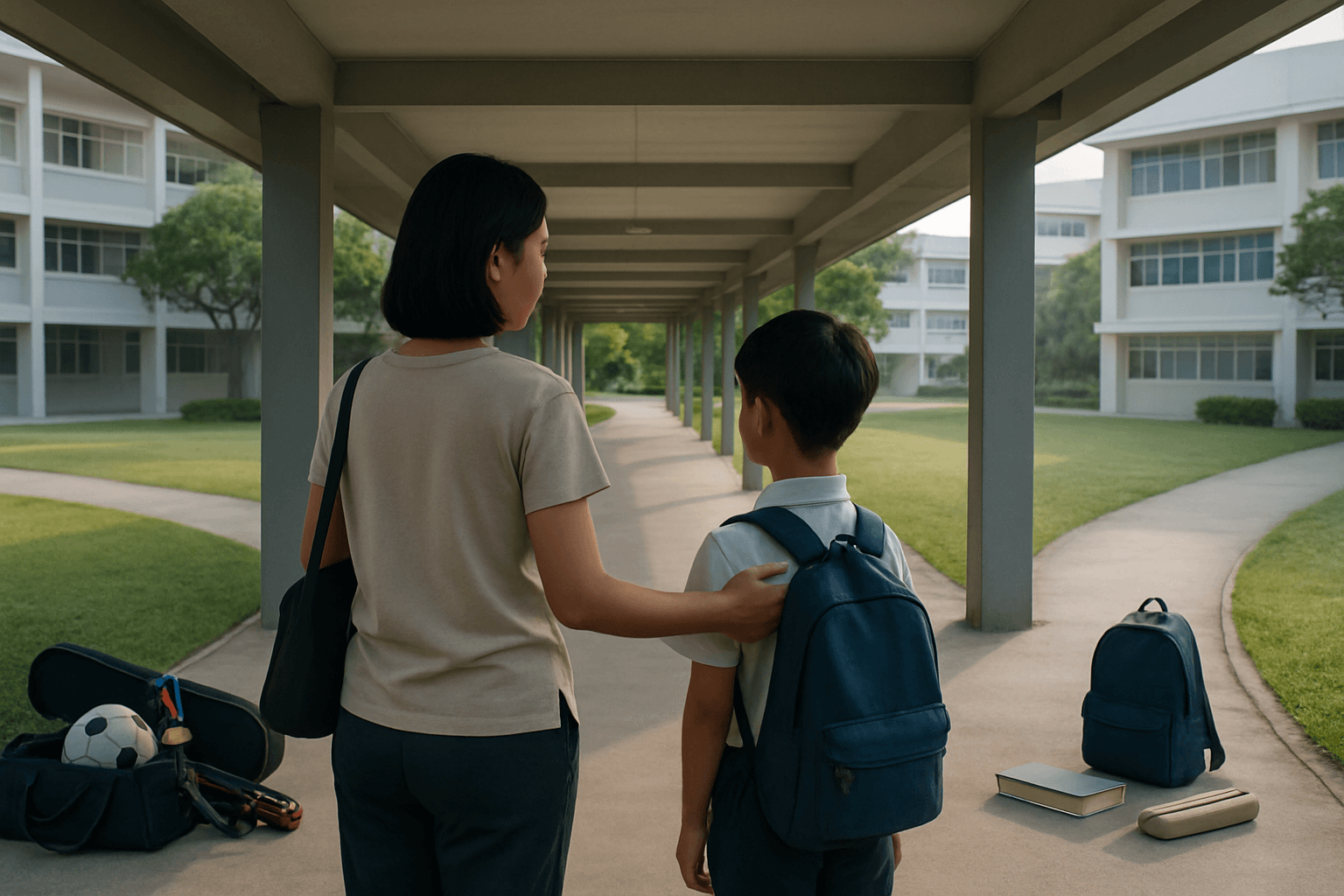
The short answer is this: Direct School Admission and PSLE posting are two different routes for secondary school entry in Singapore.
DSA-Sec is the early route. Schools look at a child’s strengths beyond exam scores, such as sports, music, leadership or other niche areas. PSLE posting is the normal route after results are released, when families submit school choices and placement is based mainly on PSLE performance and the school’s posting requirements.
The practical difference is commitment. If your child accepts a DSA place, you are usually committing to that school instead of waiting for the regular posting exercise. That is why the key question for parents is not which route sounds better. It is which route fits your child’s profile, your family’s flexibility, and your long-term school plan.
This guide breaks down how each route works, what changes if a DSA offer is accepted, and how to decide which path makes more sense for your child.
What is the difference between Direct School Admission and PSLE posting?
DSA is an early fit-based admissions route, while PSLE posting is the standard results-based Secondary 1 placement route after the exam.
The difference is mainly what schools are looking at and when the decision happens. Direct School Admission, or DSA-Sec, is an early route that lets schools consider a child’s achievements, talents, interests, aptitude and potential beyond PSLE scores. PSLE posting happens later, after results are released, when families submit school choices and placement is based mainly on the child’s PSLE outcome and the school’s posting requirements. MOE explains the DSA route here.
A simple way to think about it is this: DSA is early matching, while PSLE posting is results-based placement. A child with a strong and sustained record in football, debate, Chinese orchestra or leadership may suit DSA because the school is judging fit and potential. A child whose strongest advantage is academic performance may be better served by waiting for PSLE results and choosing schools after that.
One point parents often miss is that DSA does not make PSLE irrelevant. A successful DSA applicant does not need to meet the school’s usual cut-off point, but the child still needs PSLE results that qualify for the posting group offered by the school. If you want the bigger picture first, our guide on what Direct School Admission is in Singapore is a useful starting point. For a broader overview, see Direct School Admission Singapore: A Practical Parent Guide.
2016 PSLE Results & Secondary Posting Discussions
From http://www.ifaq.gov.sg/MOE/apps/fcd_faqmain.aspx?TOPIC=8351#FAQ_59426 \t If I am successfully admitted to a secondary school via the Direct School Admission - Secondary (DSA-Sec) Exercise, can I participate in the centralised Secondary One Posting Exercise? If you are successful in the DSA-Sec Exercise, you will be informed of the school that you have been admitted to. Since this place has already been reserved for you, you will not be allowed to participate in the Secondary One Posting Exe
2009 DSA(Direct School Admission)
If your child is waitlisted or has a confirmed place in a school during DSA, he will be given a DSA School Preference Form in October, during which he can indicate his choice of school. Say for example your son was offered waitlist in School A and has no other confirmed offers. He can then indicate School A in his Form if he chooses to. This form must be submitted in October. When his PSLE results are released, he will be informed if he was successful in getting a place in School A. If he is not
How does the DSA route work in practical terms?
DSA happens before PSLE results and looks for sustained talent, aptitude and school fit rather than exam scores alone.
In practical terms, DSA happens before PSLE results are known. Parents apply to selected schools, the schools review the child’s profile, and shortlisted students may go through interviews, trials, auditions or portfolio reviews depending on the talent area. Schools are not looking for a single good day. They are trying to see whether the child is a credible long-term fit for the school’s niche.
For parents, that means evidence matters more than broad interest. A football applicant may show years of training, team involvement and competition experience. A performing arts applicant may have regular performance exposure. A leadership applicant may be able to explain real responsibilities they held, not just a title on paper. A child who simply likes science or enjoys music may still be promising, but schools usually want signs of sustained involvement rather than interest alone.
Insight line: DSA works best when it confirms a strength that is already visible, not when it tries to create one at the last minute. For a broader overview, start with our Direct School Admission Singapore guide. If your child is likely to be shortlisted, our article on what happens during a DSA interview in Singapore can help you prepare sensibly. For a parent-friendly media explainer, The Straits Times overview is also helpful. For a broader overview, see How DSA Fits Into the Secondary 1 Posting Process.
2010 DSA(Direct School Admission)
If you accept the DSA offer, your kid will not be able to participate in S1 posting. So he/she has to appeal to the school he wants to go after the S1 posting results are out. There is no guarantee he can go to the appealed school even if his PSLE score may above the COP of the school. So far I have seen a few cases in 2009 (2010 sec 1) and most of them have been successful in their appealing. But please be prepared for the \"stressful\" period while waiting for the appealed result.
2010 DSA(Direct School Admission)
You would have made the choices before u sit for the PSLE and on result day, u have no more choices. You would have \"accepted\" the DSA offer before the PSLE is out.......as in u are required to rank your choices of DSA offers from the schools that have offered u MOE will do the rest and on PSLE result day, you will be notified of your posting to your first choice school chosen in the above school ranking of choice by DSA offeree
Have More Questions?
Get personalized guidance on schools, tuition, enrichment and education pathways with AskVaiser.
Try AskVaiser for Free →How does PSLE posting work in practical terms?
PSLE posting is the normal Secondary 1 placement route after results are released, when school choices are matched against the child’s PSLE outcome and the school’s requirements.
PSLE posting is the route most families use. After PSLE results are released, students submit school choices and the posting process matches those choices against the child’s results and the schools’ posting requirements. In plain language, this is the stage where families compare realistic options after they know the academic outcome.
For many parents, this route feels simpler because there is no early commitment to one school based on a niche area. It also gives families more room to compare school culture, travel time, programmes and likely fit after the result is known. That matters for children who are broadly capable but still exploring their interests.
One practical point is that not every school uses the same route. Some specialised independent schools, including schools such as NUS High School of Mathematics and Science, the School of Science and Technology and the School of the Arts, do not participate in normal S1 Posting and instead admit students through DSA-Sec. MOE explains school participation here. If a specific school is central to your plan, confirm its admissions route early rather than assuming it will appear in the regular posting exercise. For a broader overview, see Is a DSA Offer Binding? What Parents Commit To.
2016 PSLE Results & Secondary Posting Discussions
http://www.straitstimes.com/singapore/education/slight-dip-in-cut-off-points-for-popular-secondary-schools-despite-record-psle Slight dip in cut-off points for popular secondary schools despite record PSLE performance SINGAPORE - The minimum entry requirement for most popular secondary schools dropped slightly this year. This is despite the cohort's record performance at the Primary School Leaving Examination (PSLE) this year, with 98.4 per cent doing well enough to progress to secondary school
2011 PSLE - Appeal for Sec School
http://www.moe.gov.sg/education/admissions/secondary-one-posting/process/ What do they mean?
If my child applies for DSA, can we still go through PSLE posting?
Yes. If DSA does not work out, your child can go through normal S1 Posting. But if your child accepts a DSA place, they usually do not submit regular school choices later.
Yes, if the DSA application does not result in an accepted place. An unsuccessful DSA applicant simply goes on to the normal Secondary 1 Posting exercise, which is why many families treat DSA as an early attempt and PSLE posting as the fallback. Our guides on how DSA fits into the Secondary 1 posting process and whether a DSA rejection affects normal posting explain that flow in more detail.
The important change happens if your child accepts and is admitted through DSA. MOE states that the child will not take part in the usual S1 school-choice posting and must honour the DSA commitment. MOE also explains the allocation outcomes, including the point that DSA students may still need to indicate posting group or language-related options where relevant.
The practical takeaway is simple: applying for DSA does not block PSLE posting, but accepting a DSA place usually does. Treat a DSA offer as a real school decision, not as a placeholder while you wait to see what else is available later. For a broader overview, see DSA vs PSLE: Which Route Should Parents Prioritise?.
2009 DSA(Direct School Admission)
thanks for sharing the experience on transfering even after taking up dsa offer. may i ask what is the sequence of steps? after accepting dsa offer but the psle results were above the COP for another IP school, what to do next? do we need to contact the IP school first if they allow the transfer and then contact the DSA school to be released? Thanks in advance for reply.
2010 DSA(Direct School Admission)
Strparent, hope you don't mind me jumping in here. In this case, you may consider only putting RI in your DSA acceptance form and reject all other DSA offers whether they are CO or WL. In this case, in case your ds misses the DSA slots, he will still be able to participate in S1 posting using his PSLE results. The risk here is that if his PSLE score is lower than expectation, he may be worse off. PSLE scores will only be known in mid Nov, on the same day when you know the outcome whether his RI
When does DSA make sense for a child?
DSA makes sense when a child has a clear, sustained strength that matches a school’s niche and the family is comfortable with the commitment.
DSA makes sense when there is a real match between the child and the school, not just when the school name sounds attractive. A strong DSA candidate usually has a strength that is already visible and sustained. That might be a student athlete with years of competition experience, a musician with regular performance experience, a debater with a solid competition track record, or a child who has consistently taken on meaningful leadership responsibilities.
A useful test is whether your child would still want to keep doing this activity two or three years from now, even when secondary school gets busier. If the answer is yes, DSA may be worth serious consideration. If the interest is shallow, recent or mostly parent-driven, PSLE posting usually gives healthier flexibility.
What many parents overlook is that school fit matters as much as talent. A child may be good enough for DSA on paper but still be a poor fit if the school’s culture, commute or expectations are wrong. If you are trying to judge whether your child has a realistic DSA profile, our guide on what talents count for DSA eligibility is a practical next read.
2010 DSA(Direct School Admission)
Take a look at this web-site: http://www.moe.gov.sg/education/admissions/dsa-sec/participating-schools/ If you look at the list of secondary schools participating in the DSA for 2011 Sec 1 intake, you will see that some schools offer only 'Express' stream and other offer 'Normal Technical' (NT) , 'Normal Academic' (NA) and 'Express'streams. So if you have CO from a school that offers only 'Express' stream, then you must have a PSLE t-score that is above the COP for 'Express' stream to be joining
2010 DSA(Direct School Admission)
Invariably at each year's open houses, such questions are asked and answered wrt vacancies By the way, the admission is based on merit and exceptional ability demonstrated, not to fill a quota Each independent schools has their own selection criteria, a desire to maintain a certain type of culture and environment, hence each school is unique and all their vacancies will be filled by the time of S1 posting. The DSA process can be viewed as a form of training for the kids - go strive for what you
When is PSLE posting the safer or simpler route?
PSLE posting is usually the simpler choice when the child’s main strength is academic performance and there is no strong DSA match.
PSLE posting is often the safer route when the child’s strongest evidence is academic performance and there is no clear DSA niche. This is common for children who do well across subjects but do not yet have a deep record in one area, or children who enjoy several activities without standing out strongly in any one of them.
It can also be the better route for families who want more room to compare schools later. A child may be capable enough for DSA on paper, but the commute may be too long, the talent area may require more commitment than the child wants, or the family may simply prefer to keep options open until results are known. That is not a weaker choice. It is often the more practical one.
Insight line: if the child’s clearest strength is still the exam, let the exam do the work. If that sounds like your situation, our comparison on DSA vs PSLE: which route should parents prioritise goes one step further.
2010 DSA(Direct School Admission)
On one hand, it’s easier to make decision when PSLE results are known; on the other hand, IP schs seems to take in abt 50 % from DSA. So the vacancies aft DSA are much less ; especially for schs with affliation eg NYGH, 420 places, abt 210 left for PSLE; dunno how much is reserved for NYPS (250 can go in already). May be that’s why NYGH COP is high. That’s why we only advised DD to try 1 or 2 sch; if 1st choice didn’t give confirmed offer, may just leave to PSLE. We also didn’t spend much time o
2010 DSA(Direct School Admission)
Pardon me for my ignorance after reading your post. If one gets into a school of choice via DSA, after PSLE result, one cannot change to another school even if it is a better one? I know even if DSA accepted, it is only provisional because one has to meet the minimum PSLE aggregate. So how about if a child does exceedingly well and wants a change of a better school choice, boleh or not? :?
What are the tradeoffs if a child gets a DSA offer?
A DSA offer gives early certainty, but it also reduces flexibility and comes with a real commitment to the school and talent area.
The main benefit of a DSA offer is early certainty. Your child secures a place before PSLE results are used for school-choice posting, which can reduce some of the stress around secondary school selection. For a child with a genuine school match, that certainty can be very valuable.
The tradeoff is reduced flexibility. Once your child accepts the DSA route into a school, the family is no longer keeping the full range of normal posting choices open. In practical terms, you are choosing the school earlier and more firmly. Families should also assume that the school expects the child to continue contributing in the area they were admitted for, whether that is sport, music, leadership or another niche.
That is why parents should pause before saying yes and ask a simple question: are we choosing this school because it truly fits our child, or because the offer feels reassuring? If you are weighing that decision, our guide on whether a DSA offer is binding and what parents commit to is worth reading next.
2010 DSA(Direct School Admission)
You won't be able to take part in the S1 posting after the PSLE result has been released as you have accepted the ACSI offer. That is the spirit of the DSA exercise - your choice of school based on criteria from the school and your ability. You have been given the offer in priority to others who need to wait for PSLE result Of course you can do what people call the dishonourable thing
2009 DSA(Direct School Admission)
Having had a child who went through DSA last year and subsequently transferred, perhaps I am qualified to give some advice here Choosing the school is really an important issue and it must be a school that your child is willing to go to and not one that you have decided for him or her. So please discuss this at length/with depth with your child. If you have one or 2 confirmed offers, no problem go ahead and exercise the option. If you have been waitlisted at your preferred choice, I feel it is s
What should parents compare before choosing between DSA and PSLE posting?
Compare fit, pressure, school culture, travel time, commitment, and whether your child can realistically sustain the chosen area for several years.
Compare the decision the way you would compare a several-year family commitment, not a one-time admission win. Look at whether the school’s culture fits your child, whether the commute is realistic, whether the talent area still feels sustainable, and whether your family is comfortable giving up later school-choice flexibility if DSA succeeds.
A few typical scenarios make the difference clearer. A child with a strong sports record and a clear interest in a school’s sports culture may benefit from DSA because the fit is obvious and durable. A child who is academically strong but has not built a deep record in any one area may do better waiting for PSLE posting, when a wider range of schools can be compared after results are known. A child who likes a school’s reputation but is lukewarm about the talent area is usually a weak DSA case, because the offer, if it comes, carries ongoing expectations.
Parents also tend to underestimate opportunity cost. If chasing DSA takes too much time away from PSLE preparation without a strong school match, the family may end up adding pressure without improving outcomes. For a practical fallback strategy, see our guide on how to build a backup secondary school list when applying for DSA. For broader perspective on how DSA is often misunderstood, this CNA commentary is also worth reading.
2010 DSA(Direct School Admission)
What schools is your child aiming for? Remember, your child MUST want to do the DSA and go thru the process. Do not force your child to go for certain schools. Respect your child. That's v important, so that you don't waste time in an already very busy PSLE year - apply for a school, get offer, then in the end, your child don't really want it? I've heard many of such.
2016 PSLE Results & Secondary Posting Discussions
Hi, I am interested to know what happens if the child is selected to the school through DSA but then the psle results falls short of the cut-off point for the school. Does it matter once he was already selected in?
What is the most common misunderstanding parents have about DSA?
The biggest misunderstanding is thinking DSA is just a shortcut into a better school.
The biggest mistake is thinking DSA is just an easier route into a better school. It is not. It is a different admissions route designed to match a child to a school based on demonstrated strengths and fit, and it comes with real commitment.
Insight line: DSA is a match-based pathway, not a shortcut. If your child is the right fit, it can be valuable. If not, normal PSLE posting is not a lesser option. It is simply the route that keeps broader choice open until results are known.
2009 DSA(Direct School Admission)
Hi all, Thanks for the info. So from what I gather, schools that offer DSA does not mean that they only have IP. Also, DSA is just a means of getting into secondary school besides using the PSLE results.
2010 DSA(Direct School Admission)
Once you are successful in DSA, the school will take you in so long as you meet their stated cut-off criteria in PSLE, which in most cases is an aggregate allowing you to be in Express stream. In short, yes, even if your child scores 240, so long as he has been confirmed a place via DSA, he will be accepted.
Have More Questions?
Get personalized guidance on schools, tuition, enrichment and education pathways with AskVaiser.
Try AskVaiser for Free →