
DSA Performing Arts Singapore: What Schools Look For in Dance, Drama and Stage Talent
A practical parent guide to performing arts DSA in Singapore, including auditions, portfolios, and how schools assess dance, drama, and stage potential.
DSA performing arts in Singapore is a Direct School Admission route for students with genuine talent or strong potential in areas such as dance, drama, and stage performance. Schools typically assess live performance, expression, confidence, discipline, coachability, and programme fit, so parents should prepare clear evidence such as training history, performance records, relevant clips, and a child who can audition steadily and speak naturally about their interest.
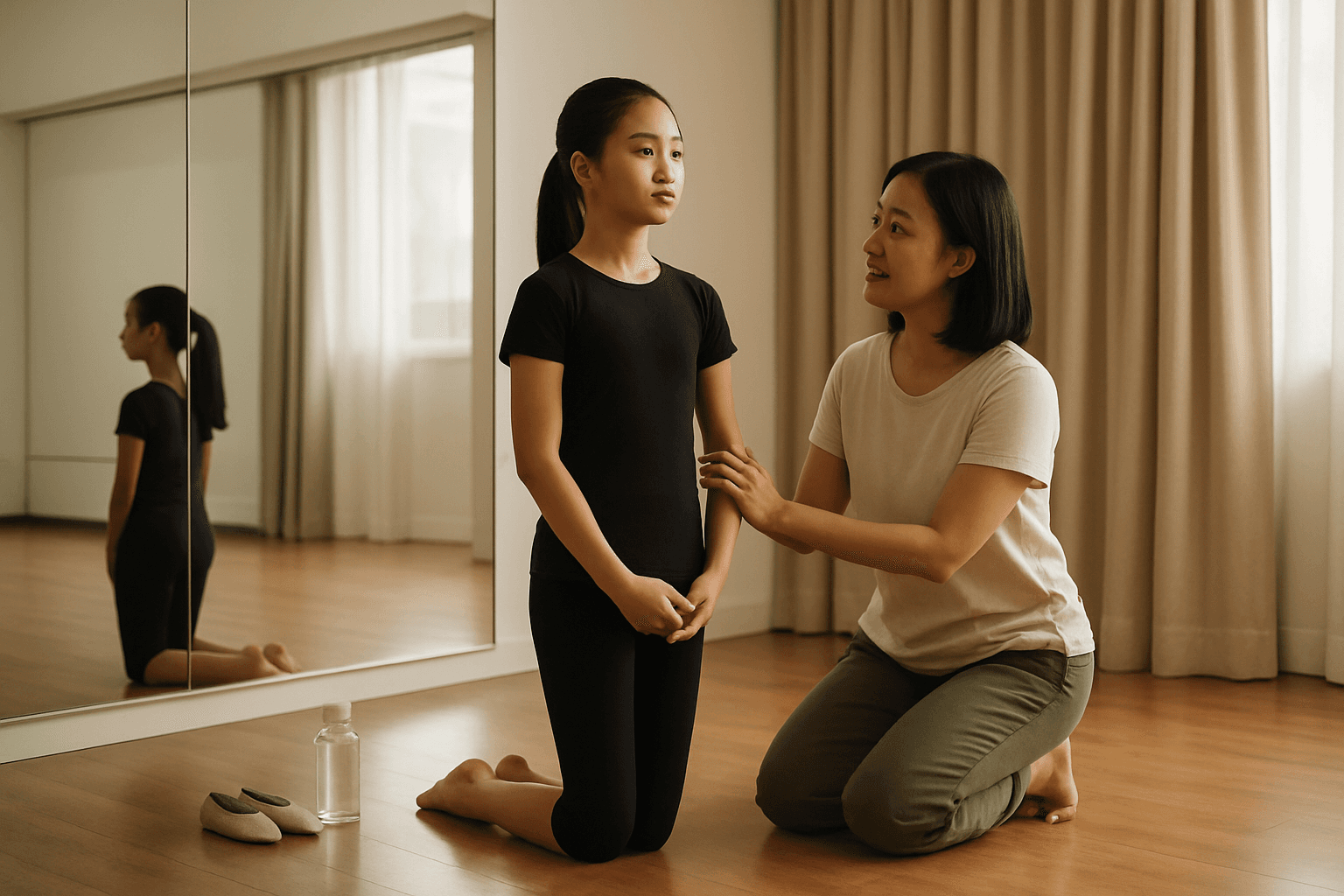
DSA performing arts in Singapore is meant for Primary 6 students who can already show genuine ability or strong potential in dance, drama, or stage performance. In practice, schools usually look beyond medals and certificates. They often want to see how a child performs live, takes direction, responds under pressure, and fits the school’s performing arts programme.
What is DSA performing arts in Singapore, and who is it for?
It is the DSA-Sec route for students who can already show real talent or clear potential in dance, drama, or stage performance.
DSA performing arts is the DSA-Sec route for Primary 6 students who can already show meaningful ability or clear potential in areas such as dance, drama, and stage performance. It is usually a better fit for a child with sustained training, repeated performance experience, or unusually strong stage instinct than for a child whose only exposure is casual enrichment or an occasional school concert.
A useful parent test is this: if a school asks your child to perform live, take correction, and explain why they want that programme, is there enough substance to show? If yes, DSA may be worth exploring. If not, the child may still enjoy performing arts, but may need more time and experience before this route is realistic.
Think of DSA as a talent-fit application, not a general interest form. Your child still takes PSLE, and DSA does not replace the wider posting process. If you want the bigger picture first, start with Direct School Admission Singapore: A Practical Parent Guide and What Is Direct School Admission in Singapore?.
DSA - Ballet
Hi there. Just to share, the schools in the East who take DSA for Dance at Sec 1 would be Temasek Secondary, Tanjong Katong Girls and St Anthony's Canossian. You would have to check with the schools when their DSA exercises are. The reality about SCGS and MGS Dance DSA - they take at the MOST 2 to 3 girls via DSA if your child is not from their Primary school. Aside from your child's talent, their standards are very high : pass RAD GD 5 with Distinction, have competition experience (eg CSTDs eve
2010 DSA(Direct School Admission)
DSA means direct school admission via special talents such as sports and music. Gep also consider a talent, if a mainstrem child do very well in any of the academic subject, participates in various activities or competition also consider a talent. keep the record well, you need them to fill up the forms. there are children apply dsa thru Eng, Maths, Science, Chinese. Maths is the popular one, the chances is slim. Sports and music talents, you should participated in school cca, join competitions,
What do schools actually look for in a performing arts applicant?
Schools usually look beyond talent alone. They also assess expression, confidence, discipline, coachability, and whether the child can grow in the school’s programme.
Schools usually assess more than raw talent. A technically strong dancer who cannot absorb corrections may be less convincing than a slightly less polished dancer who learns quickly, stays focused, and performs with confidence. In drama, a child with clear diction, believable expression, and good listening skills may stand out more than a child who simply projects loudly.
In practical terms, schools often look for some combination of technique, expression, timing, stage confidence, discipline, coachability, and genuine interest in developing further. They are not only asking, "Can this child perform today?" They are also asking, "Can this child grow in our programme and contribute to it over time?"
This is where many parents misread the process. They focus on certificates because certificates are easy to file, but schools often care more about what the child actually looks like in the room. That broader view is consistent with how DSA is commonly explained in Schoolbag's parent-facing overview of DSA questions. For a broader overview, see What Talents Count for DSA Eligibility?.
DSA - Ballet
Depends on which dsa school you are looking at bc the qualifying criteria varies. A mid range school may not need competition experience as long as you can demonstrate your techniques in the dance audition but a more competitive Sch may require soloist competition awards before even getting shortlisted. If you want to look for a dance school, depending on genre (tap, jazz, contemp, lyrical, theatrical, classical etc), the popular dance schools are different. Suggest for you to look up the variou
2009 DSA(Direct School Admission)
DSA is not equivalent to IP. IP is a prog offered in certain sec schs which do not require its students to sit for O levels, ie it is a “thru train prog” from Sec 1 to JC2 where they then sit for A levels. That is not to say that it’s automatic promotion to each level regardless, they still hv sch based exams etc with minimum pass requirements etc. DSA is offered by several sec schools, where diff schools will have diff areas of “talent” they are looking for. Generally if the DSA offer received
Have More Questions?
Get personalized guidance on schools, tuition, enrichment and education pathways with AskVaiser.
Try AskVaiser for Free →How are dance, drama, and stage presence usually assessed?
Schools usually assess these areas through live tasks, but the emphasis differs. Dance often focuses on movement control and learning ability, drama on voice and character work, and stage presence on how naturally the child holds attention.
Assessment often differs by talent area and by school, but parents should expect live demonstration to matter. For dance, schools may watch rhythm, coordination, control, posture, musicality, and how quickly a child picks up choreography. A child who makes a mistake but adjusts smoothly after feedback can still leave a strong impression.
For drama, schools may pay attention to voice, diction, characterisation, emotional range, focus, and how naturally the child responds in scene work or improvisation. Some children are strong only in prepared pieces. Others are better when reacting in the moment. Schools may test either or both.
Stage presence is usually judged more holistically. Schools may notice whether a child can hold attention, use space well, stay composed when being observed, and connect with an audience without looking forced. A child does not need to be flashy to have stage presence. Calm control, clear intention, and believable engagement often matter more than exaggerated performance.
In real terms, one school may ask for a prepared item, another may run a workshop-style session, and another may include an on-the-spot task such as learning a short combination or responding to a script excerpt. Prepare for live tasks, not just polished recitation. For a broader overview, see How to Apply for DSA in Singapore.
School Of The Arts, Singapore
For dance an important component is *performance*, meaning no matter what their personalities , when they dance they must get into character and smile, laugh, look happy or sad depending on what is required. They are just good actors. Even at the RAD exams performance is graded ....... when you smile alot in the exam, getting the full 10 marks for the catergory is easy-peasy ...... but Singapore dancers waste that grading by not smiling thinking it's not necessary. This is one of the reasons why
School Of The Arts, Singapore
My DS will be joining the Theatre programme. He attends a neighbourhood school and there is no drama club CCA. All he did was perform in a Racial Harmony Day skit. The application only asks for results and prior stage experiences, no matter how small. I think the 2min video goes a long way and then the monologue, group audition and the interview
What kind of evidence helps support a DSA performing arts application?
Use real evidence of training and performance, not just a long list of certificates. Relevant videos, training history, programmes, CCA records, and references are often more useful than volume.
The most useful evidence is the evidence that makes your child’s performing history easy to understand. Common examples parents prepare include a short training summary, recital or show programmes, school performance records, CCA participation, teacher or coach references, and short performance clips. These are examples, not an official checklist, and different schools may ask for different things.
For performing arts, relevance usually matters more than volume. A clear clip of your child performing a dance piece, ensemble item, monologue, scripted scene, or named stage role usually tells a school more than a thick file of unrelated workshop certificates. The same goes for programme booklets that show repeated participation or specific roles across several years.
A good parent question is not "How many documents do we have?" but "Can someone unfamiliar with my child quickly see what they have done, how often they have performed, and what they seem strongest at?" If that answer is yes, the portfolio is probably moving in the right direction. For a parent view of DSA readiness, this KiasuParents guide can help frame the question, even though each school still decides what it values most. For a broader overview, see What Happens During a DSA Interview in Singapore?.
2010 DSA(Direct School Admission)
Yes , if it is accredited - like RAD (Royal academy of dance) or others... Anyway, auditions definitely required for dance dsa.
2009 DSA(Direct School Admission)
Hi, My gal would like to try DSA using Wushu for the following school which they do have wushu as CCA: 中正总校 Anglican High Dunman High Nanyang Girls’ High River Valley High Anyone has experience in with these school using DSA ? What questions or preparation needed for the audition ? :? Thanks.
Remember: there is no single standard audition format or document checklist
Do not assume one school’s audition style or document expectations apply everywhere.
Different schools assess performing arts DSA differently, so do not build your whole plan around one school’s sample process. One school may want a prepared piece, another may run a workshop-style audition, and another may combine a short performance with an interview. Use the broad MOE FAQ on DSA-Sec for process context, then use open houses and practical question lists such as this guide for DSA parents to find out what that specific school actually looks for. For a broader overview, see How DSA Fits Into the Secondary 1 Posting Process.
DSA - Ballet
I think for Ballet to be used for DSA, it has to be under Dance, which many schools do take Dance under DSA…it could be Chinese Dance or International dance which both require ballet foundation. Remember your objective : To enter the secondary school of choice via DSA.
DSA Dance
Hi, i have been following the thread for many years. Some schools have also removed DSA dance. My child is p4 now and still very much in love in dance. Just want to get a sense of what DSA auditions they do? We are looking at SCGS, fairfield and potentially NJC. I understand about the AL scoring and all, and we will shift our plans accordingly to the schools we are applying for after going through her p5 results next year. For parents who have successfully DSA their children into SCGS, can i che
What should parents prepare before auditions or showcases?
Prepare your child to perform clearly, stay composed, and present relevant evidence without sounding over-rehearsed.
- ✓Rehearse one prepared piece, monologue, movement sequence, or showcase item until your child can perform it steadily without prompting.
- ✓Practise a short self-introduction covering training, performance experience, and why the child is interested in that talent area.
- ✓Prepare only relevant supporting materials, such as a simple training summary, recital programmes, CCA records, references, or short clips if the school allows them.
- ✓Confirm attire early so your child looks neat and can move comfortably without costume-related distractions.
- ✓Run at least one mock audition in front of an unfamiliar adult or small audience so your child gets used to being watched.
- ✓Practise common interview questions without scripting every sentence; natural answers usually sound stronger than memorised ones.
- ✓Pack practical items the night before, such as shoes, water, hair ties, and any documents the school has requested.
- ✓Keep the final day calm, because tired or over-coached children often look less ready than children who are simply steady and prepared.
What happens during a typical performing arts selection process?
Expect some combination of application screening, a live performance task, an interview, and follow-up communication from the school.
A common pattern is application submission, school shortlisting, a live audition or performance task, an interview, and then follow-up communication from the school. In performing arts, the middle stage often matters most because the school can directly observe how the child performs, listens, and responds.
One school may ask for a prepared monologue or dance item, while another may set an on-the-spot task to see how quickly students learn or adapt. The interview is usually not separate from the talent assessment in any meaningful way. Schools often use it to understand motivation, attitude, and fit. A child may be asked why they want that school, what performances or roles they have done, how they handle mistakes on stage, or what they hope to contribute.
If you want a clearer sense of the conversational part, see What Happens During a DSA Interview in Singapore? and this general DSA interview primer.
Two practical details matter. First, if your child applies to two talent areas within the same school, the school makes only one offer. Second, a confirmed DSA offer is not the end of the process. Your child must still opt for the school during the relevant preference stage and meet the PSLE score requirement for a posting group offered by that school. If you need that part explained clearly, read How to Apply for DSA in Singapore and How DSA Fits Into the Secondary 1 Posting Process.
2009 DSA(Direct School Admission)
Very true. Some schools ask the kids to sign a 'contract' to make sure the kids understand they have to take that CCA for 6 years. It's a heavy commitment if the child realizes in Sec 2 or 3 that they no longer enjoy the sport they DSA'd through and can't cope with the heavy coaching plus keep up with their studies.
School Of The Arts, Singapore
You still have to go thru auditions. Apply thru student affairs direct and they will arrange for auditions, either in March or June. You will have to attend the chosen school until informed date. They will definitely ask for reasons why you did not apply during TA period. You will come in as transfer students. Best to ask student affairs direct for updated info.
What are common mistakes parents make when applying through performing arts DSA?
The biggest mistakes are overestimating fit, over-padding portfolios, and using DSA as a school-entry strategy instead of a real talent route.
A common mistake is treating DSA as a shortcut into a preferred school rather than a fit-based talent application. When that happens, parents may push a child who is not deeply interested, choose schools for reputation instead of programme fit, or present a level of experience that does not hold up once the audition starts.
Another mistake is over-padding the portfolio. Ten minor certificates from unrelated workshops usually do less than one clear record of sustained participation, a credible teacher reference, and a strong performance clip. Parents also sometimes coach interview answers so heavily that the child sounds polished but detached from their own experience.
The most overlooked issue is life after admission. A child still has to cope with the school’s academic expectations, rehearsal load, and co-curricular commitment. A school can look attractive on paper but still be the wrong daily fit. That is why it helps to read Is Direct School Admission Worth It For My Child?, Do You Need Top Grades for DSA in Singapore?, and this broader parent guide on whether DSA is the right option.
School Of The Arts, Singapore
Hi all I am new to this forum, and this topic is one very near to my heart as my daughter is in the school in Year 1. As well, we have family friends whose kids are at SOTA (Years 2 and 3) and what I post here is based on experiences and feed back from them, and what led us to choose SOTA above mainstream schools. The disclaimer here would be : my daughter is in dance, so too most of the kids we know personally, and this is the area where I have the most information. Yes in SOTA your child would
School Of The Arts, Singapore
Hi, first and foremost I’m not a parent I’m a secondary four student. I’m so desperate for information that I’m actually posting on a KIASU parent website haha. I’ve attended the talen academy when I was P6 but failed to get in, and here I am trying again. needless to say, my past failure has really been creeping up on me and making me feel very uncomfortable, unsure if I should even try again. anyway, I am taking my o’levels this year and am currently considering applying for DSA to Sota this j
How can parents judge whether their child is ready for DSA performing arts?
Look for consistency, resilience, and real performance ability rather than excitement alone.
Readiness usually shows up in patterns, not in one impressive performance. A child is more likely to be ready if they have trained or performed over time, can take feedback without shutting down, and are willing to practise even when there is no immediate reward. That matters more than whether they are always the most naturally gifted child in the room.
A useful comparison is this. One child loves the idea of performing but avoids practice, becomes upset by correction, and has very limited experience being observed. Another child may not be as flashy, but has performed repeatedly, stays composed when corrected, and genuinely wants to improve. The second profile is often more DSA-ready.
Think of readiness as repeatable performance under pressure. If your child can show skill, recover from mistakes, and speak honestly about why they want this route, you probably have something real to assess. If not, it may be wiser to build more experience first and treat DSA as one option rather than the whole plan.
School Of The Arts, Singapore
Congrats! Just something to note for parents looking to get into SOTA. To stand out from the crowd, your child should have attended some recognised professional courses in the area of interest, whether it is dance, theatre or art. The certification from these courses should give them an edge.
2009 DSA(Direct School Admission)
Give your child the opportunity to try DSA but ensure they have realistic expectation and not to depend on DSA to gain entry into the choice school. From my understanding with parents who tried DSA CCA with various school, each school has its own criteria, expectation and preferred sports for DSA application including quota. The competition among students depends on the number of applications. If the student was awarded medal in National Level sports and the sport is a niche or preferred sport o
What should families do if the child is interested but not highly trained?
Build experience first, but do not assume the child is automatically out of the running. Some schools may still value visible potential if the child can show it credibly.
Do not assume the child has no chance, but do be realistic about what they can currently show. Some children have raw stage presence, strong musicality, or unusual confidence even without years of formal training. The practical question is whether they already have enough evidence for a school to act on that potential.
If the answer is not yet, the next step is usually to build real performance history. That can mean joining school productions, taking structured dance or drama classes, recording a few honest performance clips, or finding small but regular chances to perform in front of others. A child with a clear upward trend and repeated participation often looks more credible than a child with many one-off activities.
This is also where school research matters. At open houses, ask whether the school mainly recruits students with substantial formal experience or whether it is open to developing students who show visible potential. That helps you separate schools that want finished performers from schools that are more willing to nurture. Keep your options open with What Talents Count for DSA Eligibility? and How to Build a Backup Secondary School List When Applying for DSA.
School Of The Arts, Singapore
We attended the Open Symposium and during that session, we were told that SOTA will conduct audition for EVERY child who applies. So there might be no pre-requisite grade level attained before the child can apply. My DD just attended the Talent Academy for Theatre Studies on 14 March. I've shared her experience under the DSA thread. http://www.kiasuparents.com/kiasu/forum/viewtopic.php?t=157&start=3160
School Of The Arts, Singapore
Hi Pixie28, The BAC is usually via auditions, but if the student has already gone through the Foundation year, the next year the student may automatically be accepted upon SDT receiving the application. Is the BAC useful - well, once a month is not enough. BUT my daughter feels it offers her a view into what the professional dancers do, and get tips on how to perform on stage. Mr Janek who teaches them is likable, has vast experience and very generous with sharing dance knowledge. Some of the st
Have More Questions?
Get personalized guidance on schools, tuition, enrichment and education pathways with AskVaiser.
Try AskVaiser for Free →