
How to Compare Secondary Schools After PSLE in Singapore
A practical parent guide to commute, culture, support, programmes and future pathways
To compare secondary schools after PSLE, first shortlist schools your child can realistically enter. Then compare real daily factors: commute, school culture, student support, subject and CCA fit, and how the school may shape later options after O-Levels. Use open houses and school websites as evidence, but choose the school your child can travel to comfortably, settle into well and benefit from consistently.
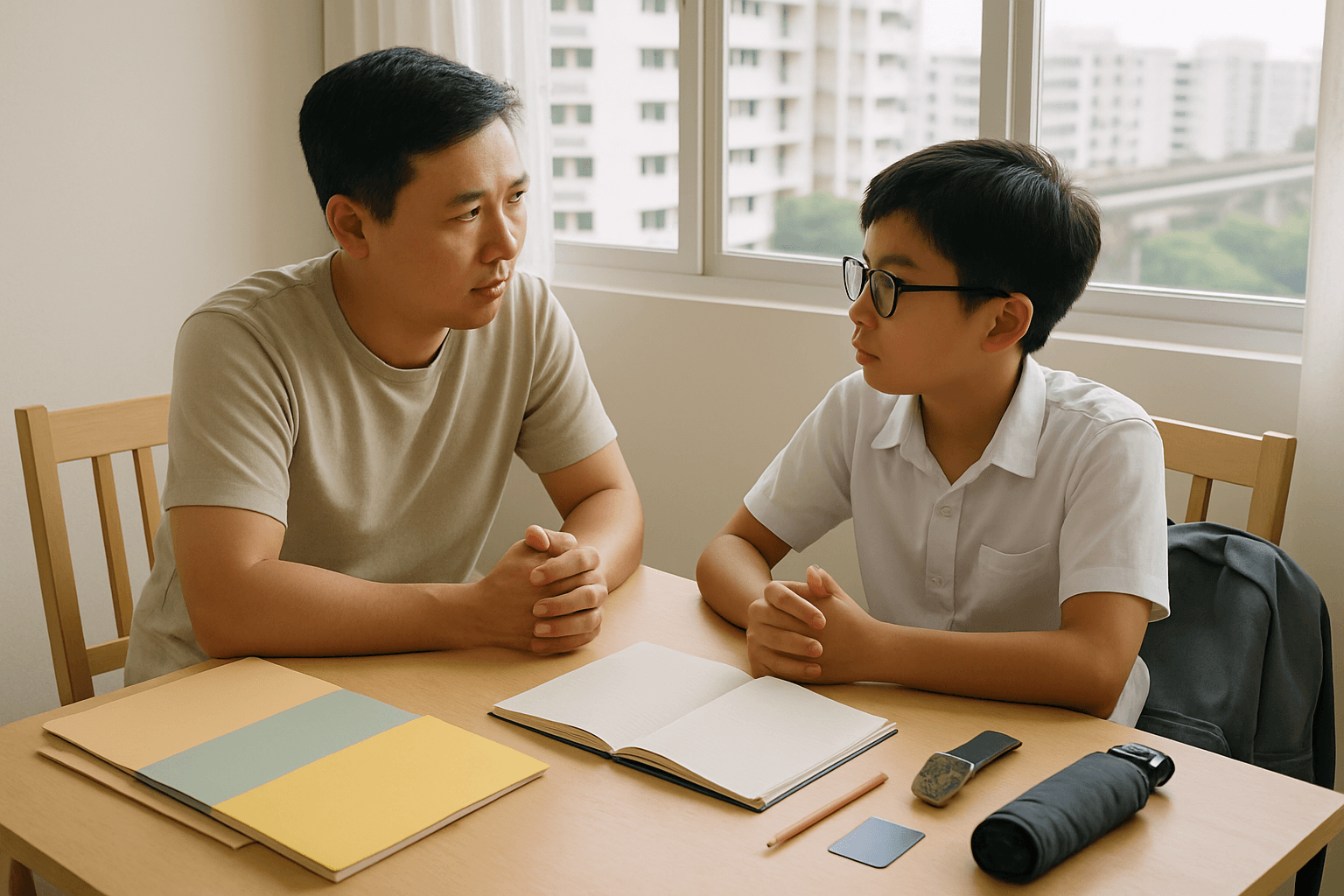
After PSLE, compare schools in this order: eligibility, commute, culture, support, programme fit and future options. That gives you a clearer answer than reputation or indicative cut-off points alone.
Start with the schools your child is realistically likely to enter. Then look at what daily school life will actually feel like: the journey, the environment, the kind of support available, the subjects and CCAs your child is likely to use, and whether the school keeps sensible options open later on. You do not need a perfect ranking. You need a decision framework that fits your child.
What should parents compare first when choosing a secondary school after PSLE?
Begin with schools your child can realistically enter, then compare commute and fit before reputation. Scores help you shortlist, but they do not tell you which school will suit your child.
Start with eligibility, but do not stop there. PSLE results and indicative cut-off points help you see which schools are realistic, but MOE has been clear that parents should also consider the child's interests, strengths and the school's ethos, culture and programmes, as reflected in its new PSLE scoring guidance and ministerial remarks on choosing schools more broadly. Think of the score as a filter, not a verdict.
A practical comparison order helps. First ask which schools are genuinely within reach. If your child already has a DSA-Sec placement, factor that in before building the shortlist. Next ask whether the commute is workable every day. Then compare culture, support, programmes and likely pathway fit. This order prevents a common mistake: parents spend hours debating two schools with similar cut-off points, while ignoring that one has a direct trip and clear transition support, and the other needs multiple transfers and gives vague answers about how weaker students are helped.
Once you have a realistic shortlist, compare the same factors across every school. Use MOE's school search tools, school websites and open houses to gather evidence, but judge schools by what your child is likely to experience every weekday. The strongest choice is usually not the one that looks best in a ranking conversation. It is the one your child can actually live with and benefit from. For a broader overview, see What Is Full Subject-Based Banding in Singapore? A Parent's Guide to Secondary School Subject Levels.
What goes into choosing a suitable Secondary School
Saw this being shared in the parents groupchats. https://www.thewackyduo.com/2022/11/how-to-choose-secondary-school-guide.html https://i.imgur.com/fDkJSy6.png\"> https://www.thewackyduo.com/2022/11/how-to-choose-secondary-school-guide.html It's time to choose a secondary school. Choosing a secondary school is a completely different process than primary school. One tends to choose a primary school based on distance or affiliation. Picking a secondary school is a different ball game. Grades play a
Beyond AL/PSLE scores - Choosing Secondary School
Hi everyone, I’ve noticed a lot of discussions here about PSLE posting and how tough it can be to shortlist secondary schools — especially when trying to consider more than just the cut-off points. I recently built a free website called School Advisor SG that might be useful for parents going through this process. It helps you explore schools holistically, by combining publicly available data on: PSLE cut-off points (2024) Sports & CCA performance (from national competitions) Primary–secondary a
How much should commute matter when choosing a secondary school?
Commute should matter a lot because it affects energy, stress and willingness to stay for school activities. Compare real door-to-door travel, not just map distance.
A great deal. Commute affects sleep, punctuality, mood and whether your child still has energy for CCA, homework and family time. Parents often compare schools by reputation first, then realise too late that the child will be making a long, tiring journey five days a week.
Do not judge commute by postcode or MRT line alone. Compare the actual door-to-door journey, including walking time, waiting time, transfers and what the route feels like on a rainy morning or after a late CCA. A school that looks only slightly farther away can feel much harder if it needs two bus changes or a packed train ride. On the other hand, a longer but direct route may still be manageable because it is predictable and less stressful. In real life, a 40-minute direct trip can be easier than a shorter trip with multiple transfers.
A useful parent test is this: imagine your child doing the route in August, not in the first excited week of Secondary 1. If the journey already sounds draining before school even starts, that is a real decision signal. Commute is not just a transport detail. It shapes the school day before the first lesson begins. For a broader overview, see What Do G1, G2 and G3 Mean in Secondary School?.
What goes into choosing a suitable Secondary School
Hi there, Recently a relative asked me how I choosed my kid’s Secondary School and I kind of got a shock, I had no answer. It was simply just based on the results. My relative came then with a list of important factors that he thought would be helpful to help his kid cope with the stresses of school. I thought that I would help him make this post to help him make a better decision (the kid will be going into the Secondary School in next year). So here goes, considering grades what else should he
When does a PSLE student start to choose secondary school?
Hi parents of children taking psle this year, u may find the following link info helpful. http://www.moe.gov.sg/education/admissions/secondary-one-posting/important-dates/
Have More Questions?
Get personalized guidance on schools, tuition, enrichment and education pathways with AskVaiser.
Try AskVaiser for Free →How do I judge school culture and environment from an open house?
Use the open house to observe the school in action, not just to collect brochures. The best clues are how students behave, how staff answer difficult questions and whether the environment feels supportive in a believable way.
Look for how the school feels in practice, not just how it describes itself. Brochures show the promise. Open houses show the vibe. Notice how students speak to adults and to one another, whether teachers answer questions clearly or fall back on slogans, and whether the atmosphere feels calm, orderly and purposeful or rushed and overly staged.
Good clues are often small. When you ask about discipline, support or class mix, does the school answer directly? When students talk about their experience, do they sound believable or heavily coached? If your child is quiet, watch whether student ambassadors make space for quieter visitors or only engage the confident ones. If your child needs structure, pay attention to whether expectations are explained clearly and consistently.
One open house is only a snapshot, so compare patterns across several schools. Parents often over-trust polished presentations. A better question is, "Can I imagine my child being known here, guided here and comfortable here after the novelty wears off?" For a parent-grounded perspective on what families tend to ask and value, this KiasuParents article on choosing a secondary school is a useful reality check. For a broader overview, see What Happens in Secondary 1 Under FSBB?.
Moving to Singapore and looking for a good Secondary School
Hi Singaporenew, First of all, let me welcome you to Singapore. Can I suggest you to attend the open house of all the independent schools such as ACS, RI, SJI? Maybe could just walk into the schools to talk to their principals to find out more about their curriculum and to clear your doubts. Do bring your boys along to take a look at the environment. Your kids should be able to fit in socially since they have lived in Asia for a period of time. Hope you find an idea school for your boys. All the
Choosing Secondary school
Hi, Wonder if anyone knows what happens in this Secondary School selection scenario : If there are 10 places left in School A and 20 pupils with EXACTLY the same PSLE score apply, how does MOE decide which 10 to take into the school. Does it matter in this case whether the child had put School A as the first choice? This impacts what schools to put as 1st and 2nd choice - whether the common advise of putting the dream school which is just out of range of the child’s mark is a wise thing to do. P
What student support should parents look for in a secondary school?
Check how the school supports both learning and wellbeing, especially during the move into Secondary 1. Ask what happens in practice when a student is struggling, unsettled or inconsistent.
Look for both academic support and pastoral support. Academic support is what happens when a student falls behind, has uneven subject strengths or needs help adjusting to new Secondary 1 demands. Pastoral support is how the school helps students settle in, builds routines, responds to stress and works with parents when concerns come up.
This matters more than many parents expect. A shy child may need strong transition support in the first term. A bright but disorganised child may need teachers who spot missing work early. A child who is strong in languages but weaker in mathematics may need a school that can explain clearly how subject levels, reviews and extra help are handled. If you are still getting familiar with how subject levels work, our guide to What Is Full Subject-Based Banding in Singapore? gives the bigger picture.
At open house, ask what usually happens if a Secondary 1 student has trouble coping, how teachers monitor adjustment and how parents are updated if issues arise. Common examples schools may mention include after-school consultations, form teacher check-ins, subject clinics, peer support or counselling referrals, but these are examples rather than a standard package every school offers. The useful answer is not "we care for every child." The useful answer explains what the school actually does in an ordinary week. For a broader overview, see How G1, G2 and G3 Subjects Work for O-Levels.
Which Secondary Schools?
When you receive a copy of the list of secondary schs given to all P6 students, you can compare the COP of the sch, in general, those with extremely low COP means more behavioural problems from students. Not wise to list the 'no no' sch, later get sued by the sch for tarnishing their image.
When does a PSLE student start to choose secondary school?
for those without DSA offer, yes, after PSLE result for those applying via DSA, would have shortlisted the schools well before the DSA process begins, and must decide by late Oct, after PSLE exam, before result, which offer to accept; after which NOT eligible to choose school after the result of PSLE is released some kids may already have an idea what school they want from Pri 5 onward, some may have no idea, depending 100% on the parents
How do programmes, subject choices and CCAs affect school fit?
Programmes, subject options and CCAs help only when they genuinely fit your child's interests, strengths and capacity. Attractive offerings are useful only if your child is likely to take part and sustain the commitment.
They matter when they match your child's real strengths and interests, not just what sounds impressive at an open house. A school may highlight leadership opportunities, applied learning, arts programmes, sports results or special academic offerings, but these only become meaningful if your child is likely to participate and benefit from them.
For example, a child who genuinely enjoys science may value a school that offers richer science experiences and supports that interest consistently. A child who is happiest in performance, design or sport may thrive more in a school where those activities are a visible part of everyday school life, not just brochure highlights. A child with a very full after-school schedule may not actually benefit from a school whose most attractive opportunities require frequent long hours after class.
The same applies to subjects. Under the current system, students can have different strengths and may take subjects at different levels over time. That is why it helps to understand what G1, G2 and G3 mean in secondary school. A simple rule of thumb is this: a programme is only an advantage if your child can really use it. More programmes do not automatically mean a better fit, and a famous CCA does not help much if the commitment level or culture is wrong for your child.
Using Secondary School material to prepare my PSLE kid
The Secondary English practice books in Popular vary considerably in style, content and quality. Secondary English is much tougher than Primary English. In Secondary English, students have to focus on comprehension and composition. A new aspect to comprehension is summary writing; this is something many students, especially in Secondary One, find enormously difficult. There is a large focus on vocabulary in comprehension. In compositional writing, there are many new genres and text types; studen
What goes into choosing a suitable Secondary School
If Temasek JC is far while Crescent Girls’ Secondary school is nearer your house, then choose Crescent Girls. Travelling time, to and fro everyday, is crucial. I won’t want to tired my child, just because of travelling. Everyday, from Mon to Fri, your daughter has to stay back for Ccas, some Talent development programme or some project group / team work discussion. Thus, travelling distance + time, are important factors. Besides, Crescent Girls is a good Secondary school, too. Plus, u mentioned,
What should parents ask at a secondary school open house?
Ask practical questions about daily routines, settling in, support, parent communication, CCA load and how subject levels work in real school life. If answers stay vague, keep asking until you hear a concrete example.
Ask questions that reveal daily life, not just achievements. Useful questions include what a normal school day looks like for Secondary 1 students, how the school helps new students settle in, what support is usually given if a child struggles in a subject, how the school communicates with parents when there is a concern, what kinds of students usually do well there and how demanding CCA schedules are in practice.
If the school mentions subject flexibility or different learning paces, ask how this works in ordinary school life rather than stopping at the headline. Parents who want a clearer foundation before asking these questions can read What Happens in Secondary 1 Under FSBB? and Can Students Take Mixed Subject Levels Under FSBB?. Those guides make it easier to understand what to listen for when schools explain subject levels.
The goal of the open house is not to collect the longest list of programmes. It is to find out whether the school can explain clearly how a child learns, settles in and grows there. If an answer sounds polished but vague, ask for a typical example. Specific answers are usually more useful than impressive ones.
Using Secondary School material to prepare my PSLE kid
I think for many of the high scorers in PSLE this could be what they have done some coaches for languages esp EL & CL actually do exactly that - Pri 5 practise on Pri 6, and Pri 6 practise on sec sch stuff also, for example, some sec school actually uses sec 2 EL book for sec 1, and sec 2 uses book 3 etc and so on and so forth
Using Secondary School material to prepare my PSLE kid
Hi parents, I heard that POPULAR is recommending that we use Secondary School level books for practice for kids taking the PSLE especially for model English compositions and Science practice. Anyone out there does this already? Is it effective or too difficult for a P6 child to cope with? Can someone recommend which books to buy? Thanks!
How do secondary school choices affect O-Levels and post-secondary routes?
A secondary school choice affects subject options, academic pace and the kind of support your child gets before later decisions. It influences future routes, but it does not decide your child's whole future on its own.
Secondary school does not lock a child into one future, but it does shape the conditions in which later choices are made. The school's academic structure, subject availability, guidance on subject levels and overall learning environment can affect what a child is ready for by the time post-secondary decisions come around. MOE's PSLE and Full Subject-Based Banding overview explains the broader idea that students can learn at levels that better match their strengths and learning pace.
This is where parents should think one step ahead without trying to script the whole future. If your child is strong across most subjects and may later consider junior college, you will probably want to understand how the school supports deeper academic progression. If your child is more applied, hands-on or course-focused, you may care more about whether the school helps them build confidence, stay engaged in key subjects and keep practical routes open for polytechnic or ITE. If your child has an uneven profile, such as strong English but weaker mathematics, it becomes especially important to ask how subject levels and subject combinations are reviewed over time.
Choose for today's child and tomorrow's options. For follow-up reading, parents often find these guides helpful: How G1, G2 and G3 Subjects Work for O-Levels, Does Taking G1 or G2 Limit Future Options Later? and Can G1 or G2 Students Still Go to JC, Poly or ITE?. If you are still thinking mainly in terms of cut-off points, this Straits Times explainer on cut-off scores under the newer PSLE scoring system is a useful reminder that posting scores help with eligibility, but they do not tell the full story of fit.
choosing secondary schools 2013
Sadly, there isn't a lot of good schools in this South area compared to the other areas ( had a pretty hard choosing my Secondary School last year because of this ) If your daughter can travel a bit more, you can consider these schools as well: 1) Fairfield Methodist School ( COP 239, previous year COP was 235 ) 2) Queensway Secondary School ( COP 214 ) 3) Queenstown Secondary School ( COP 200 ) Thank you!
Moving to Singapore and looking for a good Secondary School
My son has gone through 3 international schools in Singapore, although none of those u mentioned. I am beginning to realize that the local system might be better for a child that is average and above. By local system, I do include the 3 local international schools - SJI (I have heard many good things about this school from separate sources), ACS International and Hwa Chong International. If your child excels in Math, all the more u should consider the local system. My son is slightly above avera
How should parents compare schools side by side after visiting open houses?
Compare every school using the same criteria and write concrete observations, not fuzzy feelings. A simple side-by-side matrix makes the final decision clearer and less emotional.
Use the same comparison criteria for every school. A simple matrix in a notebook or spreadsheet works well if it covers commute, culture, support, subject fit, CCA fit, programmes and likely pathway fit. The key is to record one concrete observation in each area instead of vague impressions.
For example, instead of writing "good school," write "direct bus route and likely manageable even after CCA," "teachers explained support clearly," or "child liked the science facilities but felt the environment was too hectic." Instead of writing "not suitable," write "two transfers each way and likely tiring in bad weather" or "school seemed strong overall but could not explain how weaker students are supported." Concrete notes make later discussions calmer and more objective.
It also helps for parent and child to compare impressions separately before discussing them together. Children may react strongly to one exciting performance or one attractive campus feature. Parents may react strongly to reputation. A side-by-side comparison puts both reactions back against the same yardstick. If a school looks strong overall but has one real deal-breaker, such as an exhausting commute or a culture your child clearly disliked, write that down plainly. It is easier to make a sound decision when the trade-offs are visible.
Comparison among some Secondary schools
1. Chung Cheng (YISHUN) vs. Maris Stella vs. Kranji Secondary 2. Presbyterian High vs. Riverside Secondary vs. Ahmad Ibrahim Secondary 3. Evergreen Secondary vs. Woodlands Ring Secondary Can anyone enlighten me w some words? :? :thankyou:
Selection of Secondary School
My girl's T-sore result 200... ya.... Although she scored 3As for ECS, but M scored D... haiz would like to seek advise for our 6 choices... 1. Greenridge Secondary School - 207 (Bukit Panjang) 2. Hillgrove Secondary School - 198 (Bukit Batok) 3. Christ Church Secondary School - 196 (Woodlands) 4. Canberra Secondary School - 200 (Sambawang) 5. Jurongville Secondary School - 201 (Jurong East) 6. New Town Secondary School - 202 (Dover Road) Not sure the abovementioned school consider not too bad o
What is the biggest mistake parents make when choosing a secondary school?
Choosing by reputation alone is the most common mistake. Fit matters more than status once everyday school life begins.
The biggest mistake is choosing by prestige or cut-off point alone and treating fit as secondary. A school may look stronger on paper, but if the commute is draining, the culture does not suit your child or the support is a poor match, daily school life can become much harder than expected.
Prestige does not shorten the journey or improve fit. The best school is the one your child can attend, settle into and grow in every day.
Have More Questions?
Get personalized guidance on schools, tuition, enrichment and education pathways with AskVaiser.
Try AskVaiser for Free →