
How to Tell What a Primary School Is Really Like in Singapore
Look past reputation and read the everyday signs that shape your child's experience: communication, routines, discipline, pace, and how pupils and teachers behave.
If you want to assess primary school culture in Singapore, use reputation only as a first filter and then test it against practical evidence. The strongest clues are what you see at Open House or around drop-off, how the school communicates with parents, what its homework and discipline routines sound like, and whether recent parent feedback points to the same patterns. The goal is not to label a school perfectly. It is to judge what your child is most likely to experience day to day.
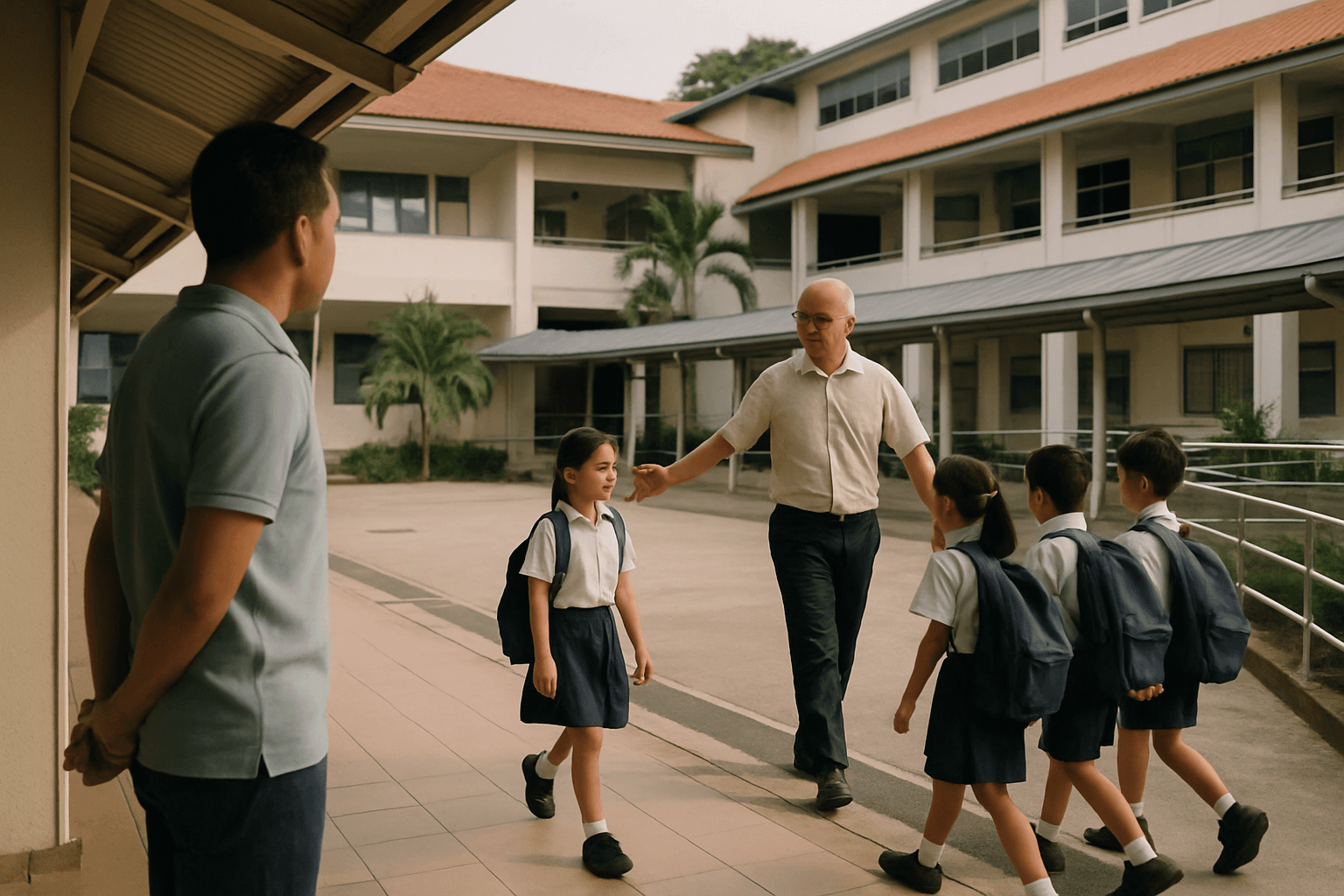
Parents can usually tell what a primary school is really like by looking at daily signals, not just rankings or word of mouth. Watch how adults speak to pupils, how children move around the school, how clearly the school communicates with families, and whether routines feel calm, supportive, and organised or tense and pressurised. Reputation tells you what a school is known for. Culture tells you what your child is likely to feel on a Tuesday morning.
What does school culture actually mean in a Singapore primary school?
School culture is the day-to-day feel of the school: its routines, discipline, teacher tone, peer behaviour, values, pace, and communication with parents.
School culture is the everyday environment your child steps into, not the school's public image. In practical terms, it includes how strict or relaxed the routines feel, how teachers speak to children, how pupils behave around one another, what the school praises, how problems are handled, and how clearly parents are kept informed.
This matters because parents often use the word culture when they really mean daily fit. A school may have a strong name, but your child will experience something much more specific: the pace of lessons, the tone of corrections, how much independence is expected, and whether the atmosphere feels warm, formal, demanding, or balanced.
A useful way to assess culture is to break it into observable parts. Ask yourself whether expectations seem clear, whether values are visible in action rather than just slogans, whether pupils look settled, and whether adults sound calm and organised. If you still cannot picture an ordinary school day after a visit, you probably do not know the culture well enough yet. For a broader overview, see Primary 1 Registration in Singapore: How It Works, Balloting Risk, and How to Choose a Realistic School Plan.
Preschools prepared your kids well for Singapore primary?
For parents who have already been through the pre-school days and with kids now in primary schools (Singapore schools), can you share your comments on your kid's previous preschool and their curriculum - specifically if they have prepared your child properly for the Singapore education system ? (not discussing the international or foreign schools system here) Nowadays, there are so many pre-schools and childcare centres with many learning methods. Parents currently at the pre-school stage will b
Are All Primary Schools The Same?
A lot of people underestimate the role parents play in the education landscape. In every school, the “parent support group” synergy can be a powerful source of strength for further improvements. A school with a better track record attracts parents who want the same for their children. Higher expectations will also lead to higher demands on the school teachers. In some schools, it is not uncommon for parents to voice their concerns to the school leaders, even to the ministry if teachers or exam p
Why reputation does not always match the day-to-day experience
Reputation is a starting point, not a verdict. What your child experiences depends more on the current teachers, cohort, routines, and pace than on a school's name alone.
A school's reputation is often broad, old, or built around other families' priorities. It may reflect exam results, alumni pride, years of word of mouth, or a principal's past reputation. That can help you shortlist schools, but it does not tell you exactly what your own child will experience now.
Daily life can differ by cohort, class, teacher, and level. A school known as highly academic may still have warm lower-primary teachers and a steady transition into routines. A school described as nurturing may still expect children to become independent quickly. Parents also often overlook peer effects. In some popular schools, more pupils may enter already well prepared through tuition or enrichment, which can make the classroom pace feel faster even if the school itself is not deliberately harsh.
This is why hearsay needs translating. If someone says a school is 'very strong', ask what that means in practice. Do they mean homework is heavy, pupils are highly motivated, parents are very involved, or teachers move quickly because many children are already ahead? Use reputation to narrow the list. Do not let it make the decision for you.
If you are still weighing broad school types, our guides on popular primary school vs neighbourhood school and whether to pick a popular dream school or a safer nearby school can help you separate image from fit.
Are All Primary Schools The Same?
Every parent has different expectations of their children...same goes for my kids too. With my son who is the firstborn, hubby & I have no idea whatsoever about Primary 1 and the choice of school. Sad to say he is the 'guinea pig'. Then, we had no information about schools. We just went for the school which is within 1km of our home. We learn along with him and gain some experience about what SAP schools are, as well as the stress, culture & expectations. With the 2nd child, we felt that she is
Are All Primary Schools The Same?
I saw an online article that many parents want their children to enter popular/famous primary schools because it is very difficult for a primary school to produce MANY academically strong PSLE scorers. Why? Primary school children come from all walks of life. Enrollment into a primary school has absolutely zero link to the K2 child's academic ability. There is no entrance test to do BEFORE enrolling into a Primary School. Priority phases include the child's parents' alumni links, the child's par
Have More Questions?
Get personalized guidance on schools, tuition, enrichment and education pathways with AskVaiser.
Try AskVaiser for Free →What should parents watch for at Open House or on a school visit?
Use visits to watch real behaviour: how adults talk to children, how pupils move around, what the walls emphasise, and whether the atmosphere feels calm, warm, tightly controlled, or high-pressure.
During a visit, focus on behaviour and routines, not just presentations. Watch how staff speak to pupils when they are moving between spaces, how children line up or transition, whether notices are easy to follow, and whether the environment feels orderly without feeling tense. If the school only tells you what it values, you learn less than when you watch what it normalises.
Small details often say a lot. If wall displays mainly celebrate competition wins and top achievements, that may suggest a more performance-led tone. If you also see student work, values messages, and evidence of broad participation, the school may be signalling a more balanced identity. If a teacher answers a nervous child gently but firmly, that suggests one kind of discipline style. If the tone feels abrupt or overly polished for visitors, that is also useful information.
Try to compare the staged and unstaged versions of the school where possible. Open House is helpful, but it is still a curated event. A brief look around drop-off or pick-up can show more natural student behaviour, which is why many parents use observational ideas like those discussed in this guide on alternative ways to assess a school and this article on hidden signs parents look for.
A few examples help. If pupils move calmly and confidently and adults give clear instructions without raising their voices, the school likely has routines children are used to. If the school is very quiet and tightly controlled, that could mean reassuring order for one child and stress for another. If children seem cheerful and relaxed but logistics feel messy, the school may be warm yet less structured. After each visit, write down three words that describe the atmosphere. That makes comparisons much easier later. For a broader overview, see Primary 1 Registration: Should You Pick a Popular Dream School or a Safer Nearby School?.
Preparing Your Child for Primary School:Parent Seminar - MOE
Preparing Your Child for Primary School: A Parent Seminar by MOE Starting primary school is a big step in your child's life. To help you better understand primary school programmes and enable you to make key education decisions, the Ministry of Education will be conducting a seminar on Primary School Education. At the seminar, parents can look forward to sharing sessions by the school principal and a parent volunteer, as well as view the various programmes our primary schools provide. The Primar
Moving to Singapore and looking for a good Secondary School
Hi Singaporenew, First of all, let me welcome you to Singapore. Can I suggest you to attend the open house of all the independent schools such as ACS, RI, SJI? Maybe could just walk into the schools to talk to their principals to find out more about their curriculum and to clear your doubts. Do bring your boys along to take a look at the environment. Your kids should be able to fit in socially since they have lived in Asia for a period of time. Hope you find an idea school for your boys. All the
How can the school's communication style tell you what it is really like?
The school's website, notices, and social updates can show how structured, transparent, and parent-friendly it is. Vague communication now often becomes avoidable stress later.
A school's communication style often reveals its culture faster than its branding does. Look at the website, parent-facing notices, social media updates, and Open House materials. Clear, plain communication usually points to a school that is organised and understands that parents need practical information, not just slogans.
Notice what the school chooses to highlight. If updates regularly show student life, values, routines, and ordinary school moments, the school may be presenting a broader view of education. If almost everything revolves around awards, competitions, and achievements, the school may lean more visibly toward performance and recognition. That does not make it wrong. It simply tells you what seems closer to the centre of the school's identity.
The tone matters too. A notice that explains expectations clearly, gives enough context, and sounds respectful to families usually suggests steadier parent-school communication. Many parents find that the real problem is not strictness but ambiguity. If the school cannot explain expectations clearly, families usually feel that later in missed forms, rushed preparation, or confusion over routines.
For comparison, you can browse how schools present themselves in parent-facing roundups such as this Open House overview and this school choice FAQ article. A simple test is this: after ten minutes on the school's channels, do you understand how school life works, or do you only know how the school wants to look? For a broader overview, see How to Read Past Balloting Data Before Chasing a Popular Primary School.
[Pasir Ris] Primary Schools
I'm surprised that people think that Loyang Primary is a poor performing school. I recall looking at Loyang's results in 2011. They achieved remarkable results. My friend's kids are studying there now. They have commented that their kids enjoy school very much and are performing well. Check out the school website or the Loyang Primary thread in this forum.
[Pasir Ris] Primary Schools
Hi, I do have a few friends and relatives staying in pasir ris from east to west. Lots of my nephews, nieces and friends' kids studies Meriden, Whitesands, Parkview & Elias Park.. Getting in a popular school doesn't really make a kid smarter only (to be frank, based on experience) Eg. One of my nephews who studied in Meriden scored 3 As & 1A star. Back then, it was still a pretty new school. One niece & one cousin's son who studied in Parkview scores all As & 3As 1A respectively. Two cousin's so
What homework, discipline, and punctuality expectations can reveal
Homework, punctuality, and discipline routines usually show whether a school feels tightly structured, moderately demanding, or more developmental and gentle.
Culture shows up fastest in routines, not slogans. Homework practices, punctuality expectations, and behaviour management often tell you how tightly the school is structured and how quickly children are expected to adapt.
You do not need exact official numbers to learn something useful. Ask what a typical lower-primary week looks like, how the school handles forgotten work or forgotten items, and what usually happens when a child is late or takes time to settle into routines. Children often learn a school's culture most clearly when they make small mistakes, so these answers matter more than polished mission statements.
A school with firm routines and very clear consequences may suit a child who feels safer with predictability. The same setup may feel overwhelming for a child who is easily anxious or slow to warm up. On the other hand, a school that gives children more room to adjust may feel kinder at first, but some families may find they need to create more structure at home.
Listen for examples, not just reassuring phrases. 'We guide lower-primary pupils step by step and remind them how to pack up' signals something different from 'children are expected to manage their own materials quite quickly'. A calm, concrete explanation of latecoming or behaviour expectations usually tells you more than a vague claim that the school is 'disciplined'.
Difference in Primary school standards?
During P1 SA1, my friends’ kids who happened to study in the same school in Bukit Panjang area appeared to have scored very well for their SA1 results. Eg. bd 1 results. Meanwhile my child who studies in one of the SAP schools in Spore only manage band 2 results for english and maths but did well for chinese. For my child’s school, they had the normal paper which includes vocab, grammer, punctuation, comprehension, cloze passagae, etc… they are also given separate assessment on oral, composition
Are All Primary Schools The Same?
All schools are the same in the following areas: 1. They are given same MOE guidelines on how the school is run but they can be creatively different 2. All teachers are NIE-trained but again they can be creatively different to be good, mediocre or bad teachers. 3. All teachers are empowered on lesson plans to a large extent, they can be creatively different. 4. It depends on your luck what kind of teacher you get regardless of school 5. Teachers are distributed to schools not based on their resu
How can I tell if a school feels academically intense or more balanced?
You can often read a school's academic tone from what it celebrates most and how it defines success. The key question is whether that pace suits your child.
Look at what the school publicly rewards, how staff talk about success, and what gets visible space during visits. A more academically intense school often foregrounds achievement, competitions, special programmes, and high expectations. A more broadly balanced school usually gives similar visibility to character development, participation, arts, service, or student well-being.
The difference is not whether both exist, because most schools will say they care about both academics and values. The difference is what feels central. If the tour, displays, and conversations keep circling back to results and distinctions, that is a meaningful clue. If staff naturally talk about how children settle in, build confidence, and participate across different areas, that may suggest a wider definition of success.
This is where fit matters more than labels. A child who enjoys challenge, adapts quickly, and likes moving at pace may do well in a more intense environment. A child who needs more breathing room or reassurance may find the same environment draining even if the school is admired by other families. Ask yourself not only whether the school is impressive, but whether your child can grow there without starting every week already stressed.
If you are balancing school fit against prestige or balloting risk, it helps to read this together with our Primary 1 registration guide and our article on how to read past balloting data before chasing a popular primary school.
[Pasir Ris] Primary Schools
I have 2 children currently studying in Pasir Ris Primary School. Both of them commented that they love the school very much. The younger one has very good results of close to perfect score for P1 and P2 (without any tuitions) whereas the older one scoring much poorer at 65 +/- (with tuitions), that is the average of the cohort, I am expecting a PSLE score of around 220 only with Chinese being the worst performing subject. I did volunteer work to get my older one into Pasir Ris Primary many year
[Pasir Ris] Primary Schools
Pasir Ris Pri is the choice if you would like a balanced of both academics and non-academics. PRPS has a longer history and an established culture both academically and in other holistic areas. Their sports teams and aesthetics groups have won various awards consistently over the years. For instance, Just look at their \"Achievements\" listed in their school website. http://www.pasirrispri.moe.edu.sg/Achievements/NonAcademicAchievements.aspx Every year, the school also holds their annual Sing Si
How do you get a realistic picture from parents, alumni, and online comments?
Use parents, alumni, and online comments to look for repeated, recent patterns about daily life. One strong opinion is less useful than three similar recent ones.
Other parents can be useful, but only if you listen for patterns instead of dramatic stories. One glowing recommendation may come from a child who was already confident and well supported at home. One harsh complaint may come from a difficult class year or a family whose expectations did not match the school. What matters more is whether recent, independent accounts keep pointing to the same issues.
Ask current parents what daily life actually feels like. Do children seem happy going to school most days? Is communication clear? Are homework routines manageable? Do teachers seem approachable? How are concerns handled? Those questions usually tell you more than asking whether the school is 'good'. Alumni can also help, but older experiences may reflect a different principal, different teachers, or a different cohort culture.
Online comments are best used as a cross-check. If several unrelated parents mention that the school is organised but quite demanding, that is useful. If one person complains about a teacher but nobody else mentions broader issues, treat it as a specific experience rather than a school-wide truth. The most useful parent source is often someone whose child is somewhat like yours, not just someone who loves the school.
For parent-led perspectives on reading culture beyond rankings, you may find this school culture article and this guide to assessing a school in alternative ways helpful as reference points.
Are All Primary Schools The Same?
Revival of a 9yo thread :rotflmao: Not all primary schools are equal; and not all primary schools are the same. The difference starts with the apex and then filters downwards. Strictly speaking, the https://www.moe.gov.sg/news/speeches/speech-for-mr-ong-ye-kung--minister-for-education--at-the-singapore-hokkien-huay-kuan-affiliated-schools-teachers-day-appreciation-dinner-and-leap-award-presentation-ceremony in Singapore :scared: :yikes: :shock: Schools with powerful backers may be better funded
What is the fair criterion to rank primary schools?
I was thinking that if the school has a good reputation then it will naturally attract good students, students who come from families where the parents are more savvy and know which good education or tuition centres to send the children to. Like I find some of the neighbourhood schools which did not do well, their cohort is made up of children who may not have that much advantages (according to teacher friend of mine) or they cannot afford expensive tuition so the school could be good but they h
What should I ask to understand a primary school's culture better?
Ask for examples about routines, support, discipline, homework, and parent communication. Concrete answers tell you far more than broad claims like 'we are nurturing' or 'we are disciplined'.
Good questions do not ask the school to praise itself. They ask for examples. Instead of asking whether the school is nurturing, ask how the school helps children who take time to settle in. Instead of asking whether homework is heavy, ask what a typical lower-primary week looks like and how expectations are communicated to parents.
Some of the most useful questions are simple. Ask how the school defines success beyond results, how lower-primary children are guided into routines, how behaviour issues are usually handled, how often parents are updated, and what kinds of children tend to settle well there. If you are speaking to current parents, ask what surprised them after their child joined. That often reveals the gap between image and reality.
Listen carefully to the style of the answer as well as the content. A school that gives concrete examples usually understands its own routines well. A parent who says that their child needed a few months to adapt but the teacher kept them informed is giving you something usable. A vague answer such as 'it depends on the child' only becomes helpful when it is followed by what support actually looks like.
If you are comparing several schools during registration season, ask the same core questions at each one. That gives you a fairer comparison than relying on which Open House felt most polished.
[Pasir Ris] Primary Schools
Hi I’m joining this thread coz my boy will be in P1 in 2016. The most important thing for me is that I want my boy to enjoy schooling when he goes to P1 instead of feeling so stressed especially with current education here. I’m still considering which school should I enroll for him. (Pasir Ris Primary, Causirina Primary or Loyang Primary) The nearest school from my place is Pasir Ris Primary School and my girl was an ex-student there. I should say it is indeed a good school and it is very compet
[Pasir Ris] Primary Schools
I am an active parent support group member of Loyang Primary School. My child and niece enjoy the school programme. I am surprised to read your claim that they do not have academic achievement in 2013. Early this year, the school shared their PSLE 2013 results with some parent support group members, they have good academic track records with 100% passes for standard course pupils for consecutive 9 years. All quantity passes above national. They are strong in Mathematics and all 3 Mother Tongue L
When a school looks good on paper but may not suit your child
Prestige, convenience, and word of mouth do not guarantee fit. The right school is the one whose daily culture your child can handle and grow in.
A school can be popular, convenient, or highly respected and still be the wrong fit for your child's temperament. A child who needs reassurance, predictability, or a gentler transition may struggle in a fast-paced or highly pressurised setting even if other families love it. A child who enjoys challenge and independence may feel under-stretched in a school that is warm but less demanding.
This is the mistake many parents regret later: they choose the school that sounds best instead of the school their child is most likely to handle well every day. The better question is not 'Which school is best?' but 'Which daily environment is my child most likely to settle into and grow in?'
[Pasir Ris] Primary Schools
So for parents still thinking which primary school to choose in Pasir Ris, the facts are all here. The same old arguement remain: Small fish in big pond or big fish in small pond But always remember, all primary schools are good school in Pasir Ris as long as it is convenient for you and your little one loves them. More and more neighbourhood schools are producing good results. No point making the kids travel long distance just to go to a branded school.
Are All Primary Schools The Same?
Well said... and it is precisely because of the leadership & commitments from the school which makes the school different.. and I must say, some very significantly different.. And therefore we kiasuparents flood them..
Have More Questions?
Get personalized guidance on schools, tuition, enrichment and education pathways with AskVaiser.
Try AskVaiser for Free →