
How to Compare DSA Schools in Singapore: Distance, Culture and Academic Fit
A practical parent framework for ranking DSA schools beyond brand name and prestige.
The best way to compare DSA schools is to rank each one on commute, culture, and academic fit. In most families, the right DSA school is not the one with the strongest name, but the one your child can realistically thrive in week after week.
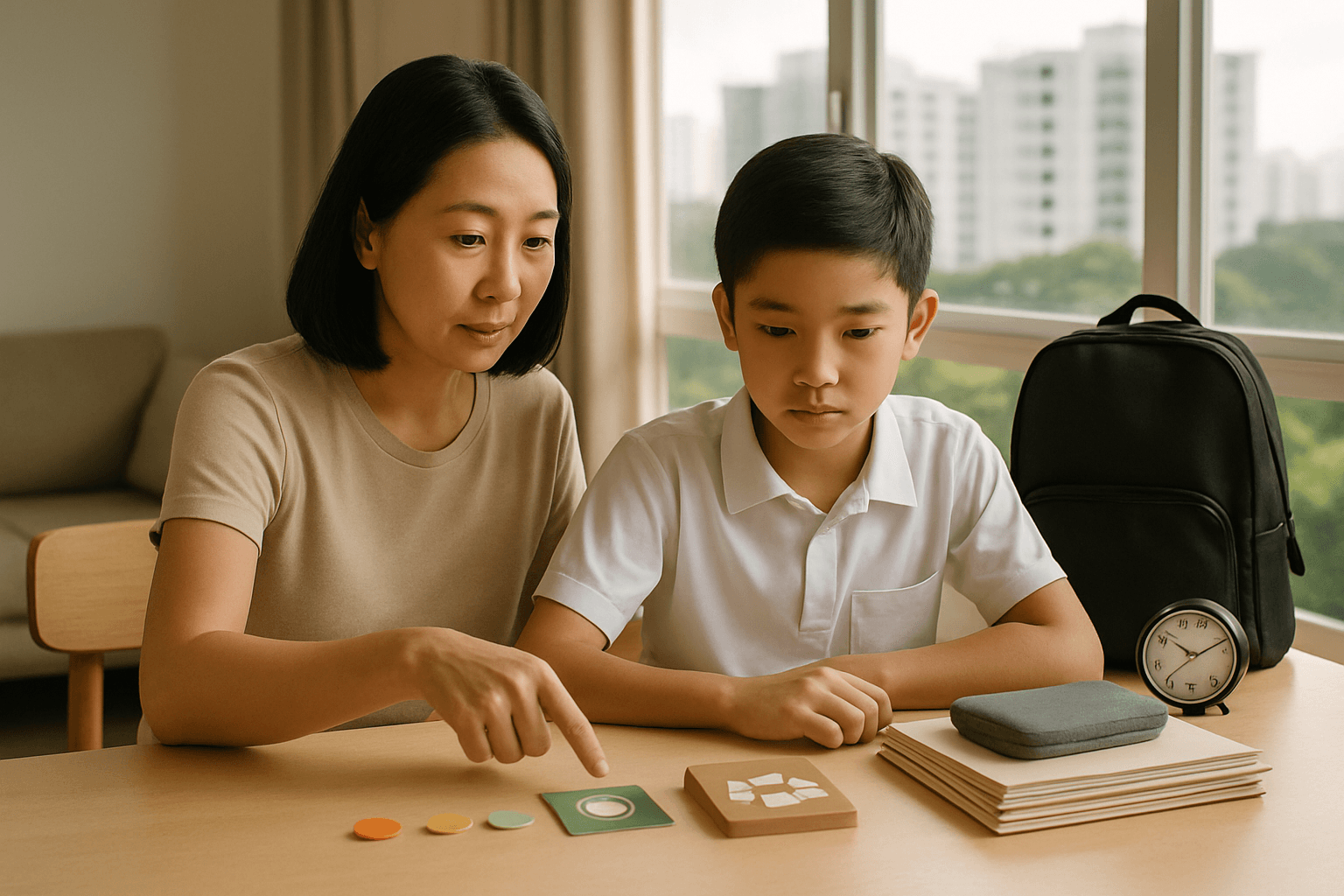
To shortlist DSA schools well, compare them by daily fit, not by reputation alone. The three most useful filters are commute, culture, and academic fit. Those are the factors that decide whether a school still feels right after the excitement of application season passes.
This guide shows you how to compare schools in a way that is practical for real family life: ordinary weekdays, training days, exam periods, and tired evenings. If you want a quick overview of how the scheme works first, start with our Direct School Admission Singapore guide.
What is the best way to compare DSA schools?
Compare each DSA school using the same three filters: commute, culture, and academic fit. Then rank schools side by side so the decision reflects real-life fit, not reputation alone.
The simplest and most reliable method is to compare every school using the same three filters: distance, culture, and academic fit. That keeps the discussion grounded in real life instead of drifting toward prestige, hearsay, or whichever school name sounds most impressive.
A useful parent rule is this: a DSA choice should be livable on a school day, not only attractive on paper. A school can look excellent during application season and still be a weak match if the commute drains your child, the environment does not suit them, or the combined academic and talent demands become too heavy.
In practice, put your schools side by side and ask the same three questions each time. Can my child sustain the travel? Is this a place where my child is likely to settle and grow? Can they manage both the schoolwork and the talent commitment without living in constant catch-up mode? Once you compare schools this way, the shortlist usually becomes much clearer. For a broader overview, see Direct School Admission Singapore: A Practical Parent Guide.
How many DSA schools did you apply to?
You may look at the All About DSA thread http://www.kiasuparents.com/kiasu/forum/viewtopic.php?f=48&t=157 or http://www.moe.edu.sg/education/admissions/dsa-sec/ While for the intention and selection criteria, you may look up secondary schools that offer DSA as each of them has a different one. List of schools offering DSA http://www.moe.edu.sg/education/admissions/dsa-sec/participating-schools/
Singapore Secondary School short listing for DSA
This is an online workbook to help you shortlist secondary schools for DSA. You may shortlist secondary schools by DSA, location and more: https://public.tableau.com/app/profile/sg.parent/viz/SingaporeSecondarySchoolSearchDSA/Search Please view these workbooks from a computer and not mobile device (may not not display in full). Will work towards updating them yearly.
Why should distance be part of the decision, not an afterthought?
Distance affects sleep, energy, punctuality, and family routine. Judge it by whether your child can sustain the full travel pattern during busy weeks, not just by what the map says.
Distance matters because the real issue is not map distance. It is daily stamina. A school that looks manageable on Google Maps can feel very different once your child is travelling during peak hour, staying back for training, and getting home tired several days a week.
Parents often focus only on one-way timing, but the better question is what the full routine looks like. A direct 25-minute ride is often easier to sustain than a route with two transfers, long waits, and occasional late pickup. A child may cope well with a longer but predictable trip, yet struggle with a technically shorter journey that is fragmented and tiring.
If possible, test the route at realistic timings, not just on a relaxed weekend. Try one morning trip close to reporting time and one return trip at the kind of hour your child might travel home after CCA or training. Also ask a family question parents sometimes skip: if practice ends late, who is handling transport and how often? Distance is not just a transport issue. It is a sleep, energy, and routine issue. For a broader overview, see Is Direct School Admission Worth It For My Child?.
2008 DSA(Direct School Admission)
One of the reasons why we decided to apply for DSA is because the independent schools can admit up to 50% of cohort through DSA. The remaining 50% vacancy are left for students going in through PSLE scores. So as a \"kiasu\" parent, want to maximise the chance. My son felt the DSA tests and interview \"drained up all his brain juices\". After spending 6 hours on all the tests and interview, he went home so tired and slept for the whole day. :lol:
2008 DSA(Direct School Admission)
[quote]How will we be able to tell which sports is favored by a particular school under DSA? Is such info published?[/quote] Yes, each school has its own preference and they are normally published on the schools' websites. DSA is not only for Sports or Music talents, if your child is good academically throughout the years (esp P4 - P6), then, you can also try for DSA at some of the top schools. Each school has their own entrance tests and interviews. Independent schools can take in up to 50% of
Have More Questions?
Get personalized guidance on schools, tuition, enrichment and education pathways with AskVaiser.
Try AskVaiser for Free →How do you judge whether a school culture suits your child?
Judge school culture by the feel of the environment, how students are treated, and whether the school’s tone matches your child’s temperament. Reputation and fit are not the same thing.
Look for what seems normal in the school, not just what appears in slogans. Culture shows up in tone, expectations, and how adults talk about students. During open houses or school interactions, notice whether staff speak only about achievement or whether they also describe adjustment, mentoring, and support in a concrete way.
Student signals matter too. Do students seem comfortable asking questions? Do they look confident and settled, or tense and overly managed? Neither atmosphere is automatically better. Some children thrive in a highly structured, competitive setting. Others do much better in a school that is firm but less intense, where they feel secure enough to participate and recover from mistakes.
This is where many parents get misled by reputation. A famous school is not automatically a better fit. A child who feels constantly behind, intimidated, or invisible may not do well there, even if they were excited at first. The more useful question is not, "Is this a good school?" It is, "Will my child be able to belong and grow here?". For a broader overview, see Do You Need Top Grades for DSA in Singapore?.
2010 DSA(Direct School Admission)
What schools is your child aiming for? Remember, your child MUST want to do the DSA and go thru the process. Do not force your child to go for certain schools. Respect your child. That's v important, so that you don't waste time in an already very busy PSLE year - apply for a school, get offer, then in the end, your child don't really want it? I've heard many of such.
2010 DSA(Direct School Admission)
Invariably at each year's open houses, such questions are asked and answered wrt vacancies By the way, the admission is based on merit and exceptional ability demonstrated, not to fill a quota Each independent schools has their own selection criteria, a desire to maintain a certain type of culture and environment, hence each school is unique and all their vacancies will be filled by the time of S1 posting. The DSA process can be viewed as a form of training for the kids - go strive for what you
How do you assess academic fit alongside DSA commitment?
Check whether your child can manage the school’s academic pace and the talent programme together without constant stress. Ask what a busy school term actually looks like, not just how the school describes itself.
Academic fit matters because DSA is not only about talent. Schools consider more than achievements in the talent area. MOE notes that schools look at talents and achievements, personal qualities, and academic suitability in their DSA FAQ guidance. For parents, the practical question is not just whether your child can enter the school, but whether they can cope after entry.
Start with your child’s current pattern, not your hopes for how they might suddenly change. If your child is talented but already needs heavy prompting for homework, a demanding school plus a heavy talent commitment may create constant friction. If your child is organised, recovers quickly after long days, and tends to self-manage, a more ambitious academic setting may be realistic.
Do not stop at labels like "strong academics" or "good balance." Ask what a busy term actually feels like. During competition season, performance season, or assessment periods, how do students typically cope? How much independent work is expected? What support is available if a student falls behind? Those answers reveal much more than generic school marketing. If this is the tradeoff you are struggling with, our guide on whether top grades are needed for DSA can help you frame it more realistically. For a broader overview, see How DSA Fits Into the Secondary 1 Posting Process.
2010 DSA(Direct School Admission)
Take a look at this web-site: http://www.moe.gov.sg/education/admissions/dsa-sec/participating-schools/ If you look at the list of secondary schools participating in the DSA for 2011 Sec 1 intake, you will see that some schools offer only 'Express' stream and other offer 'Normal Technical' (NT) , 'Normal Academic' (NA) and 'Express'streams. So if you have CO from a school that offers only 'Express' stream, then you must have a PSLE t-score that is above the COP for 'Express' stream to be joining
2010 DSA(Direct School Admission)
DSA means direct school admission via special talents such as sports and music. Gep also consider a talent, if a mainstrem child do very well in any of the academic subject, participates in various activities or competition also consider a talent. keep the record well, you need them to fill up the forms. there are children apply dsa thru Eng, Maths, Science, Chinese. Maths is the popular one, the chances is slim. Sports and music talents, you should participated in school cca, join competitions,
What practical signs show that a school is a realistic match?
Look for concrete fit signals such as training frequency, programme structure, support systems, and your child’s own stamina and independence. These usually tell you more than brand name alone.
A realistic match usually reveals itself through day-to-day details. Look at how often training or practice is likely to happen, how established the programme seems, and whether the school explains support clearly when students are tired, behind, or adjusting slowly. These are not official acceptance criteria, but they are strong fit signals.
It also helps to study what each school seems to value in that talent area. Some schools may place more weight on sustained involvement, competition exposure, or school representation. Others may give more room for raw aptitude and potential. Because schools set their own selection criteria, parents should read school-specific information carefully rather than assume all programmes work the same way. A practical starting point is the MOE DSA-Sec page, and parent compilations such as this set of school selection links can help you find school pages faster, though they should be treated as practical navigation help rather than official policy.
The child’s own signals matter just as much. Can your child handle routine without daily prompting? Do they still enjoy the talent area after a long week, or only on their best days? A strong DSA match usually stretches a child without making them feel permanently behind.
2009 DSA(Direct School Admission)
Give your child the opportunity to try DSA but ensure they have realistic expectation and not to depend on DSA to gain entry into the choice school. From my understanding with parents who tried DSA CCA with various school, each school has its own criteria, expectation and preferred sports for DSA application including quota. The competition among students depends on the number of applications. If the student was awarded medal in National Level sports and the sport is a niche or preferred sport o
2008 DSA(Direct School Admission)
Hi Sally, You can check all about DSA via this website. http://www.moe.edu.sg/education/admissions/dsa-sec/ One advice is to start working on your child's portfolio detailing his academic achievements, CCA involvement, certificates attained (NSW, Math Olympaid), proof of community involvement, leadership positions etc.... All the best!
How can parents compare two or three schools side by side?
Put schools on one comparison sheet using the same categories. A simple matrix makes tradeoffs visible and stops the decision from being driven only by emotion or reputation.
Use one simple comparison sheet and score every school on the same categories. Most parents find it enough to compare distance, culture, academic fit, talent-programme strength, support level, and overall family convenience. You can use a basic 1-to-5 score or just mark each area as strong, okay, or weak. The point is not to create a perfect formula. The point is to make tradeoffs visible.
For example, School A may have the strongest name in your child’s talent area, but the commute is long and the environment feels intense. School B may be less talked about, but the route is manageable, the school tone suits your child better, and the total load looks sustainable. School C may be very convenient but less convincing in the talent area. Once those tradeoffs sit on one page, the decision usually becomes less emotional and more honest.
A useful reminder is this: if one school only wins on prestige while losing on fatigue, fit, and family logistics, it is not really winning. The matrix is there to expose that.
2009 DSA(Direct School Admission)
Any one needs to know more about DSA school preference exercise can go moe web, dsa. Can read up the frequent-ask question, it explains very clearly.
How many DSA schools did you apply to?
Why go the DSA route if kids are definitely going to do well in psle? Is DSA about using cca to get to the sec school? Am I missing something here?
What is the most common mistake parents make when choosing a DSA school?
Parents often overvalue school prestige and underestimate whether the choice is sustainable for their child day to day.
The biggest mistake is overvaluing prestige and undervaluing sustainability. Parents sometimes choose with their ears, meaning they react to reputation, stories from other families, or what sounds impressive, instead of asking whether the school is genuinely workable for their child.
That is how families end up overlooking commute fatigue, assuming a strong school name automatically means the right talent fit, or underestimating how much school culture affects confidence. A better question is not, "Which school sounds best?" It is, "Which school can my child realistically thrive in?" If you are still deciding whether DSA itself is the right route, our guide on whether DSA is worth it for your child can help you step back before ranking schools.
2010 DSA(Direct School Admission)
My personal experience on DSA, think twice before you accept. We decided to try DSA route because our daughter’s performance is not consistent and she is in the range of above average. We gathered that should would get anywhere between 240-260. We saw our niece went through a bad experience when she got 240+. Where the girl can only be happy to be in the next best range, as the top ranges 255++. And staying in Bt Timah and wanting her to waste little in travel time means that her risk is high to
2010 DSA(Direct School Admission)
Anyone can advise if a student is selected by a school during DSA selection but then PSLE marks is much better when released. Can this student choose another better school and reject the offer from DSA school? I am not clear on the DSA part.
What should parents ask during open houses, school visits, or conversations with teachers?
Ask questions that uncover the school’s daily reality, expectations, and support systems. You are trying to see what a normal week looks like, not just how the school presents itself.
Ask questions that reveal normal weekly life, not just selection language. Useful examples include asking what successful DSA students in that talent area usually look like in practice, how much time the programme typically takes each week, what busy periods are like, and what happens if a student struggles with workload or adjustment. You can also ask what kinds of evidence of interest or commitment are commonly seen, and whether students without primary school representation or competition records may still be considered if they show strong aptitude. These are practical parent questions, not an official checklist.
Questions about fit are just as important. Ask what kind of student tends to settle well in the school, what teachers notice about students who struggle at first, and how the school supports them. Nearly every school will say it is supportive. More revealing answers usually come when you ask for examples of what support looks like in real situations.
To prepare, parents can review the MOE DSA-Sec overview, browse MOE’s Schoolbag article on common DSA questions, and check open house round-ups such as this secondary school open house guide for DSA families. The goal is simple: understand what an ordinary week feels like for a child in that school.
2010 DSA(Direct School Admission)
DSA is not that time consuming. Essentially there are just the following steps, for most schools: 1. Online application: Have your results and awards on hand for easy reference. 2. Preparation of portfolio: Photocopy and certify your results, awards, certificates etc as required by the school. Check with the school for their requirements. 3. Submission of portfolio to school: Some schools ask you to bring it with you during the interview, some schools require you to submit it before the intervie
General Observation about DSA
Hi Lizawa, How about selecting just one school which your dd is keen on to try for DSA? The process isn't taxing if it's just for one school. There's no harm trying. Aside from preparing her portfolio and the online application, you really only need to go through a test and interview, depending on the school you apply for.
How should parents rank schools if the child has strong talent but mixed academic confidence?
Prioritise the school where your child can keep developing their talent without falling into avoidable stress. A slightly less famous but more manageable school is often the stronger long-term choice.
Start by removing schools that are clearly too far, too intense, or too fragile a fit. This first cut matters. Parents in this situation are often pulled toward the strongest talent programme without asking whether the overall load is survivable for the child they actually have right now.
Strong talent and mixed academic confidence is not an automatic reason to avoid DSA. It simply means fit matters even more. One child may be highly motivated, organised, and able to recover quickly after demanding weeks, so a more challenging school is realistic. Another may be equally talented but slower to settle, less confident in class, or more affected by fatigue. That child may grow better in a school with steadier logistics, clearer support, and a less punishing overall rhythm.
A good ranking principle is to prioritise the school where your child can keep developing without living in constant catch-up mode. Sustainable growth usually beats fast progression if the alternative is exhaustion. If you are torn between talent opportunity and manageability, our guides on DSA vs PSLE priorities and building a backup secondary school list can help you make that tradeoff more calmly.
2009 DSA(Direct School Admission)
I’d rather not say which school but it is one of the top schools in Singapore. If you’re really strong in the sports the school is keen on, it is much easier to get in via sports than through academics for DSA. I have a few friends whose children all got in via Sports DSA.
2010 DSA(Direct School Admission)
Hi all For the top schools like RI/RGS/HCI/NYGH, I feel that the DSA places for mainstream (academic) are limited as GEP take up the bulk of the places, and they expect all the high PSLE scorers to apply, so they will eventually get the ‘smart’ ones anyway. The DSA places are probably skewed towards taking good sportsmen, musicians, others with special talents who are academically strong, but may not have gotten into the schools as they may miss the COP by a little. Other talents like strength i
What is a sensible final shortlist process before applying?
Cut the list to two or three schools your child can genuinely see themselves attending. Every final option should feel workable in commute, culture, and total workload.
Keep the final shortlist small. For most families, two or three realistic schools are enough. By that stage, every school on the list should pass the same three checks: the commute is manageable, the culture suits the child, and the academic plus talent demands look sustainable. If one school clearly fails one of those checks, it should not stay on the list just because it feels prestigious.
Before applying, picture each school as an ordinary weekday choice rather than a dream choice. Think about the morning journey, the likely end-of-day routine, competition or training periods, and how your child usually responds when tired or under pressure. Ask your child not only where they want to go, but where they can actually imagine themselves coping and belonging.
This final step matters because DSA is a commitment decision, not just an expression of interest. MOE’s DSA-Sec process allows students to seek admission before PSLE based on interests, aptitude, and potential, but parents still need to understand how DSA fits into posting and what commitment follows if the school becomes the child’s route. Our guides on how DSA fits into the Secondary 1 posting process and what parents commit to when a DSA offer is accepted can help with that final check. By the time you submit, every school on the shortlist should be a school you would genuinely be comfortable seeing your child attend.
2009 DSA(Direct School Admission)
thanks for sharing the experience on transfering even after taking up dsa offer. may i ask what is the sequence of steps? after accepting dsa offer but the psle results were above the COP for another IP school, what to do next? do we need to contact the IP school first if they allow the transfer and then contact the DSA school to be released? Thanks in advance for reply.
2010 DSA(Direct School Admission)
You have to look at the conditions in the DSA offer letter. Most schools would take in as long as it's above either 188 (MOE express cut-off point) or 200(most schools' express stream cut-off), depending on which they set. Some schools do set their own internal cut-off for DSA. Eg. my boys' school's secondary section set the cut-off as 225, so I saw that there were boys who still didn't make it in in the end as they got less than that for PSLE. Another friend's son who had DSA under sports to an
Have More Questions?
Get personalized guidance on schools, tuition, enrichment and education pathways with AskVaiser.
Try AskVaiser for Free →