
Should You Consider Private or International School After Missing Your Preferred P1 School in Singapore?
A practical guide to when a non-MOE primary school is a sensible fallback and when another MOE school is usually the better move.
Consider a private or international school after missing your preferred primary school only if it solves a real long-term need such as curriculum fit, language environment, family relocation, or an unsustainable MOE option. A disappointing P1 result on its own is usually not a strong reason to switch tracks. For many Singapore families, staying within the MOE route remains the more practical and stable choice.
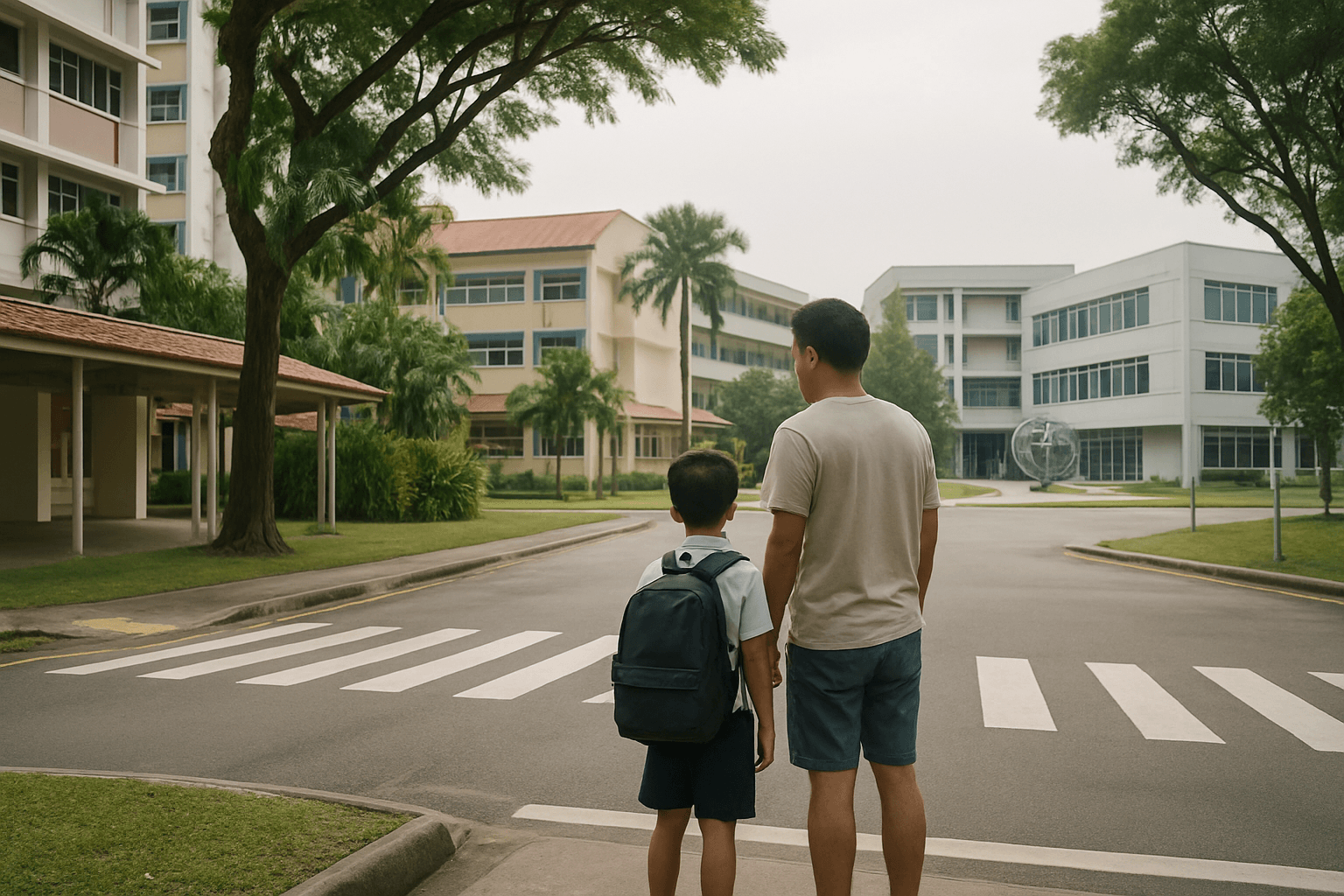
Missing your preferred Primary 1 school can feel like a major setback, but it does not automatically mean you should switch out of the MOE route. The short answer is yes, a private or international school can be worth considering after P1 registration, but usually only if it clearly fits your child and your family over the next few years. If the decision is mainly driven by disappointment over one school result, another MOE school is often still the stronger default.
Should you consider private or international school if you do not get your preferred primary school?
Yes, but only if the move solves a real long-term need. Missing one preferred school alone is usually not enough reason to switch away from MOE.
Yes, but only if it solves a real family need. Missing your preferred school alone is usually not a strong enough reason to leave the MOE path.
The most useful way to think about this is simple: this is a pathway decision, not a disappointment decision. A private or international school can make sense when it addresses something concrete, such as a curriculum mismatch, a language environment your child genuinely needs, a daily commute that is too draining, or a family plan to relocate overseas in a few years. In those cases, a non-MOE school may be a better fit rather than just a backup.
If the real issue is mainly that you missed one specific school name, another MOE school is often still the better default. It is usually more predictable on cost, easier to stay with long term, and less likely to create an unnecessary system switch at age six. If you are still dealing with the immediate result, start with our Primary 1 registration guide and this companion article on what happens if you do not get your preferred school.
International students applying to Singapore Pr schools
I'm pretty sure they cannot approach a school/MOE for a place mid-year at this point in time. If arriving March +/-, I think the two options are: a) Get kid and one parent temporarily here in Feb for S-AEIS. If pass, I assume entry starts in Term 3 (after June holidays). If unsuccessful, probably need to enroll in int'l school for Aug-Sept and can try AEIS again in Sept. b) Arrive in March +/- and take AEIS in Sept for entry the following year. Outcome probably won't be known until very late in
[Punggol] Primary Schools
Hihi, I'm also interested in knowing about the punggol schools as will be moving there next year, just in time for P1 registration! - Edgefield Primary - Horizon Primary - Mee Toh Our preference is Mee Toh coz it's a buddhist school but based on the previous stats, it is really popular and always has balloting for 2C (purely luck then!) I was wondering should we risk it or should we go for the other 2 schools instead as it seems mostly SC within 1km should be able to get in (even with balloting,
What problem are you actually trying to solve: school fit, distance, language, stress, or prestige?
Most bad decisions happen when parents mistake prestige disappointment for a real child or family need.
Many poor decisions start when parents confuse disappointment over a school name with a real educational need. A simple test is to imagine that all school names were hidden. Would you still want to switch systems?
A genuine fit problem usually sounds specific. Your child may be facing a commute that is too long to manage every day. Your family may need a different language environment at school. You may already have reasons, even before P1 results, to think your child needs a different teaching pace or classroom style. Or your family may expect to leave Singapore soon, so curriculum continuity matters more than a local school brand.
A prestige problem sounds different. It is usually about not wanting to settle, feeling embarrassed about the result, or worrying that a less sought-after school means a weaker start. That is where families often overreact. If the problem is status, changing school type will not fix it.
If you are not sure whether you are reacting to fit or prestige, it helps to compare this decision against our guide on whether to choose a popular dream school or a safer nearby school. Broader parent discussions, such as this KiasuParents article on access to top schools, can also provide perspective, but they should not replace a calm fit assessment for your own child. For a broader overview, see Primary 1 Registration Unsuccessful: What Happens If You Do Not Get Your Preferred School.
School Placement Exercise for returning S'porean children
If you are definite about wanting her to continue with IB, then local international school or some other international school that offers IB would be the best choice. Taking SPERS to get into just 1 of 2 schools is very chancy as most schools have extremely limited places for SPERS students. Waiting till the beginning of the school year for the local international schools may not be such a bad thing as it will give your daughter more time to settle into Singapore. She can just join at the beginn
School Placement Exercise for returning S'porean children
Additional considerations: if u convert his citizenship to sg, he will have to serve NS. But if he is not an sg citizen or PR, he may not be able to enter a popular primary school, and will have to take the leftover slots like other foreigners.
Have More Questions?
Get personalized guidance on schools, tuition, enrichment and education pathways with AskVaiser.
Try AskVaiser for Free →How is a private primary school different from an international school in Singapore?
Both are non-MOE options, but they are not interchangeable. Compare the actual curriculum, language environment, and transition path, not just the school label.
They are both non-MOE options, but they are not the same thing. Parents often use the terms loosely, and that can lead to poor comparisons.
Private schools can differ widely from one another in curriculum, teaching style, admissions approach, and student profile. Some families look at them because they want a different school environment from the mainstream route, not necessarily because they want an overseas curriculum. International schools also vary, but they are more commonly chosen by expatriate or internationally mobile families and may follow overseas curricula or international frameworks.
What matters for parents is not the label but the pathway. Ask what curriculum your child will be learning, how assessment works in the first few years, what language environment the child will be in, what kind of student support is available, and how easy or hard it may be to move into another system later. For example, a school can look attractive now but become awkward if your family expects to re-enter the local system or move to another country after only a short stay in Singapore.
A good comparison is not private versus international on branding. It is whether this school path fits your child better than a realistic MOE option over the next one to three years. For a broader overview, see Primary 1 Registration: Should You Pick a Popular Dream School or a Safer Nearby School?.
Which one is better option between private and public school
What do you mean by private or public school? Primary schools in Singapore are all either government or govt-aided schools. There are no private schools. Or are you talking about international schools?
International school or local school?
Your choices of international schools after PSLE are pretty much limited to ACS intl, St Joseph Int’l and Hua Chong intl. These are the local “international schools”. Govt will not approve the foreign intl schools especially when u are in the local system now. St Joseph Int’l has been producing relatively good IB results. Hope this helps.
Important reminder: for Singapore Citizen children, this is not just a lifestyle choice
For eligible Singapore Citizen children, compulsory education rules matter. Do not treat a private or international school switch as a simple lifestyle swap or a way to try P1 again next year.
For eligible Singapore Citizen children living in Singapore, attendance at a national primary school is generally compulsory under the Compulsory Education Act. That is why a move away from the usual MOE route should be treated carefully, not casually. It also means parents should not assume they can simply skip this year's exercise and try P1 again later. MOE states that a child who is eligible to register for P1 this year cannot wait for a later year's exercise, as explained in MOE's P1 registration information. If your concern is your child's readiness rather than the school itself, treat that as a separate issue and discuss the proper route with MOE. If a child already has a place, deferment is a separate process from choosing a different school pathway. For a broader overview, see Popular Primary School vs Neighbourhood School in Singapore: Which Is Better for Your Child?.
School Placement Exercise for returning S'porean children
Depending on how poor his English is, he may be asked to got back a year, meaning that he may be offered a Sec 1 place next year. If his English is really poor, and they don't think he can manage Sec 1, I'm not sure what they will do. He won't be accepted in P6 as it's a major exam year, and it might be too much to ask him to go back to P5 (even if MOE allows it, and they may not). It seems you are prepared to keep him overseas if he doesn't get into a Singapore school? If that's the case, you c
Moving to Singapore and looking for a good Secondary School
My child is currently at SAIS (pursuing IB). Prior to that he was in another IB PYP school. The first one that he went to was in pre-school (back then pursuing IB) My son was educated in the US K through 4th. My personal experience is that PYP programs arent that suitable for kids who are not motivated as they seem not to be able to give those kids an extra nudge or push to achieve higher. Also, I find that the PYP classes usually spills over to the other class times and thus the core subjects g
When does a private or international school make sense as a fallback?
A private or international school makes sense when it solves a real long-term problem such as relocation, curriculum fit, language needs, or an unsustainable daily routine.
It makes sense when the switch solves a long-term need, not just a short-term emotion.
One common case is a family that expects to leave Singapore in a few years and wants a curriculum that will be easier to continue elsewhere. Another is a child who genuinely needs a different classroom environment, whether because of language needs, pace, or a learning style issue that the family had already been thinking about before the P1 outcome. A third is when the MOE option available to the child would create serious daily strain, such as a commute that is hard to sustain for both the child and the family.
A useful signal is timing. If you were already calmly discussing a non-MOE route before the registration result, the result may simply be bringing forward a decision you had already considered. That is very different from making a sudden switch out of frustration a few days after missing a preferred school.
For some international students, the fallback question is more immediate. MOE states that if an international student is not offered a place after Phase 3, the posting result is final, schools will not accept walk-in applications or transfers, and parents may need to consider other education options such as private schools or the AEIS for Primary 2 in the following year, as noted in this MOE FAQ. That does not make non-MOE schools the best answer for everyone. It means they can be a practical answer in a narrower set of cases.
School Placement Exercise for returning S'porean children
HI! My child is in oversea IB PYP syllabus (grade4) now, & we are planning to move back SG (for good) for SPERS test in 2025 year. Due to the syllabus differences and the child has never been exposed to SG local primary school… I’m just wondering, what if one failed the SPERS test for Sec One entry, what will it be like? Will they be put to retake PSLE in following year? or will they go into G1 class and not making it to JC or University? And apart from distributing a sec school to you, will the
[Punggol] Primary Schools
Looking for feedback on Punggol view primary school, I am considering to register for my son this year for P1 next year. MTS seemed the best choice but I need alternatives. Appreciate your feedback especially from existing students’ parents at Punggol view.
When is it better to stay in the MOE route instead?
Stay in MOE if the main issue is missing a preferred school name, not a real mismatch in fit, logistics, or family plans.
Stay with MOE when the main issue is disappointment rather than a genuine mismatch. For many families who expect to remain in Singapore long term, another MOE school is still the more practical, affordable, and stable choice.
This is especially true when the child can attend a nearby school with a manageable commute, when the family wants predictable costs, or when the preferred school mattered mostly because of reputation. A six-year-old usually benefits more from a workable daily routine than from carrying adult disappointment into a completely different education system.
There are a few common signs that staying in MOE is the better move. One is when parents mainly wanted the school because other families around them were chasing it too. Another is when a non-MOE option would put the household budget under pressure for years, not just for one term. A third is when parents say they still want the local route eventually and are considering a detour only because this one result felt painful.
In practice, many children settle well once school starts, teachers are known, and the commute is manageable. If that sounds like your situation, it may help more to rethink what matters in a first school than to switch systems. Our articles on popular primary school versus neighbourhood school and dream school versus safer nearby school are often more useful next reads than a sudden move to a non-MOE option.
[Punggol] Primary Schools
Clue no. 1 : https://www.moe.gov.sg/admissions/primary-one-registration/vacancies Clue no. 2: https://www.kiasuparents.com/kiasu/article/punggol/ The popular schools are red hot like fire.
[Punggol] Primary Schools
Published on Jun 19, 2015 Oasis of learning in Punggol, to fill young minds source http://mypaper.sg/top-stories/oasis-lea ... s-20150619 THREE new primary schools will open in Punggol next year to help meet the growing demand in the area. The schools - Oasis Primary in Edgefield Plains, Punggol Cove Primary in Sumang Walk and Waterway Primary in Punggol Drive - will be able to take in 210 pupils each . They are located near a number of housing projects. Waterway Primary, for instance, is locate
What costs should parents plan for before choosing a private or international school?
Do not compare only fees. Compare the full recurring cost, the daily logistics, and whether the choice still feels manageable over several years.
Look beyond the headline school fee. The real question is whether the full choice remains comfortable year after year.
Parents often compare only tuition or school fees, but that rarely gives the full picture. You may also need to budget for transport, uniforms, meals, devices or learning materials, school activities, and after-school care or schedule changes. Some schools may also have application, assessment, or deposit-related costs, so it helps to ask for the recurring cost picture rather than only the first invoice.
A practical test is to imagine the choice over several years, not one term. If the school only works financially when bonuses come in, grandparents cover transport regularly, or other family priorities have to be squeezed, that is a warning sign. A fallback should reduce stress, not create a new type of stress.
Cost also interacts with logistics. A school with higher fees and a difficult commute can become expensive in both money and energy. That is one reason a nearby MOE school often remains the stronger default even after a disappointing result.
How your kid's performance in P1 if attended gd Pre-sch?
My ds in P5 next year. He didn’t attend the listed pre-school but did attend a ‘premium’ preschool which includes PRC chinese teachers and Letterland programmes. Cost us S$500/month for half-day. DH and I always say we should have just sent him to PCF and save the $ for vacation. The amount does adds up with 2-3 years in preschool. He did fairly okay in P1, next few years…same struggles as the rest of the cohort. All the spelling and tingxie he was made to learn, all forgotten ie. only in short
[Punggol] Primary Schools
hmm… the most impt thing is your child must be happy. This must come from supportive parents in their learning. My boy enjoys his class and gamely contribute and am glad teachers (Chinese and form teacher) have been responsive in his learning. As he was a transferred student, I was also concern of him blending to his school but such were unfound. Phew! All in all, in a primary school, be it a popular, a top or mediocre school (in others’ opinion) you can still “control” a child’s learning habits
What should parents ask before applying to a private or international primary school?
Ask questions that reveal fit, transition risk, and total cost, not just reputation.
- ✓What curriculum does the school use, and will it make future transitions easier or harder for your child?
- ✓How does the school help new Primary 1-age students settle in during the first term and first year?
- ✓What recurring costs should you expect beyond school fees, such as transport, uniforms, meals, devices, or activity charges?
- ✓How long is the daily commute in real traffic conditions, and is that sustainable for your child every week?
- ✓What language environment will your child be learning in, and does that match your home situation?
- ✓How are homework, assessment, and classroom expectations handled in the early years?
- ✓What kind of student support is realistically available if your child needs help adjusting?
- ✓If your family leaves Singapore or later wants to change systems, what transition issues should you expect?
- ✓Is this school solving a child need, a family logistics problem, or only the disappointment of one P1 outcome?
I am still undecided. What should I do next?
Write down the real problem, compare options using the same daily-life criteria, and do not let one P1 result force a rushed system switch.
Start by writing down the real problem in one sentence. If you cannot explain the problem without naming the school you missed, you may still be reacting emotionally. Then compare the MOE place you have, or realistic MOE alternatives, against any private or international option using the same factors every time: commute, total cost, curriculum, language environment, and how likely your child is to settle in calmly.
It also helps to speak to schools directly and ask the same questions at each one instead of relying on reputation. If visits are possible, pay attention to whether the environment feels workable for your child, not just impressive to adults. In the first year of primary school, settling in often matters more than branding, which is why practical parent resources such as this starting primary school checklist can be more useful than prestige discussions.
If your child already has an MOE place and your concern is readiness rather than school type, remember that deferment is a separate process. If you are still torn between a less famous nearby school and a more emotionally charged alternative, go back to the basics in our Primary 1 registration guide. One P1 outcome should not decide your whole education philosophy for you.
[Punggol] Primary Schools
Hi all kiasu mummy, I’m new here, I need some advise from all of you. My girl will be register her primary school end of July under phase 2C. Within 1km Compassvale primary school Edgefield primary school Punggol view primary school Punggol green primary school Rivervale primary school Which one would you recommend and why?very urgent !! Thanks
[Punggol] Primary Schools
hi blitze u can check on the open house somewhere from june to july, cos aug will start to P1 reg for phase 2 onwards (if i remember). my colleague’s girls are in Changkat (Simei). Seems not a bad sch. but like you, i stay in punggol. but i chose Horizon due to below reasons (my girl in P2 now): 1) i did not do any PV (parent volunteer) even i stay opp of Meetoh. I don want to stress myself for the ballating. 2) Horizon has student care center (SCC) inside the school. this is more safer than to
Have More Questions?
Get personalized guidance on schools, tuition, enrichment and education pathways with AskVaiser.
Try AskVaiser for Free →