
What Happens If a Primary School Fills Up Before Your P1 Registration Phase?
What reduced vacancies mean, when balloting can still happen, and how to switch to a practical backup plan.
If a primary school fills up before your P1 registration phase, it usually means earlier phases have already taken most of the intake. If your phase still has vacancies, you may still register, and balloting can happen if demand is higher than the remaining places. If there are no vacancies left by the time your phase opens, treat that school as unrealistic for that year and move quickly to a backup that still works for your family.
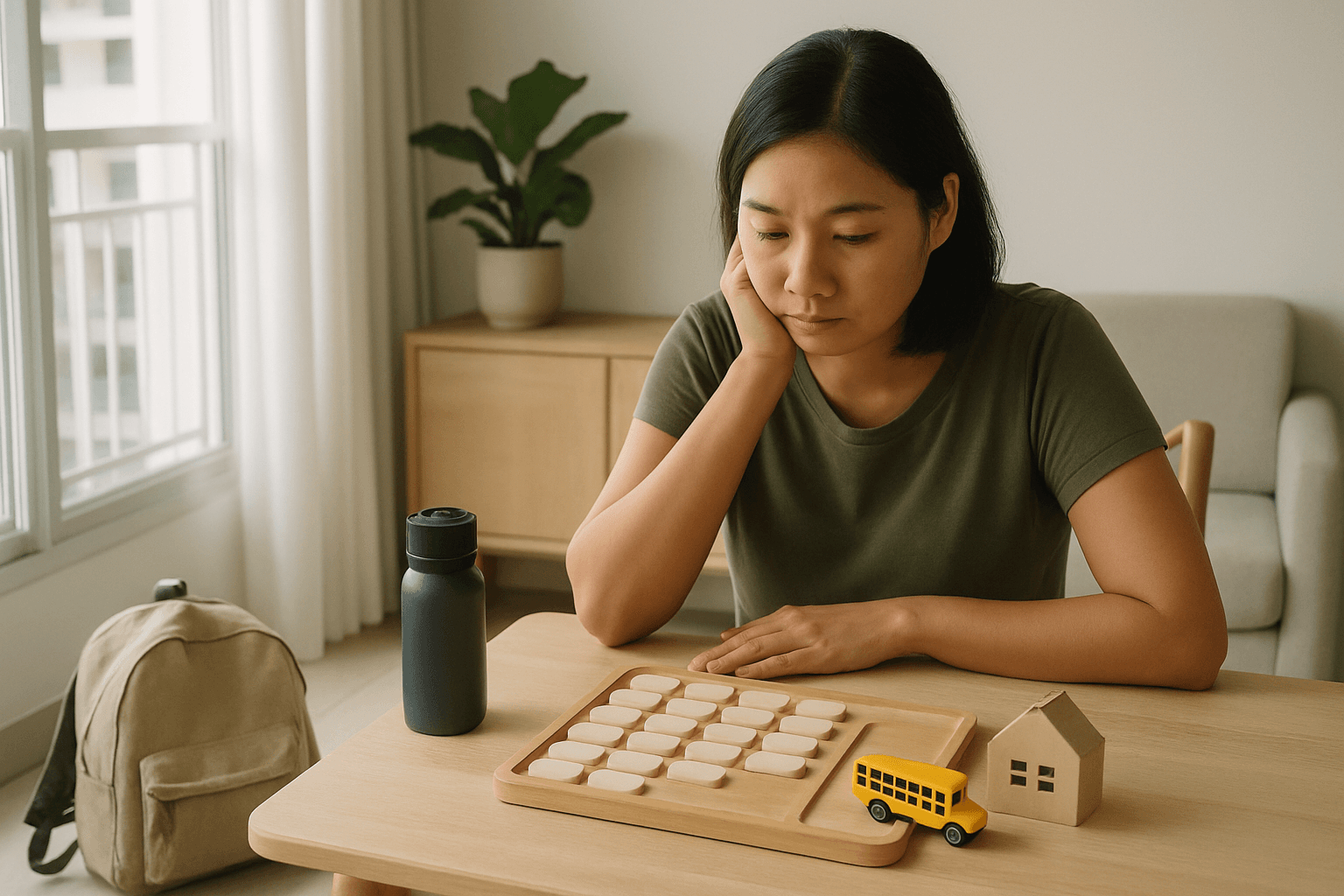
This is one of the most common Primary 1 registration worries in Singapore. By the time your phase opens, a popular school may already have very few places left, or none at all. That does not mean the registration exercise has stopped. It usually means later-phase parents are working with the vacancies that remain, not the school’s full intake. Once that happens, the practical move is to stop planning around hope and start planning around schools that are still genuinely available.
What does it mean when a primary school fills up before your registration phase?
It usually means earlier phases have already taken most of the places, so when your phase opens there may be only a few vacancies left, or none at all.
It usually means earlier phases have already taken most of the school’s Primary 1 places, so by the time your phase opens, only a small number of vacancies may be left, or none at all.
In parent conversations, “full” is often a practical way of saying the school has very few remaining places. It is not always a formal MOE label. The more useful question is not whether a school sounds full, but whether there are still vacancies for your phase. MOE publishes the official Primary 1 registration pages, and that is the information parents should rely on.
The key mindset shift is simple: later phases do not start with the school’s full intake. They start with whatever earlier phases have not used. That is why one school can still look possible to one family and already feel out of reach to another. For a broader overview, see Primary 1 Registration in Singapore: How It Works, Balloting Risk, and How to Choose a Realistic School Plan.
All about Transferring to Other Primary Schools
Note that primary schools normally have a class size of maximum 30 for P1 and P2 (I think it’s MOE policy) so for most schools, unless there are parents who give up their confirmed places, it is unlikely there will be any vacancy until P3, where schools are allowed to have 30++ for each class. Or you can approach the schools that still have vacancies after P1 registration (all phases) for P1 and P2 transfers.
All about Transferring to Other Primary Schools
You should go to scgsp and fill up a waitlist form and then wait. I know of a boy who got a place in phase 1 school A, and then filled up a waitlist form for school P and was offered a place at P a few days before the first day of school in pri one. They didnt apply to P at all since they already got through Phase 1 at A, that would be the same situation as you right — phase 1 at school m, didnt apply to school s, and now want to go to school s.
Can you still register if parents say the school is already full?
Yes, if your phase is open and the school still has vacancies. But if only a few places remain, your chances may be low and balloting may decide the outcome.
Sometimes yes. If your phase is open and the school still has vacancies, you can register for those remaining places. If applications are more than the vacancies, MOE will conduct balloting.
This is where many parents get caught out. A school can be described as “full” in everyday talk even though it still has a few places left for the next phase. That does not make it a strong choice. It just means the decision has moved into higher-risk territory.
A realistic example helps. A parent applying in Phase 2B may still see a handful of vacancies at a popular school, but those places may attract many families. By Phase 2C, the same school may already be a stretch choice. Even for a former primary school place in Phase 2A, MOE says admission is not guaranteed if there are more applicants than vacancies, as explained in this MOE FAQ.
The practical rule is this: if the school already looks packed before your phase, do not make it your only plan. For a broader overview, see Primary 1 Registration Phases in Singapore: What Each Phase Means for Your Chances.
Does school conduct test before allow the kid to reg Pri 1?
I have not heard of Primary schools giving entrance exams as part of the initial Primary One Registration process. I don't think that will come down well at all, as it implies that parents will be FORCING their pre-schoolers to take up all sorts of academic courses just to ace the entrance tests. However, if you want to transfer your child to another school after Primary One, the new school may require your child's exam results and even conduct assessment tests.
Give citizens priority in Primary 1 registration
Ha.ha. maybe next time the P1 registration phase can propose like that, just a suggestion: Phase 1 – Existing siblings in the Primary school except PR siblings. Phase 2A(1) – No Change Phase 2A (2) – No Change Phase 2B – No change Phase 2C – Singapore Citizenship Only. Phase 2C Supplementary - Singapore Citizenship Only Phase 3A – Permanent Residents Phase 3A Supplementary - Permanent Residents Phase 4 – Non Citizen.
Have More Questions?
Get personalized guidance on schools, tuition, enrichment and education pathways with AskVaiser.
Try AskVaiser for Free →How do P1 registration phases affect your chances when places are already tight?
Later phases usually face tougher competition because earlier phases have already used up more of the intake.
The phase structure matters because earlier phases get first access to the intake, while later phases work with whatever vacancies remain. That is why popular schools often become much harder to get into as registration moves on.
MOE publishes the official registration phases and key dates, and our Primary 1 registration guide and phase-by-phase explanation cover the wider system. For this question, the main point is simple: Phase 1, Phase 2A, Phase 2B, Phase 2C, and Phase 2C Supplementary are not equal in practical availability once a school starts filling up.
Earlier-phase parents are often deciding while more of the intake is still open. Later-phase parents are often choosing from the remainder. That is why a school that looked comfortably available earlier can turn into a ballot-risk school later.
A common mistake is to focus on preference before feasibility. The better question is not just, “Do we want this school?” It is, “By our phase, is this school still realistically open to us?”. For a broader overview, see How to Read Past Balloting Data Before Chasing a Popular Primary School.
2022 P1 Registration Exercise for 2023 In-take
School vacancies To ensure continued open access to all schools in later phases, we are reserving 20 places in each primary school in Phase 2B and 40 places in each primary school in Phase 2C. This means a total of 60 places reserved places will be set aside in all schools at the start of the P1 Registration Exercise. In addition to these reserved places, one-third of any remaining vacancies at the end of Phase 2A will be allocated to Phase 2B, and two-thirds to Phase 2C. A cap on the intake of
2023 P1 Registration Exercise for 2024 In-take
A gentle reminder for International Students : From MOE https://www.moe.gov.sg/primary/p1-registration/international-students International students (IS) can only register for P1 during Phase 3 of the P1 Registration Exercise, after all Singapore Citizens and Permanent Residents have been allocated a place under the earlier phases. Prior to Phase 3, ISes must go through a 2-step process: 1. Submit an online indication of interest form, available here from 9am on Tuesday, 30 May 2023 to 4.30pm on
What if there are no vacancies left when your phase opens?
If no vacancies remain when your phase starts, treat that school as unrealistic and move quickly to backup options.
If there are no vacancies left by the time your phase opens, that school is no longer a realistic target for your phase. In practical terms, you should stop planning around it and move to schools that are still open to you.
MOE’s public guidance explains vacancies, phases, and balloting, but the source material provided here does not describe a separate waitlist or reserve-list path for parents hoping a school with no vacancies will reopen later. That means passive waiting is usually not a good strategy.
Your next step is to check the official vacancy information, confirm which schools are still available to your phase, and choose the option your family can manage every day. Daily logistics matter more than school branding. A school with a workable bus route, realistic pickup timing, and after-school care can be the better family decision than chasing a school that has already slipped out of reach.
Once results are released through the P1 Registration Portal and SMS, parents who prepared a backup are in a much stronger position than parents who are starting from zero. For a broader overview, see Primary 1 Registration Unsuccessful: What Happens If You Do Not Get Your Preferred School.
All about Transferring to Other Primary Schools
Parents, do take note of which primary school, u are attempting to seek Transfer into, for your P2 kid. 1) if is not a popular, just an ordinary neighbourhood school, vacancies may still arise at end of P2, for those seeking Transfer. 2) But, if is a highly popular GEP school like Raffles Girls' Primary (for example), If any vacancies (if any) were to arise during the course of entire P2, the school will rather \"keep\" or reserve these vacancies, wait until ... the end of P3, before start to co
All about Transferring to Other Primary Schools
You don't get to decide when you can transfer. It depends on whether there's vacancy in the school you want, and whether the school accepts your child. You can start by waitlisting your child in the school you want after P1 registration closes. If you are lucky, transfer can happen before P1 starts, or you can wait indefinitely.
What should you prepare if your preferred school is likely to fill early?
Confirm your child’s phase, watch vacancy updates, and prepare real backup schools before the pressure starts.
- ✓Confirm which registration phase applies to your child before assuming a popular school is realistic. If needed, use our guide on [who is eligible for Primary 1 registration](/blog/who-is-eligible-for-primary-1-registration-in-singapore).
- ✓Watch MOE’s published vacancy information instead of relying on school reputation, chat groups, or hearsay.
- ✓Shortlist one or two backup schools that you would genuinely accept, not schools you only mention in theory.
- ✓Compare the daily commute, transport routes, student care options, and pickup timing for those backup schools before results day.
- ✓Decide in advance how much balloting risk you are willing to take so you are not making an emotional choice under time pressure.
- ✓Keep common registration details and documents ready. Our [documents checklist](/blog/primary-1-registration-documents-checklist-what-singapore-parents-commonly-prepare) and guide on [which home address counts](/blog/which-home-address-counts-for-primary-1-registration-in-singapore) can help you prepare early.
- ✓If distance may matter, read ahead on [distance priority](/blog/primary-1-registration-distance-priority-how-home-school-distance-works) and review [past balloting patterns](/blog/how-to-read-past-balloting-data-before-chasing-a-popular-primary-school) before you commit to a high-risk choice.
How can you tell whether your preferred school is still a realistic choice?
Check your phase, the remaining vacancies, and how quickly the school has already filled before treating it as a realistic option.
Use three checks: your phase timing, the remaining vacancies, and how quickly the school has already filled. If all three point in the wrong direction, the school may still be attractive, but it is no longer a strong plan.
MOE’s vacancy updates matter more than a school’s reputation alone. Public reporting has shown that some schools fill a large share of their places very early. For example, this Straits Times report noted that some schools had already taken about half their places by the end of Phase 1. The exact schools and numbers change from year to year, but the planning lesson stays the same: heavy early take-up is a warning sign for later-phase parents.
In practice, parents usually read the situation well when they ask three direct questions. Is our phase early enough to give us a meaningful shot? Are there still enough vacancies left to make this more than a symbolic attempt? Has this school already shown signs of filling quickly? If the answers are no, very few, and yes, you are looking at a stretch choice.
A useful way to think about it is this: do not ask only whether the school is your preferred school. Ask whether it is still a realistic school for a child entering in your phase. If you are weighing a high-risk choice against a safer one, our guides on reading past balloting data and choosing between a popular dream school or a safer nearby school can help.
All about Transferring to Other Primary Schools
Primary schools normally have a class size of maximum 30 for P1 and P2 (I think it's MOE policy) so unless there are parents who give up their confirmed places, it is unlikely there will be any vacancy until P3, where schools are allowed to have 30++ for each class. I do know of a case where a student did not turn up since first day of P1. Around Term 2, a student from another school was transferred. This student was balloted out from earlier phase (parent volunteer). For normal transfer (P3 and
All about Transferring to Other Primary Schools
If u transfer in at P2, you have control over which schools u apply to. But if u apply at Phase 3, u have zero control. MOE has a history of assigning foreigners a school far far away from their home. To ensure better spread of racial groups - no congregating of ethnic enclaves into a particular region in Singapore. IMPT NOTE: if u are really intending to apply at Phase 3 this year, do take note of the important dates that u have to Pre-register. There has been a change in the rules from this ye
What should you do if your child misses out on your preferred school?
Switch quickly to your backup and focus on a school place your family can manage every day.
Move quickly to your backup option and focus on securing a workable school place. Missing one school is disappointing, but it does not mean the whole registration process has failed.
This is where earlier planning pays off. A slightly less popular school that fits your commute and childcare routine may be a much better real-life outcome than a school that looked ideal on paper but was always a long shot. For one family, that may mean choosing a school a little farther away because it has a direct bus route and reliable student care. For another, it may mean choosing a nearby neighbourhood school because daily drop-off and pickup are simpler.
What matters most after a miss-out is speed and clarity. Do not spend precious time trying to revive an option that has already become unrealistic. Shift to the next workable choice and make sure the daily routine is sustainable. If you want a fuller walkthrough of fallback steps, read Primary 1 Registration Unsuccessful: What Happens If You Do Not Get Your Preferred School.
All about Transferring to Other Primary Schools
Put your kid on waitlist in all the schools first. There is no limit. make a copy of the waitlist (take pic etc) and email to principal cc school admin to tell them you waitlisted and really really hope to join them because of distance. Anywhere in punggol is still nearer than her current school. Explore neighboring towns too. you may need to register on waitlist yearly. movement may only take place in end p3 when students move on to gep and p4 class size increased then have vacancies. Important
All about Transferring to Other Primary Schools
Since your kindergarten kid already successfully been enrolled into Kheng Cheng primary for next year 2022 Primary 1, just fill up the Wait list form for your other son, 2022 P3 next year. If you cannot find the Wait-list form on school website, can login Parents Gateway, check if the form is there. If Wait-list form also not found there, can email the school, request for one. If vacancies were to arise in 2022 P3, then Kheng Cheng primary will start to process the pile of Transfer Wait-list for
The biggest mistake parents make is treating a popular school like a lottery ticket
The real risk is waiting too long to build a backup plan.
The real risk is not rejection. The real risk is waiting too long to build a backup plan.
When a school is already filling quickly before your phase, hope is not a strategy. Treat it as a risk decision, not a wish-list item. If you are not comfortable with the odds, put your energy into a school you can live with every morning, not one you are only admiring from a distance.
All about Transferring to Other Primary Schools
Yes. In P1 and P2, the (max) class size is 30 kids per class. From P3 to P6, the (max) class size is 40 kids per class. Hence in popular schools (which are all running at max capacity), there will be new seats opened up at P3. Eg. during P1 registration u can see some schools have a P1 intake of 270 seats. That’s 9 classes of 30. When the kids reach P3, the school will rearrange the kids into 7 classes of 40 (=280), which allows for an extra 10 new kids to be transferred in. Some schools have a
All about Transferring to Other Primary Schools
My son is P1 next year. So registration this year. However he is foreigner status so won’t qualify till phase 3. I will be applying for pr for him as I am Singaporean. Hubby is old boy of acs too, but again we don’t qualify for 2a as not SC or PR. Wondering if we can start off in international sch (P1) and then transfer later (maybe p2).[/quote] Transfer from International schools to local schools happen quite frequently. However, transfer tend to be for less popular local schools since they hav
If the school is already filling up, does that mean my child has no chance?
No. Filling up means fewer vacancies, not zero chance. If seats remain in your phase, you may still get in, but the odds are usually tighter.
No. It means the school has fewer remaining vacancies, so if your phase still has places available, your child may still be considered. If applications exceed those vacancies, balloting may decide the outcome.
What parents should avoid is treating “filling up” and “no chance” as the same thing. A school that is filling up may still be possible, but usually with tighter odds. A school with no vacancies left by your phase is different. At that point, the practical move is to stop treating it as your plan and switch to alternatives that are still genuinely open to you.
Share with us your kid's P1 registration experience
Hi parents, I've gone through 2 rounds of registration for my kids - Phase 2B 5 years ago (2006) and Phase 2A2 (2010). For son's P1 registration at Pei Hwa then, there was just 1 stop - ie to submit documents for verification. No guarantee at Phase 2B, just a high chance of getting in. Today's registration for daughter is slightly longer - 3 'stops'. Station 1 is at ground floor where a lady will make sure we are eligible for Phase 2A2. If so, then we proceed to the hall on 2nd floor. Station 2
Share with us your kid's P1 registration experience
Funtastic4, RGPS finally had 117 applicants >2km fighting for 51 places under phase 2C (after 26 applicants <2km admitted). For my case, I had a daughter borned in year 2002. From 2005 onwards, we were closely monitoring the P1 registration stats, keeping all the records ourselvs as MOE dont retain them. Since my mil stayed near HPPS, we decided to enrol our child there. We were prepared to move <1km of the school. However after studying the stats, we discovered that HPPS needs balloting under p
Have More Questions?
Get personalized guidance on schools, tuition, enrichment and education pathways with AskVaiser.
Try AskVaiser for Free →