
What Makes a School a Realistic Backup for Primary 1 Registration in Singapore?
How to tell whether a fallback school will actually work for your family, not just look safer on paper.
A realistic backup school for Primary 1 registration is one your family can genuinely accept and manage if your preferred school is unavailable. The main checks are whether the daily commute is sustainable, the school fits your childcare and work routine, your child is likely to cope there, and you would be willing to stay for the full primary journey rather than treat it as a temporary placeholder.
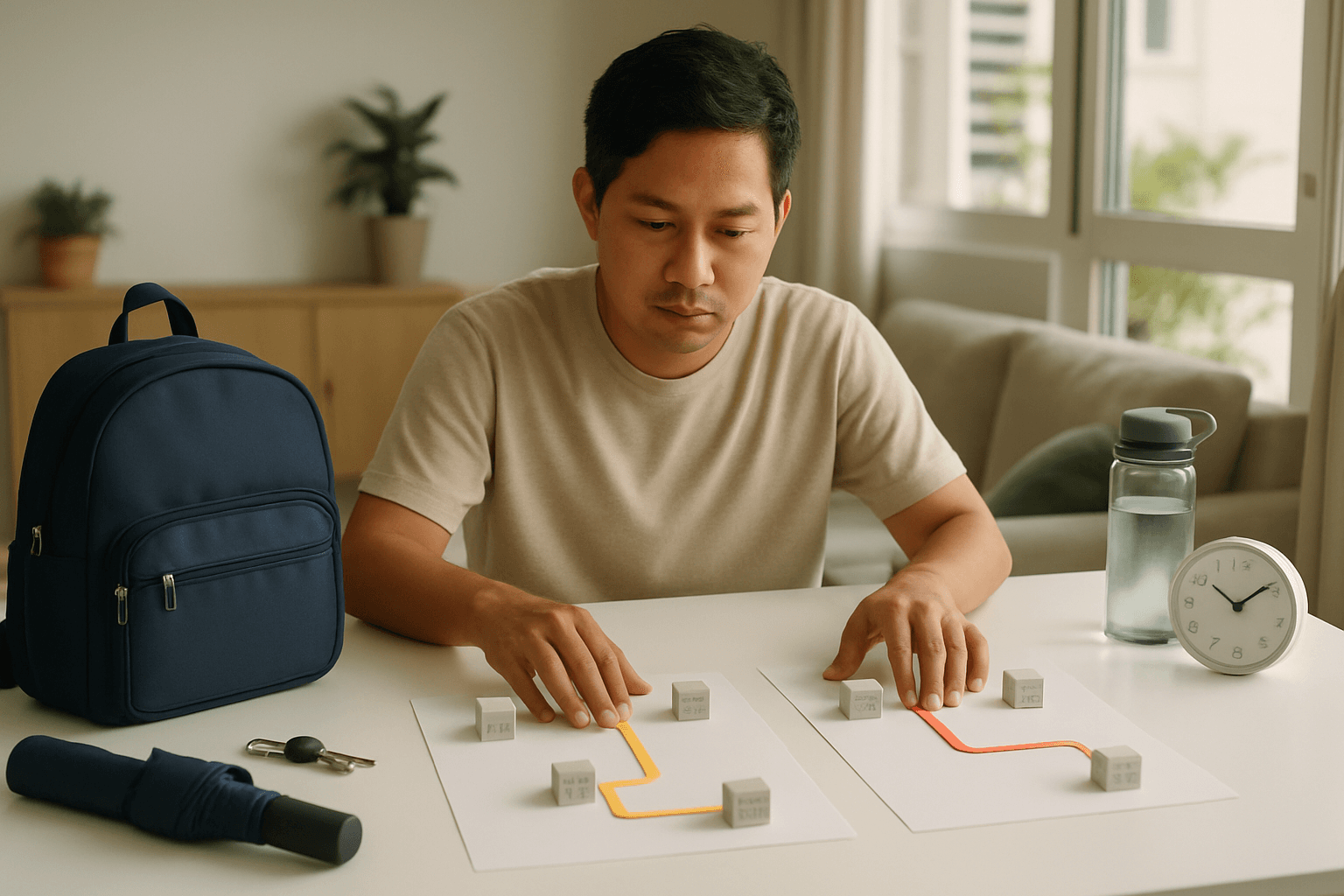
Many parents treat a backup school as just the next less competitive option. That is usually too narrow. A true backup is a school your family can actually use without major disruption if your first choice does not happen. In practice, that means looking beyond popularity to the daily commute, who handles drop-off and pickup, whether your child is likely to settle there, and whether you can honestly accept the school for six years. If you need the bigger picture on phases, balloting, and school planning, start with our Primary 1 Registration in Singapore guide.
What does a realistic backup school mean in Primary 1 registration?
A realistic backup school is one your family can actually use and accept if your first choice does not happen.
A realistic backup school is a school your family can genuinely use if your first-choice school is not secured. It is not just a lower-demand name on a shortlist. If that backup becomes the actual outcome, your family should still be able to move forward without scrambling to redesign transport, childcare, work arrangements, or expectations for the next six years.
The simplest way to think about it is this: a backup school should be one you can accept, not just one you can name. For one family, that may be the nearby school a grandparent can reach easily. For another, it may be a slightly farther school with a direct route and workable student care. This matters because Primary 1 registration is not only about getting in. It is also about whether the school still works on ordinary Tuesdays when everyone is tired, rushing, and dealing with real life. For a broader overview, see Primary 1 Registration in Singapore: How It Works, Balloting Risk, and How to Choose a Realistic School Plan.
All About Preparing For Primary One
Starting primary school? This is a big milestone. Do enjoy the journey with your child! :rahrah: https://www.straitstimes.com/singapore/education/the-st-guide-to-preparing-your-child-for-primary-1 Parents often confuse being ready for school with being academically capable in skills like reading and counting. Instead of focusing solely on academic progress, it is more important to make learning an enjoyable process, and help your child have a swift and happier adjustment to primary school. Here
All About Preparing For Primary One
Was surfing around on understanding if I am well prepared on behalf of my DD1 for Primary 1 Chanced upon a few websites, thought to share though it could have been mentioned before Tips For Parents ◦Work on independent reading skills. ◦Set up a study area and regular study times that are not interrupted. ◦Learn to follow a routine with a lot of sleep and early mornings. ◦Practice organisation and planning by packing a daily bag with essentials for the day. ◦Talk about social skills and communica
Why lower popularity alone does not make a school a good backup
A school can be easier to apply for and still be unrealistic for daily family life.
A school can be less competitive and still be a poor backup. If the journey is long, the route is awkward, or no one in the family can handle the school run consistently, the school may be easier to apply for but much harder to live with. Parents sometimes focus so much on reducing balloting risk that they forget the more important question: can we actually sustain this school every day if we get it?
A practical comparison makes this clearer. School A may look safer because demand has been lower, but it requires a long drive through morning traffic and creates pickup problems twice a week. School B may attract slightly more interest, yet it is closer, easier to reach, and fits after-school care properly. In real life, School B may be the more realistic backup even if it looks less "safe" on paper. If you are weighing that trade-off, our guide on dream school vs safer nearby school goes deeper into that decision.
Top Primary school?
Yup... you are absolutely right about what we want as parents... that all schools are equal in standards and procedures, etc. But in practice, just as everyone is not born equal, schools are also not equal, even if they are all teaching the same curriculum. Simple reason - teachers are all different. And teachers are the most critical element in a primary school. I was lucky to have a great P1 teacher during my time - she made an ENORMOUS difference in how I turned out - from being last the kind
All About Preparing For Primary One
You should have seen the way the mum drilled the poor child, depriving him of food till he completed his revision. Obviously, an uninterested child will only retain the information into his short term memory. Preparing a child for primary 1 is more than just the academics. There are several areas that parents have to take note of. Does your child know how to clean up after himself if he does a big business in the toilet? Does your child know how to wash his hands correctly and rinsed his hands p
Have More Questions?
Get personalized guidance on schools, tuition, enrichment and education pathways with AskVaiser.
Try AskVaiser for Free →How far should a backup school be from home in practical terms?
Do not judge by map distance alone. Judge whether the real weekday commute is manageable.
There is no official distance cut-off that tells you a backup school is manageable. The better test is the real school run. Look at who will actually do drop-off and pickup, what the route feels like during peak hour, whether rain makes the trip much worse, and whether the journey still works when a sibling is sick or a meeting runs late. A map can make a school look close enough while hiding awkward transfers, traffic bottlenecks, or an unrealistic morning timeline.
A useful parent check is to separate registration distance from daily usability. A school may be within a priority band for registration, but still be tiring in practice. If possible, test the route at school-going hours. If the school only works when everything goes right, it is probably not a strong backup. MOE points parents to SchoolFinder through its Primary 1 registration FAQ, which is a good starting point for exploring nearby options. If you also want to understand how home-school distance affects registration priority, see our guide to Primary 1 distance priority.
[Bedok] Primary Schools
Thank you for your valuable comments. However to be realistic, the achievement grades of Bedok Green students are better than East Coast. I'm caught in a fix. Cos based on our registered address, Bedok Green falls between 1 to 2 km, whereas East Coast is within 1 km. Really stressful.
[Geylang] Primary Schools
For primary schools, I recommend going for convenience than popularity. Reason is the kids are still young, and travelling time should not be long enough to tire them out, even for those driving. Have you seen children dozing off in the parents car (some in an awkward position, especially straining their necks) because they have to wait up earlier than their peers to reach these “better” schools to feed their parents “ego”. Please note that the above is just my PERSONAL view as I have gone throu
What school-fit factors matter even for a fallback option?
Even a fallback school should be a reasonable match for your child’s routines, temperament, and likely support needs.
A backup school does not need to be your perfect match, but it should clear a basic fit threshold for your child. The key question is whether your child is likely to settle there with normal support, not whether every feature is ideal. Parents usually make better decisions when they look at simple fit factors such as whether the child copes well with routines, how they respond to change, whether they may need a calmer or more structured environment, and whether the school feels like a place they can grow into over time.
This is where school websites, open houses, and conversations with current parents are often more useful than general reputation. A lively and highly structured environment may suit one child and overwhelm another. A child who takes longer to warm up may manage well in a school that feels easier to navigate daily, especially if the commute is also simple. If you want a practical framework for comparing options, How to Evaluate Primary Schools is a helpful starting point, and Starting Primary School: A Checklist for Parents is a useful reminder of the adjustment and routine issues families often overlook. For a broader overview, see Primary 1 Registration Unsuccessful: What Happens If You Do Not Get Your Preferred School.
Kindergarten that prepares child well for Primary 1
HiHi My girl is in Nursery and from NAFA. I have gone round to many kindergartens to check if their curriculum actually prepare children for P1. my findings...depends on which primary school you have selected for your child. I've talked with some parents from NAFA...some say more than sufficient, while others said no... I'm also scared to death if my child is ready for P1...went to check further with some of friends teaching in primary school...some schools use the MOE text books...some don't. G
All About Preparing For Primary One
hey hi everyone, my DD will be entering Primary 1 next year and it seems like more and more students are now enrolling in some form of preparations for primary education. It comes in the form of teaching maths and english in advance http://sg.mpmmath.com/ , cognitive improvements http://cce.education/p1prepclass/ , and some even learn things like packing bag and being organised https://www.thelearninglab.com.sg/programme/preschool/ The kindergarten my DD attends do teach them maths and english.
How should parents weigh transport, childcare, and work routines?
The best backup is the one that still works with your actual drop-off, pickup, and caregiving routine.
Choose the school that fits your family's real care chain, not the one that looks best in isolation. A backup school becomes unrealistic when it breaks the morning or afternoon routine. That can happen when the grandparent who usually helps cannot manage the longer trip, when after-school care is too far from the school, or when the only available pickup adult would need to leave work too early every day.
What many parents miss is that small daily friction adds up fast. An extra twenty difficult minutes each way may not sound dramatic at first, but over a full school year it affects sleep, work schedules, sibling routines, and household stress. A useful test is to identify the weakest link in your weekday plan. If one adult, one route, or one childcare arrangement has to stretch too far for the school to work, that school is probably not a realistic backup. If you are still unsure what happens if a preferred option falls through, our guide on what happens if you do not get your preferred school can help you plan calmly instead of reacting late. For a broader overview, see How to Read Past Balloting Data Before Chasing a Popular Primary School.
All About Preparing For Primary One
Dear parents, I hope parents could share your experience regarding the preparation for primary school and time schedule spend with your kids everyday. I have a son of 6 this year going to P1 next year. I would like to find out with parents things that you are doing with your child prior going P1, cos I do not want to react too kan-jiong or too relax in front of my child. I am particularly concerned about the 3 main subjects being taught in P1 and wonder should I expect him to be able to do the a
All About Preparing For Primary One
:goodpost: Thanks so much for your great sharing! It really helps us as P1 parents from 2012! :lovesite:
A backup school should not be a place you secretly plan to replace later
If you would immediately try to leave the school, it is probably not a real backup.
If your first reaction to getting the school would be to start looking for an exit, it was probably never a true backup. Primary school is a long journey, so a realistic backup is one you can accept now, not one you are only tolerating while hoping something better appears later.
All About Preparing For Primary One
Here's the thing: most of them do not add any real value. Teaching in advance doesn't help in preparation, it's just... learning in advance. And when P1 comes, they get distracted or bored or worst, a disturbance in class because none of the lessons interest them (because they already know them). Notwithstanding, there are some courses / programmes that may be beneficial but they are not compulsory and may not benefit everyone equally. Examples of such programmes are English / Chinese reading /
All About Preparing For Primary One
My son is going primary 1 next year and I am eligible for phase 2b under a good school but it took two hours of time of bus transport to n fro from home. The kid have to be at the bus stop at 6am waiting for bus. That school have proven track record for the past many years because of it’s strict standards. Now, my headache is there Is a relatively new school which is only a few years old n has not proven track records n the highest psle scores is 230plus. This school is just downstairs my home b
What common mistakes do parents make when choosing a fallback school?
The biggest mistakes are chasing prestige, over-trusting past demand data, and listing a school the family has not truly accepted.
One common mistake is choosing by reputation alone. Parents may pick a school because it feels safer socially or sounds like a better name to mention, even when the route is tiring and the daily routine is fragile. Another mistake is treating past popularity or balloting patterns as if they guarantee safety. Past data can be useful context, but it is not a promise. Our article on how to read past balloting data explains why parents should use it as a guide, not a shortcut.
Another blind spot is emotional non-acceptance. Some families list a backup school they have never truly discussed. Then if disappointment comes, the school suddenly feels unacceptable even though it was always on the list. A better question is: if this becomes our actual school, can we move forward without resentment? That mindset matters because registration outcomes can still force quick decisions. For example, MOE explains in its registration guide that an unsuccessful Phase 2C Supplementary applicant may be posted to a school with available vacancy. That does not apply to every phase in the same way, but it is a reminder that backup planning should be calm and realistic before registration, not after.
Preschools prepared your kids well for Singapore primary?
For parents who have already been through the pre-school days and with kids now in primary schools (Singapore schools), can you share your comments on your kid's previous preschool and their curriculum - specifically if they have prepared your child properly for the Singapore education system ? (not discussing the international or foreign schools system here) Nowadays, there are so many pre-schools and childcare centres with many learning methods. Parents currently at the pre-school stage will b
Top Primary school?
in my opinion, I do not believe in ranking primary schools as these are totally nonsense… Primary school is an early stage of education for young kids especially from P1-P3. We should not emphasis too much on academic results. By ranking schools, it put pressure to the principals to emphasis on results & thus favours better students than the average students. This will have negative effect on the average students… Education have to be fair to ALL students… this is just my opinion and i hope pare
How can parents quickly test whether a backup school is realistic?
If several answers are no or only work under ideal conditions, the school is probably not a strong backup.
- ✓Can one adult handle the normal drop-off and pickup routine without daily rushing?
- ✓Is the journey still manageable during rain, peak hour, or on days when another child also needs attention?
- ✓Does the school seem like a reasonable fit for your child's temperament, routines, and likely support needs?
- ✓Can grandparents, childcare, or after-school care realistically support this arrangement if needed?
- ✓Would you accept this school for the full primary journey rather than treat it as a temporary holding place?
- ✓If your first-choice school does not happen, could your family move forward with this option without major hesitation?
What is a practical decision rule for choosing between two backup schools?
When two options are both acceptable, pick the one that creates less daily strain unless the other is clearly better for your child without adding serious burden.
If both schools are acceptable, choose the one that is easier to live with daily. In most cases, the better backup is the school with the smoother commute, simpler pickup plan, and less fragile routine. A slightly stronger reputation usually does not outweigh a much harder school run.
The main exception is when the harder option is clearly better for your child in a way that matters every day and does not seriously break family logistics. For example, if one school is only slightly farther but offers a noticeably calmer environment that suits your child much better, that trade-off may be worth it. But when the difference is mostly reputation or parent preference, the easier school is usually the wiser backup. Choose the school you can sustain, not the one you merely prefer in theory. That is the difference between a paper backup and a real one.
All About Preparing For Primary One
For me, two hours is just too long. Your child will need to wake up at 5:30am meaning that he should be in bed by 7:30pm every evening if he won't nap in the afternoon. Are you able to do that? As he gets older, there will be more after-school activities so he will be coming back very late. You say that the new school is not results-oriented. I think what you mean is that they don't make exam results the be all & end all. Isn't that a good thing? Your child will be able to enjoy school and not b
Top Primary school?
Honestly I am not sure if there is such a thing as a top primary school based on the efforts of the school. All schools have the same mission set by MOE to deliver the same thing. If you hear from them, even teachers they have no control, it's all from MOE. So what then would you consider as top primary school? It definitely cannot be results alone because results are typically parents-driven in today's context in some schools. Every school has the best cream of the crop and the worst performers
Have More Questions?
Get personalized guidance on schools, tuition, enrichment and education pathways with AskVaiser.
Try AskVaiser for Free →