
Are Neighbourhood Primary Schools Good in Singapore? What Parents Often Get Wrong
How to judge a nearby primary school fairly, without letting prestige, gossip, or registration stress make the decision for you.
Yes. Neighbourhood primary schools in Singapore are not second-tier by default, and many are solid choices for young children. A well-run nearby school can give a child a calmer start, a more sustainable routine, and a better daily experience than a more famous school that is harder to reach or less suitable.
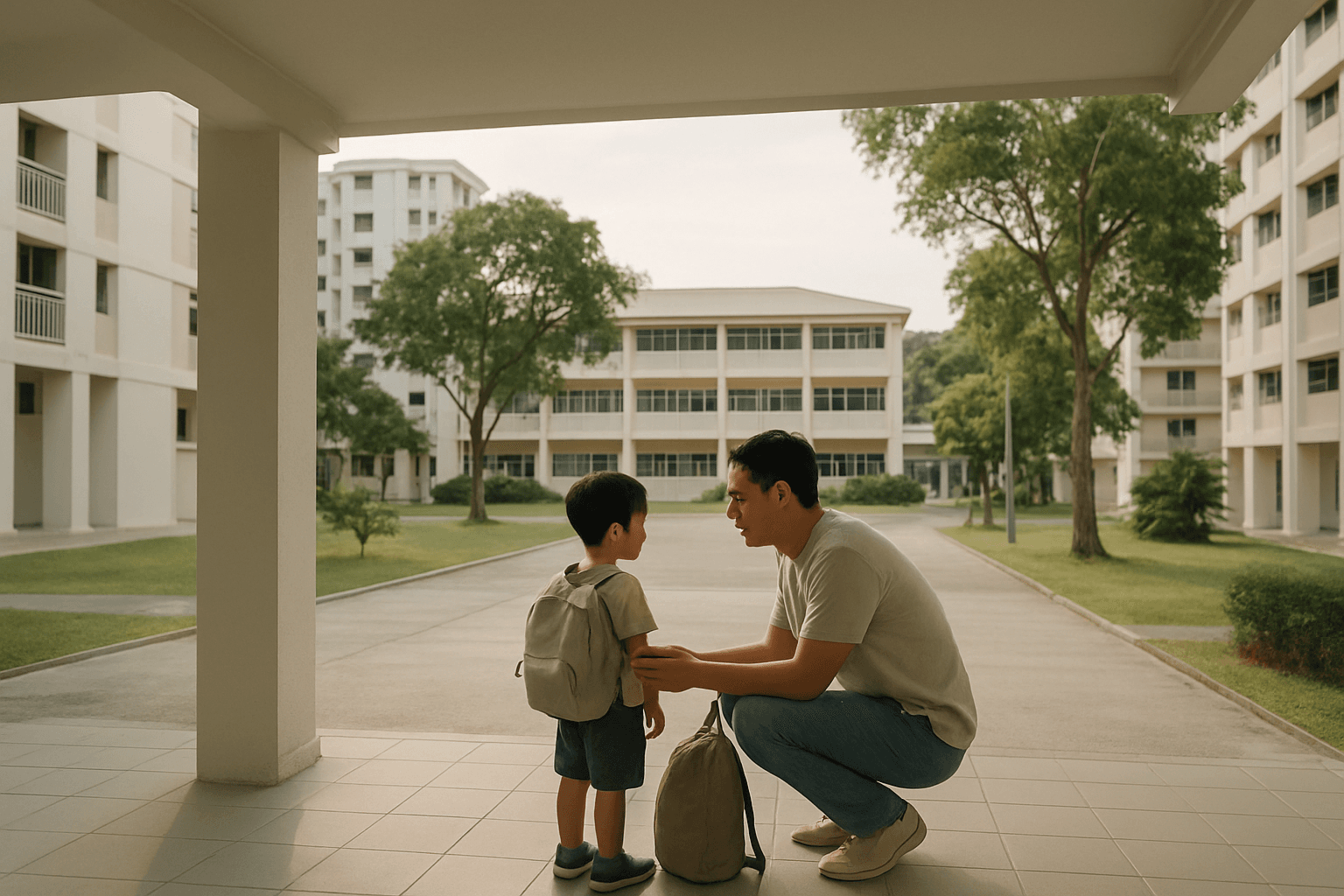
Yes, neighbourhood primary schools can be good choices in Singapore. For most families, the real question is not whether a school is famous, but whether it is a strong fit for the child and the household. A nearby school that is calm, practical, and manageable may serve a child better than a more sought-after school with a tiring commute or a poor day-to-day fit.
Are neighbourhood primary schools good in Singapore?
Yes. Many neighbourhood primary schools are good choices, and for many families a nearby school is a better fit than a more famous one.
Yes. A neighbourhood primary school in Singapore is not inferior by default. For many families, the better question is whether the school fits the child’s temperament, needs, and daily routine well enough to work for six years.
Parents sometimes treat Primary 1 as a prestige decision, but it is really a day-to-day life decision. A school that is easy to reach, easy to manage, and easy for a child to settle into can be the better choice even if it is less talked about. A six- or seven-year-old who arrives calm, rested, and on time is often in a better position to learn than one who starts the day already tired from travel.
MOE’s broad guidance on school choice points parents to practical factors such as the child’s abilities and interests, school culture, home-school distance, Mother Tongue Language options, and support needs. That is a useful frame because it shifts the decision away from status and back to fit. If you are still building a shortlist, our broader Primary 1 registration guide is a helpful place to start.
[Ang Mo Kio] Primary Schools
My girl will be enrolling in a primary school next year too. I feel where you stay will play a big part in deciding on which pri school your child will study at eventually. Why do we need to compare which primary schools your child will study in ? I think this create an unhealthy system in which most parents will strive to get their child into these perceived good schools. ( If they score well in those schools, it is expected of them but if they do not, these children will enter different second
[Geylang] Primary Schools
For primary schools, I recommend going for convenience than popularity. Reason is the kids are still young, and travelling time should not be long enough to tire them out, even for those driving. Have you seen children dozing off in the parents car (some in an awkward position, especially straining their necks) because they have to wait up earlier than their peers to reach these “better” schools to feed their parents “ego”. Please note that the above is just my PERSONAL view as I have gone throu
What parents usually get wrong about neighbourhood schools
The big myth is that brand name automatically means better teaching or a better fit for every child.
The most common mistake is assuming a famous school name proves better teaching or better outcomes. Popular schools do attract strong demand, but reputation can reflect many things besides school quality, including intake patterns and how much enrichment children already had before Primary 1.
Another misconception is that teachers in popular schools are automatically better. In reality, every school has strong and less-strong teachers. What often differs is the student profile entering the school, which can make the classroom pace look faster or more polished from the outside.
Treat reputation as a clue, not a verdict. Community pieces like Neighbourhood Schools Are Worthy Too and parent reporting in this TODAY article on what families value in a good school point to the same practical idea: many parents care about confidence, character, and daily wellbeing, not just brand name. For a broader overview, see Primary 1 Registration: Should You Pick a Popular Dream School or a Safer Nearby School?.
Are All Primary Schools The Same?
A lot of people underestimate the role parents play in the education landscape. In every school, the “parent support group” synergy can be a powerful source of strength for further improvements. A school with a better track record attracts parents who want the same for their children. Higher expectations will also lead to higher demands on the school teachers. In some schools, it is not uncommon for parents to voice their concerns to the school leaders, even to the ministry if teachers or exam p
[Bukit Timah] Primary Schools
a) 11 schools most highly sought after by parents (click on picture inside, one by one):- http://www.edvantage.com.sg/edvantage/photos/1226116/P1_registration_heads_to_ballot_boxes.html b) Parents rent condo, to enhance P1 balloting chance :- source http://www.edvantage.com.sg/edvantage/photos/1243954/Parents_rent_condos_for_better_P1_balloting_chance.html Schools that the paper spoke to said that parents risk having their child expelled if they are caught using a false address. Nanyang Primary
Have More Questions?
Get personalized guidance on schools, tuition, enrichment and education pathways with AskVaiser.
Try AskVaiser for Free →What a neighbourhood primary school can actually be good for
Its biggest strengths are routine, stability, and a school day that a young child can handle more comfortably.
A nearby school can be especially strong in the areas parents feel every day but often overlook when comparing options. Shorter travel usually means calmer mornings, less rushing, better punctuality, and more energy left after school. Those are not small lifestyle perks. They affect whether a child starts the day settled and whether the family can keep the routine going without constant strain.
This matters most in the first year or two of primary school, when children are adjusting to a longer day, more structure, and new social demands. A shy child may settle faster when the whole day feels manageable. A child who tires easily may cope better with a shorter journey. A family juggling student care, grandparents, or siblings in different schools may also find that a neighbourhood school gives them more consistency.
A useful way to think about it is this: convenience is often learning support in disguise. Parent discussions such as these frequently asked questions on choosing a primary school often circle back to the same point. Daily manageability is not a weak reason. It is part of school fit. For a broader overview, see Primary 1 Registration Distance Priority: How Home-School Distance Works.
Preschools prepared your kids well for Singapore primary?
For parents who have already been through the pre-school days and with kids now in primary schools (Singapore schools), can you share your comments on your kid's previous preschool and their curriculum - specifically if they have prepared your child properly for the Singapore education system ? (not discussing the international or foreign schools system here) Nowadays, there are so many pre-schools and childcare centres with many learning methods. Parents currently at the pre-school stage will b
Are All Primary Schools The Same?
I think these days, there are many good neigbourhood schools and my definition of good schools are those that have modern facilities and enterprising principal/teachers who can run interesting programs in the school. Usually, these schools will have balloting at least at phase 2C. I am more concerned about those schools which still have plenty of vacancies in Phase 3…
What a neighbourhood school may not offer compared with a more sought-after school
Some sought-after schools may offer stronger prestige or more visible programmes, but those advantages usually come with admissions and lifestyle trade-offs.
It is fair to acknowledge that some higher-profile schools offer things that strongly attract parents. These can include more visible programmes, stronger public prestige, a more competitive peer environment, or an alumni network that families already know well. For some children and families, those are meaningful advantages.
But those benefits usually come with trade-offs. The school may be harder to enter, harder to commute to, or harder to sustain once real family schedules kick in. A school can look impressive on paper and still be the wrong day-to-day environment for a child who needs a calmer start.
The more honest comparison is not good school versus bad school. It is one set of trade-offs versus another. If you are weighing a famous school against a nearby option, it helps to read both our guide on popular dream school or safer nearby school and our article on how to read past balloting data before chasing a popular primary school. That makes the decision more realistic and less emotional. For a broader overview, see Popular Primary School vs Neighbourhood School in Singapore: Which Is Better for Your Child?.
[Bukit Timah] Primary Schools
Also, I think parents need to wake up to the reality of Singapore education. 1. MGS, ACS, Nanyang, SCGS, RGPS - these schools are located in expensive neighborhoods. I do not think there are even any HDBs within 1km. Considering 70% of Singaporeans live in government housing…what is this telling you? 2. If schools are positioned to service children within the school area (address) does that not tell you that these schools are targetting a certain socio-economic segment of society? 3. So those pa
Are All Primary Schools The Same?
There are many good schools in public estates. CCK has Southview, which has been very consistent in producing high-scoring PSLE students. And there are schools built in private estates which don't perform that well either. It's not true that those surrounded by good schools can go to another good school if they're balloted out - registration is done in phases and most people who live in the Bukit Timah area will have only one, at most two shots at a good school, which is the same as everyone els
How should parents judge a school beyond its label or reputation?
Judge the school by child fit, culture, and practical realities, not by status alone.
Start with child fit, not school brand. Ask whether your child needs a gentler transition, enjoys structure, warms up slowly, or is likely to thrive in a faster-moving environment. A school that suits your child’s temperament is often a stronger choice than one that simply sounds more impressive when other parents mention it.
Then look for clues about school culture. School websites, open house materials, social media posts, and wall displays can show what the school chooses to celebrate. Notice whether the school highlights character, participation, bilingualism, creativity, discipline, academic competitions, or community involvement. None of these signals is perfect on its own, but together they tell you more than hearsay does.
Also check practical fit. Look at travel time, whether your child’s Mother Tongue Language is offered, how the school seems to communicate with parents, and whether there appears to be support for adjustment, learning needs, or behaviour where relevant. If you attend an open house, listen closely to how staff talk about mistakes, confidence-building, and settling into Primary 1. Those details often reveal more than a polished presentation. This guide on alternative ways to assess a school is a useful prompt, but your own observations still matter most. For a broader overview, see How to Read Past Balloting Data Before Chasing a Popular Primary School.
[Jurong East] Primary Schools
Jurong Primary is really good. Nothing else in that area is worth going into. Avoid the rest. Not a wise choice. There is a reason why certain schools are more popular. There is also a reason why a certain of the above schools is not popular.
Are All Primary Schools The Same?
I saw an online article that many parents want their children to enter popular/famous primary schools because it is very difficult for a primary school to produce MANY academically strong PSLE scorers. Why? Primary school children come from all walks of life. Enrollment into a primary school has absolutely zero link to the K2 child's academic ability. There is no entrance test to do BEFORE enrolling into a Primary School. Priority phases include the child's parents' alumni links, the child's par
Why does convenience matter more than many parents think?
A shorter commute can improve mood, energy, punctuality, and the family routine that supports learning.
Because school choice affects the whole day, not just classroom time. A long or complicated journey can mean earlier waking, more rushing, less patience, and less energy by the time homework starts. If the journey is draining, the school day starts tired.
Parents feel the effect too. Commute time shapes drop-off timing, pick-up planning, student care arrangements, meal schedules, enrichment timing, and whether evenings feel calm or constantly compressed. A school that looks manageable on a map may still be a weak fit if the routine falls apart whenever work runs late or another child has a conflicting schedule.
Many parents think about distance only in terms of admissions, but it is also a quality-of-life factor. If distance is part of your shortlist, our guide on how home-school distance works explains the registration side. The bigger decision point is simpler: a manageable school run often gives children better consistency, better rest, and a better chance of starting school well.
[Punggol] Primary Schools
hmm… the most impt thing is your child must be happy. This must come from supportive parents in their learning. My boy enjoys his class and gamely contribute and am glad teachers (Chinese and form teacher) have been responsive in his learning. As he was a transferred student, I was also concern of him blending to his school but such were unfound. Phew! All in all, in a primary school, be it a popular, a top or mediocre school (in others’ opinion) you can still “control” a child’s learning habits
Top sch vs Good neighbourhood sch
My child went to one of the IP schools in Singapore following his PSLE. I think access to resources (e.g. facilities, materials, quality teachers, etc.) is one factor, but more importantly is the type of learning environment that he/she will be subject to. In such schools that may be deemed “better”, students are generally motivated to study harder and are more focused on their academics. This will play a huge part in what your child prioritises during these early / impressionable years. Even if
When is a neighbourhood primary school the smarter choice?
It is often the better choice when your child needs a steadier start and your family needs a routine you can actually sustain.
A neighbourhood school is often the smarter choice when the child needs stability more than status. This is common for children who are young for their cohort, shy, easily overwhelmed, or slow to warm up. In these situations, a familiar area and a simpler routine can help the child build confidence faster.
It can also be the better choice when family logistics are already tight. Parents with demanding work schedules, households relying on grandparents for pick-up, and families coordinating multiple children often benefit more from a school that is easier to reach and easier to sustain over six years.
This is where many parents misread the decision. They treat the nearby school as the backup even when it may actually be the better long-term option. A neighbourhood school is not a compromise if it gives your child a calmer start, stronger attendance habits, and a routine your family can keep up without daily strain. In real life, sustainable often beats impressive.
Top Primary school?
To be fair, I think people should not tag “good” or “bad” to a school. I don’t think there is really a “bad” school in Singapore. To me, the most important thing is the teacher your child gets. You can have very lousy teachers in the popular “good” schools as well. Or you can have very good teachers in the normal neighbourhood schools. Academic excellence is not the only thing to look for in primary school education, what about character building ? team work ? All these should be equally importa
[Bedok] Primary Schools
is temasek primary a good choice? why is it so popular?how do parent actually choose the school?
When might it be worth stretching for a different school?
It can be worth it when the school clearly fits your child better and the logistics are genuinely manageable for your family.
It may be worth stretching when the school clearly matches something your child genuinely needs or is very likely to benefit from, and your family is prepared for the trade-offs. That might be a programme that strongly fits your child’s interests, a school culture that feels noticeably more suitable, or support that is harder to find elsewhere.
For example, a family may reasonably choose a farther school if the child has a strong interest in an area the school is known to support, or if visits to both schools make one environment clearly feel more suitable for the child’s temperament. Another realistic case is when the commute looks long on paper but is actually simple because it fits a parent’s work route or childcare arrangement.
The key is to stretch intentionally, not emotionally. If the main reason is prestige or fear of what other parents will think, that is usually a weak basis for a six-year decision. If you want a clearer side-by-side comparison, our article on popular primary school vs neighbourhood school in Singapore can help you test whether the extra effort is really justified.
[Geylang] Primary Schools
Hi thanks for your message. Ok lah, I will tell you everything. All the schools you mentioned are not too bad, in fact we qualify for phase 2B under Saint Stephen. But because I have a boy and a girl and expecting another girl, I opted this boys' school out. Don't wanna go through P1 registration stress again. I would choose Tao Nan if I have a choice because I had heard good feedbacks from my friends (who have kids in the school) and also due to its chinese culture emphasis (I'm from chinese sc
Sengkang/punggol primary school - input from parents of kids in schools in these area?
~ starting to think about primary school registration (applying this year, 2025) and it’s giving me a headache. The schools my kid has a good chance of getting in (2B - 1km) are: 1)Nativity primary 2)Mee Toh 3) Rivervale primary My kid is really quite nerdy and has a hard time finding friends because of her subject-specific interests (usually science-related). Has expressed a preference for co-ed, but I don’t know how seriously to consider her input. Nan Chiau (phase 2b) seems impossible because
What is a simple way to compare nearby primary schools fairly?
Use a weighted shortlist based on your child, your routine, and your real constraints, not on reputation alone.
- ✓Write down the real door-to-door travel time on a school morning, not just the map distance.
- ✓Ask which school routine your child is more likely to handle calmly in the first year of Primary 1.
- ✓Check whether the school offers your child’s Mother Tongue Language and any support that matters for learning, behaviour, or adjustment.
- ✓Look at what the school regularly highlights on its website or open house materials, because that often reveals more about culture than reputation does.
- ✓If you visit, notice how adults speak to children and how the school talks about mistakes, effort, discipline, and parent communication.
- ✓Separate facts from gossip by comparing what you hear with your own visit and with practical parent resources such as this guide on how to choose the best primary school near you.
- ✓Give each factor a simple weight so one famous school name does not drown out commute, child fit, or family routine.
- ✓If admission risk matters too, compare your shortlist with our [Primary 1 registration guide](/primary-1-registration-singapore-guide) and our article on [past balloting data](/blog/how-to-read-past-balloting-data-before-chasing-a-popular-primary-school) before locking in a plan.
Have More Questions?
Get personalized guidance on schools, tuition, enrichment and education pathways with AskVaiser.
Try AskVaiser for Free →