
How Working Parents Should Choose a Backup Primary School After Missing Their First Choice
Choose the school that fits your weekday routine, not just the school with the strongest name.
Working parents should usually choose the backup primary school that is easiest to run every weekday, not the one with the strongest reputation. The best option is the one with a predictable commute, workable drop-off and pick-up, and a real after-school plan that still holds up when work runs late or someone is unavailable.
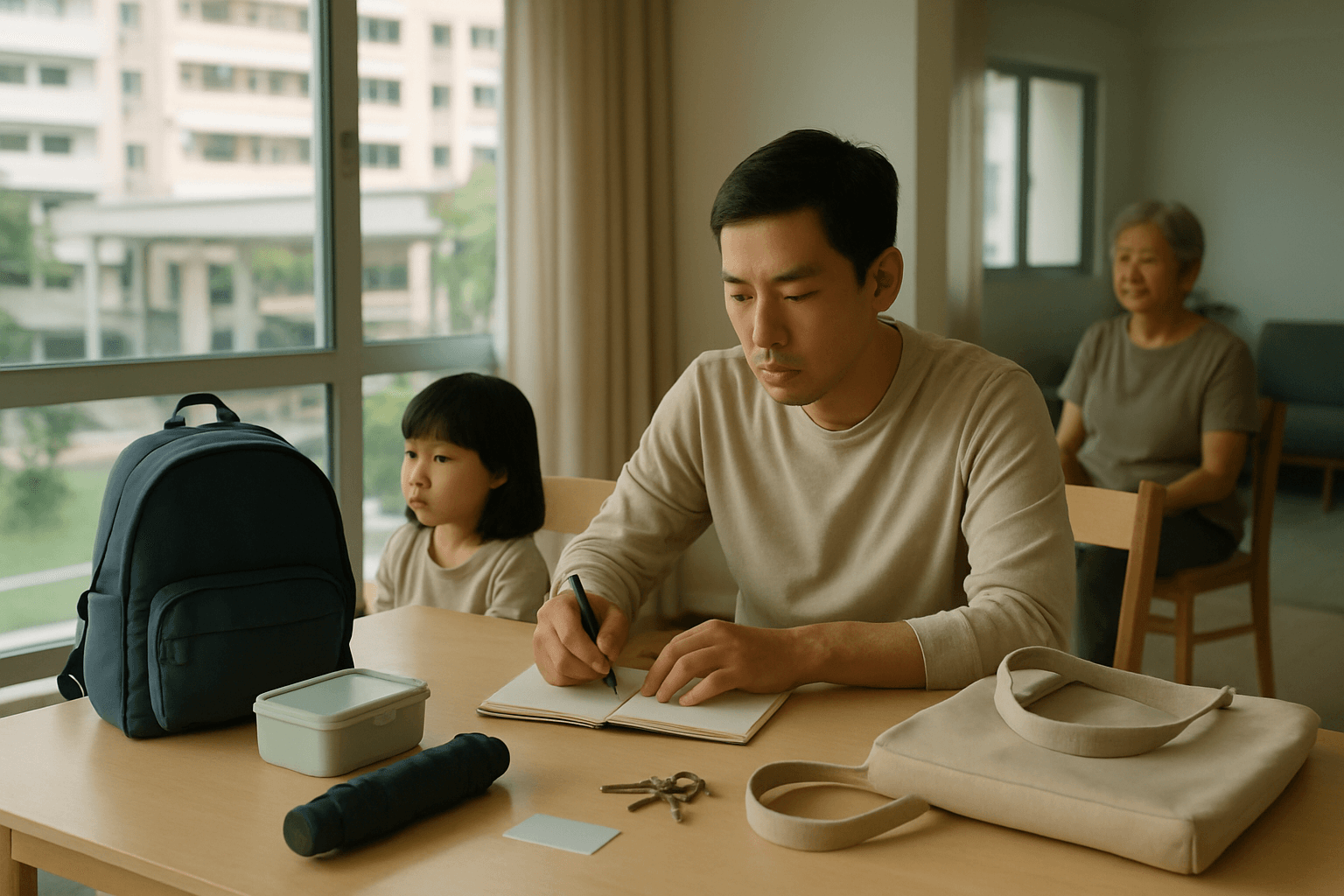
If your first-choice school is out of reach, the safest backup is usually the one your family can run without constant stress. MOE advises parents to balance the child’s needs and the parents’ preferences when choosing a school, and for working households that often means commute time, dismissal coverage, and who can actually do the school run matter more than prestige. If you missed a phase your child was eligible for, MOE says you can register in the next eligible phase but without priority. For the broader process, see our Primary 1 registration guide and our explainer on what happens if you do not get your preferred school.
What should working parents prioritise first in a backup primary school?
Prioritise the routine first: commute, dismissal coverage, and after-school care. If the weekday plan is shaky, the school is not a strong backup no matter how good it sounds on paper.
Start with the weekday routine, not the school name. MOE’s P1 registration overview explains the admissions process, but once your first choice is no longer available, the better question is practical: which school can your family repeat calmly from Monday to Friday?
For most working households, the first checks are simple. Can your child get there without a tiring journey? Is there a reliable plan after dismissal? If the usual adult is tied up at work, is there another person who can step in without the whole schedule breaking?
This is where many parents become clearer. A more famous school is not automatically the better backup if it creates daily rushing, late pickups, or constant dependence on favours. A less well-known school with a shorter route, confirmed student care, and easier handoffs may be the stronger choice because it reduces friction every day. If you are still working through the process itself, our guide on what happens if you do not get your preferred school explains the next steps. For a broader overview, see Primary 1 Registration in Singapore: How It Works, Balloting Risk, and How to Choose a Realistic School Plan.
To leave or not to leave P1 child in after school care
If you leave your child at home, ask the adult to follow the timetable you have for him. If can't follow timetable, at least stress to adult and child that must finish homework, revision first before playtime. I have a timetable but sometimes will close one eye when my ds said he is tired and don't feel like doing work or I want to bring him out for a treat (only once in a while) Some primary schools hardly have homework, tests etc for p1 kids (eg my dd's school) while others will have a fair bi
Home timetable for P1
For my P2, he is in PM session, in the morning we would ask him to practise his CL S&D stuff and also piano. It is up to him to rest and relax. I know he would watch TV..... Meanwhile for P3, there are several days that she need to stay back after school. She usually takes a nap in the afternoon. I told her to try to finish her homework before i come back. As our evening timetable is \"intense\" no tv, etc... I usually let them do whatever they want in the morning/ noon. I don't want them to be
How much should commute matter when comparing backup schools?
Treat commute as a daily energy issue, not just a map issue. A shorter, more predictable route is usually the safer backup choice for a working family.
Quite a lot. A backup school should be judged by the real door-to-door journey, not just map distance or a rough estimate from home. MOE highlights travel time and distance because a shorter commute can save time and travel costs, and it can also help a child rest better and have more energy.
For a Primary 1 child, a route that is short and predictable is usually more valuable than one that only looks easy on a quiet day. A 15-minute journey that stays close to 15 minutes during the school run is often easier for the family than a 20-minute route that regularly becomes much longer in rain, traffic, or dismissal congestion.
Test the route from the places that actually matter: home, the parent who usually does drop-off, and the adult who may need to do pick-up. A common mistake is checking the journey on a weekend and assuming weekday timing will be the same. It usually is not. If you also need to understand admissions distance rules, our guide on how home-school distance works covers that separately. For a broader overview, see Primary 1 Registration Unsuccessful: What Happens If You Do Not Get Your Preferred School.
All about Transferring to Other Primary Schools
I suppose before august, u will still be living in Punggol? Perhaps you still need some time to renovate, move/pack or settle down. Think it’s easier to transfer to TPY schools when your new premise is ready and settled.. perhaps register your child where your p2 is first and apply for transfer later. Better to start in a fresh year, say p3 and p1. If you have a caregiver for your p1 near TPY, u can try register p1 under that address...
All about Transferring to Other Primary Schools
Put your kid on waitlist in all the schools first. There is no limit. make a copy of the waitlist (take pic etc) and email to principal cc school admin to tell them you waitlisted and really really hope to join them because of distance. Anywhere in punggol is still nearer than her current school. Explore neighboring towns too. you may need to register on waitlist yearly. movement may only take place in end p3 when students move on to gep and p4 class size increased then have vacancies. Important
Have More Questions?
Get personalized guidance on schools, tuition, enrichment and education pathways with AskVaiser.
Try AskVaiser for Free →Why does student care often decide the backup school choice?
Student care often decides the issue because it covers the part of the day that clashes most with work. Confirm the actual setup directly instead of assuming it is available.
Because the school day does not end at dismissal. For many working parents, the real gap is the time between school ending and an adult being able to collect the child. If that gap is not covered, the school may be possible on paper but hard to sustain in real life.
Student care often becomes the deciding factor between two otherwise acceptable schools because it turns an anxious afternoon into a routine one. But do not assume every school has the same arrangement or that a place is automatically available. Check the actual setup directly. Ask whether the care is in-school or nearby, what the operating hours are, how collection works, and what happens on school holidays, half-days, or event days.
A useful way to think about it is this: morning convenience gets your child to school, but afternoon coverage is what keeps the whole arrangement stable. A school that is slightly less convenient at drop-off can still be the better backup if its after-school arrangement is much more reliable. For a broader overview, see Primary 1 Registration Distance Priority: How Home-School Distance Works.
Home or After School Care?
have a P1 going child next year, but we have yet to put him in student care as we are concerned about his adaptability given next year big change in his normal routine life. he was used to shorter time of lesson during kindergarten. do anyone has similar experience of putting your child in the student care half way in the P1 term? is P1 home work need to submit everyday? am thinking of letting him experience the hard truth first (without student care) and then proposing to him the need to have s
Choosing Secondary school
I think you have to watch out for point 3 in the chart - 3. Pupils from primary schools which has an affiliation will take priority in posting to its affiliated secondary school if they have opted for that school as the first choice. If you have the \"privilege\", take advantage of it. Otherwise, consider its impact on the number of available vacanies left for \"non-affiliated\" students.
How should parents compare drop-off and pick-up logistics between schools?
Compare the whole handoff chain: who drops off, who picks up, and who covers when the usual person cannot. Fewer moving parts usually means a more workable school.
Map the full handoff chain, not just the school location. Who usually does morning drop-off, and does that person have enough buffer before work starts? Who handles dismissal on most days? If that adult is delayed, who is the next person who can step in without the afternoon becoming a scramble?
The strongest backup school is often the one with the fewest handoff points. For example, a school that one parent can reach easily by MRT may still be awkward if the grandparent who picks up avoids stairs or crowded stations. A school with easier car access may be more forgiving on rainy days, but that matters only if your family actually relies on car pick-up.
What parents often overlook is that a routine can look fine in an ideal week and still fail under normal pressure. Dismissal changes, heavy rain, meetings that overrun, and caregiver illness are not rare exceptions. They are part of the real test. For a broader overview, see Primary 1 Registration: Should You Pick a Popular Dream School or a Safer Nearby School?.
All about Transferring to Other Primary Schools
Parents, do take note of which primary school, u are attempting to seek Transfer into, for your P2 kid. 1) if is not a popular, just an ordinary neighbourhood school, vacancies may still arise at end of P2, for those seeking Transfer. 2) But, if is a highly popular GEP school like Raffles Girls' Primary (for example), If any vacancies (if any) were to arise during the course of entire P2, the school will rather \"keep\" or reserve these vacancies, wait until ... the end of P3, before start to co
All about Transferring to Other Primary Schools
It is not surprising to hear that the top students in some primary schools are aiming to go to better-name schools. Nothing wrong with transferring school but must bear in mind that there is a 1% risk that the child will not fit into school culture. Usually, those who get the first few positions in class or are in the so called best class for high ability learners will tend to transfer out. With this cycle, the more famous primary schools will have no lack of top potential students to bring glor
What if one school is closer to home but another is closer to work or caregiver help?
Pick the school that makes the most important handoff easiest, not just the one that looks closest on a map. For many families, caregiver access matters more than home distance alone.
Choose the school that removes the most friction across the week, not the one that is nearest from only one point. The best option is often the one that is closest to the person who handles the most important school run, especially pick-up.
For some families, that will still be the school nearest home. For others, it may be the school on a parent’s commute to work. And for many dual-income households, it may be the school nearest a grandparent or caregiver who handles most afternoons. If a grandparent collects the child four days a week, that location may matter more than shaving a few minutes off the home-to-school trip.
This is why physical closeness and operational closeness are not always the same. A school can be slightly farther from home but much easier for the people who actually keep the routine running.
All about Transferring to Other Primary Schools
Primary schools normally have a class size of maximum 30 for P1 and P2 (I think it's MOE policy) so unless there are parents who give up their confirmed places, it is unlikely there will be any vacancy until P3, where schools are allowed to have 30++ for each class. I do know of a case where a student did not turn up since first day of P1. Around Term 2, a student from another school was transferred. This student was balloted out from earlier phase (parent volunteer). For normal transfer (P3 and
All about Transferring to Other Primary Schools
For parents looking to transfer their children to another primary school, the best time (year) would be when the child is in P3. Call up the school you wish to transfer to and put in your child’s name in the waiting list. The transfer could take place for the next academic year of P4 where schools would have some movement of existing pupils due to being selected for GEP. (for non GEP primary schools) Of course, the academic results of your child matters alot for a successful transfer.
How can parents tell if a backup school is truly sustainable?
Stress-test the school on overtime days, rainy days, and caregiver-disruption days. If the plan works only when everything goes right, it is not sustainable.
A sustainable school choice still works on bad days. Do not test each option against your best-case week. Test it against the week you are most worried about.
Ask practical questions. If one parent has overtime, can the child still be collected without a panic call? If it rains heavily, does the journey become too difficult for a young child or elderly caregiver? If the helper is off or a grandparent is unwell, is there still a realistic backup? If your plan only works when every adult leaves work on time, it is not stable yet.
Another useful check is your child’s stamina. Some children handle longer commutes well; others are clearly worn out by early starts, crowded transport, or too many transitions. A backup school is sustainable when the family can keep the routine going without renegotiating it every week.
Share with us your kid's P1 registration experience
First thing to do after being balloted out, is to put your child's name under the school's wait list. After then, I've wrote in to MOE, called/met the school's Principal for discussion. Telling them all my problems and how the registration system had affected us (because I have only 1 school within 2km and NO school within 1km). With this factual, MOE has verified and consulted the school. My son was then placed on the highest priority in the waiting list .. and fortunately by early Nov, we were
Share with us your kid's P1 registration experience
Sorry, I thought this thread is suppose to discuss on the experience of P1 registration, but I think it had somehow been drifted away by some of the discussions. Anyway, I had gone through the P1 registration last year. Being a P2C applicant, it was extremely stressful and unpleasant. Pre-registration, was worry-some and many sleepless nights After registration, was tough and sleepless due to the balloting wait Post-balloting, for me & spouse … was a total breakdown (balloted OUT) My spouse and
When should school reputation matter less than family logistics?
Logistics should win when prestige means daily stress, fragile handoffs, or an exhausted child. Compare reputation only after you confirm the routine is workable.
When prestige creates a daily cost your family keeps paying. A school may be admired by other parents, but it can still be a weak backup if it leads to longer travel, repeated late pick-ups, exhausted mornings, or constant dependence on backup help.
That does not mean programmes and school culture do not matter. MOE’s school-choice guidance also asks parents to consider the child’s interests. The practical way to use that advice is to sequence the decision properly. First ask which schools are workable every weekday. Then, among the workable options, compare programmes, environment, or activities that genuinely suit your child.
A simple rule helps here: if the school fits the child but breaks the family schedule, it is not really a good fit. If you are still weighing prestige against practicality, our articles on popular primary school vs neighbourhood school and dream school or safer nearby school can help. A parent perspective on letting go of status is also useful in this KiasuParents article.
All about Transferring to Other Primary Schools
Wow, if offer some antiques to the school to display & get the kid into the school is like bribery right? I would like to know when is the best time to apply for the transfer of primary school? After primary 2 school result release or during primary one? My daughter is going to P1 next year but since both of us do not have any alumni with any school - we can only send her to a nearby school within 1 km which require to ballot too. I hope to transfer her to another school which is 1-2km away from
All about Transferring to Other Primary Schools
Just call up those schools that u are interested in to transfer your kid to, ask them to send you the \"Transfer Application \" form by email, assuming that the form is not found available on the school website. ( If the Form is already available on website, then no need to call lah ) Fill up the Transfer Application form and submit to the school Admin, after Admin tell you that got vacancies arise for your P3 level. If Admin say Sorry, no vacancy arise for P3 currently at this time of the year,
How can parents compare two or three backup schools without overthinking?
Use a short practical scorecard. The goal is not the perfect school, but the one with the fewest weekday failure points.
- ✓Keep the shortlist small; comparing two or three realistic options is usually enough.
- ✓Check weekday travel time from home, the main parent work route, and the location of the adult who will pick up most often.
- ✓Confirm student care or another after-school arrangement directly instead of assuming it will be available.
- ✓Write down the usual drop-off adult, the usual pick-up adult, and the backup adult for each school.
- ✓Remove any school that fails on dismissal coverage, even if the morning route looks easy.
- ✓Test each option against rain, overtime, half-days, sick days, and school-event weeks.
- ✓If two schools are otherwise similar, choose the one with fewer daily handoffs and fewer moving parts.
What is the most common mistake working parents make when choosing a backup school?
The most common mistake is picking for reputation or map distance alone without testing the full weekday routine.
They choose the school that sounds strongest rather than the school their family can repeat calmly every weekday. The biggest mistake is not choosing a less prestigious school. It is choosing a routine that only works on good days.
All about Transferring to Other Primary Schools
You don't get to decide when you can transfer. It depends on whether there's vacancy in the school you want, and whether the school accepts your child. You can start by waitlisting your child in the school you want after P1 registration closes. If you are lucky, transfer can happen before P1 starts, or you can wait indefinitely.
Share with us your kid's P1 registration experience
Pardon me if this question has been answer before. If we registered in P2B and given a place, can we still withdraw at P2C to register at the 1st choice school if chances are very high? :?
Have More Questions?
Get personalized guidance on schools, tuition, enrichment and education pathways with AskVaiser.
Try AskVaiser for Free →