
Does a Primary 6 Older Child Still Help in P1 Registration?
What Singapore parents should know about sibling priority, school demand, and whether a graduating child can still help.
Yes. A Primary 6 older child can still help in P1 registration if the sibling link is recognised while the child is still officially enrolled. But older child in Primary 6 sibling priority is an advantage, not a guaranteed seat, especially at popular schools.
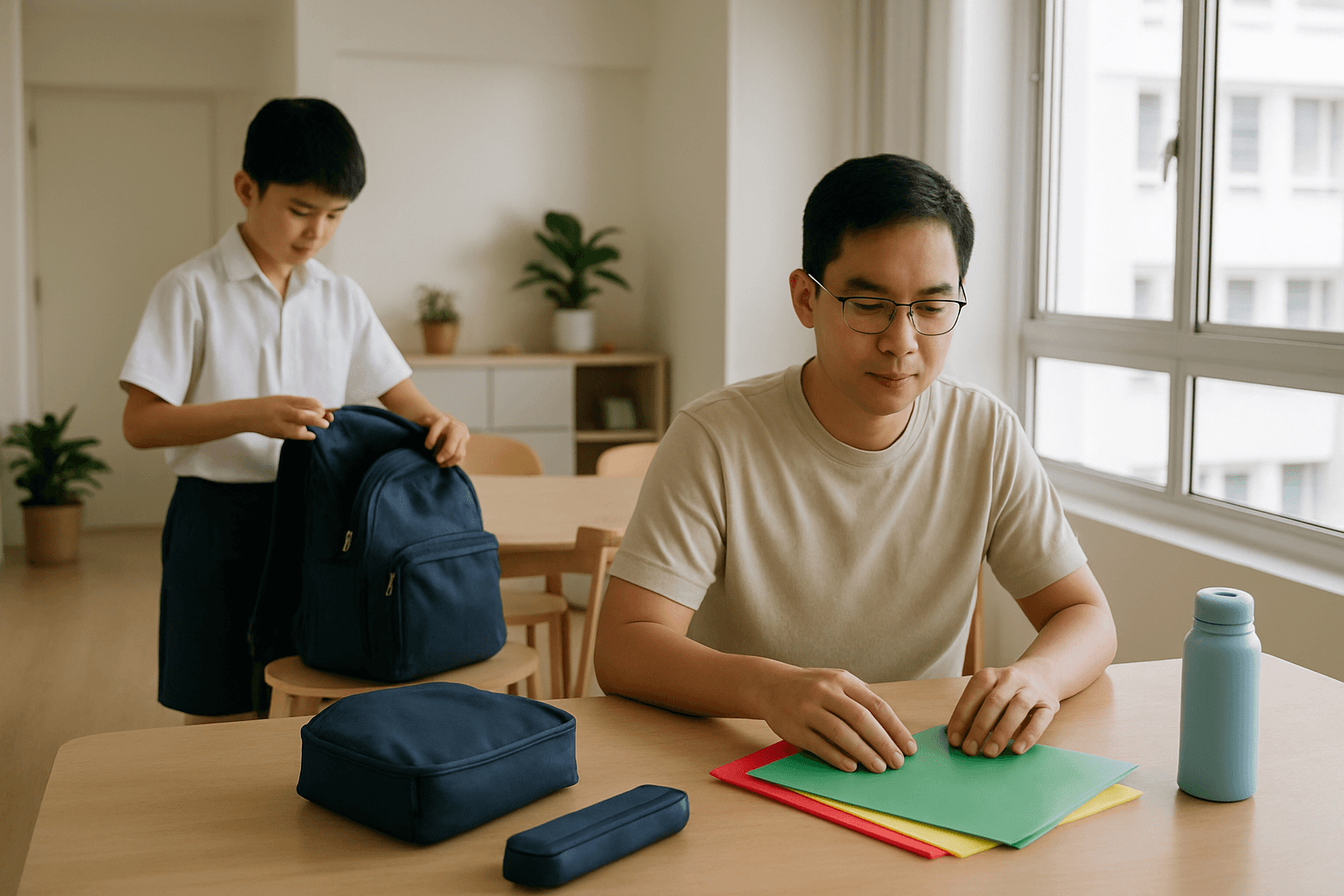
Usually yes: if your older child is still officially enrolled when your younger child applies, the sibling link may still help in P1 registration. The mistake many parents make is treating Primary 6 as a cutoff by itself. The better question is simpler: is the older child still recognised as enrolled when the younger child registers, and is that advantage strong enough for the school you want?
Short answer: does a Primary 6 older child still matter for P1 registration?
Yes. A Primary 6 older child can still help if the child is officially enrolled when your younger child applies, but it is only an advantage, not a promise.
Yes, usually. If your older child is still officially enrolled in the school when your younger child applies, the sibling link may still be recognised. Many parents think Primary 6 automatically means the benefit is gone, but that is too blunt. The more useful question is whether the school still sees the older child as enrolled at the point of registration.
The practical takeaway is simple: do not dismiss sibling priority just because your older child is graduating soon. At the same time, do not rely on it as if it guarantees a place. If your case is close to the handover point, confirm the timeline with the school early and check what documents they want. For the wider process, start with our Primary 1 Registration guide.
Child's Position in P1 Class
Ranking in P1 does not mean anything. Too young & too early. P2 to P3 is a big jump & P4 to P5 will be another big jump too. My elder boy’s level ranking in P1 was 174/360. He will be taking PSLE this year. His P5 level ranking was 34/360. A lot of them who did much better than him in P1 can’t maintain and he received the MOE Edusave Scholarship last year.
How your kid's performance in P1 if attended gd Pre-sch?
preschool does not matters if you can supplement it with enrichment or coach your child by yourself with regards to preparing for P1. if you have no time for external enrichment (ie weekends reserved for families), a preschool with good curriculum matters a lot.
What sibling priority usually means in Singapore primary school admission
Sibling priority is a preference that may improve the younger child’s chances of getting into the same school, but it does not automatically secure a place.
In plain language, sibling priority means a younger child may receive preference when applying to the same school as an older sibling who is already linked to that school. For parents, the attraction is practical: one school can mean easier drop-offs, fewer transport arrangements, and a smoother start for the younger child.
But preference is not the same as certainty. A better way to think about it is this: sibling priority can improve your chances, but it does not remove competition. If the school is heavily sought after, the sibling link may still leave you with real uncertainty. That is why sibling priority should be used as one part of your plan, not the whole plan. For a broader overview, see If Your Older Child Is Already in the School, Does Your Younger Child Automatically Get In?.
Give citizens priority in Primary 1 registration
Ha.ha. maybe next time the P1 registration phase can propose like that, just a suggestion: Phase 1 – Existing siblings in the Primary school except PR siblings. Phase 2A(1) – No Change Phase 2A (2) – No Change Phase 2B – No change Phase 2C – Singapore Citizenship Only. Phase 2C Supplementary - Singapore Citizenship Only Phase 3A – Permanent Residents Phase 3A Supplementary - Permanent Residents Phase 4 – Non Citizen.
IS IT COMPULSORY TO ATTEND KINDERGARTENS BEFORE P1 ADMISSION
No, it is not. According to MOE, compulsory education starts from above 6 to less than 15 years. Basically, it just means that the child must attend P1 to about Sec 3. However, unless you have a very good reason or alternative like home schooling, it is best to enroll the child in a kindergarten or childcare centre that has a K1/K2 class. This is because kindy prepares the child for primary school. Not just academically but also socially and emotionally. The child learns exactly what is required
Have More Questions?
Get personalized guidance on schools, tuition, enrichment and education pathways with AskVaiser.
Try AskVaiser for Free →Why a Primary 6 sibling can still be useful, even if graduation is near
What matters most is whether the older child is still enrolled during registration, not the fact that the child is about to graduate.
The timing matters more than the label “Primary 6.” Parents often worry the older child is too close to graduation to count, but the real issue is whether that child is still enrolled when the younger child’s registration is being handled.
A realistic example is a family with one child in P6 and another starting P1. In that case, sibling priority may still be worth using, especially if the school is one the family would choose anyway. By contrast, if the older child has already completed primary school and fully left before the younger child’s registration is assessed, parents should be much more careful about assuming the same advantage still applies.
The short version is this: nearing graduation is not the same as already gone. For a broader overview, see How to Read Past Balloting Data Before Chasing a Popular Primary School.
All About Preparing For Primary One
Was surfing around on understanding if I am well prepared on behalf of my DD1 for Primary 1 Chanced upon a few websites, thought to share though it could have been mentioned before Tips For Parents ◦Work on independent reading skills. ◦Set up a study area and regular study times that are not interrupted. ◦Learn to follow a routine with a lot of sleep and early mornings. ◦Practice organisation and planning by packing a daily bag with essentials for the day. ◦Talk about social skills and communica
All About Preparing For Primary One
If you have the time or resources, no harm preparing the child in advance. The child will have more confidence which will boast their learning interest. You will have less to worry. I prep my younger child. She is now coping well in primary 1 and teacher ask her to help the weaker classmates.
Important nuance: do not plan as if sibling priority guarantees a seat
Sibling priority is helpful, but it is not a guaranteed seat.
This is where many parents get caught out. Sibling priority can strengthen your application, but it does not erase demand, vacancy limits, or competition from other families.
Priority helps your position. It does not make the school yours. For a broader overview, see Primary 1 Registration Phases in Singapore: What Each Phase Means for Your Chances.
All About Preparing For Primary One
You should have seen the way the mum drilled the poor child, depriving him of food till he completed his revision. Obviously, an uninterested child will only retain the information into his short term memory. Preparing a child for primary 1 is more than just the academics. There are several areas that parents have to take note of. Does your child know how to clean up after himself if he does a big business in the toilet? Does your child know how to wash his hands correctly and rinsed his hands p
All About Preparing For Primary One
Starting primary school? This is a big milestone. Do enjoy the journey with your child! :rahrah: https://www.straitstimes.com/singapore/education/the-st-guide-to-preparing-your-child-for-primary-1 Parents often confuse being ready for school with being academically capable in skills like reading and counting. Instead of focusing solely on academic progress, it is more important to make learning an enjoyable process, and help your child have a swift and happier adjustment to primary school. Here
When sibling priority is not enough on its own
If the school is highly sought after, sibling priority may still not be enough to secure admission.
School demand matters. A sibling link that feels reassuring at a quieter school can feel much weaker at a school with strong demand. That is why parents should separate two questions that often get mixed up: “Can I apply with sibling priority?” and “Is this school still risky even with that advantage?”
If you are aiming for a very popular school, treat sibling priority as an edge, not a safety net. That usually leads to better decisions. You stay hopeful, but you also prepare properly. If you want help judging the risk, our guides on popular versus safer school choices and how to read past balloting data can help you think more clearly. For a broader overview, see Primary 1 Registration Documents Checklist: What Singapore Parents Commonly Prepare.
Kindergarten that prepares child well for Primary 1
Hello all I am very concern of which nursery, kindergarten actually prepares a child well for primary 1. I was told that some church kindergarten does not prepare a child well for primary 1. I was also told that those good preschool are pat school house, chiltern house, eaton house… which you actually have to pay premium for their school fees. Whereby Nanyang kindergarten, St James kindergarten and Nafa kindergarten have a long waiting list which is impossible to get my child in. Can anyone plea
Competition among primary schools
Apart from children being over-prepared for P1, I tend to think that P1 is meant for settling children into primary school life. To get used to the routine (perhaps longer hours for some), learning to go toilets on their own, deciding what food to eat during recess, playing with both younger and older children etc ..and last but not least, taking exams. Academic achievement is IMHO the least important concern at this stage of primary school and children are expected to sail through. The screws a
What families should check before banking on sibling priority
Check enrolment timing, school demand, and any relationship documents before relying on sibling priority.
- ✓Confirm that your older child will still be officially enrolled in the school when your younger child is registered.
- ✓Confirm that you are applying to the same school where the older child is enrolled, rather than assuming sibling status helps across different schools.
- ✓Check how competitive the school usually is, because the same sibling advantage feels very different at a less pressured school versus a heavily subscribed one.
- ✓Prepare relationship documents early. Common examples parents keep ready include both children’s birth certificates, the applying parent’s identification records, and custody papers or court orders where relevant. These are examples, not an official universal list.
- ✓If your family situation involves custody or children from different marriages, note that MOE says the children can still be considered siblings if the parent has custody of both children, and the school may advise on what documents to show.
- ✓Make sure the school still works for commute, daily routine, and child fit even if sibling priority turns out to be less helpful than you hoped.
- ✓Use our [documents checklist](/blog/primary-1-registration-documents-checklist-what-singapore-parents-commonly-prepare) to organise papers early so you are not scrambling near registration.
If your older child is in P6, should you still choose the same school for your younger child?
Choose the same school only if it still makes sense without the sibling advantage.
Often yes, but only if the school is already a good fit on its own. Even a short overlap can help. The younger child may enter a more familiar environment, the older child can help with routines, and parents may enjoy a simpler first year.
What many families overlook is how short that overlap can be. If your older child is leaving soon, the long-term benefit of having both children in the same school may last only briefly. So ask yourself one blunt question: if there were no sibling advantage at all, would we still choose this school?
If the answer is yes, the same-school plan may still make sense. If the answer is no, a one-year overlap may be pulling you into a six-year commitment that is not actually your best fit.
How your kid's performance in P1 if attended gd Pre-sch?
Dear Members Can anyone of you feedback how your kid/kids doing in P1 if they attended pre-school as follows: 1)\tPat school 2)\tMontessori 3)\tMy First School or Normal child care centre 4)\tHalf day in CC or in Kindergartens I have heard so much about how good /strong or poor academically the pre -school can be. But ultimately are kids really perform better when go to Pri i.e. (e.g. with Montessori they do have their special techniqe in their learning path, half day CC or Kindergarten as they
Child's Position in P1 Class
hi insider, Thanks for sharing. Each kid is different so even in the same environment, what works for one might not work for another. E.g., in the kindergarten that my ds attended from K1 to K2, I think they did a pretty good job (not just academic but other areas such as arts, food, annual concerts, ... etc). Some of his classmates (including my ds) are doing very well in P1 now ... but some other parents were not too happy with the kindergarten (one withdrew midway during K2, another put young
Common scenarios: what this looks like in real families
A P6 sibling can still help, but the outcome depends on school demand and whether the school is a sound choice in the first place.
One common scenario is a family with an older child in P6 applying for a younger child to join the same school. In that case, sibling priority may still be worth using, especially if the school is near home and the family would choose it anyway.
Another common scenario is a family aiming for a very popular school mainly because the older child is already there. That is where parents need to be careful. The sibling link may still help, but it may not be strong enough to make the school a safe one-school plan.
A third scenario involves blended families or custody arrangements. In those cases, the sibling relationship may still be recognised, but schools may ask for supporting documents. The MOE FAQ is useful here because it confirms that children from different marriages can still be considered siblings if the parent has custody of both children.
Across all three situations, the same principle holds: sibling priority works best when it supports a school choice that already makes sense, not when it is trying to rescue a weak plan.
Info on what your child learns in P1 and how you can help
Dear parents, in case you're wondering what your child will be learning when he goes into P1, here's an article which you may find useful. http://sg.theasianparent.com/what-your-child-is-learning-in-primary-1/ The article covers tips which you can do to help your child with literacy and numeracy skills. Hope it helps! Sincerely Junior Wonders Tuition Centre
Child's Position in P1 Class
My DS1 school does ranking at P1 as well. He's doing quite well for my standard but he is 40th position away from the one that scored 2 points above him. To my surprise, the school even do a partial stream at P2 based on P1 result. How not to be kiasu & kiasi??
My older child will graduate before my younger child starts P1. Should I still declare the sibling link?
Yes. Declare the sibling link if it is relevant, but do not assume it carries the same value once the older child has fully left the school.
Yes, if the sibling relationship is relevant to the application, you should still declare it. The key point is not whether your older child will still be in the school when the younger one starts P1. The key point is whether the school recognises that sibling link during registration while the older child is still officially enrolled.
If your timeline sits close to the point where the older child is no longer enrolled, do not guess. Contact the school early, explain the dates clearly, and ask what documents they want to see. For most parents, that is more useful than relying on informal advice from other families.
All about Transferring to Other Primary Schools
They didnt ask for her to drop one year? My friend’s kid dropped one year because of Chinese and PSLE. Now I cannot remember which year it was prob something like, kid is supposed to be p5 but asked to join. If yours is supposed to be p6, they let her join p6?
All about Transferring to Other Primary Schools
I suppose before august, u will still be living in Punggol? Perhaps you still need some time to renovate, move/pack or settle down. Think it’s easier to transfer to TPY schools when your new premise is ready and settled.. perhaps register your child where your p2 is first and apply for transfer later. Better to start in a fresh year, say p3 and p1. If you have a caregiver for your p1 near TPY, u can try register p1 under that address...
What to do next if you are unsure whether to rely on sibling priority
Use sibling priority as one input, then build a realistic backup plan around school demand, documents, and alternatives.
Start with the basics. Confirm the timing with the school, make sure your older child is still officially enrolled at the relevant point, and gather any documents that may be needed. Then look honestly at how competitive the target school is. Parents usually make better decisions when they judge sibling priority together with school demand, instead of treating it like a magic factor.
After that, build a real backup plan. That means one or two alternatives you would genuinely accept, not panic options you have never thought through. If you want help with the wider process, read our guides to P1 registration phases, what happens if you do not get your preferred school, and whether an older sibling means automatic entry.
The calmest approach is also the most practical one: treat older child in Primary 6 sibling priority as one useful factor, not the whole strategy.
All About Preparing For Primary One
Dear parents, I hope parents could share your experience regarding the preparation for primary school and time schedule spend with your kids everyday. I have a son of 6 this year going to P1 next year. I would like to find out with parents things that you are doing with your child prior going P1, cos I do not want to react too kan-jiong or too relax in front of my child. I am particularly concerned about the 3 main subjects being taught in P1 and wonder should I expect him to be able to do the a
All About Preparing For Primary One
hi Celyw, your child is more than ready for P1 at least, he should be fine. a) Speech & drama whether English or Chinese Speech & drama - can help your child in P1 Show & Tell. Nowadays a high percentage of marks are allocated for P1 Show & Tell. i) for K2, some Montessori kindergarten set tests for K2 kids close to K2 Term 4, to assess readiness. Some minor non Montessori kindergarten also do this. However, most or majority of non Montessori kindergarten, church kindergarten do not set tests fo
Have More Questions?
Get personalized guidance on schools, tuition, enrichment and education pathways with AskVaiser.
Try AskVaiser for Free →