
If Your Older Child Is Already in the School, Does Your Younger Child Automatically Get In?
Sibling priority can help in Primary 1 registration, but it does not guarantee a place.
No. An older child already in the school does not automatically secure a place for the younger child. Sibling priority may help in Primary 1 registration, but the final outcome still depends on available places, demand, and whether the school accepts the relationship and documents you provide.
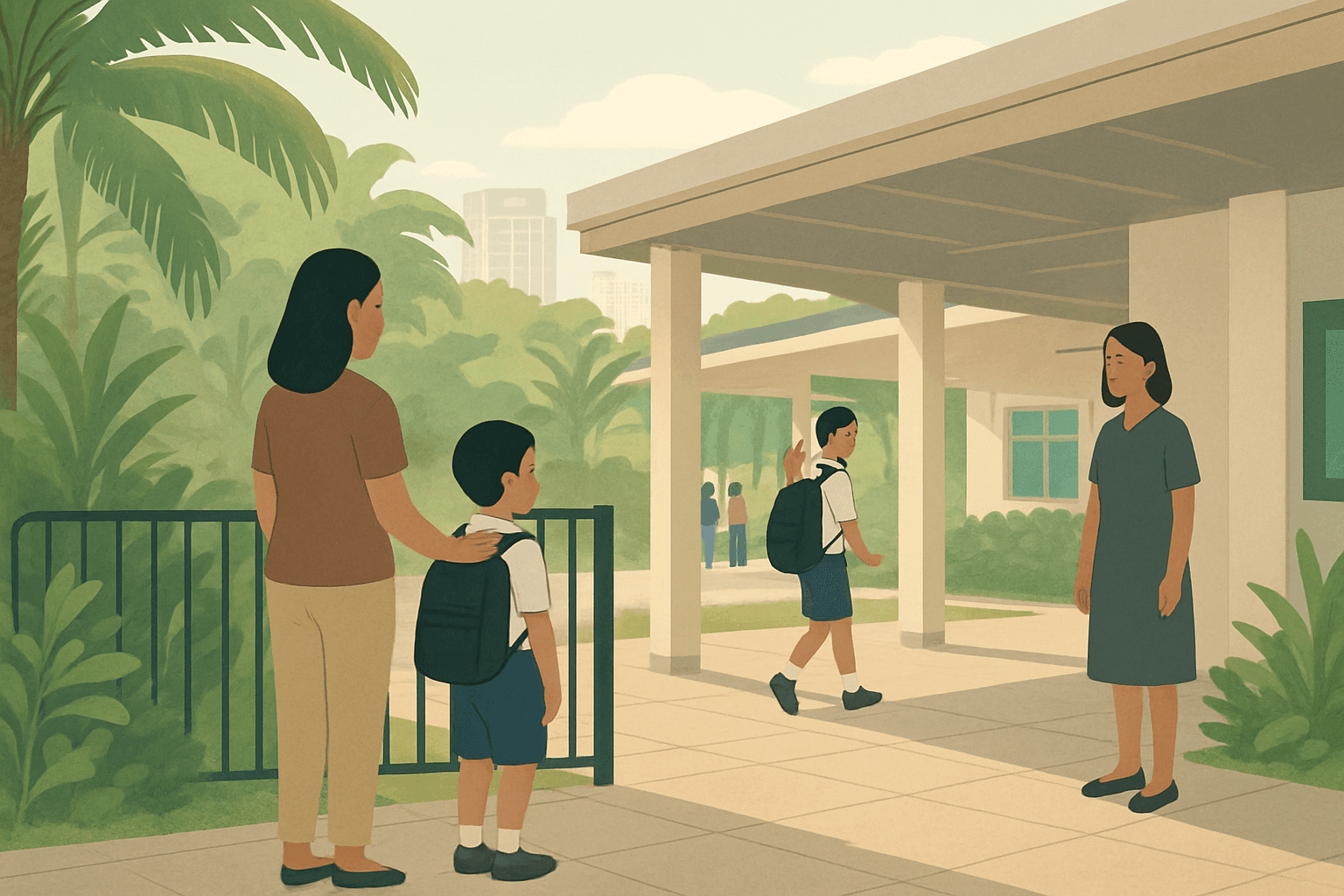
No, not automatically. In Singapore Primary 1 registration, having an older sibling already in the school can improve your younger child’s chances, but it is not a guaranteed place. You still need to register on time, follow the school’s instructions, and be realistic if the school is popular. The useful question is not just whether sibling priority exists, but how much it helps in your situation and what you should prepare before registration opens.
Short answer: if my older child is already in the school, does my younger child automatically get in?
No. Sibling priority can help, but it does not guarantee automatic admission.
No. Your younger child does not get in automatically just because an older sibling is already enrolled.
In practice, sibling priority may improve your child’s position in the Primary 1 registration process, but it is not the same as a reserved seat. You still need to register properly, and the outcome can still be affected by the school’s available places and how many other families apply.
Think of it this way: sibling priority can help you, but it does not create a vacancy. If you want the broader picture of how the process works, start with our Primary 1 Registration in Singapore guide.
Does school conduct test before allow the kid to reg Pri 1?
I have not heard of Primary schools giving entrance exams as part of the initial Primary One Registration process. I don't think that will come down well at all, as it implies that parents will be FORCING their pre-schoolers to take up all sorts of academic courses just to ace the entrance tests. However, if you want to transfer your child to another school after Primary One, the new school may require your child's exam results and even conduct assessment tests.
Seeking advice for P1 registration for daughter and son
Hi all, seeking advice Daughter born on 1st Jan 2021, by default will enter P1 when she’s 6yrs old in 2027. She’s in N2 this year. Younger son will be born in Oct 2024. initial plan to aim for St Nic for daughter, before younger son come into the picture. So now plan to aim for Ai Tong, hoping both children can get in. But only realized in early Jul 2024 that to be eligible for Hokkien Huay Kuan Phase 2B recommendation for Year of Registration 2026, must be of min 2 consecutive years of membersh
What sibling priority means in Singapore Primary 1 registration
Sibling priority gives a younger child an advantage, but it is not the same as a guaranteed place.
Sibling priority means a younger child may be given preference because an older sibling is already in the same school. For many families, that is a practical advantage because it can make daily routines easier and keep both children in one place.
The common mistake is to hear the word "priority" and assume it means a confirmed place. That is not the safe way to read it. Priority can improve your chances, but the school still has limited vacancies and still follows the registration process.
The simplest way to think about it is this: sibling priority is an advantage, not a promise. That distinction matters most when you are comparing a convenient family plan with a school that may still be hard to enter. For a broader overview, see Primary 1 Registration Phases in Singapore: What Each Phase Means for Your Chances.
All About Getting Priority Registration
http://www.straitstimes.com/BreakingNews/Singapore/Story/STIStory_579675.html \"THE current Primary 1 registration process will not be changed to give higher priority to children living very near to their school of choice - even if they live right across the street from it.\" :stupid: :stupid: :stupid: :stupid: Sad lah....
Give citizens priority in Primary 1 registration
Ha.ha. maybe next time the P1 registration phase can propose like that, just a suggestion: Phase 1 – Existing siblings in the Primary school except PR siblings. Phase 2A(1) – No Change Phase 2A (2) – No Change Phase 2B – No change Phase 2C – Singapore Citizenship Only. Phase 2C Supplementary - Singapore Citizenship Only Phase 3A – Permanent Residents Phase 3A Supplementary - Permanent Residents Phase 4 – Non Citizen.
Have More Questions?
Get personalized guidance on schools, tuition, enrichment and education pathways with AskVaiser.
Try AskVaiser for Free →When sibling priority helps, and when it still may not be enough
Sibling priority helps most when demand is manageable. At very popular schools, it may still not be enough.
Sibling priority is most useful when the school still has places and demand is manageable. In that situation, having one child already there can make it more realistic to keep both children in the same school, which is often easier for drop-off, dismissal, transport, and after-school care.
It becomes less reassuring when the school is very popular. A well-known school can still be difficult even if sibling priority applies, because priority does not increase the number of available places. A neighbourhood school with steady demand may feel straightforward, while a highly sought-after school may still need a backup plan.
The key insight is simple: priority improves your position; it does not manufacture a seat. If you are weighing a competitive school, our guides on how to estimate balloting risk before Primary 1 registration and whether to pick a popular dream school or a safer nearby school can help you think through the trade-off. For a broader overview, see Primary 1 Registration Documents Checklist: What Singapore Parents Commonly Prepare.
All About Getting Priority Registration
Actually, it depends on schools. Some schools will allow that if you pay to join their alumni. You need to contact the school to find out. I know an ex-classmate (who joined the school in Secondary only) and she managed to get into alumni and managed to get her gal a priority registration for the same affiliated primary school. Better to enquire from the school.
All About Getting Priority Registration
Hi I thought of registering my boy in 2017 for 2018 intake for my former primary school. I’ve studied 6 yrs there & had joined the alumni & stay within 1 km, do I have a guarenteed place? But if I move house before 2018 , will my boy still be guaranteed a place or need balloting? Do I need to register for a few pri schools at the same time , If I still do not get a place in my former Sch? Anyone can advise ?
Does sibling priority work in every Primary 1 registration phase?
No. Sibling priority works within the normal P1 registration process, so parents still need to register on time and correctly.
Sibling priority sits inside the normal Primary 1 registration framework. It is not a shortcut that lets parents skip timing, paperwork, or the proper registration route.
For parents, the practical takeaway is to treat the younger child’s application as a fresh registration, not an automatic extension of the older child’s admission. Even if the school already knows your family, you should still watch the registration window closely, follow the current instructions, and clarify anything that is unclear before the deadline.
If you want the wider structure, our guide to Primary 1 registration phases in Singapore explains how the process fits together. For a broader overview, see How to Estimate Balloting Risk Before Primary 1 Registration.
All About Getting Priority Registration
When the actual P1 registration starts, you will receive, via your elder child, the formal registration form (the one with carbon copies) from the school. Fill in the form and ask your elder child to submit to the school. The form that you mentioned is something like an \"expression of interest\". The form that you will receive is the formal application. However, as you have already submitted the necessary documents to the school, you need not submit these documents again. Phase 1 will start on
Share with us your kid's P1 registration experience
Hi parents, I've gone through 2 rounds of registration for my kids - Phase 2B 5 years ago (2006) and Phase 2A2 (2010). For son's P1 registration at Pei Hwa then, there was just 1 stop - ie to submit documents for verification. No guarantee at Phase 2B, just a high chance of getting in. Today's registration for daughter is slightly longer - 3 'stops'. Station 1 is at ground floor where a lady will make sure we are eligible for Phase 2A2. If so, then we proceed to the hall on 2nd floor. Station 2
What if my family situation is remarriage, sole custody, or children from different marriages?
In some complex family situations, sibling status may still be recognised, but you should confirm the school’s document needs early.
Do not assume the school will automatically treat the sibling relationship as obvious if your family structure is more complex. In MOE’s Primary 1 registration FAQ, MOE says a child from a second marriage can be considered a sibling of an older child from a former marriage if the parent has custody of both children.
The practical next step is to contact the school early and ask what proof they want. Common examples parents may prepare include birth certificates, custody papers, guardianship documents, or other records showing the family relationship. These are examples only, not an official checklist. For a broader overview, see Primary 1 Registration Unsuccessful: What Happens If You Do Not Get Your Preferred School.
All about Transferring to Other Primary Schools
You can put him down in the waitlist for all 3 schools, see which gets back to you first. If there’s no opening from now till 2022 registration, then just register your girl for balloting at whichever of the 3 schools you prefer. If she gets in, then immediately update that school of the new circumstances (sibling will be attending that school) - to expedite the boy’s transfer prior to P5. They will probably let him start in P5 when sister starts in P1. If she does not get in, then hopefully his
All about Transferring to Other Primary Schools
Just download Holy Innocent primary school's Transfer Application form from the school website, fill it up and submit for processing. Only when vacancies arise, admin staff will process all the Application forms received, contact certain parents, provided their child has been short listed by the Transfer-in-primary-school-staff-panel-in-charge. Of course, inside your Transfer Application form, u can tell them that you will be registering your younger child soon under Phase 2A. However, whether t
What parents should prepare if they want both children in the same school
Prepare early, confirm what the school needs, and keep likely supporting documents ready before the registration window opens.
Start early instead of waiting for the registration period to get busy. If keeping both children in the same school matters to your family, contact the school before registration opens and ask a simple question: if my older child is already enrolled, what do you need from me for my younger child’s registration?
In straightforward cases, parents usually keep the older child’s school details handy and make sure they can produce basic family records quickly if asked. In more complex cases, parents often prepare supporting documents that show custody, guardianship, or the family relationship. These are common real-world examples, not guaranteed requirements, so the school’s instructions should be your working guide.
It also helps to separate two questions. One is whether sibling priority may apply. The other is whether the school is still risky because demand is high. Smart planning means dealing with both at the same time. If you want a practical companion piece, see our Primary 1 registration documents checklist.
Share with us your kid's P1 registration experience
:rotflmao: and some believed that once registration is accepted means place in school is confirmed.
Share with us your kid's P1 registration experience
P1 registration experience… On the 1st day, went to the 1st choice school in the morning of 2/Aug to register… Actually I wanted to go on the last day to better gauge the chances as I was staying between 1-2km but the other half keep pestering me to go early… many parent still don’t understand the concept of balloting and priority and 3 days registration period… no sure why they always have the belief of 1st-come-1st-serve go later no place misconception even after much much explanation… No choi
Common mistakes parents make about sibling priority
The most common mistake is treating sibling priority as a guaranteed place and planning too late.
The biggest mistake is planning as if the place is already secured. That can lead parents to miss deadlines, delay speaking to the school, or forget to think about a backup option. A better approach is to treat sibling priority as helpful, but not complete, until the registration outcome is clear.
Another common mistake is assuming the school will automatically recognise every family relationship without documents. If your children have different surnames, your family includes remarriage, or custody matters are involved, ask early what the school needs instead of waiting for a problem to appear.
Parents also sometimes focus so much on the preferred school that they ignore the practical goal. For many families, the real question is not prestige but a workable routine. If that is true for you, keep a backup school in mind that still gives you a manageable commute and daily schedule.
All About Getting Priority Registration
If I studied at the secondary school, can my child have priority during the registration for the primary school? For example, if I studied at ACS Secondary but didn’t study at the primary school, would I be considered under the phrase 2A2? Thanks.
All About Getting Priority Registration
Hi fellow parents, I’m a total newbie to primary registration and my elder kid is currently 4 years. I have checked out that i falls under phase 2A (2), i’m a former student of Nanyang Primary. I’ve been led to believe that phase 2 A(2) is a confirmed entry. Is that true? else what can i do to enhance my probabilities? (I heard voluntary, grassroot activities and alumni help) Also as I’m thinking of moving to Yio Chu Kang Area, I’m worried the children will be tire out by the distance, thought o
If sibling priority does not secure a place, what are the realistic next steps?
Stay calm, move to your backup options quickly, and decide based on commute, fit, and what is realistically available.
First, keep the process moving. Not getting the same school for both children is frustrating, but it does not mean you are out of workable options.
In practice, most parents then focus on the decision that affects daily life most: which available school gives the most manageable commute, whether transport arrangements still make sense, and whether the goal of being in the same school was mainly about convenience or something deeper. For some families, a nearby alternative solves most of the problem. For others, school fit matters more than keeping siblings together.
This is where a backup plan earns its value. If your case looks uncertain, our guides on what happens if you do not get your preferred school and distance priority can help you think through the next step. One practical tip: avoid locking in transport arrangements or buying school-specific extras too early.
All about Transferring to Other Primary Schools
You don't get to decide when you can transfer. It depends on whether there's vacancy in the school you want, and whether the school accepts your child. You can start by waitlisting your child in the school you want after P1 registration closes. If you are lucky, transfer can happen before P1 starts, or you can wait indefinitely.
All about Transferring to Other Primary Schools
3. There is no such thing as auto-transfer. You can move house to anywhere and your elder child will remain in his current school. MOE will not kick him out just becos you move house. 2. Yes. As far as I have heard, huge difference. * go to the school’s general office (you probably need to sign in at the guard house first), ask for a waitlist form. Fill up everything you have mentioned as supporting reasons. Then wait. If and when a vacancy arises for your elder child, the school will call you u
Can my younger child get in automatically if the older sibling is already enrolled?
No. An older sibling can help with priority, but it does not guarantee your younger child a place.
No. An older sibling may give the younger child priority, but it does not guarantee automatic admission.
You should still complete the registration properly, follow the school’s process, and confirm whether the school needs any documents to recognise the sibling relationship. This matters even more if the school is popular or your family situation is not straightforward.
Have More Questions?
Get personalized guidance on schools, tuition, enrichment and education pathways with AskVaiser.
Try AskVaiser for Free →