
Dream School or Nearby School for Primary 1? How Singapore Parents Should Decide
A practical Singapore guide to prestige, commute, balloting reality, and everyday fit.
For most families, the better Primary 1 choice is the school your child and household can manage well every day. A dream school is worth considering only when the school fits your child, the travel is sustainable, and you have a realistic backup if admission does not work out.
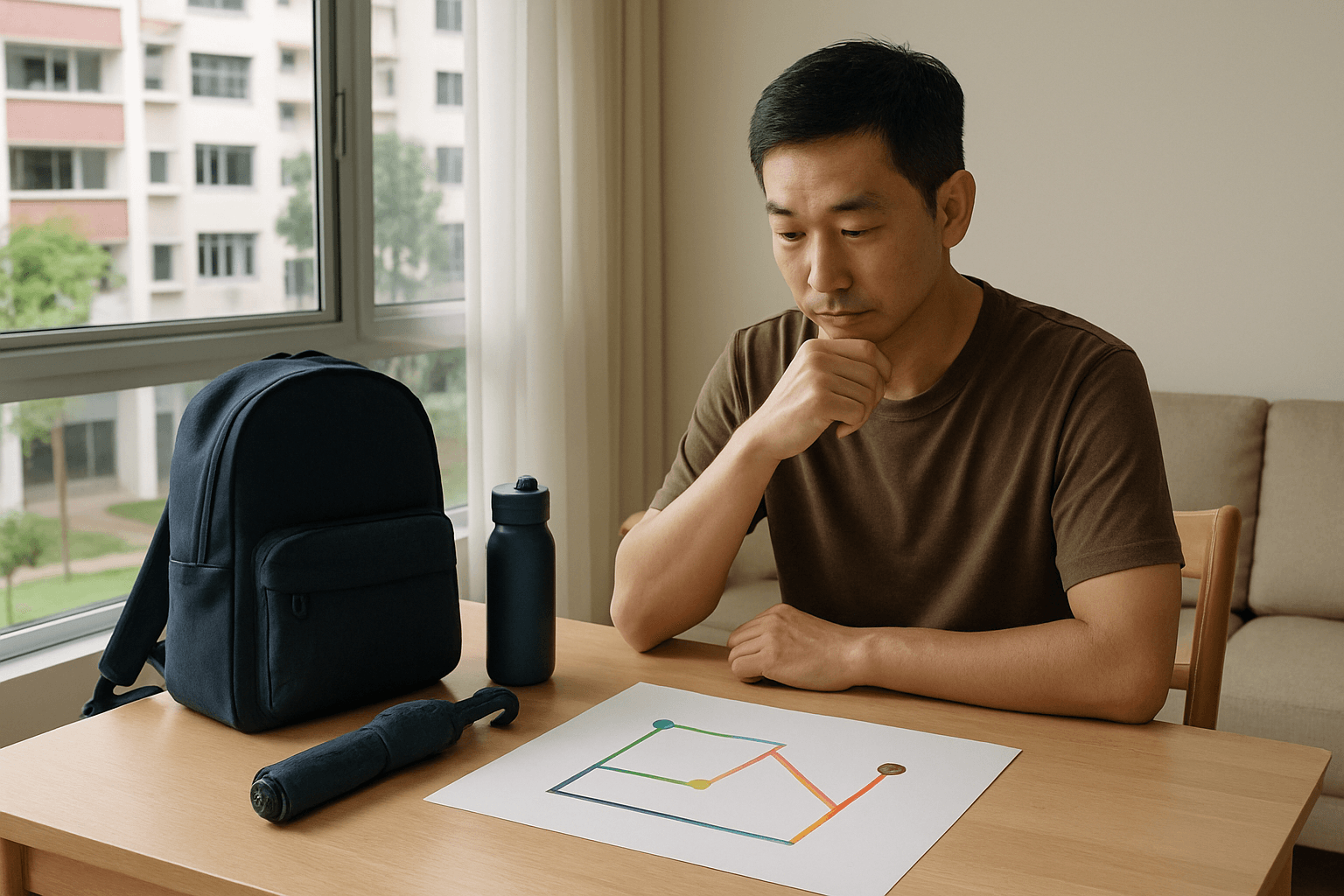
If you are deciding between a dream school and a nearby school for Primary 1, start with this rule: choose the school your child and family can sustain comfortably every weekday. A dream school can still be the right choice, but only if the fit is strong, the commute is workable, and you are not relying on an uncertain admission outcome.
What is the real difference between a dream school and a nearby school for Primary 1?
The real difference is not prestige alone. It is whether the school’s benefits are strong enough to justify the daily travel, logistics, and admission uncertainty.
The real difference is usually not “good school versus bad school.” It is the trade-off between perceived upside and everyday sustainability. A dream school is often a parent label for a school with a strong reputation, a sought-after programme, alumni appeal, or social status. A nearby school may feel less exciting during registration season, but it often gives families something far more valuable in Primary 1: a shorter commute, simpler drop-off and pick-up, and less strain on the household.
That matters because Primary 1 is not a one-time decision. It is a weekday routine that affects sleep, punctuality, energy, and family bandwidth. A school that looks impressive on paper can become stressful if it requires very early mornings, rushed breakfasts, or complicated transport. A nearby school may not sound glamorous, but it can create calmer mornings and leave more energy for reading, homework, play, and after-school care.
The useful comparison is not school name first. It is daily life first. Ask: if my child actually gets this place, what will our mornings, afternoons, and backup arrangements look like? For the wider admissions picture, see our Primary 1 Registration in Singapore guide.
[Geylang] Primary Schools
For primary schools, I recommend going for convenience than popularity. Reason is the kids are still young, and travelling time should not be long enough to tire them out, even for those driving. Have you seen children dozing off in the parents car (some in an awkward position, especially straining their necks) because they have to wait up earlier than their peers to reach these “better” schools to feed their parents “ego”. Please note that the above is just my PERSONAL view as I have gone throu
[Bedok] Primary Schools
hi, if i am you, i can totally forget about Red Swastika(ballot at Phase 2C is for SC within 1 km @2012 ) and Yu Neng(ballot at Phase 2C is for SC within 1km @2012 ). So left with Bedok West and Damai Primary. Firstly need to find out on these school more and what are they stong in. and make my choice within these two school, since within 1 km it is also better for the kids when comes to travelling to school.
Why do Singapore parents feel so torn between prestige and convenience?
Parents feel torn because they are balancing aspiration, social pressure, and practical family limits at the same time.
Because the choice feels bigger than school placement. Parents are trying to make a decision that feels responsible, future-proof, and fair to their child. A well-known school name can feel like choosing opportunity. A nearby school can wrongly feel like settling, even when it may suit the child better.
Social pressure makes the tension worse. Parents hear about balloting, alumni links, popular programmes, and other families aiming for specific schools. That can create fear of regret: if you do not try for the dream school, are you limiting your child too early? But most families are not choosing between success and failure. They are choosing between different strengths and different costs.
One common misunderstanding is that a popular school automatically means better teaching or better outcomes for every child. That is too simple. Reputation is not the same as fit. A school may be highly sought after for many reasons, but what your child needs is a setting that matches their temperament, routine, and support needs. For a balanced parent perspective, see Can a Primary School Determine Your Child's Future Success? and Neighbourhood Schools Are Worthy Too.
Insight line: prestige feels important before school starts; routine feels important after school actually starts. For a broader overview, see Primary 1 Registration Phases in Singapore: What Each Phase Means for Your Chances.
Top sch vs Good neighbourhood sch
My child went to one of the IP schools in Singapore following his PSLE. I think access to resources (e.g. facilities, materials, quality teachers, etc.) is one factor, but more importantly is the type of learning environment that he/she will be subject to. In such schools that may be deemed “better”, students are generally motivated to study harder and are more focused on their academics. This will play a huge part in what your child prioritises during these early / impressionable years. Even if
[Geylang] Primary Schools
Hi thanks for your message. Ok lah, I will tell you everything. All the schools you mentioned are not too bad, in fact we qualify for phase 2B under Saint Stephen. But because I have a boy and a girl and expecting another girl, I opted this boys' school out. Don't wanna go through P1 registration stress again. I would choose Tao Nan if I have a choice because I had heard good feedbacks from my friends (who have kids in the school) and also due to its chinese culture emphasis (I'm from chinese sc
Have More Questions?
Get personalized guidance on schools, tuition, enrichment and education pathways with AskVaiser.
Try AskVaiser for Free →How much should daily travel matter for a Primary 1 child?
Very much. Commute affects sleep, energy, punctuality, and whether your family’s routine stays workable all year.
A lot. Travel affects wake-up time, breakfast, punctuality, mood, and how much energy your child has left after school. A school that looks excellent on paper can become a poor everyday fit if getting there means very early mornings, multiple transport changes, or constant rushing.
There is no single official commute time that is automatically too long. What matters more is whether the route is simple and sustainable. A 25-minute direct ride can be easier than a shorter trip with one bus transfer, heavy traffic, and different caregivers handling drop-off and pick-up. Parents often underestimate how tiring a “manageable” journey becomes when it repeats every weekday.
The strain usually shows up on ordinary difficult days. Think about heavy rain, a child who is slightly unwell, a parent who has to leave early for work, or a helper or grandparent covering pick-up. If the routine becomes fragile as soon as one thing goes wrong, the school may be too hard to sustain even if the school itself is attractive.
A practical test helps more than map estimates. Do one weekday trial at school-going time and see how your child and household actually cope. How to Choose the Best Primary School Near You is also a useful reminder that convenience is part of school fit, not a lesser concern. For a broader overview, see Primary 1 Registration Distance Priority: How Home-School Distance Works.
[Bedok] Primary Schools
Do consider carefully on the distance to the school and the logistics. Just to share my experience. I am staying in the east and enrolled my dd when she was younger in St Anthony's Canossian Primary though I had priority in a branded school in the west. Never regretted it, the convenience of being near the school especially during her later years when there were cca, extra afterschool lessons and activities, I could ask my maid to assist bringing her back from school. The time saved on distance
[Bedok] Primary Schools
Thank you for your valuable comments. However to be realistic, the achievement grades of Bedok Green students are better than East Coast. I'm caught in a fix. Cos based on our registered address, Bedok Green falls between 1 to 2 km, whereas East Coast is within 1 km. Really stressful.
How realistic is it to get into a popular dream school?
For many popular schools, not realistic enough to treat as a sure thing. If the school is oversubscribed, assume you may need a backup and decide whether that backup is truly workable.
For many popular schools, not very realistic enough to treat as a sure thing. Balloting happens when applications exceed vacancies, and that is common at some sought-after schools. If a school is regularly oversubscribed, do not build your whole Primary 1 plan around getting in.
Distance can help, but parents often overestimate how much it protects them. Its effect depends on the registration phase, the number of applicants in the same distance band, and the demand in that year. In other words, living closer may improve your chances, but it does not make a high-demand school guaranteed.
The practical move is to plan in layers. Decide whether the dream school is still worth considering even if admission is uncertain, then shortlist one or two schools you would genuinely accept if your first choice does not work out. If you want to understand the process better, our guides on Primary 1 registration phases, how home-school distance works, how to read past balloting data, and what happens if you do not get your preferred school are good next reads.
[Bedok] Primary Schools
Popular schools for P1 Admission Almost full http://www.edvantage.com.sg/edvantage/news/news/1206256/Popular_Primary_1_schools_almost_full.html
[Bedok] Primary Schools
is temasek primary a good choice? why is it so popular?how do parent actually choose the school?
When does a dream school make sense despite the distance?
A dream school makes sense when the fit is genuinely strong and your family can sustain the routine without constant strain.
A dream school can make sense when the reason is stronger than name value. The best cases usually have three things in place: a clear child-school fit, logistics that have been tested honestly, and enough family support to keep the routine stable.
For example, the school may offer a language environment, culture, or programme that genuinely suits your child. Your child may be energetic, adapt well to early mornings, and enjoy a more structured or demanding setting. Or the commute may look long on paper but is actually a simple direct route, with a reliable school bus or a grandparent who can manage daily drop-off and pick-up without stress.
What usually makes the choice workable is predictability. If the route is smooth, the caregiving plan is stable, and your child is likely to thrive there, distance may be a reasonable trade-off. If the main appeal is status, but the daily routine already looks tiring before school starts, that is usually a sign the trade-off is weak.
A helpful test is this: if the school’s name were hidden, would its environment still be worth the extra effort for your child? For a broader overview, see Popular Primary School vs Neighbourhood School in Singapore: Which Is Better for Your Child?.
Top Primary school?
for me, there is only one school within 1km from my place...it is a good one, but...i don't have any girls. i will need to ballot for a place for one sch within 1-2km from my place (next nearest school). if *touch wood*, balloting is unsuccessful, i will go for the next nearest neighbourhood school. for this, i am wary that this school focus its resources on the 'diamond' class and streaming starts as early as end of P1! getting him into such class will be my next best bet. so neighbourhood scho
[Yishun] Primary Schools
Dear all, Student Care recommend nearby Yishun Primary School? I was headache , dun know which is good? Pls help.....
When is a neighbourhood school the smarter choice?
It is often the smarter choice when a calmer routine, easier logistics, and lower daily stress will help your child settle and cope better.
A neighbourhood school is often the smarter choice when stability and family bandwidth matter more than branding. That is especially true for children who do better with predictable routines, families juggling younger siblings, parents with tight work hours, or households relying on after-school care.
The advantage is not only convenience for adults. It often helps the child settle better too. A shorter journey can mean more sleep, less rushing, and an easier emotional start to Primary 1. It also lowers the friction around ordinary problems: late mornings, bad weather, sick days, changes in caregiver, or shifting enrichment schedules.
There are also benefits parents sometimes notice only later. Classmates may live closer, which can make playdates easier to arrange and friendships easier to maintain. Pick-up is simpler. If the child is tired after school, recovery starts sooner because the trip home is shorter.
That is why a neighbourhood school should not be treated as a fallback by default. It can be a strong first-choice decision. For a broader comparison, see our guide on popular primary school vs neighbourhood school in Singapore and the parent perspective in Neighbourhood Schools Are Worthy Too.
[Bedok] Primary Schools
hi everyone, i am dilemma between Temasek Primary school vs Poh Chin Primary. Both schools confirm i can get a place for my daughter entering P1 in 2018. I am staying in tampines. Any insights which is a better one? Temasek Pri ( Hubby’s sch) At Bedok Poh Chin (SAP sch) at Tampines Guarantee a seat if complete PV. Thanks for advice.
[Bedok] Primary Schools
[Moderator's note: Topics merged.] Hi, I am mom of a 2005 boy. I have shortlised a few schools and found temasek pri best meet my criteria (I am focusing more on non academic areas like developing the child based on his strength, a nurturing environment ie motivating and patient teachers over academic excellence). This is based on my findings from reading their websites and the awards they have received. Now, I wonder how life is really like for a child currently is or was from the school. I hav
What should you compare besides school rankings or reputation?
Look beyond name value and compare travel, culture, support needs, programmes, and how well the school suits your child’s day-to-day needs.
Compare fit, not just fame. A practical comparison should include travel time, how complicated the route is, the school’s culture, the support your child may need, and whether the environment suits how your child learns and settles. MOE’s broad guidance points parents to their child’s abilities and interests, as well as the school’s culture and programmes. That is a better starting point than reputation alone.
In real life, parents often shortlist schools using SchoolFinder and OneMap School Query, then look closer through open houses, school websites, newsletters, wall displays, and conversations with current or former parents. These are not official scorecards, but they are useful clues. One school may feel highly structured and fast-paced. Another may feel warmer, more community-oriented, or stronger in a particular co-curricular area. A school can also differ in practical ways that matter more than reputation, such as mother tongue options, after-school care fit, or whether the environment seems welcoming for a child who needs more reassurance.
If you want more parent-style ways to look beyond rankings, Choosing a Primary School: Frequently Asked Questions by Parents and Choosing a Primary School: 6 Alternative Ways to Assess a School are practical references.
Sharp test: if you removed the school name from the application form, would you still choose it for its fit, culture, and routine?
Top Primary school?
Honestly I am not sure if there is such a thing as a top primary school based on the efforts of the school. All schools have the same mission set by MOE to deliver the same thing. If you hear from them, even teachers they have no control, it's all from MOE. So what then would you consider as top primary school? It definitely cannot be results alone because results are typically parents-driven in today's context in some schools. Every school has the best cream of the crop and the worst performers
Preschools prepared your kids well for Singapore primary?
For parents who have already been through the pre-school days and with kids now in primary schools (Singapore schools), can you share your comments on your kid's previous preschool and their curriculum - specifically if they have prepared your child properly for the Singapore education system ? (not discussing the international or foreign schools system here) Nowadays, there are so many pre-schools and childcare centres with many learning methods. Parents currently at the pre-school stage will b
How do you know if your child is ready for a longer commute or a more demanding school environment?
Check your child’s stamina, emotional resilience, and ability to cope with early mornings, long days, and repeated transitions.
Look at stamina, independence, and recovery, not just academic ability. A bright child can still struggle with early starts, crowded travel, frequent transitions, or a fast-paced environment. Academic ability is a weak proxy for daily coping.
Parents usually already have useful clues from preschool mornings, enrichment schedules, and busy family days. Does your child wake up reasonably well, or does every early morning become a battle? After a long day out, can your child still regulate emotions, or do they crash hard? Can they handle unfamiliar routines and handovers without becoming overwhelmed? These signs do not predict everything, but they do show whether you are choosing a realistic stretch or a routine that may drain your child quickly.
If you are unsure, run a rehearsal instead of guessing. Follow the likely wake-up time and travel pattern for a few weekdays. If possible, do the actual route at the school timing you expect. Watch not only the child, but the whole household. Sometimes parents discover that the child can manage the trip, but the family cannot manage the repeated logistics. That is still important information.
Insight line: a good school choice should suit your child’s energy, not just your ambition.
All About Preparing For Primary One
Starting primary school? This is a big milestone. Do enjoy the journey with your child! :rahrah: https://www.straitstimes.com/singapore/education/the-st-guide-to-preparing-your-child-for-primary-1 Parents often confuse being ready for school with being academically capable in skills like reading and counting. Instead of focusing solely on academic progress, it is more important to make learning an enjoyable process, and help your child have a swift and happier adjustment to primary school. Here
All About Preparing For Primary One
First of all, how far are u from the school? Within 1km or 1 - 2km? If near, don't take school bus, send yourself. Any balloting history for the neighbourhood school under 2C?
What is a practical way to make the final decision?
Use a simple scorecard that compares fit, travel, family logistics, and admission realism side by side.
- ✓Choose 3 to 5 factors that will affect weekly life most, such as commute, child-school fit, caregiver logistics, likelihood of admission, and after-school care.
- ✓Give those factors a weight before comparing schools so a famous name does not quietly override your priorities.
- ✓Score every shortlisted school against the same criteria, even if one is already your favourite.
- ✓Do one real weekday trial for any school that is not clearly near home, including the likely drop-off and pick-up timing.
- ✓Ask what happens on a bad day, such as heavy rain, a sick child, delayed work, or a change in caregiver.
- ✓Treat any oversubscribed dream school as a risk, not a guarantee.
- ✓If a school wins mainly on reputation but creates daily strain, count that strain as part of the cost.
- ✓If a nearby school meets your child’s needs and makes family life easier, treat that as a strong result, not a compromise.
Have More Questions?
Get personalized guidance on schools, tuition, enrichment and education pathways with AskVaiser.
Try AskVaiser for Free →