
How to Choose a Primary School in Singapore: A Practical Parent Fit Checklist
Compare schools by commute, care, culture, temperament, and real daily fit.
To choose a primary school in Singapore, compare daily fit before reputation. For most families, the strongest checklist is commute, drop-off and pickup logistics, student care, school culture, your child's temperament, support needs, and whether the school's programmes are realistic and useful for your child. A school is a good choice only if your child can cope there comfortably and your family can sustain the routine without constant strain.
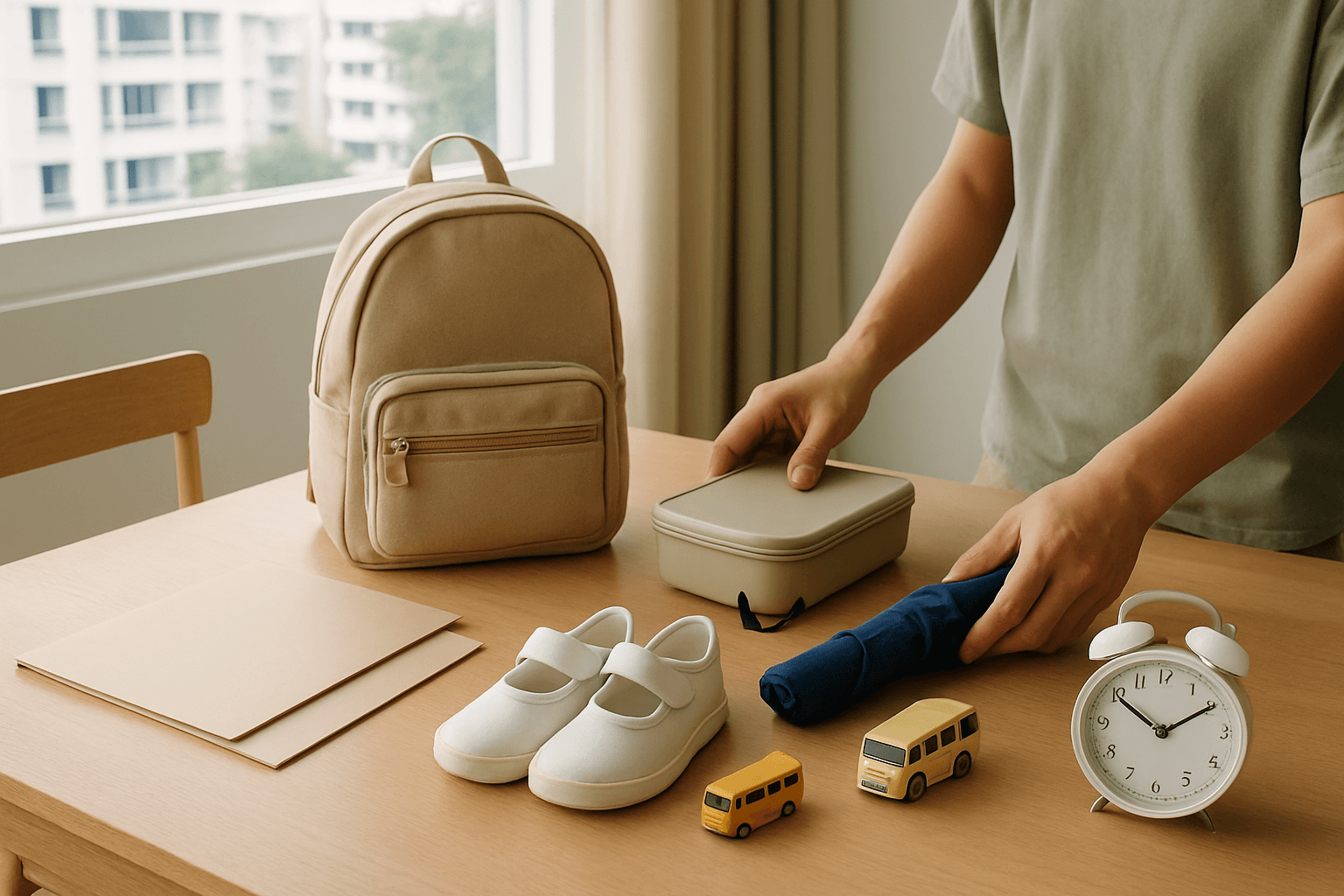
If you are wondering how to choose a primary school in Singapore, start with fit, not popularity. The question that helps most parents is not "Which school is best?" but "Which school will work well for my child and my family every day?"
A good shortlist becomes clearer when you compare the routine your child will actually live with: the morning journey, dismissal and pickup plans, student care options, school culture, your child's temperament, and whether the school's programmes are worth the trade-offs. In practice, many parents make better decisions by eliminating poor daily-fit options first, before thinking about school reputation.
What should Singapore parents really look at when choosing a primary school?
Start with fit, not reputation. The most useful comparison is how the school will work for your child and your family every day.
Start with fit, not reputation. There is no single official formula for the "best" primary school, so the most useful comparison is usually how each school will work for your child and your household every school day.
That means looking first at the routine your child will actually live through: the journey to school, dismissal and pickup timing, student care arrangements, the tone of the school, and whether your child is likely to feel secure there. A school can be admired and still be a poor fit for a child who is easily overwhelmed, a family with tight work schedules, or a household that cannot sustain a long daily commute.
A simple way to think about it is this: school choice is a seven-year routine, not a one-day win. If School A sounds impressive but creates daily rushing, tiredness, and fragile care arrangements, while School B feels steady and workable, School B may be the stronger choice. If you also need to weigh registration realism and balloting risk, start with our broader Primary 1 Registration in Singapore guide, then return here to compare school fit.
All About Preparing For Primary One
Starting primary school? This is a big milestone. Do enjoy the journey with your child! :rahrah: https://www.straitstimes.com/singapore/education/the-st-guide-to-preparing-your-child-for-primary-1 Parents often confuse being ready for school with being academically capable in skills like reading and counting. Instead of focusing solely on academic progress, it is more important to make learning an enjoyable process, and help your child have a swift and happier adjustment to primary school. Here
What goes into choosing a suitable Secondary School
Saw this being shared in the parents groupchats. https://www.thewackyduo.com/2022/11/how-to-choose-secondary-school-guide.html https://i.imgur.com/fDkJSy6.png\"> https://www.thewackyduo.com/2022/11/how-to-choose-secondary-school-guide.html It's time to choose a secondary school. Choosing a secondary school is a completely different process than primary school. One tends to choose a primary school based on distance or affiliation. Picking a secondary school is a different ball game. Grades play a
How much should commute time matter?
Commute matters a lot because it shapes your child's energy and your family's routine every school day.
A lot. Commute affects sleep, mood, punctuality, after-school energy, and the stress level of the adults managing the routine.
Do not judge this only by a map or by driving past once. Test the route as door-to-door travel during actual school-going hours. Include walking time, waiting time, traffic, bus or MRT changes, rainy-day delays, and the reality of carrying a school bag when your child is still adjusting to Primary 1. If grandparents, a helper, or a different parent will sometimes do pickup, test their version of the route too.
Parents often underestimate the difference between an inconvenient route and a tiring one. A school that is slightly further away but needs just one straightforward bus ride may be easier to sustain than a "closer" school that requires a rushed car trip through peak traffic or multiple handovers between adults. Another common mistake is testing the route on a calm day and assuming it will always feel that manageable.
There is no official commute threshold that makes a school "too far". The practical question is simpler: can your child do this journey five days a week without arriving tired and frayed, and can your family still manage the rest of the day well? If you are also thinking about admissions distance priority, our guide on how home-school distance works explains that separate part of the decision.
[Geylang] Primary Schools
For primary schools, I recommend going for convenience than popularity. Reason is the kids are still young, and travelling time should not be long enough to tire them out, even for those driving. Have you seen children dozing off in the parents car (some in an awkward position, especially straining their necks) because they have to wait up earlier than their peers to reach these “better” schools to feed their parents “ego”. Please note that the above is just my PERSONAL view as I have gone throu
All About Preparing For Primary One
First of all, how far are u from the school? Within 1km or 1 - 2km? If near, don't take school bus, send yourself. Any balloting history for the neighbourhood school under 2C?
Have More Questions?
Get personalized guidance on schools, tuition, enrichment and education pathways with AskVaiser.
Try AskVaiser for Free →What school culture should I pay attention to?
Pay attention to tone, structure, and everyday interactions, not just results or facilities.
Look at tone, structure, and how adults and children interact. Results and facilities matter, but they do not tell you what everyday school life feels like.
During visits or open houses, notice whether the school feels calm, orderly, warm, hurried, or highly intense. Watch how staff redirect children. Listen to whether parent questions are answered clearly or brushed aside with generic lines. A school does not need to feel soft or relaxed to be a good fit, but it should feel clear, respectful, and consistent. Children usually settle better when expectations are firm and understandable rather than unpredictable.
Culture also shows up in parent communication. Many families receive updates through tools such as Parents Gateway, but the tool itself matters less than the communication style behind it. Some schools are very structured and proactive. Others expect parents and children to manage more independently. Neither is automatically better. The useful question is whether your family can work smoothly within that style.
One practical insight: try to judge the school by transitions, not speeches. A polished presentation tells you what the school wants to say. Watching dismissal, movement between spaces, or how adults handle small disruptions often tells you more about the real culture. For a broader overview, see Primary 1 Registration: Should You Pick a Popular Dream School or a Safer Nearby School?.
Top Primary school?
Honestly I am not sure if there is such a thing as a top primary school based on the efforts of the school. All schools have the same mission set by MOE to deliver the same thing. If you hear from them, even teachers they have no control, it's all from MOE. So what then would you consider as top primary school? It definitely cannot be results alone because results are typically parents-driven in today's context in some schools. Every school has the best cream of the crop and the worst performers
Top Primary school?
To be fair, I think people should not tag “good” or “bad” to a school. I don’t think there is really a “bad” school in Singapore. To me, the most important thing is the teacher your child gets. You can have very lousy teachers in the popular “good” schools as well. Or you can have very good teachers in the normal neighbourhood schools. Academic excellence is not the only thing to look for in primary school education, what about character building ? team work ? All these should be equally importa
How do I match a school to my child's temperament?
Match your child to a school they can grow into without feeling consistently overwhelmed.
Choose an environment your child can grow into without feeling overwhelmed. A good school fit should stretch your child a little, but not leave them constantly on edge.
A quiet or slow-to-warm child often benefits from a school that feels predictable, orderly, and reassuring. A child who needs time to settle may struggle in an environment that feels very loud, fast, or socially intense from the start. A highly independent child may enjoy a school that gives more room to try, adapt, and take initiative. An energetic child may do better where there is clear structure and enough healthy outlets for movement, rather than an environment that feels like constant correction.
Parents sometimes choose based on the school they admire rather than the child they actually have. For example, a highly competitive environment may sound attractive until a sensitive child begins dreading mistakes. A school with strong routines may sound less exciting on paper until you realise it gives an anxious child the stability needed to settle into Primary 1 well.
If your child has learning, behavioural, emotional, or developmental needs, ask more specific questions instead of assuming every school can support those needs in the same way. MOE's overview of school support for special educational needs is a useful starting point for what to clarify. The goal is not to find a perfect label. It is to find a setting where your child is likely to cope, connect, and make steady progress. For a broader overview, see Popular Primary School vs Neighbourhood School in Singapore: Which Is Better for Your Child?.
Preparing Your Child for Primary School:Parent Seminar - MOE
Preparing Your Child for Primary School: A Parent Seminar by MOE Starting primary school is a big step in your child's life. To help you better understand primary school programmes and enable you to make key education decisions, the Ministry of Education will be conducting a seminar on Primary School Education. At the seminar, parents can look forward to sharing sessions by the school principal and a parent volunteer, as well as view the various programmes our primary schools provide. The Primar
All About Preparing For Primary One
Was surfing around on understanding if I am well prepared on behalf of my DD1 for Primary 1 Chanced upon a few websites, thought to share though it could have been mentioned before Tips For Parents ◦Work on independent reading skills. ◦Set up a study area and regular study times that are not interrupted. ◦Learn to follow a routine with a lot of sleep and early mornings. ◦Practice organisation and planning by packing a daily bag with essentials for the day. ◦Talk about social skills and communica
What should I check about before- and after-school care?
Check the care plan early. A school is only practical if pickup and student care arrangements will really work for your family.
Confirm the care plan before you commit to the school, especially if both parents work or pickups depend on grandparents, helpers, or rotating family schedules.
MOE states that every primary school has a school-based Student Care Centre, and families can also consider community-based options. You can see MOE's note on this in its student care FAQ. The practical issue, though, is not just whether student care exists. It is whether the arrangement fits your child's dismissal time, your workday, your backup pickup plan, and your child's energy level.
Ask concrete questions. How does application usually work after enrolment? What are the operating hours? Does care start right after dismissal? What does a normal afternoon look like? Some children settle well when there is a clear snack, homework, and rest routine. Others become drained if the school day and care day together feel too long. If you may need a backup, compare a school-based option with a community-based centre near home and think through who will actually handle the transfer.
This is where many parents get caught out. A school can look ideal until you realise pickup timing is tight, the handover is awkward, or the care setting does not suit your child. If the care plan already feels fragile at planning stage, it usually feels harder once school starts. For a broader overview, see How to Read Past Balloting Data Before Chasing a Popular Primary School.
Preschools prepared your kids well for Singapore primary?
For parents who have already been through the pre-school days and with kids now in primary schools (Singapore schools), can you share your comments on your kid's previous preschool and their curriculum - specifically if they have prepared your child properly for the Singapore education system ? (not discussing the international or foreign schools system here) Nowadays, there are so many pre-schools and childcare centres with many learning methods. Parents currently at the pre-school stage will b
[Geylang] Primary Schools
School vacancies out ! http://www.moe.gov.sg/education/admissions/primary-one-registration/vacancies/#geylang How to pick the right school ? http://www.straitstimes.com/the-big-story/ask-sandra-p1-registration/story/how-pick-the-right-school-20130620
How important are academic reputation and enrichment offerings?
Academic reputation and programmes matter, but only after the school passes the daily-fit test.
They matter, but only after practical fit is clear. Reputation should inform your decision, not run it.
Parents naturally notice a school's name, perceived standards, and stronger programmes in areas such as sports, arts, languages, or technology. Those things can be valuable. But they only help if your child can realistically benefit from them. A school with excellent offerings is not automatically a better choice if the commute is draining, the care plan is weak, or your child is unlikely to thrive in the school's overall pace and environment.
The more useful test is whether the school's strengths match your child's real interests and likely level of participation. A child who genuinely loves music may benefit from a stronger arts culture. A child who enjoys movement may appreciate a school with active programmes and facilities that support them. But if the main attraction is something your child may barely use, it should not outweigh daily sustainability. For example, a robotics programme sounds less compelling if the child is already exhausted by a long journey and cannot stay engaged after school.
Schoolbag's advice on choosing schools by interests and programmes, though written for older students, reflects a sensible habit for parents too: connect school strengths to the child, not just to adult perceptions of prestige. See Choosing a Secondary School: What I Did That Paid Off for that broader principle. If you are torn between status and sustainability, our article on popular primary school vs neighbourhood school can help you think it through.
What goes into choosing a suitable Secondary School
Hi there, Recently a relative asked me how I choosed my kid’s Secondary School and I kind of got a shock, I had no answer. It was simply just based on the results. My relative came then with a list of important factors that he thought would be helpful to help his kid cope with the stresses of school. I thought that I would help him make this post to help him make a better decision (the kid will be going into the Secondary School in next year). So here goes, considering grades what else should he
[Geylang] Primary Schools
Just to share some of the feedback I heard from frenz which has kids in GEYLANG METHODIST SCHOOL (PRIMARY) . If I were you, I would go for GMSP becos it will be a lesser headache when she goes to Sec School - easier to enter through affiliation. :lol: But it all depends on what you think is 'good' in yr view. Some goes for discipline, some goes for PSLE results, some goes for CCA, etc etc. :?: Anyway, in choosing a pri school for yr kid, you will need to know yr kid's strengths and weaknesses, a
What should I look for during school open houses or visits?
Use school visits to judge the real daily environment, not just the polished presentation.
Use visits to observe daily life, not just to collect marketing points. The goal is not to be impressed. It is to notice whether the school feels workable for your child.
Watch the school in motion. Notice whether students seem settled, how adults redirect behaviour, how noisy or calm shared spaces feel, and whether the facilities seem connected to real programmes rather than just looking attractive. Schoolbag's coverage of school open houses and visits is a useful reminder that visits matter because they show what brochures cannot.
Ask practical questions that reveal the everyday experience. How are Primary 1 children helped to settle in? What does dismissal usually look like? How does the school communicate with parents? If a child takes longer to adapt, what support is typically given? If your child has a specific concern, ask it directly and listen for whether the answer feels specific or generic.
A useful habit is to write down your impression right after each visit. Parents often remember the biggest hall or nicest display board, but the better notes are things like "felt calm," "staff were clear," "child looked comfortable," or "the whole place felt rushed." One good visit can correct a bad assumption very quickly.
Moving to Singapore and looking for a good Secondary School
Hi Singaporenew, First of all, let me welcome you to Singapore. Can I suggest you to attend the open house of all the independent schools such as ACS, RI, SJI? Maybe could just walk into the schools to talk to their principals to find out more about their curriculum and to clear your doubts. Do bring your boys along to take a look at the environment. Your kids should be able to fit in socially since they have lived in Asia for a period of time. Hope you find an idea school for your boys. All the
[Geylang] Primary Schools
Hi thanks for your message. Ok lah, I will tell you everything. All the schools you mentioned are not too bad, in fact we qualify for phase 2B under Saint Stephen. But because I have a boy and a girl and expecting another girl, I opted this boys' school out. Don't wanna go through P1 registration stress again. I would choose Tao Nan if I have a choice because I had heard good feedbacks from my friends (who have kids in the school) and also due to its chinese culture emphasis (I'm from chinese sc
What is a practical primary school fit checklist for Singapore parents?
Use one simple scorecard across your shortlist so you compare schools the same way.
- ✓Commute: Test the real door-to-door journey during school-going hours, not just the distance on a map.
- ✓Drop-off and pickup: Confirm who handles each part of the day and whether the plan still works when one adult is delayed.
- ✓Student care: Check whether the school-based or community-based arrangement suits your child's routine, stamina, and your working hours.
- ✓School culture: Note whether the environment feels calm, respectful, clear, and appropriately structured for your child.
- ✓Temperament fit: Ask whether your child is likely to feel secure here or regularly rushed, intimidated, or overstimulated.
- ✓Programme fit: Compare the school's strengths with what your child is actually interested in, not just what sounds impressive.
- ✓Support needs: If relevant, check whether the school's answers on learning, behavioural, emotional, or developmental support are concrete.
- ✓Parent communication: Look for clarity on expectations, routines, and how families are kept informed.
- ✓Long-term sustainability: Ask whether your family can realistically maintain this choice for years, not just through registration season.
- ✓Overall impression: After the visit, record whether the school felt manageable in real life and whether your child seemed comfortable there.
What do parents often misunderstand about choosing a primary school?
Popular does not automatically mean suitable.
The most common mistake is assuming that popular means suitable. A school can be admired, difficult to get into, and still be the wrong fit for your child's temperament or your family's daily routine.
Another mistake is treating school choice like a prestige contest instead of a sustainability decision. The more useful question is not "Can we get in?" but "Can our child live this routine well?" If you want to reality-check a dream-school plan against balloting history and practical risk, read how to read past balloting data and whether to pick a popular dream school or a safer nearby school.
Keep this in mind: a good school is not the one other parents mention most. It is the one your child can attend happily and your family can support steadily.
[Geylang] Primary Schools
No problem, June. The decision is difficult because we believe it has significant impact on our children's education, which of course also impacts their future. The presence of a teacher that your child likes and respects in the school can make all the difference in determining how he will view his learning journey. We parents think, perhaps rather shallowly, that the \"elite\" schools have better teachers because they churn out national-level top students, that's why we are so eager to register
Top Primary school?
As always, the annual ritual of flustered parents trying to make up lost time in going for the “best” primary school has begun. IMO, while the school and its staff is an important criteria for the success of students, all schools offer the same minimum opportunities for students to succeed. In other words, even if your child goes to the most “ulu” school, he/she will still be given enough learning to do well in the exams. It all boils down to parents themselves. Parents of children in the better
Have More Questions?
Get personalized guidance on schools, tuition, enrichment and education pathways with AskVaiser.
Try AskVaiser for Free →