
How to Decide Your Non-Negotiables Before Primary 1 Registration
Use a simple framework to separate real deal-breakers from nice-to-haves before you shortlist schools.
To decide your non-negotiables before Primary 1 registration, focus on the few factors that must be true for the school to work every day, not just look attractive on paper. In practice, that usually means a sustainable commute, reliable caregiving and pickup support, a school environment your child can cope with, and a routine your household can maintain without constant strain. If missing a factor would create repeated stress, make the plan unreliable, or wear your child down, treat it as a non-negotiable. If it would be nice but the school could still work without it, treat it as a preference.
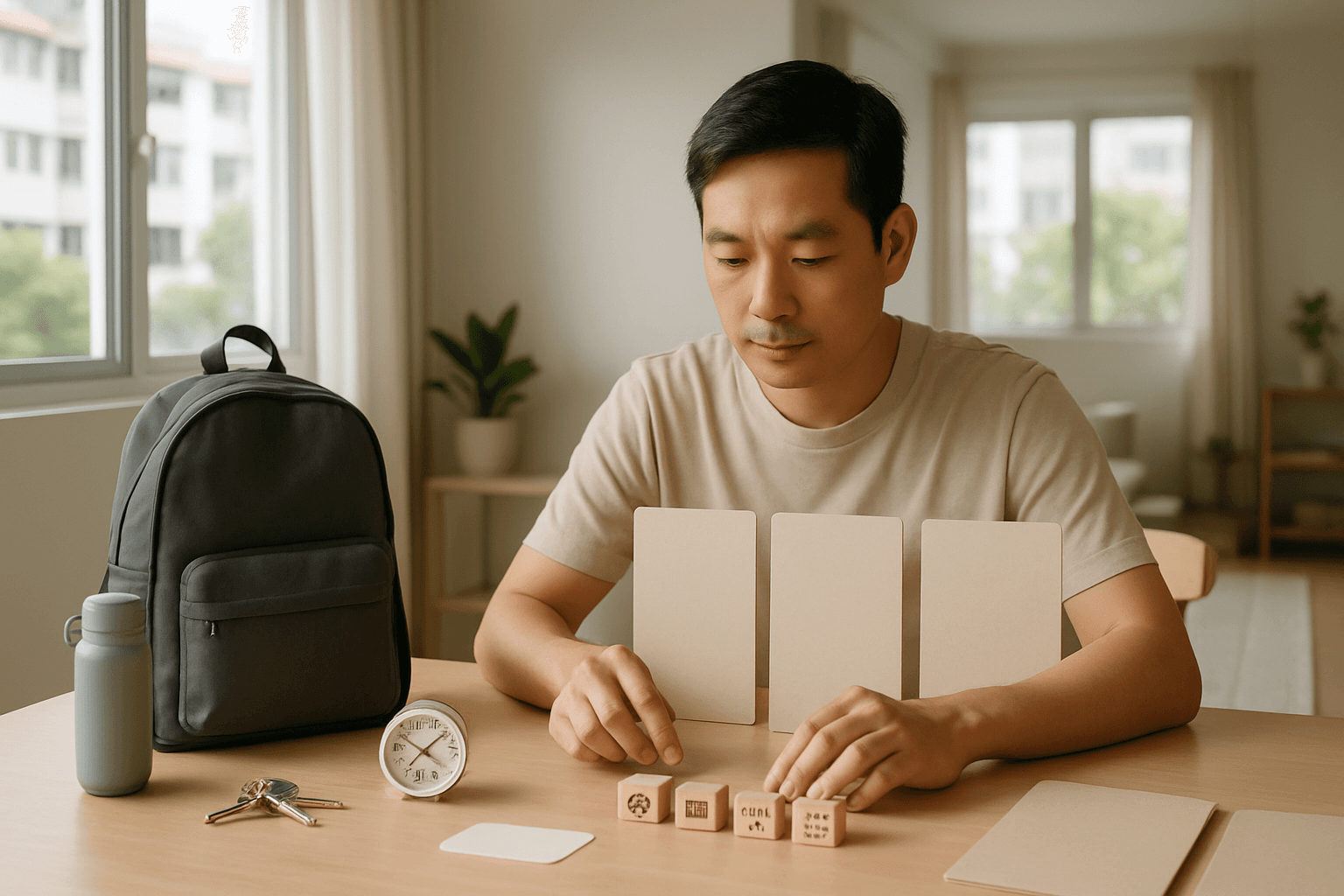
The clearest way to choose a Primary 1 school is to define 3 to 5 true non-negotiables first, then compare schools against them. For most families in Singapore, the real must-haves are not rankings or other parents' opinions. They are the basics that decide whether school life will be workable every weekday: commute, pickup arrangements, child fit, and a routine the family can actually sustain.
What are school choice non-negotiables, and why should you decide them before Primary 1 registration?
Non-negotiables are the few conditions that must be true for a school to work in daily life. Deciding them early helps you compare schools more clearly instead of being pulled by popularity, hearsay, or pressure from other parents.
School choice non-negotiables are the few conditions that must be true for a school to work for your child and family in real life. They are deal-breakers, not aspirations. A school can be popular, well-known, or heavily discussed in parent groups, but if the commute is draining, the pickup plan is fragile, or the environment does not suit your child, it is still a weak fit.
The main reason to decide these early is that school choice gets noisier once registration planning starts. Parents begin hearing stories about "good schools," comparing prestige, or reacting to what other families are doing. A short list of must-haves gives you a filter before that noise takes over. It also helps to separate two different questions: "Which schools fit our family?" and "How does the registration process work?" For official process details, use the current MOE Primary 1 registration guidance. For the wider picture, our Primary 1 Registration in Singapore guide pulls together how school choice, distance, and registration strategy fit together.
A useful way to think about this is simple: choose your filters before you choose your schools.
What goes into choosing a suitable Secondary School
Saw this being shared in the parents groupchats. https://www.thewackyduo.com/2022/11/how-to-choose-secondary-school-guide.html https://i.imgur.com/fDkJSy6.png\"> https://www.thewackyduo.com/2022/11/how-to-choose-secondary-school-guide.html It's time to choose a secondary school. Choosing a secondary school is a completely different process than primary school. One tends to choose a primary school based on distance or affiliation. Picking a secondary school is a different ball game. Grades play a
All About Preparing For Primary One
Starting primary school? This is a big milestone. Do enjoy the journey with your child! :rahrah: https://www.straitstimes.com/singapore/education/the-st-guide-to-preparing-your-child-for-primary-1 Parents often confuse being ready for school with being academically capable in skills like reading and counting. Instead of focusing solely on academic progress, it is more important to make learning an enjoyable process, and help your child have a swift and happier adjustment to primary school. Here
What non-negotiables do most Singapore parents start with?
Most parents begin with four practical filters: commute, caregiving support, child fit, and school culture. These usually matter more to daily life than a school's reputation does.
Most families start with commute, caregiving logistics, child fit, and school culture. These are not official MOE criteria. They are simply the factors that most often decide whether daily school life is sustainable.
Commute matters because it affects every school morning, not just the first week. A school may look attractive on paper, but a long or complicated journey can leave a child tired before lessons even begin. Caregiving logistics matter because Primary 1 routines are rarely just about drop-off. Parents also need to think about pickup, after-school care, and what happens when the usual adult is delayed or unavailable.
Child fit matters because not every child handles change, noise, structure, or long days in the same way. School culture matters for the same reason. Some families care deeply about how the school communicates with parents, how structured the environment feels, or how demanding the likely routine seems. If you want a practical way to compare schools beyond reputation, this guide on evaluating primary schools is a useful starting point.
Start with what affects daily functioning first. Prestige rarely fixes a bad routine. For a broader overview, see Primary 1 Registration Distance Priority: How Home-School Distance Works.
All About Preparing For Primary One
First of all, how far are u from the school? Within 1km or 1 - 2km? If near, don't take school bus, send yourself. Any balloting history for the neighbourhood school under 2C?
[Punggol] Primary Schools
hmm… the most impt thing is your child must be happy. This must come from supportive parents in their learning. My boy enjoys his class and gamely contribute and am glad teachers (Chinese and form teacher) have been responsive in his learning. As he was a transferred student, I was also concern of him blending to his school but such were unfound. Phew! All in all, in a primary school, be it a popular, a top or mediocre school (in others’ opinion) you can still “control” a child’s learning habits
Have More Questions?
Get personalized guidance on schools, tuition, enrichment and education pathways with AskVaiser.
Try AskVaiser for Free →How do you tell a real non-negotiable from a nice-to-have?
If missing the factor would make school life stressful, fragile, or hard to sustain, treat it as a non-negotiable. If you would like it but can manage without it, it is a preference.
Use a stress test. If missing that factor would create repeated strain, make the routine unreliable, or affect your child's wellbeing, it is a non-negotiable. If you would still prefer it but the school could work without it, it is a nice-to-have.
A workable commute is often a non-negotiable because you feel its effect every weekday. Reliable pickup support is often a non-negotiable because the whole plan can fail when one adult is unavailable. By contrast, a school's brand name, a programme you like, or a stronger reputation may be meaningful, but they are usually preferences unless they solve a real need your child has.
Parents often get stuck because too many preferences start sounding essential. Once that happens, the shortlist becomes emotional instead of practical. A good rule is this: non-negotiables protect daily functioning; preferences improve the experience. For a broader overview, see Primary 1 Registration: Should You Pick a Popular Dream School or a Safer Nearby School?.
Choosing Secondary school
I think you have to watch out for point 3 in the chart - 3. Pupils from primary schools which has an affiliation will take priority in posting to its affiliated secondary school if they have opted for that school as the first choice. If you have the \"privilege\", take advantage of it. Otherwise, consider its impact on the number of available vacanies left for \"non-affiliated\" students.
All About Preparing For Primary One
I agree with you that decision making skills to balance work and play and ability to delay gratification are important skills to have when entering P1. Looking back at my son when he was in P1 last year, most of the time spent on coaching him is not so much on the academic work but more on teaching him how to make decisions such as to stay focus on homework so that he finish them in shorter time. Then he will have time for himself. And how not to give up and keep trying when he encounter a diffi
How much should distance and daily travel matter in Primary 1 school choice?
Treat commute as a long-term family issue, not a small preference. A route that looks manageable on paper can become exhausting when repeated every day for years.
Distance should be judged by sustainability, not by what looks acceptable on a map. A route that seems fine during a weekend visit can feel very different on a wet weekday morning, after a rough night, or when the adult doing drop-off is rushing to work.
What matters is the full routine. Is the child walking, taking a bus, being driven, or relying on a school bus? Does the journey involve several transfer points? Can the same plan still work when one parent travels, when a grandparent needs to step in, or when the morning starts late? Two schools may look similar in distance, but one may be much easier to manage because the route is simpler and the support plan is stronger.
A practical check is to picture the route on your ordinary week, not your best week. If the plan already feels tiring before Primary 1 begins, it deserves serious weight. For the registration side of distance priority, see our guide on how home-school distance works. If you are exploring nearby options, MOE's FAQ points parents to SchoolFinder as a starting tool. For a broader overview, see Popular Primary School vs Neighbourhood School in Singapore: Which Is Better for Your Child?.
All about Transferring to Other Primary Schools
I'm afraid you have the process mixed up. You should: 1. Apply first, 2. Think / decide later. (And not consider first, apply when you've made up your mind) Not point thinking or considering now when: 1. the school(s) may not have vancancies, or 2. the school(s) have vacancies but you are not high on their priority list. Talks about psyhoing your child or deciding between school a and school b are meaningless until you have something concrete on your hand. And I'll expand the options to waitlist
All about Transferring to Other Primary Schools
I suppose before august, u will still be living in Punggol? Perhaps you still need some time to renovate, move/pack or settle down. Think it’s easier to transfer to TPY schools when your new premise is ready and settled.. perhaps register your child where your p2 is first and apply for transfer later. Better to start in a fresh year, say p3 and p1. If you have a caregiver for your p1 near TPY, u can try register p1 under that address...
When should your child's temperament or readiness affect the school choice?
Let child fit matter when the environment, routine, or pace could either help your child settle or make school life harder. Temperament and stamina are often more useful than chasing reputation.
Your child's temperament should affect the decision when the school setup could either support or strain their daily experience. This is not about labelling children. It is about being honest about what helps them settle, cope, and build confidence in the first year of primary school.
For example, a child who is quiet, slow to warm up, or easily overwhelmed may need calmer mornings and predictable transitions more than they need a school with a stronger name. A very energetic child may cope well in a lively environment, but still benefit from a simpler commute and clear routine so the day does not begin in a rushed, dysregulated way. A child who is still developing independence may not be disqualified from Primary 1, but parents should think carefully about how much change the overall school setup is asking them to handle at once.
It also helps to keep readiness in perspective. One commonly used guide suggests looking for signs such as being able to sit through about 20 to 30 minutes of structured activity and follow multi-step instructions, but these are readiness signals, not strict gates. Schools do not expect every child to start at exactly the same level. This starting-primary-school checklist is helpful for thinking about readiness without turning it into a pass-fail test.
Choose the school your child can grow into, not the one they must simply survive first. For a broader overview, see How to Read Past Balloting Data Before Chasing a Popular Primary School.
All About Preparing For Primary One
Was surfing around on understanding if I am well prepared on behalf of my DD1 for Primary 1 Chanced upon a few websites, thought to share though it could have been mentioned before Tips For Parents ◦Work on independent reading skills. ◦Set up a study area and regular study times that are not interrupted. ◦Learn to follow a routine with a lot of sleep and early mornings. ◦Practice organisation and planning by packing a daily bag with essentials for the day. ◦Talk about social skills and communica
All About Preparing For Primary One
You should have seen the way the mum drilled the poor child, depriving him of food till he completed his revision. Obviously, an uninterested child will only retain the information into his short term memory. Preparing a child for primary 1 is more than just the academics. There are several areas that parents have to take note of. Does your child know how to clean up after himself if he does a big business in the toilet? Does your child know how to wash his hands correctly and rinsed his hands p
What family logistics should you settle before choosing a school?
Settle the real logistics first: drop-off, pickup, after-school care, backup help, and how the school fits your weekly routine. If the setup works only when everything goes smoothly, it is not a strong plan.
Before you shortlist schools, map the decision to your actual support system. Who handles morning drop-off most days? Who does pickup? If student care is likely, is that already part of the plan or only a vague possibility? If grandparents help, can they support this specific location and timing consistently, not just once in a while?
This is where many families realise that a school they admire is not actually workable. One parent may be willing to do a long drive now, but not once work schedules tighten. A grandparent may be happy to help, but only if the school is near home. Both parents may work far away, which makes emergency pickup difficult. A younger sibling's preschool route can also change what is realistic each morning.
A practical way to test this is to think in pairs: Plan A and backup plan. If the school routine works only when one specific adult is always free and traffic always behaves, the setup is weaker than it looks. The question is not whether the plan can work on your best week. It is whether it still works on your normal, messier weeks.
All about Transferring to Other Primary Schools
You don't get to decide when you can transfer. It depends on whether there's vacancy in the school you want, and whether the school accepts your child. You can start by waitlisting your child in the school you want after P1 registration closes. If you are lucky, transfer can happen before P1 starts, or you can wait indefinitely.
All about Transferring to Other Primary Schools
It is not surprising to hear that the top students in some primary schools are aiming to go to better-name schools. Nothing wrong with transferring school but must bear in mind that there is a 1% risk that the child will not fit into school culture. Usually, those who get the first few positions in class or are in the so called best class for high ability learners will tend to transfer out. With this cycle, the more famous primary schools will have no lack of top potential students to bring glor
What role should academic reputation play in the decision?
Use reputation as a secondary filter, not the main one. A strong school name does not automatically outweigh a hard commute, weak logistics, or poor child fit.
Academic reputation should be treated as one input, not the main rule. A school being popular or well-known may tell you that many parents want it, but it does not tell you whether your child will thrive there or whether your family can support the routine comfortably.
Reputation becomes more useful after the basics are covered. If two schools both meet your real must-haves, then school culture, programmes, and reputation can help you choose between them. But reputation is a poor substitute for fit. A child with a difficult commute and a fragile caregiving arrangement will still feel that strain even if the school has a strong name.
Many parents also over-read other families' stories. Another family may prioritise prestige because they live nearby, have flexible work schedules, or already have siblings in the school. That does not make the same choice right for you. If you are weighing this trade-off, our guides on popular primary school vs neighbourhood school and whether to pick a popular dream school or a safer nearby school can help you think about the trade-offs more calmly.
Let reputation break ties, not drive the whole decision.
What goes into choosing a suitable Secondary School
Hi there, Recently a relative asked me how I choosed my kid’s Secondary School and I kind of got a shock, I had no answer. It was simply just based on the results. My relative came then with a list of important factors that he thought would be helpful to help his kid cope with the stresses of school. I thought that I would help him make this post to help him make a better decision (the kid will be going into the Secondary School in next year). So here goes, considering grades what else should he
2011 Request for Advice on Selecting Secondary Schools
Dear all, I am a P6 student this year and I am currently studying in a neighbourhood school. I got 260 for prelims and I was third in class. My target for PSLE is 275 and I aspire to get into RGS. My considerations are: 1) Raffles Girl’s School 2) Nanyang Girls’ School 3) National Junior College 4) Cedar Secondary School I live in Ang Mo Kio so transportation is a problem. I have financial problems with the school fees and other necessary fees too. Many people tell me that Nanyang is better than
Which quick questions should you ask for every school on your shortlist?
Use the same short checklist for every school so you compare options consistently. The goal is to identify the few factors you truly cannot compromise on.
- ✓Can my child handle this commute every school day without starting the day already tired or rushed?
- ✓Do we have a reliable drop-off and pickup plan that still works when one adult is unavailable?
- ✓If after-school care is needed, is that part of the plan realistic for this school location?
- ✓Does this school setup suit my child's temperament, stamina, and comfort with routine?
- ✓Can our family sustain the likely daily rhythm of mornings, homework, and evening recovery time?
- ✓If this school is popular, are we being pulled by reputation more than by fit?
- ✓Which two or three missing factors would create repeated stress for our family?
- ✓Which factors feel emotionally important right now, but are actually still manageable without?
What do parents most often get wrong when setting school choice priorities?
Parents often get stuck by calling too many things non-negotiable or by borrowing someone else's priorities. If everything is essential, nothing is.
The most common mistake is turning too many things into non-negotiables. Once reputation, enrichment, convenience, culture, friends' opinions, and every preference all become must-haves, you no longer have clear priorities. Another common mistake is copying another family's logic without checking whether their work schedules, transport setup, and child temperament are anything like yours. A short list creates clarity. A wish list creates noise.
All About Preparing For Primary One
My son is going primary 1 next year and I am eligible for phase 2b under a good school but it took two hours of time of bus transport to n fro from home. The kid have to be at the bus stop at 6am waiting for bus. That school have proven track record for the past many years because of it’s strict standards. Now, my headache is there Is a relatively new school which is only a few years old n has not proven track records n the highest psle scores is 230plus. This school is just downstairs my home b
All About Preparing For Primary One
Here's the thing: most of them do not add any real value. Teaching in advance doesn't help in preparation, it's just... learning in advance. And when P1 comes, they get distracted or bored or worst, a disturbance in class because none of the lessons interest them (because they already know them). Notwithstanding, there are some courses / programmes that may be beneficial but they are not compulsory and may not benefit everyone equally. Examples of such programmes are English / Chinese reading /
How do you make a final choice when no school checks every box?
Choose the school that protects your real must-haves and creates the least daily strain. When no option is perfect, keep the deal-breakers fixed and stay flexible on the rest.
Most families will not find a school that satisfies every preference. When that happens, keep your top two or three true deal-breakers fixed and stay flexible on the rest. You might decide that a manageable commute and reliable caregiving support cannot move, but reputation can. Another family may decide that child fit and sibling logistics matter more than extra programmes.
The key is to compare compromises honestly. Ask which trade-off creates inconvenience and which one creates repeated strain. Giving up one programme you like is usually easier to absorb than committing to a draining journey for six years. A school that is slightly less impressive on paper may still be the stronger choice if it gives your child a steadier daily life and gives your family the best chance of being consistent.
Parents do not need a perfect school. They need a workable one. Once you have a realistic shortlist, pair it with a realistic registration plan by reading our guides on how to read past balloting data and what happens if you do not get your preferred school.
Have More Questions?
Get personalized guidance on schools, tuition, enrichment and education pathways with AskVaiser.
Try AskVaiser for Free →