
Is Secondary School Harder After GEP? What Singapore Parents Should Expect
A practical guide to the jump from primary GEP into secondary school workload, pace, and independence.
No, secondary school is not automatically harder just because a child was in GEP. The more common challenge is adjustment: secondary school usually brings more subjects, more teachers, more homework coordination, and stronger independence demands, so former GEP students may cope with the content but still need time to settle into the workload and routine.
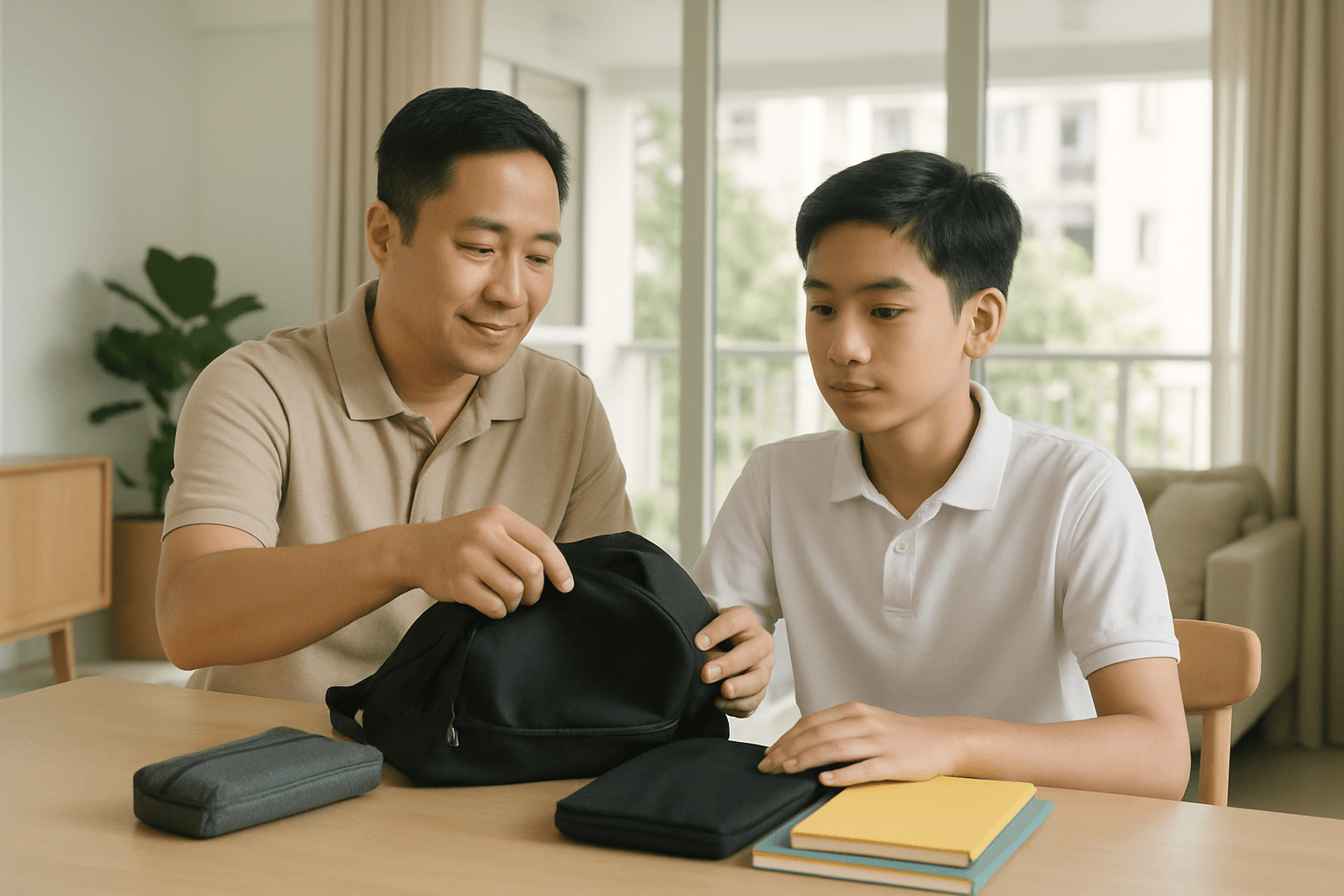
Usually not in the way parents first imagine. For many children, the harder part after GEP is not suddenly more difficult content, but the move into a secondary-school routine with more subjects, more teachers, more deadlines, and far less prompting. That is why a child who looked very capable in primary GEP can still seem unsettled in Sec 1.
The more useful question is not "Was GEP worth it?" It is "What exactly is my child adjusting to now, and what support helps without taking over?"
Short answer: Is secondary school harder for former GEP students?
No, not automatically. The bigger challenge is usually independence, pace, and workload management rather than raw academic difficulty.
Not automatically harder in ability, but often harder in adjustment. Many former GEP students can handle the academic content, yet still find Sec 1 tougher because the pressure points change. Instead of one specialised primary setting, they now have to manage several subjects, several teachers, different classroom expectations, and much less hand-holding.
A common parent misunderstanding is to equate "bright enough" with "will cope smoothly." Those are not the same thing. A child may understand a Science concept quickly and still forget a worksheet, miss a deadline, or revise too late because no one helped pace the week.
A useful way to think about it is this: the challenge often shifts from stretch learning to self-management. Secondary school tends to feel harder after GEP when organisation, stamina, and confidence are still catching up. For a broader overview, see Gifted Education Programme (GEP) in Singapore: A Parent's Guide.
Is your child happier in GEP school or his/her old school?
DS did not change school when he got into GEP. He wasn’t unhappy in his old class, although he was bored most of the time. (He wasn’t never the top student either, although he was in the top 5-10%). In the GEP, he feels academically stretched by new ideas and teaching formats, and definitely some pressure in keeping pace with assignments and deadlines. But he is still happy! I know someone else who had consistently been the top student in an all-girls’ school throughout lower primary levels, in
GEP kids and their parents
I had a relative who joined GEP in Secondary school after PSLE. Don't know if he sat for a test or if it was based on PSLE results.
What is GEP, and what changes after primary school?
GEP is a primary-level programme, not a secondary-school pathway. After Primary 6, your child enters a new school stage, so you should expect a real transition rather than more of the same.
In Singapore, GEP refers to a primary-school programme for intellectually gifted students. According to MOE's GEP overview, students are identified through a two-stage exercise in Primary 3 and selected pupils join the programme in Primary 4. MOE also describes the curriculum as enriched, covering the same content areas as mainstream but extending them in breadth and depth. If you want the broader background first, our Gifted Education Programme (GEP) in Singapore: A Parent's Guide and What Is the Gifted Education Programme in Singapore? explain the basics clearly.
The key point for this article is simple: GEP is not a secondary-school track. After Primary 6, students move into secondary school through the next-stage pathways, so the secondary experience is a fresh transition rather than a continuation of primary GEP.
Parents also sometimes assume the classic GEP model existed in every primary school. Historically, it did not. It operated in selected schools, which is part of why the programme often felt like a distinct primary-school environment. If you want context on how the model has changed over time, TODAY's timeline on how gifted education and schools have evolved is a useful background read. For a broader overview, see What Is the GEP Workload Like?.
All About GEP
GEP Status in Secondary Levels 1.What happens after the primary GEP? After Primary 6, retention of the GEP status and promotion to the next level of gifted education is based on: ■performance in the GEP from Primary 4 to 6, including a pass in Social Studies ■attitude towards work and the enrichment programme ■performance at the PSLE 2.What percentage of the Primary 6 GEP pupils meets the criteria for retaining the GEP status? Each year approximately 99% of the pupils meet the criteria. For more
All About GEP
Any parents whose child is in GEP and the child’s previous school was a non academic focussed school with very minimal homework? Could you share if it was really quite a jump since GEP?
Have More Questions?
Get personalized guidance on schools, tuition, enrichment and education pathways with AskVaiser.
Try AskVaiser for Free →What is the difference between GEP and the High Ability Programme?
GEP is the traditional primary gifted programme, while the High Ability Programme refers to a broader approach to supporting higher-ability learners. A child can be well supported without being in the classic GEP model.
Parents should not use these labels as if they mean the same thing. GEP usually refers to the traditional primary-level gifted programme, while the High Ability Programme reflects MOE's broader direction of supporting higher-ability learners across more schools. You can see that shift in MOE's 2024 announcement on strengthening support for higher-ability learners and this Channel NewsAsia summary of how gifted education is evolving.
For parents, the practical takeaway is that a child does not need to be in the classic GEP model to receive stretch, enrichment, or stronger support for higher ability. That matters because some families still think the only meaningful route for a highly able child is the old GEP structure. It is not.
If you want a direct comparison, see our guides on GEP vs High Ability Programme in Singapore: What’s the Difference? and Why Singapore Is Moving from GEP to HAP. The key idea is straightforward: support for higher-ability learners is now wider than one label. For a broader overview, see GEP Selection Process in Singapore: Stage 1 and Stage 2 Explained.
All About GEP
Parents that pay thousands of dollars to try to get their children into GEP: Yes, GEP is a coveted programme. Yes, GEP allows your dd/ds to be able to have a higher chance of getting into an IP school. But bear in mind that the programme is immensely challenging. Your child will have to juggle tonnes of projects and lots of HW and at the same time prepare for the all-important PSLE. And if you PUSH for your child to get into GEP by loads of tuition classes, ask yourself: Will he/she be cope? Wil
All About GEP
As you know, MOE GE Branch advises that all primary GEP students go to secondary schools with SBGE programmes. I believe the difference is that these schools would cater to those with higher abilities and the curriculum and pedagogy would be better suited to their learning. My personal opinion - my dd and I attended the Open House of an IP school which did not offer an SBGE programme. My dd and her classmates commented that a couple of the projects the school would be doing the kids already cove
How does a child get into GEP in Singapore?
The broad path is a two-stage selection exercise in Primary 3, with selected pupils joining GEP in Primary 4. It is a selective entry point, not a promise of future ease.
A child does not usually enter GEP through a parent application alone. The broad route is a selection exercise in Primary 3, and selected students join in Primary 4. That is the main timeline parents need to remember when planning ahead or trying to understand what GEP actually represents.
What matters for this article is less the paperwork and more the meaning. Entry into GEP shows that a child was identified as ready for a more advanced primary-school environment at that point in time. It does not guarantee that secondary school will later feel easy, smooth, or stress-free.
If you want the fuller admissions-style explanation, our GEP Selection Process in Singapore: Stage 1 and Stage 2 Explained covers the process in more detail. For a broader overview, see GEP vs High Ability Programme in Singapore: What’s the Difference?.
All About GEP
Hi folks, I was browsing reddit, and came across this today: https://www.reddit.com/r/singapore/comments/qlplx5/getting_into_a_primary_school/?sort=confidence On reddit, several students who went through GEP said that they were \"trained\" by enrichment for GEP, and they got in. However, once they were in the GEP programme, they struggled to stay on par with their really gifted peers, who just breezed through difficult tests. Can any parent who went through this with their children or similar, h
All About GEP
Hi thmejlfm, it will help in term of her learning and skill-set pick up e.g. how to go about doing research etc... and topics are deeper and expose to more other challenging programs. This will stretch the kid further in their learning. As for posting to sec school, they do take GEP kid into consideration in their selection... e.g. RI criteria already ask whether the kid is in GEP? But that doesn't means he/she can relax on PSLE, still must work hard hor. Just GEP looks good in their portfolio w
How does GEP selection work, and what does it really test?
It broadly identifies strong reasoning and learning potential, not every skill needed for later school success. Secondary school still tests habits, confidence, and independence.
At a broad level, GEP selection is meant to identify children with strong reasoning ability and learning potential. Parents sometimes overread that result. Selection does not mean a child will automatically have strong habits, emotional resilience, or smooth adjustment in every later school setting.
This is one of the most useful mindset shifts for families: GEP selection is an entry-point decision, not a life forecast. A child may be very strong in language, abstract thinking, or pattern recognition, yet still need help later with planning revision, managing fatigue, or asking teachers for help when expectations become less structured.
That is why it helps to separate giftedness from readiness. If you are still trying to understand your child's profile, our guide on Is My Child Gifted or Just Advanced? can help parents think more clearly about ability versus school performance.
All About GEP
We had a detail briefing by the teachers in charge of GEP in the school They even have counsellor for GEP students who need emotional support. More or less we know what to expect. But the workload is quite heavy. For the projects some parental help are needed definitely. I have a younger son in P2 now and he is very keen to be in GEP as well but we think he will probably not make it thru the test. He is the type who cannot think outside the box but have very good memory. The school has a uniques
All About GEP
I read many interesting concerns on the GEP ... Let me share some of my thoughts on these ... Why force your kids to a GEP if she /he is meant for it. Don't believe those crap training centre ..Let nature take it course My daughter is in P6 GEP at RGPS and had just completed her PSLE like all other 50K kids in her cohort. She is now enjoying herself with her fellow P6 GEP at the Sentosa UnderWater World. She was posted to RGPS from CHIJ Pri (Toa Payoh) in 2008. As a child , she was always more s
What is the GEP secondary school workload really like?
The biggest shift is usually not just harder content. It is having to manage a broader workload across more subjects, teachers, and deadlines with less guidance.
The main change in GEP secondary school workload is usually breadth and self-management, not simply harder content. In primary GEP, the curriculum is enriched and intellectually stretched, but the child is still inside a primary-school structure. In secondary school, the child usually has to coordinate more subjects, more teachers, more deadlines, and more variation in how each subject is taught.
This is why some former GEP students look unexpectedly shaky in Sec 1. One child may still write strong essays but forget a Geography assignment because several teachers are now setting separate tasks. Another may understand Math quickly but revise poorly because no one helped break the week into manageable chunks. A third may cope academically in class but become chronically tired because travel time, CCA, homework, and test preparation are now colliding.
The feel of the workload can also differ by school and pathway. An IP school, a mainstream secondary school, and different subject combinations will not feel identical. Parents who still think mainly in old stream labels should know that Singapore secondary schools now use subject levels such as G1, G2, and G3 under Full Subject-Based Banding; this plain-English KiasuParents explainer on G1, G2 and G3 is a helpful overview.
A good insight line to remember is this: in secondary school, managing the work matters almost as much as understanding the work. If you want the primary-side context first, see What Is the GEP Workload Like?.
All About GEP
I saw got parents shared that some schools are easier GEP and some are tougher GEP? So which are easier/less stress and which are tougher?
All About GEP
Speaking from a GEP parents, my boy is in GEP P4 this year, however, he struggle very badly as he is not the top student since P1-3, he is just a middle range student who scores around 80s for most subject. GEP has a minimum passing mark of 70% and their paper are much much harder compared to mainstream. Somehow, this year is very stressful for myself and my boy. He has officially failed his 2 subject (with not meeting the 70%) mark, I am waiting for teacher’s advise, what is going to happen to
What are the main advantages of GEP, and what myths should parents avoid?
GEP can give stronger intellectual challenge and peer fit, but it does not guarantee an easy future. Its advantage is real for some children, but it has limits.
The real advantages of GEP are usually intellectual stretch, richer inquiry, and better peer fit for some children. A child who is easily bored in a standard classroom may feel more engaged when lessons go wider and deeper, and when classmates share a similar pace of thinking or curiosity.
What parents sometimes misunderstand is the size of that advantage. GEP can be valuable without being magical. It does not guarantee top secondary-school results, and it does not remove later stress. A child may benefit greatly from GEP in primary school and still need time, support, and stronger routines in Sec 1.
Giftedness does not replace habits. That is the key point to keep in view. If you want a fuller look at the trade-offs, our guides on GEP vs Mainstream: What Is the Real Advantage? and Is GEP Better Than Mainstream Primary School? go deeper.
Is GEP really necessary?
Does taking away the so called 'DSA advantage' for the GEP students and solely based on PSLE score for the admission to the secondary school mean a fair and square game for all the P6 students. To get into the few TOP secondary schools, all P6 students must do extremely well for all 4 subjects. The GEP students must have the time to work on their weaker subjects too. The GEP students spent quite a lot of time doing the projects ( at least 2 projects on social studies - a non PSLE subjects per ye
Is GEP really necessary?
Is GEP really necessary? If it’s designed to cater to kids with special needs, yes. If the intention is to groom leaders or specialists in a developing country to raise the quality of the human resource, yes. But Singapore has progressed beyond this need. Unfortunately, the GEP is used as a guaranteed passport to an elite education. This is the grand prize that pushes all parents to overdrive. So much is invested in so few, and these few are given the best tools and resources. And at the end of
Is GEP better than mainstream or "normal stream" for every child?
No. GEP is not better for every child, and school fit should be judged by learning style, resilience, and emotional comfort rather than prestige.
No. The best fit depends on the child, not the label. Some children thrive when they are stretched early, surrounded by equally fast-moving peers, and given open-ended work. Others are capable but become anxious, perfectionistic, or drained in a highly intense environment, and may do better in a strong mainstream setting with steadier pacing.
Parents still sometimes use the phrase "normal stream," but secondary school is no longer best understood through the old fixed Express and Normal labels alone. That matters because school fit today is more nuanced than a prestige comparison. A very able child may still need the right subject mix, teaching style, and emotional environment to do well.
A practical test is to ask whether your child is being stretched and supported at the same time. If the child is curious, coping, and still has energy for school life, that is a stronger sign of fit than the name of the programme. If the child is constantly exhausted, fearful, or shutting down, the label alone is not helping. For a fit-based discussion, see How Do I Know If GEP Is a Good Fit for My Child? and Is GEP a Better Fit Than Mainstream for My Child?.
All About GEP
I think that if she is keen then she should try. If she does not like it, can transfer back to mainstream. Heard that a GEP kid in DS school did transfer back to P5 mainstream early this year. For DS, it has been a difficult though enriching journey. In P4, he failed a test for a particular subject (which was alarming) and was not doing as well in another subject. We ended up enrolling him for enrichment classes, something that we might not have done if he had remained in mainstream. Fortunately
All About GEP
From what i understand from the briefing, Gep is not the stepping stone for DSA nor a ticket to post Gep classes. If the child qualifies for IP school (via DSA or PSLE scores), the child would hve to compete for post GEP secondary places with all mainstream students on its merit. Selection criteria via various IP schools differ. I believe that if Gep students can get through IP school n meet 70% benchmark during primary Gep, the IP schools would very likely to give them a place. Having said that
How can parents support a child moving from GEP to secondary school?
Focus first on routine, sleep, planning, and independence. Support your child in organising the work without solving every problem for them.
Start with routines before rushing into more tuition. In the first term, many children need help building a steady homework rhythm, a packing system, a realistic sleep schedule, and a simple weekly planning habit. These basics are often more useful than adding extra worksheets.
Parents are usually most helpful when they coach without taking over. For example, instead of reminding your child about every task, sit down once a week for a short review of deadlines and decide what will be done on each day. Instead of rescuing every forgotten item, help the child work out what system would prevent the same mistake next time. A timetable on the wall, bag-packing the night before, and a fixed cut-off for bedtime are small habits that often reduce a surprising amount of stress.
It also helps to keep expectations realistic. A former GEP student does not need to prove anything in the first few weeks of Sec 1. The goal is not instant top performance. The goal is a stable routine, enough sleep, and a child who can gradually manage the workload with less prompting.
If you are unsure whether the issue is fit or transition, our article on GEP vs Mainstream Primary School: What Is Different? can help you separate pace from support needs.
Advice needed for GEP parent and child
My child is in GEP P6. They got in without enrichment. I would say that GEP is not only challenging in terms of the curriculum, but also needs a strong sense of ownership and independence from the kids. It is more difficult for parents to keep track of their work (many in loose worksheets) and catch them in time if they miss deadlines (so many of them). They also need to make sure the very nitty gritty stuff, like filing being done timely and neatly (necessary for revising). More challenging for
GEP kids and their parents
For the secondary section, GEP started off in RGS and RI in 1984. Later on, secondary GEP became available in ACSI, DHS, HCI, NYGH and VS. Secondary school GEP was phased off a few years ago in view of more GEP students opting for IP schools.
What should parents watch for in the first term of secondary school?
Watch for repeated exhaustion, avoided homework, falling confidence, and worsening mood over several weeks. One poor week is common, but a continuing downward pattern needs attention.
Look for patterns, not one bad week. It is normal for a child to need time to adjust to a new timetable, new teachers, new classmates, and a different pace. A few forgotten tasks, some wobbly marks, or one tired week after the first round of tests do not automatically mean the child is in serious trouble.
What deserves closer attention is persistence. If your child is regularly losing sleep, avoiding homework, becoming unusually irritable, crying often, saying "I can't do this" repeatedly, or showing a steady drop in confidence across several weeks, that is worth acting on earlier. The same applies if the child still understands lessons but is falling behind because organisation is breaking down.
This is also where many parents need a calm reminder: a rough first term does not mean GEP was the wrong choice. Early difficulty is often an adjustment issue, not proof of low ability. If the pattern continues, speak with the form teacher or subject teachers and ask specific questions, such as whether work is being missed, whether the child seems quiet or overwhelmed in class, and whether help-seeking is happening. Sometimes the real bottleneck is note-taking, planning, sleep, travel fatigue, or fear of asking for help rather than academic level itself.
A simple rule of thumb is this: if the child is strained but still settling, support and monitor. If the child is strained and steadily deteriorating, step in sooner.
GEP Student admit to Mainstream Secondary School
Such case is possible. The GEPers can opt to go to 'IP' track and also the 'O' track. These schools offer 'IP' track for GEPers : (1) Anglo-Chinese School (Independent) (2) Dunman High School (3) Raffles Instituition (4) Raffles Girls' School (Secondary) (5) Hwa Chong Institution (6) Nanyang Girls' High School (7) NUS High School of Maths & Science These schools offer 'O' track for GEPers : (1) Anglo-Chinese School (Independent) (2) Catholic High SChool (3) Methodist Girls' School (4) Singapore
GEP Student admit to Mainstream Secondary School
I have a relative who was also GEP and HCI who scraped through the years and finished A levels with results that could not get him anywhere in the local universities. However he did well for his SAT and managed to get into a good American uni. Some GEP students, especially boys are usually smart but not the most hardworking. Thus some end up with low scores for PSLE. There is usually about 5-10% GEP students in mainstream secondary schools with school based gifted programme and they mainly score
Have More Questions?
Get personalized guidance on schools, tuition, enrichment and education pathways with AskVaiser.
Try AskVaiser for Free →