
Popular School vs Neighbourhood School in Singapore: Which Is Better for Primary?
How to weigh reputation, commute, child fit, and family routine before choosing a primary school.
No, a popular school is not automatically better for the primary years. For many Singapore families, a neighbourhood school is the stronger choice because shorter travel, simpler logistics, and a calmer daily routine help children stay rested, settled, and ready to learn. Treat this as a six-year fit decision, not a prestige decision.
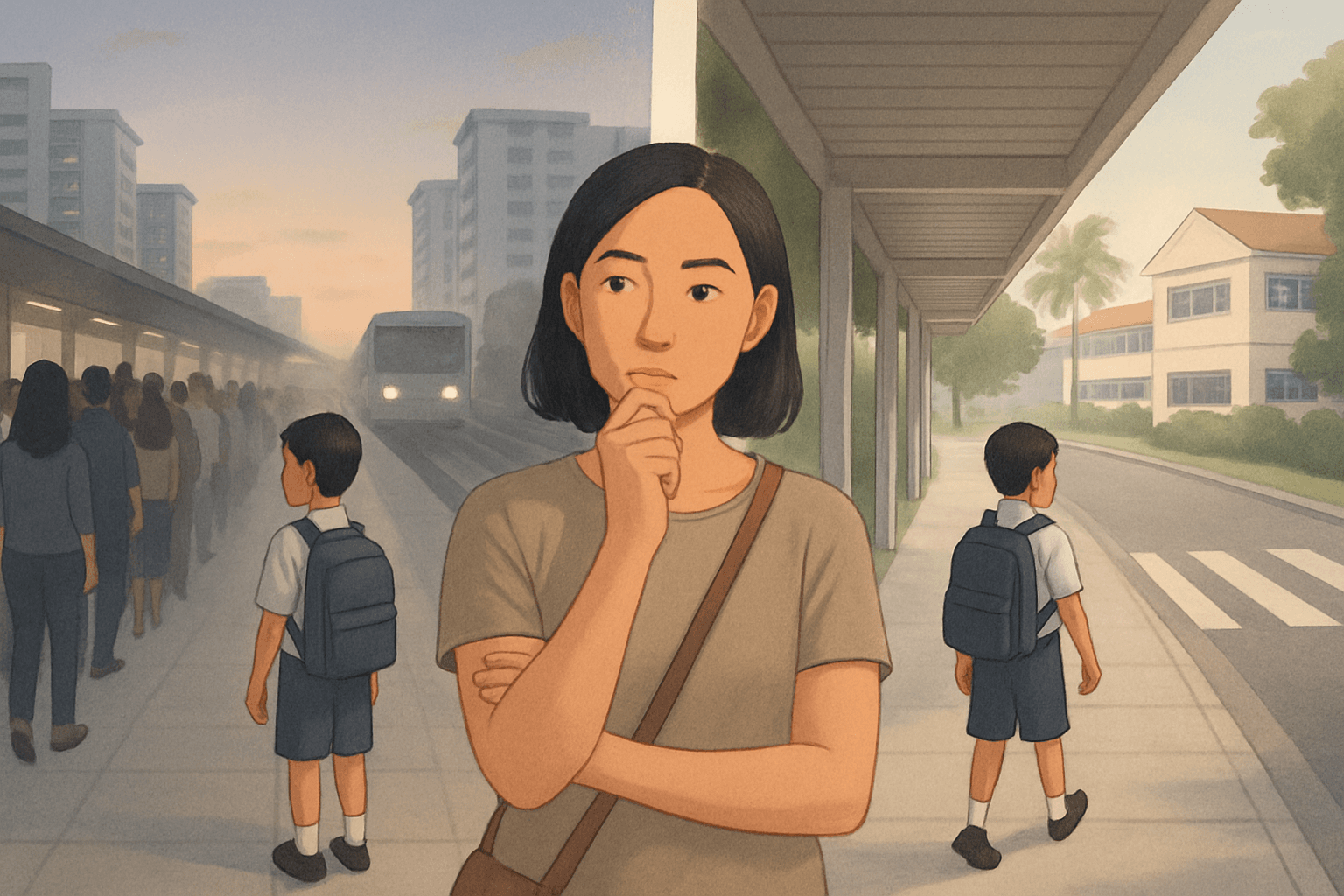
If you are deciding between a popular primary school and a nearby neighbourhood school, start with this: the better school is usually the one your child can handle well and your family can support consistently. Reputation matters, but so do commute time, admission realism, child temperament, after-school care, and whether the routine will still work in Primary 4, 5, and 6, not just during registration season.
What is the real difference between a popular school and a neighbourhood school in Singapore?
A popular school is usually a high-demand, well-known primary school, while a neighbourhood school is usually the nearby local option. The difference is mainly demand, reputation, and family trade-offs, not an official quality label.
In Singapore, “popular school” is usually a parent term, not an official MOE category. It usually means a well-known primary school with strong demand, more competition for places, and a reputation that many parents recognise. A neighbourhood school usually means the nearby local option that is easier to reach and often easier to fit into daily family life.
So the real difference is usually not that one is officially “better.” It is about demand, reputation, admission pressure, and how much effort the school day requires from the family. A popular school may appeal because of its name, alumni network, or the feeling that it has a more achievement-focused culture. A neighbourhood school may have less buzz, but it can still be a very sensible primary choice because the routine is simpler and more sustainable.
Think of it this way: this is less a status question and more a day-to-day fit question. If you are still mapping out registration strategy, start with AskVaiser’s Primary 1 Registration in Singapore guide, then come back to the school-fit question with clearer expectations about chances, commute, and backup plans.
[Geylang] Primary Schools
For primary schools, I recommend going for convenience than popularity. Reason is the kids are still young, and travelling time should not be long enough to tire them out, even for those driving. Have you seen children dozing off in the parents car (some in an awkward position, especially straining their necks) because they have to wait up earlier than their peers to reach these “better” schools to feed their parents “ego”. Please note that the above is just my PERSONAL view as I have gone throu
Top Primary school?
To be fair, I think people should not tag “good” or “bad” to a school. I don’t think there is really a “bad” school in Singapore. To me, the most important thing is the teacher your child gets. You can have very lousy teachers in the popular “good” schools as well. Or you can have very good teachers in the normal neighbourhood schools. Academic excellence is not the only thing to look for in primary school education, what about character building ? team work ? All these should be equally importa
Is a popular school better for primary children?
No. A popular school is not automatically better for primary children. The better school is the one your child can adapt to well and your family can manage consistently.
Not always. For primary school, the better choice is usually the school where your child can settle well, learn steadily, and cope with the full weekday routine.
What many parents miss is that a school can look strong on paper and still be the wrong everyday fit. A longer commute, earlier wake-up time, more rushed mornings, and a busier peer environment can wear some children down. A nearby school may look less impressive at first glance, but if your child is calmer there, sleeps more, and still has energy left by evening, that often matters more.
For the primary years, sustainable matters more than impressive. A seven-year-old does not experience school through branding. They experience it through mornings, teachers, classmates, lunch, tiredness, and whether home still feels manageable after school. For a broader overview, see Primary 1 Registration: Should You Pick a Popular Dream School or a Safer Nearby School?.
Top Primary school?
Honestly I am not sure if there is such a thing as a top primary school based on the efforts of the school. All schools have the same mission set by MOE to deliver the same thing. If you hear from them, even teachers they have no control, it's all from MOE. So what then would you consider as top primary school? It definitely cannot be results alone because results are typically parents-driven in today's context in some schools. Every school has the best cream of the crop and the worst performers
Are All Primary Schools The Same?
A lot of people underestimate the role parents play in the education landscape. In every school, the “parent support group” synergy can be a powerful source of strength for further improvements. A school with a better track record attracts parents who want the same for their children. Higher expectations will also lead to higher demands on the school teachers. In some schools, it is not uncommon for parents to voice their concerns to the school leaders, even to the ministry if teachers or exam p
Have More Questions?
Get personalized guidance on schools, tuition, enrichment and education pathways with AskVaiser.
Try AskVaiser for Free →What do parents usually mean when they say a school is better?
Most parents mean one or more of these: academic reputation, school culture, peer environment, convenience, or future pathways. The useful step is to separate those priorities instead of treating them as the same thing.
Usually, parents are combining several different things. One person means academic reputation. Another means school culture or discipline. Another cares most about peer group, convenience, or a pathway they believe may help later. These are different priorities, and they do not always point to the same school.
This is why school decisions can become emotional quickly. A parent may say they want the best school, but what they really want may be a shorter route to student care, a warm environment for a shy child, or a school where the child will be stretched without being overwhelmed. Once you separate those priorities, the decision becomes much clearer.
A useful reset is this: “better” is not one thing. It is the trade-off you are willing to live with for six years. One family may rank distance first because both parents start work early. Another may accept a longer trip because an older sibling is already there and transport is easy. Another may care less about school name and more about whether the child will feel secure and settled. For a broader overview, see Primary 1 Registration Distance Priority: How Home-School Distance Works.
Top sch vs Good neighbourhood sch
My child went to one of the IP schools in Singapore following his PSLE. I think access to resources (e.g. facilities, materials, quality teachers, etc.) is one factor, but more importantly is the type of learning environment that he/she will be subject to. In such schools that may be deemed “better”, students are generally motivated to study harder and are more focused on their academics. This will play a huge part in what your child prioritises during these early / impressionable years. Even if
Are All Primary Schools The Same?
Maximum class size for P1 and P2 is 30. Maximum class size for P3 to P6 is 40. But some of the less popular schools, class is only 3/4 filled. So they have better teacher:student ratio which translates to more attention per child. Also, teachers can request to be posted to a school nearer their dwelling, for logistics reason. Furthermore, plenty of mission schools’ or famous schools’ alumni can request to be posted back to their Alma mater, so that they can “give back” to their roots. Need the p
What are the main advantages of a popular primary school?
A popular school may offer name recognition, strong demand, motivated peers, and a culture some families see as more ambitious. Those can be real strengths, but they are not guaranteed benefits for every child.
The main draw of a popular primary school is usually confidence. Parents may feel reassured by strong demand, a familiar school name, an active alumni or parent network, or a belief that the school has a more ambitious academic culture. Some families also value the idea of motivated peers or a wider range of school experiences.
Those can be real attractions. If a child is adaptable, enjoys pace, and the commute is still reasonable, a popular school may suit them well. It may also make sense when an older sibling is already there or when the school’s culture genuinely matches the child. In some high-demand schools, parents also notice that classmates may arrive with more preschool enrichment, which can make the classroom pace feel faster for some children.
The key caution is that these are possible advantages, not guarantees. A strong reputation does not automatically mean every teacher is better or every class is a better fit. It helps to balance school name with grounded checks, such as open-house observations and broader criteria like those in this guide to assessing schools beyond ranking and this article on whether a primary school determines future success. For a broader overview, see How to Read Past Balloting Data Before Chasing a Popular Primary School.
5 DIFFERENCES BETWEEN NEIGHBOURHOOD AND ELITE SCHOOLS
I think there are different advantages for both. Students from neighbourhood schools are more knowledgeable about the different cultures and races in Singapore. Also, a lot of students have tuition. It’s not true that the most costly tuition (some parents pay above $90 per hour for secondary school tuition) is better than a tutor who charges less. Students from neighbourhood schools can have good enrichment and tuition too. But I concur with the author on lack of opportunities. I won’t mince wor
[Geylang] Primary Schools
Hi Candymum, No problem. I was once in your shoe so can understand the stress that you have. Honestly speaking, some neighbourhood schools are better than those popular school. One of these schools is Changkrat Primary School. It is a neighbourhood school. My niece is currently studying in that school. She was accepted by St Hilda's Primary becos she got into the GEP program. But my sister decided to like her continue studying at Changkrat because of transportation problem. Even she was accepted
What are the main advantages of a neighbourhood primary school?
A neighbourhood school often gives families a shorter commute, easier logistics, and a calmer routine. For many primary children, that means better rest, steadier moods, and a more sustainable school day.
The biggest advantage is usually convenience, and convenience is not a weak reason. For primary children, it often means more sleep, less rushing, easier pickup plans, and a calmer start to the day. For parents, it can mean fewer transport problems, less dependence on backup arrangements, and a routine that still works when work gets busy.
This matters more than many families expect. A child who sleeps a little longer and gets home earlier often has more patience for homework, more energy for play, and fewer evening meltdowns. A working parent may be able to manage school, student care, and dinner without daily rearranging. Grandparents, helpers, or after-school caregivers may also find a nearby school much easier to support.
A neighbourhood school is not automatically a fallback. For many children, it is the better setup because the daily rhythm is more stable. That is why pieces like Neighbourhood Schools Are Worthy Too resonate with parents. If you are choosing between a dream school and a more realistic nearby option, AskVaiser’s guide on whether to pick a popular dream school or a safer nearby school can help you frame that trade-off more clearly. For a broader overview, see Primary 1 Registration Unsuccessful: What Happens If You Do Not Get Your Preferred School.
[Bedok] Primary Schools
Neighbourhood schools the best option! If get into a poppular school - it is not just torturous process now (with ballotting and all) but also for the next 6years for a child’s life and of course the poor mummy and daddy too! Popular school…nah for me…
Preschools prepared your kids well for Singapore primary?
For parents who have already been through the pre-school days and with kids now in primary schools (Singapore schools), can you share your comments on your kid's previous preschool and their curriculum - specifically if they have prepared your child properly for the Singapore education system ? (not discussing the international or foreign schools system here) Nowadays, there are so many pre-schools and childcare centres with many learning methods. Parents currently at the pre-school stage will b
How does travel time affect a primary school child’s day?
Long travel can quietly reduce sleep, patience, homework time, and family flexibility. For young children, commute is not just a transport issue. It affects the whole school day.
Travel time affects much more than transport. It shapes the whole day. An extra 20 to 40 minutes each way can mean earlier wake-ups, more rushed mornings, less recovery time after school, and less buffer when something goes wrong, such as rain, traffic, or a missed connection.
This is especially important in the lower primary years. A child may seem fine with a longer journey at first, but the strain often shows up later in small ways. They become irritable on CCA days, fall asleep on the way home, drag through homework, or start each morning already tired. For parents, the pressure may show up as fragile pickup plans, repeated lateness to work, or constant reliance on one grandparent or one school bus arrangement.
A practical test is to map the real weekday route, not the ideal route. If you are depending on a school bus, ask about the actual pickup time, not just travel distance. A school that looks close on the map can still mean a very early bus ride. Commute is not just a transport issue. It becomes part of your child’s learning conditions every day. If distance may affect your shortlist, AskVaiser’s guide on how home-school distance works is a useful next step.
[Punggol] Primary Schools
hmm… the most impt thing is your child must be happy. This must come from supportive parents in their learning. My boy enjoys his class and gamely contribute and am glad teachers (Chinese and form teacher) have been responsive in his learning. As he was a transferred student, I was also concern of him blending to his school but such were unfound. Phew! All in all, in a primary school, be it a popular, a top or mediocre school (in others’ opinion) you can still “control” a child’s learning habits
[Bukit Timah] Primary Schools
yes!indeed, it’s really makes a world of huge difference, whether a child attends an affliated primary school - vs. those who don’t. if a a child attends affliated primary school, the psle stress for both parents and kid –the mental anxiety during exam preparation, is so many times greatly reduced ! time flies! 6 yrs primary school pass very fast, in the twinkle of an eye! If no affliation, child has to find own secondary school himself. besides, many good secondary schools minimum entry score v
Which child usually fits a popular school, and which child may fit a neighbourhood school better?
Children who enjoy pace, structure, and challenge may adapt well to popular schools, while children who need predictability, shorter days, and less pressure may do better in neighbourhood schools. The key is daily fit, not school status.
The most useful lens is temperament, not labels. Some children adapt well to a busier and faster environment. They are socially confident, recover quickly from stress, enjoy challenge, and are not easily thrown off by change. If that child also has a manageable commute and steady family support, a popular school may suit them well.
Other children do better when life feels predictable. They may be slower to warm up socially, more sensitive to tiredness, or more easily unsettled by long travel and packed schedules. These children are not less capable. They may simply learn better when the day is calmer and the routine is easier to repeat.
A few common scenarios make this clearer. A child who enjoys stimulation and handles group settings confidently may find a high-demand environment energising. A child who melts down after long days may benefit more from a shorter route and quieter evenings. A child who is academically ready but emotionally younger may still cope better in a school that gives them more breathing room. No child fits one box forever, but starting primary with a routine they can handle often matters more than proving they can cope.
Competition among primary schools
I think that if a child can learn more advanced techniques or knowledge in a good school, then he should be given the chance. But if he/she is already struggling in K1/K2, he should learn learn at a moderate pace, and thus not advisable to go to a “high pressure” school. My personal observation is that Primary School education is all about foundation, going into a good school does not mean success and to a neighbourhood school does not mean lower chance of success. The crunch time will come when
Are All Primary Schools The Same?
I saw an online article that many parents want their children to enter popular/famous primary schools because it is very difficult for a primary school to produce MANY academically strong PSLE scorers. Why? Primary school children come from all walks of life. Enrollment into a primary school has absolutely zero link to the K2 child's academic ability. There is no entrance test to do BEFORE enrolling into a Primary School. Priority phases include the child's parents' alumni links, the child's par
What should parents consider besides academics when choosing a primary school?
Besides academics, look at school culture, after-school care, transport, sibling logistics, learning support, and whether the school matches your family’s daily life. These factors often decide whether the choice still works after the first few months.
Academics matter, but they are only one part of the decision. Parents should also look at school culture, transport, after-school care, pickup arrangements, sibling logistics, and whether the school has support or programmes that genuinely suit the child. A school can look excellent on paper and still be a poor fit if the route is difficult, student care is inconvenient, or the family plan depends on support that may not be reliable every day.
Open houses help most when you go in with practical questions. Notice how the school talks to parents. Notice whether the environment feels orderly without feeling harsh. Ask yourself whether you can picture your child there on an ordinary Tuesday, not just during a polished presentation. If your child has learning, social, or emotional needs, think about whether the school environment seems likely to support those needs in a realistic way.
Tools like MOE SchoolFinder and OneMap are useful for shortlisting, but they do not make the decision for you. Parents often find it helpful to widen their lens with guides like How to Choose the Best Primary School Near You and this parent FAQ on choosing a primary school. The shift that helps most is moving from best-school thinking to best-fit thinking.
What goes into choosing a suitable Secondary School
Saw this being shared in the parents groupchats. https://www.thewackyduo.com/2022/11/how-to-choose-secondary-school-guide.html https://i.imgur.com/fDkJSy6.png\"> https://www.thewackyduo.com/2022/11/how-to-choose-secondary-school-guide.html It's time to choose a secondary school. Choosing a secondary school is a completely different process than primary school. One tends to choose a primary school based on distance or affiliation. Picking a secondary school is a different ball game. Grades play a
[Geylang] Primary Schools
From what you've described, it appears that GMPS may be a better overall school than Haig Girls. But could it be that GMPS has more obvious credentials (given its a government-aided school) and therefore more of what it does is known? And Haig Girls, being a much smaller school (in terms of physical size) does not have so much publicity, and less of what it does is actually known to the public (except of course its PSLE results which of course doesn't look that fantastic)? :idea: So would anyone
How should Singapore parents decide between a popular school and the nearby school?
Decide by comparing child fit, commute, admission chance, family support, and whether the routine is sustainable for six years. If a school only works in theory, it is probably not the better choice.
A practical way to decide is to compare both schools using the same five lenses: child fit, commute, admission realism, family support, and long-term sustainability. If the popular school mainly looks attractive because of reputation, but the journey is long and the admission path is uncertain, that is a sign to pause. If the neighbourhood school gives your child a calmer routine and gives your family more weekly margin, that is not settling. It is choosing a setup that is easier to sustain.
One simple exercise is to imagine a normal weekday for each option from wake-up time to bedtime. Who gets the child to school? What happens on a rainy morning? Who handles pickup if work runs late? What happens on CCA days or when the child is sick, tired, or upset? A plan that only works when everything goes right is usually not a strong plan.
On the other hand, if the popular school genuinely matches your child, the travel is still manageable, and your family can support the routine without daily strain, it may be worth pursuing. The key is to be honest about what you are trading away. If you are still deciding how realistic a popular-school option is, AskVaiser’s guide on Primary 1 phases and the article on how to read past balloting data can help. It is also wise to have a backup plan, which is why what happens if you do not get your preferred school matters.
The right school is the one your family can live with every morning, not just admire on paper.
Sengkang Primary School vs Compassvale Primary School
Hello, I’m an Employment Pass (EP) holder living in Sengkang, about 450m from Sengkang Primary School and 900m from Compassvale Primary School. I plan to apply for my daughter’s Primary 1 admission in 2026. She is a Dependant Pass (DP) holder. Could you provide insights into which of these schools has a better reputation? Additionally, based on my circumstances, which school might offer a better chance of admission for my daughter? Thank you!
[Geylang] Primary Schools
Hi thanks for your message. Ok lah, I will tell you everything. All the schools you mentioned are not too bad, in fact we qualify for phase 2B under Saint Stephen. But because I have a boy and a girl and expecting another girl, I opted this boys' school out. Don't wanna go through P1 registration stress again. I would choose Tao Nan if I have a choice because I had heard good feedbacks from my friends (who have kids in the school) and also due to its chinese culture emphasis (I'm from chinese sc
Have More Questions?
Get personalized guidance on schools, tuition, enrichment and education pathways with AskVaiser.
Try AskVaiser for Free →