
Primary 1 Registration After Divorce, Adoption, or a Name Change in Singapore: What to Update First
A practical Singapore guide for parents handling divorce, adoption, caregiving changes, or a child’s name update before Primary 1 registration.
Yes. If family records changed before P1 registration, align the child’s legal identity, recognised parent or guardian details, and address records first, then use one consistent set of details for registration and school communication. Most problems come from mismatched paperwork, not from the family change itself.
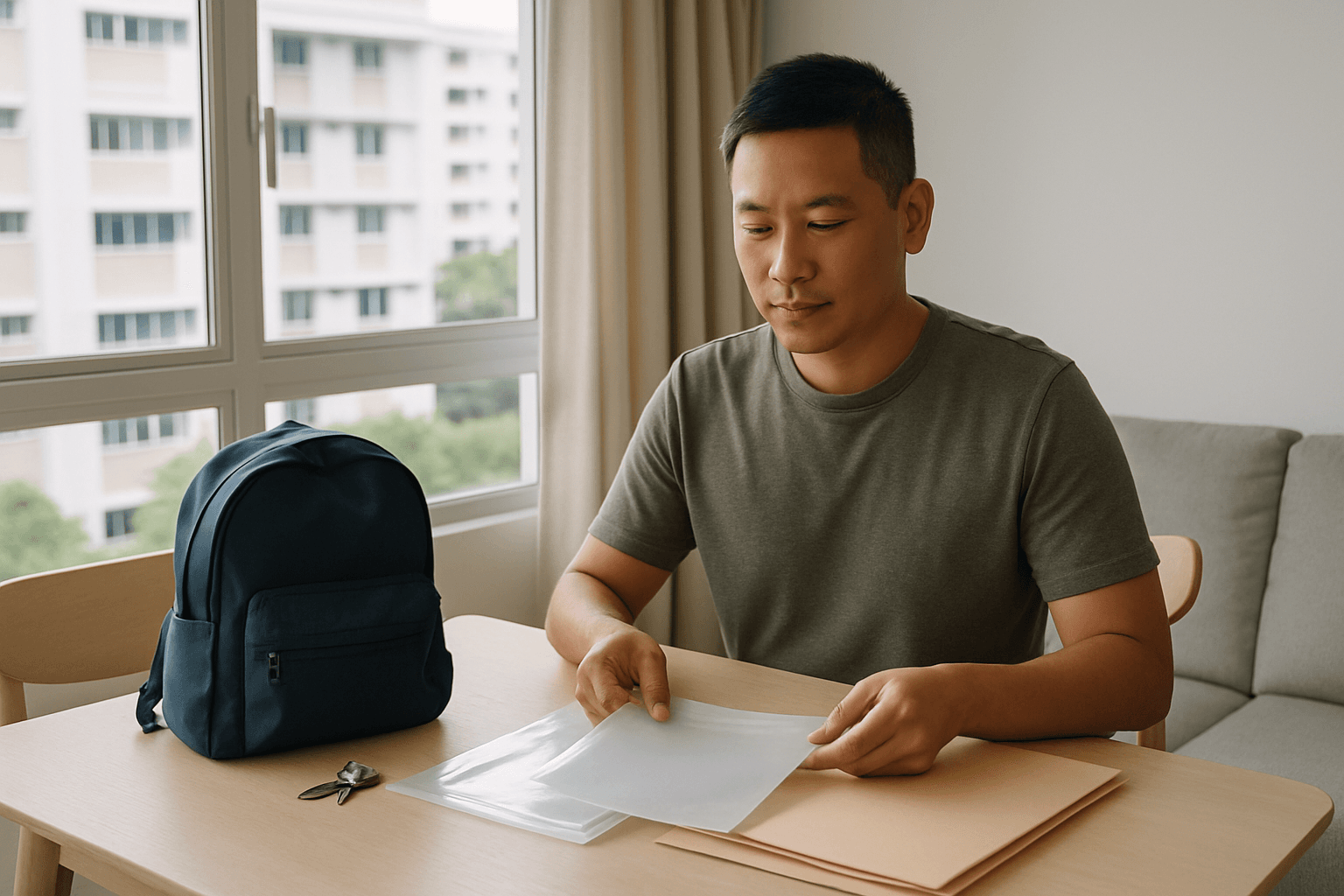
If your family situation changed recently, update the legal record and the school-facing details before you submit Primary 1 registration information. The main problem is usually not the divorce, adoption, or name change itself. It is submitting mixed records that tell two different stories. A new surname after adoption, a parent moving out after divorce, or an address that no longer matches the child’s current home can all trigger avoidable follow-up if the paperwork is not aligned first.
What should parents do first if family records changed before Primary 1 registration?
Identify exactly what changed, then check whether the child’s official records already reflect it. The safest sequence is legal record first, school form second.
Start by identifying exactly what changed, then check whether that change is already reflected in the child’s official records. The first practical question is simple: do the child’s legal identity details, parent or guardian details, caregiving arrangement, and address records still match the version of events you plan to use for registration?
In practice, most parents can sort this into four parts: who the child is on paper, which adult is legally recognised, who handles day-to-day school matters, and which address will be used for school administration. If even one of those has changed but the paperwork still shows the old setup, fix the mismatch before assuming registration will go smoothly.
The useful mindset is: legal record first, school form second. If a child now has a new surname after adoption, anchor the submission to the updated legal name. If the parents divorced and one parent moved out, do not automatically reuse the old family address and old contact details. If the caregiving arrangement changed, make sure the school-facing details reflect that clearly.
For the broader registration process, parents can refer to our main guide on Primary 1 Registration in Singapore. MOE also lists Primary 1 registration in its official education sitemap, which is a good reminder that this is a formal administrative process, not something to leave until the last minute.
Give citizens priority in Primary 1 registration
Ha.ha. maybe next time the P1 registration phase can propose like that, just a suggestion: Phase 1 – Existing siblings in the Primary school except PR siblings. Phase 2A(1) – No Change Phase 2A (2) – No Change Phase 2B – No change Phase 2C – Singapore Citizenship Only. Phase 2C Supplementary - Singapore Citizenship Only Phase 3A – Permanent Residents Phase 3A Supplementary - Permanent Residents Phase 4 – Non Citizen.
Share with us your kid's P1 registration experience
Hi parents, I've gone through 2 rounds of registration for my kids - Phase 2B 5 years ago (2006) and Phase 2A2 (2010). For son's P1 registration at Pei Hwa then, there was just 1 stop - ie to submit documents for verification. No guarantee at Phase 2B, just a high chance of getting in. Today's registration for daughter is slightly longer - 3 'stops'. Station 1 is at ground floor where a lady will make sure we are eligible for Phase 2A2. If so, then we proceed to the hall on 2nd floor. Station 2
Which family changes matter most for Primary 1 registration in Singapore?
Focus first on changes affecting identity, parentage, caregiving, or address. These are the changes most likely to affect registration records and school administration.
The changes that matter most are the ones affecting identity, parentage, caregiving, or address. Those are the areas most likely to affect what name appears on records, which adult is recognised for school administration, and whether the supporting documents make sense together.
Divorce can affect who submits the registration, whose contact details the school should use, and whether the child’s address still matches the parent handling the application. Adoption can affect both the child’s identity details and the legal parent-child relationship. A legal name change mainly affects consistency across forms and documents. A custody or care arrangement change may affect who receives school communication even if the child’s legal name stays the same. An address change is its own issue and should be checked separately rather than treated as automatically solved by a family-status update.
A common mistake is treating all family changes as one issue. They are not. Some changes alter the child’s legal identity on paper. Others mainly affect who manages school matters day to day. If you separate those questions early, the paperwork becomes much easier to organise.
If you are also checking the basic eligibility side, see our guide on who is eligible for Primary 1 registration in Singapore.
2B Primary one registration question
Hi, Hope all is well. I have been serving as an active community leader in one GRC for over 2 years. Just before primary one registration, if we move to a new address, are we able to register the child in 2B phase for schools within 2km in the new address?
All About Preparing For Primary One
Starting primary school? This is a big milestone. Do enjoy the journey with your child! :rahrah: https://www.straitstimes.com/singapore/education/the-st-guide-to-preparing-your-child-for-primary-1 Parents often confuse being ready for school with being academically capable in skills like reading and counting. Instead of focusing solely on academic progress, it is more important to make learning an enjoyable process, and help your child have a swift and happier adjustment to primary school. Here
Have More Questions?
Get personalized guidance on schools, tuition, enrichment and education pathways with AskVaiser.
Try AskVaiser for Free →What should divorced parents check before registering their child for Primary 1?
Divorced parents should check who is submitting the registration, which parent details will be used, and whether the address and caregiving arrangement are supported by the paperwork.
Divorced parents should confirm who will submit the registration, which parent details will appear on the forms, and whether the address used fits the child’s current living arrangement. These are the points most likely to create confusion when the family change is recent and older records are still in circulation.
In real life, the issue is often leftover paperwork. One parent may still be using the old family address. The child may spend most school days with one caregiver, but older records may still point to the previous home. A parent may assume the school will understand the arrangement once it is explained verbally, but the smoother approach is to make sure the forms and supporting records already line up.
Parents commonly compare the child’s identity documents, proof of address, and any custody or care-related papers they already have. Those are practical examples of documents families often keep ready for clarification, not an official or exhaustive MOE checklist. If the legal arrangements are settled but the school contact arrangement has changed, update the school-facing details instead of repeating the old setup by habit.
The practical takeaway is straightforward: choose one clear registration story and make the documents support it. Mixing an old address, a new caregiving arrangement, and outdated parent contact details in the same submission is what usually creates avoidable back-and-forth. For a broader overview, see Primary 1 Registration After Moving House: Should You Use Your Old or New Address?.
Preparing Your Child for Primary School:Parent Seminar - MOE
Preparing Your Child for Primary School: A Parent Seminar by MOE Starting primary school is a big step in your child's life. To help you better understand primary school programmes and enable you to make key education decisions, the Ministry of Education will be conducting a seminar on Primary School Education. At the seminar, parents can look forward to sharing sessions by the school principal and a parent volunteer, as well as view the various programmes our primary schools provide. The Primar
Share with us your kid's P1 registration experience
First thing to do after being balloted out, is to put your child's name under the school's wait list. After then, I've wrote in to MOE, called/met the school's Principal for discussion. Telling them all my problems and how the registration system had affected us (because I have only 1 school within 2km and NO school within 1km). With this factual, MOE has verified and consulted the school. My son was then placed on the highest priority in the waiting list .. and fortunately by early Nov, we were
What documents should parents of a newly adopted child prepare for P1 registration?
Prepare the child’s updated legal identity documents and the adoption records that show the current parent-child relationship. Think in terms of a clear paper trail, not a long pile of documents.
Parents of a newly adopted child should prepare the child’s current legal identity documents together with the adoption records that show the present parent-child relationship. The goal is not to gather every paper connected to the child’s history. It is to show a clear paper trail from the older identity details to the current legal position.
Because the source material does not provide an official MOE checklist specifically for newly adopted children in Primary 1 registration, it is safer to think in document groups rather than a fixed list. Parents commonly prepare the adoption order, updated birth or identity documents where already available, and the adoptive parent’s identification. If the child’s name also changed as part of the adoption, parents often keep the supporting name-change proof ready as well. These are common examples, not guaranteed requirements for every case.
Consistency matters more than volume. If the updated records now show the adoptive parent and the child’s current legal name, use those details consistently across the registration and later school communication. If the update is still recent and some older records remain in circulation, keep the older and newer documents together so you can explain the transition clearly if asked.
MOE’s Primary School Transfer Service FAQ is not the same as Primary 1 registration, but it is still useful because it recognises adoptive parents in a school-administration context. That is a helpful reminder to treat adoption as a formal record change, not just a family detail mentioned informally to the school. For a broader overview, see Which Home Address Counts for Primary 1 Registration in Singapore?.
Immunisation records for Pri 1 registration
What I did for my son who had a foreign non-English record, we went to Polyclinic and the nurse help me to translate and input to the immunization registry but we are Singaporean, might not work for foreigner. You can just bring along the indian immunization cert during the registration, hopefully is in English.... I have friend who just bring along the foreign cert which is not 100% English but can figure out words like BCG, MMR bla bla with dates indicated, it was accepted by the school.
All About Preparing For Primary One
Dear parents, I hope parents could share your experience regarding the preparation for primary school and time schedule spend with your kids everyday. I have a son of 6 this year going to P1 next year. I would like to find out with parents things that you are doing with your child prior going P1, cos I do not want to react too kan-jiong or too relax in front of my child. I am particularly concerned about the 3 main subjects being taught in P1 and wonder should I expect him to be able to do the a
If my child’s name has changed, what needs to be updated before registration?
Update the legal name first, then make sure the same name appears across the registration forms and supporting documents.
Update the child’s legal name records first, then use that same name consistently across the registration forms and supporting documents. Name mismatches are one of the simplest ways to create delays that could have been avoided.
This usually happens in a few predictable situations. A child may take a new surname after adoption. A legal name change may already be completed, but one older document still shows the previous name. Parents may also be used to a preferred English name at home while the official records still show a different legal name. For registration, the legal name on the official records should anchor the paperwork.
Compare the child’s current identity documents with the details you plan to submit and check that the spelling and order of names are consistent. If there was a recent change, keep the supporting proof ready so you can explain why older records look different. Older documents do not always disappear immediately, but the new legal name should drive the registration.
A simple rule helps here: consistency beats explanation. It is easier to submit one clean set of matching records than to explain later why different documents show different names. For a broader overview, see Primary 1 Registration Documents Checklist: What Singapore Parents Commonly Prepare.
*** READ ME FIRST !!! - P1 Registration FAQ ***
2A need to apply at school , so withdrawal also need to be at school. Then go over to school B for registration. Consider time for travel, withdrawal take 5-10min. Buffer 1.5 hours would be safe if driving. If you can let us know your 2C choice , we can tell you the risk. It might be worth just to go 2C
*** READ ME FIRST !!! - P1 Registration FAQ ***
For Singaporean - The child’s Singapore Birth Certificate - The child’s Singapore Citizenship Certificate for those who are not Singapore Citizens at the time of birth - Singapore NRIC of both parents or Entry / Re-entry Permits of parents if they do not possess Singapore NRIC - The child’s Immunisation Certificates For PR - The child’s Birth Certificate - The child’s Entry/Re-entry Permit - Singapore NRIC of both parents or Entry/Re-entry Permits of parents if they do not possess Singapore NRIC
What if the child’s birth certificate, NRIC, or other identity details do not match the current family records?
Do not assume a small mismatch is harmless. Compare the documents early and resolve or explain the difference before you register.
Do not ignore the mismatch. Compare the key documents early and resolve the difference before registration where possible, because this is exactly the kind of issue that tends to trigger follow-up later.
A mismatch may look small but still create confusion. One document may show an old surname while another shows the new one. An older record may still reflect the previous parent details after adoption. An address on one identity-related document may still point to the former home after a separation or move. None of these automatically mean registration cannot proceed, but they do mean you should stop relying on memory and check what the documents actually say.
The practical step is to line up the child’s latest official identity records, the parent or guardian details being used, and the address information that will support the submission. If something still shows the old arrangement, update it first where possible. If the transition is still in progress, keep the newer legal documents together with the linking records so the school-facing story is easy to follow.
Parents often underestimate how much smoother school administration becomes once the documents tell one coherent story. The family situation may be complicated, but the paperwork should not look confused.
All About Singapore Birth Rates
My kids are already in primary school (the school that your PR colleague is interested in). My kids got in under 2A1. I always tell my hubby to count our blessings that P1 registration was a breeze for us despite that I had thoughts about registering them in TNS or HIPS (since we've property within 1km of those schools). He even thought of Rosyth (1-2km for us). I told him he can try to be a PV and since he don't have such determination then don't even think about it. I've a K1 who is registerin
Give citizens priority in Primary 1 registration
How about a scheme where advantage points will be given. Such that if both parent are citizen, then awards like 20 points, then if completed NS, some more points, and etc. Scheme can be defined to include like sibling same school, PV, community work, stay near home, and etc and etc. . The more points you get put you higher for prioirty for the school of your choice. . .anymore new ideas, we have to help those civil servants to think I guess. .
How should parents handle address proof when family arrangements have changed?
Treat address proof as a separate check. Decide which address will be used, then make sure the supporting records match that address and the child’s current living arrangement where relevant.
Treat address proof as a separate check from family status. Even if divorce, adoption, or caregiving changes are the main issue emotionally, the address used for registration still needs its own review.
This matters because residential address is handled as a distinct administrative point in MOE school processes. Although the MOE transfer service FAQ covers a different process, it still shows that address changes are not treated as a casual detail. Parents should avoid assuming that once divorce or adoption paperwork is settled, the address side is automatically settled too.
Common real-world situations include one parent moving out after divorce while the child continues living mainly with the other parent, a recently adopted child moving into the adoptive family home, or a family changing homes close to the registration period. In each case, decide which address will actually be used, check that the supporting records align with it, and avoid mixing an old family address with a new caregiving arrangement unless you have a clear reason and documents that explain it. Parents also commonly keep address-linked records such as utility bills or tenancy papers ready, but these are examples of what families often prepare, not an official MOE checklist.
If address is your main concern, the most useful next reads are Primary 1 Registration After Moving House: Should You Use Your Old or New Address? and Which Home Address Counts for Primary 1 Registration in Singapore?.
All about Transferring to Other Primary Schools
Hi hennaoh, Please refer to the FAQ below. Does it address your situation? https://va.ecitizen.gov.sg/cfp/customerPages/moe/ExploreFaq.aspx?Category=3645&Mesid=422335 Q:- I am in the midst of purchasing a new resale property. The transaction will be completed soon and I will be able to move in prior to the commencement of the academic year. Can I make use of this new address to register my child? Answer: The resale Housing & Development Board (HDB) flat's/ private property’s address can be used
All about Transferring to Other Primary Schools
To add, In this link https://va.ecitizen.gov.sg/cfp/customerPages/moe/explorefaq.aspx?Category=3645&utm_source=moe-corp-site&utm_medium=referral Look for Q. I have purchased a yet-to-be completed property and should be moving in after the property is completed. Can I make use of the new home address for Primary One (P1) registration?
What is the most common mistake parents make after a divorce or adoption change?
Submitting the registration before the updated legal records and school details match each other.
The most common mistake is submitting registration details before the legal records and school-facing details are aligned. Parents often assume the school will piece the story together from mixed documents, but most registration trouble starts when the paperwork still reflects two different family situations.
Most registration problems come from mismatched paperwork, not from the family change itself.
Help for little girl with no birth cert - P1 registration
Her uncle can adopt her and get the lawyers to do legal papers for her BC to be issued again? In the long run, she will need her BC for many matters so I think it is only right to get her BC replaced. just my 2cts worth. And in Singapore, primary education is compulsory right? So she should be admitted to school.
All About Preparing For Primary One
You should have seen the way the mum drilled the poor child, depriving him of food till he completed his revision. Obviously, an uninterested child will only retain the information into his short term memory. Preparing a child for primary 1 is more than just the academics. There are several areas that parents have to take note of. Does your child know how to clean up after himself if he does a big business in the toilet? Does your child know how to wash his hands correctly and rinsed his hands p
Should I update the school first, or the legal documents first?
If the child’s identity, parentage, or recognised caregiver details changed, update the legal documents first. If the change is only about communication or contact details, update the school-facing records directly.
If the child’s legal identity, parentage, or recognised caregiver status has changed, update the legal record first and then use the updated documents for school registration and communication. That gives the school one clear version of the child’s details to work from.
If the change is only administrative, such as a new contact number, a different pickup arrangement, or a revised communication arrangement after divorce, the school-facing update can usually happen directly. But if the child’s name, legally recognised parent, or core identity details have changed, the legal record should lead.
A practical rule is to change the source record before the downstream record. In other words, fix the official identity or family-status document first, then let the school paperwork follow it. If you are also reviewing the rest of your paperwork, our guide on Primary 1 registration documents parents commonly prepare can help you sense-check what usually needs to line up.
All about Transferring to Other Primary Schools
hi may i check what are the procedures like for changing primary school ? because change of address
All about Transferring to Other Primary Schools
https://www.moe.gov.sg/primary/transfers “You can apply to transfer your child to a primary school nearer to your new residential address if your child is: - A Singapore Citizen (SC) or Permanent Resident (PR). - Currently in Primary 1 to 5. We will offer your child a school nearer to your new residential address which has available vacancies. Your child will have to report to the new school by the end of the reporting period to complete the school transfer. Your NRIC must be updated with your n
Have More Questions?
Get personalized guidance on schools, tuition, enrichment and education pathways with AskVaiser.
Try AskVaiser for Free →