
Divorced, Separated, or Unmarried Parents: What to Prepare for P1 Registration in Singapore
A practical guide to whose details to use, which care-related documents may help, and how to avoid delays.
For divorced parents P1 registration documents in Singapore, start with the details of the adult who is registering the child and should receive school communication. Then keep supporting documents ready if they apply, such as the child’s identity details, the registering adult’s identification and contact details, proof of address, and any divorce, custody, care and control, or guardianship papers. There is no source-backed universal checklist for every family setup, so if your arrangement is unusual, contact the school early instead of waiting until registration day.
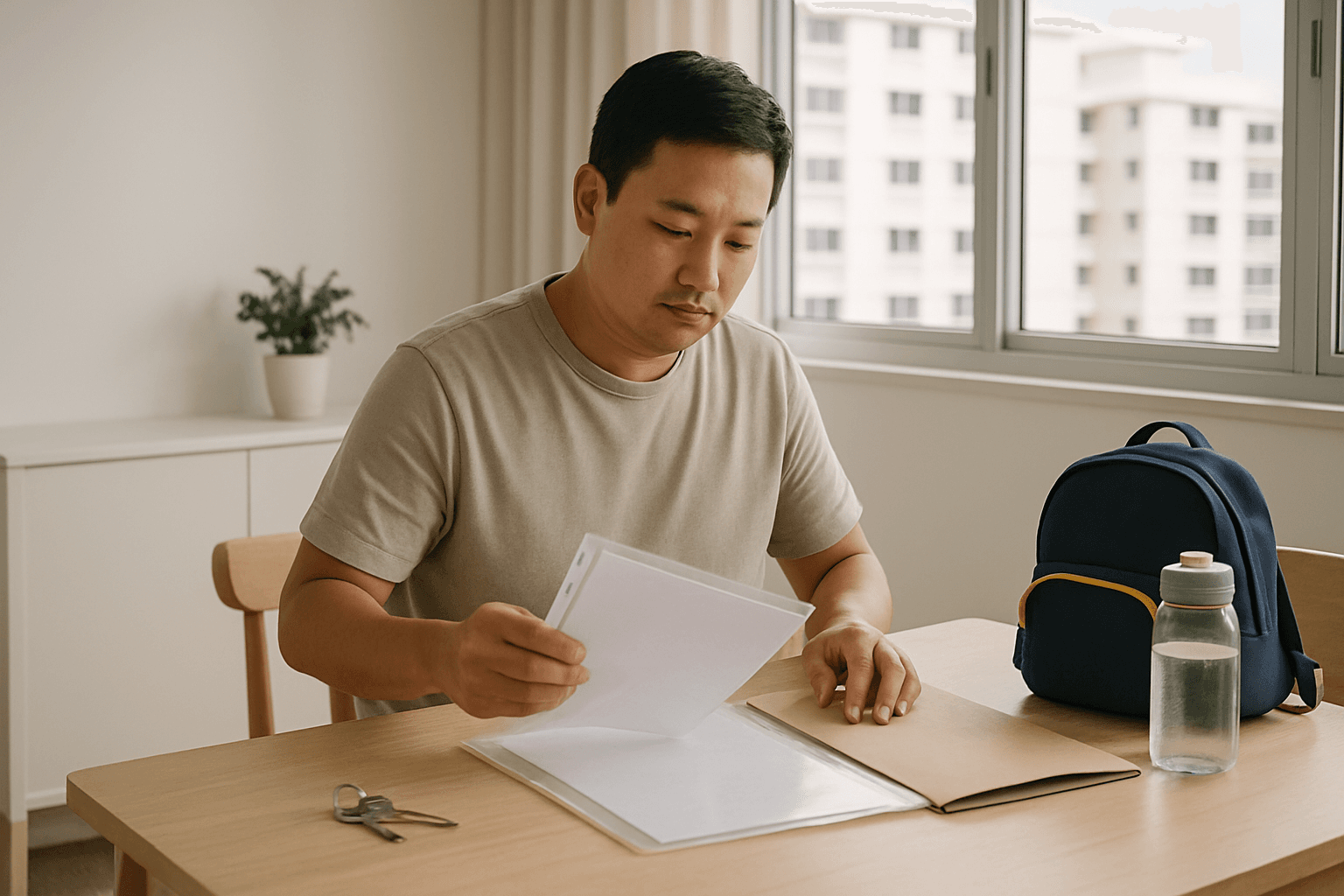
For many parents, the hard part of Primary 1 registration is not choosing the school. It is making sure the child’s particulars, the main contact person, the address, and any supporting papers are clear enough for the school to process without delay.
MOE’s public materials do not give one special checklist for every divorced, separated, or unmarried-parent family. The safest approach is simple: use the details of the adult who is actually handling school matters, keep any relevant legal or caregiving documents ready if they apply, and clarify unusual arrangements early. Clear contact details usually matter more than a long explanation.
If you want the wider context on phases, balloting risk, and school planning, start with our full Primary 1 registration guide.
What should divorced, separated, or unmarried parents know before Primary 1 registration?
Before registration, make sure the child’s details are consistent and be ready to show who should act as the main school contact.
The main issue is usually not whether your family fits a standard form. It is whether the school can clearly see the child’s particulars, the main contact person, and any document or context that explains who is acting for the child in school matters.
A practical way to prepare is to split the job into two parts. First, make sure the child’s official details are consistent across the form and supporting records. Second, if your family arrangement is not straightforward, keep ready any documents or written context that show who handles day-to-day school matters. This comes up often when a child lives mainly with one parent after divorce, when an unmarried parent is registering alone, or when care is shared but one adult is the practical school contact.
Think of this as an admin-clarity issue, not a test of family structure. Schools do not need your family history. They need a file that makes sense.
Do not leave unusual cases to the final day. MOE notes that schools may face high call and email volumes during registration, and if a document issue causes you to miss a phase you were eligible for, MOE says you can move to the next eligible phase but without priority. If you need a timing refresher, see how the P1 phases work. For a broader overview, see Primary 1 Registration in Singapore: How It Works, Balloting Risk, and How to Choose a Realistic School Plan.
All About Preparing For Primary One
Dear parents, I hope parents could share your experience regarding the preparation for primary school and time schedule spend with your kids everyday. I have a son of 6 this year going to P1 next year. I would like to find out with parents things that you are doing with your child prior going P1, cos I do not want to react too kan-jiong or too relax in front of my child. I am particularly concerned about the 3 main subjects being taught in P1 and wonder should I expect him to be able to do the a
Preparing Your Child for Primary School:Parent Seminar - MOE
Preparing Your Child for Primary School: A Parent Seminar by MOE Starting primary school is a big step in your child's life. To help you better understand primary school programmes and enable you to make key education decisions, the Ministry of Education will be conducting a seminar on Primary School Education. At the seminar, parents can look forward to sharing sessions by the school principal and a parent volunteer, as well as view the various programmes our primary schools provide. The Primar
Whose details should be used on the Primary 1 registration form?
Use the details of the adult who is actually handling registration and should receive school communication, and make sure those details match the child’s caregiving setup.
As a practical starting point, use the details of the adult who is actually handling the registration and should receive school communication. In most families, that means the parent who manages school admin, responds quickly to follow-up, and will continue dealing with the school after enrolment.
Where parents run into trouble is mixing details in a way that does not reflect real life. For example, one parent’s phone number may be listed even though the child lives mainly with the other parent. Or the mailing address may belong to one household while all caregiving and school contact happens from another. These situations are often fixable, but they tend to trigger extra checking.
If there is a court order or other formal arrangement, keep the registration details aligned with that setup as far as possible. If both parents are involved but only one should be the main contact, make that clear from the start. For instance, if the child lives mainly with the mother and she handles school matters, using her as the main contact is usually cleaner than listing the father simply because he is free to submit the form that week. If an unmarried father is handling registration because he manages the child’s school admin, his details may be the practical choice, but he should be ready if the school asks for supporting records.
A simple rule helps: do not split particulars randomly between adults. Give the school one clear contact chain first. For a broader overview, see Which Home Address Counts for Primary 1 Registration in Singapore?.
*** READ ME FIRST !!! - P1 Registration FAQ ***
For Singaporean - The child’s Singapore Birth Certificate - The child’s Singapore Citizenship Certificate for those who are not Singapore Citizens at the time of birth - Singapore NRIC of both parents or Entry / Re-entry Permits of parents if they do not possess Singapore NRIC - The child’s Immunisation Certificates For PR - The child’s Birth Certificate - The child’s Entry/Re-entry Permit - Singapore NRIC of both parents or Entry/Re-entry Permits of parents if they do not possess Singapore NRIC
*** READ ME FIRST !!! - P1 Registration FAQ ***
2A need to apply at school , so withdrawal also need to be at school. Then go over to school B for registration. Consider time for travel, withdrawal take 5-10min. Buffer 1.5 hours would be safe if driving. If you can let us know your 2C choice , we can tell you the risk. It might be worth just to go 2C
Have More Questions?
Get personalized guidance on schools, tuition, enrichment and education pathways with AskVaiser.
Try AskVaiser for Free →What custody-related documents may the school ask for?
Common examples include divorce, custody, care and control, guardianship, and identity documents, but these are sensible examples, not an official fixed list for every family.
There is no source-backed universal public checklist for every divorced, separated, or unmarried-parent case. Still, some documents are commonly useful when the family arrangement is not obvious from the form alone. Real-world examples include a divorce order, custody order, care and control order, guardianship papers, the child’s birth certificate, and the registering adult’s identification details.
These documents help answer practical questions: who is the main caregiver, who should receive official communication, and whether the adult submitting the form is the person who usually acts for the child in school matters. If one parent is registering alone, or if the child is not living with both parents in one household, the school may want enough information to verify the arrangement without having to chase multiple people later.
What many parents overlook is that more paperwork is not always better. The useful documents are the ones that explain authority, care, or contact. If your situation is straightforward, the school may only need the usual identity and contact details. But if your arrangement is unusual, having the relevant papers ready can save time. A parent with sole care and control, for example, would usually want that paperwork available. A grandparent helping with daily admin may want to keep any existing written record that shows how school matters are handled, even if the school never asks for it. For a broader overview, see Primary 1 Registration Documents Checklist: What Singapore Parents Commonly Prepare.
Share with us your kid's P1 registration experience
Hi parents, I've gone through 2 rounds of registration for my kids - Phase 2B 5 years ago (2006) and Phase 2A2 (2010). For son's P1 registration at Pei Hwa then, there was just 1 stop - ie to submit documents for verification. No guarantee at Phase 2B, just a high chance of getting in. Today's registration for daughter is slightly longer - 3 'stops'. Station 1 is at ground floor where a lady will make sure we are eligible for Phase 2A2. If so, then we proceed to the hall on 2nd floor. Station 2
All About Preparing For Primary One
Here you are....registration on first come first serve basis. Registration and payment made is on-line http://www.youngparents.com.sg/event/2011/03/p1seminar/
What if there is no formal custody order?
If there is no formal order, prepare the child’s identity details, the main contact’s particulars, and a clear explanation of who handles school matters.
Many families do not have a formal custody or care order, especially if the arrangement has been working informally for years. In that situation, the goal is not to build a legal case for registration day. The goal is to make the school’s admin easy to understand.
Start with the basics that are hard to dispute: the child’s identity details, the main contact person’s identification and phone number, and a clear explanation of who handles school matters. If you already rely on written records in daily life, keep those available as supporting context. Examples could include an email trail between parents about school decisions or a simple written caregiving arrangement that both sides have been following. You do not need to create elaborate paperwork just to look formal, but it is better to have something consistent than to rely on a rushed verbal explanation when questions come up.
This matters most in situations such as shared care across two homes, a parent who handles school admin even though the child sleeps mainly in the other household, or grandparents who help with daily care while a parent remains the legal decision-maker. In these cases, consistency helps more than volume. If your explanation, contact details, and supporting records all point in the same direction, the school is less likely to need repeated clarification. For a broader overview, see Primary 1 Registration Phases in Singapore: What Each Phase Means for Your Chances.
All About Preparing For Primary One
My girl is in P1 this year. Based on my experience, I think you are doing a fine job so far... As long as kids go to pre school, they are more or less ready for P1 because topics cover in first semester are very similar to what they will be learning in K2... I did buy some assessment books for my girl when she was in K2 because she had so much free time after school. Whether to draw up a time table is subjective... it definitely incultivate good habits which may be ideal when he starts P1. Prepa
Share with us your kid's P1 registration experience
First thing to do after being balloted out, is to put your child's name under the school's wait list. After then, I've wrote in to MOE, called/met the school's Principal for discussion. Telling them all my problems and how the registration system had affected us (because I have only 1 school within 2km and NO school within 1km). With this factual, MOE has verified and consulted the school. My son was then placed on the highest priority in the waiting list .. and fortunately by early Nov, we were
What if only one parent is registering the child?
Yes, one parent can often handle the admin side, but they should be ready with the child’s details and any documents that support why they are the main school contact.
One parent often handles the admin side of registration. That by itself is not unusual. What matters is whether the school can understand and verify the arrangement without unnecessary back-and-forth.
If one parent is registering alone, it helps to have the registering parent’s identification, the child’s particulars, and any papers that explain why that parent is the right school contact. This becomes more important when the other parent is overseas, hard to reach, not involved in day-to-day care, or likely to appear in the child’s records even though they are not handling the process.
For example, if the other parent is on a long overseas posting, the parent in Singapore should be ready to show they are the practical school contact. If a co-parent is uncontactable, the school may not need a full personal history, but it may need enough context to understand why communication should go through one adult only. If both parents are on good terms but only one is doing the paperwork, the same advice still applies: keep the file tidy in case the school asks a follow-up question.
A good rule of thumb is this: one parent may submit the form, but the paperwork should still make sense without a long explanation.
Seeking advice for P1 registration for daughter and son
Hi, just checking 2027 to enter P1, hence P1 registration for my girl is 2026, is it 2025 I should register for Parent Volunteer?
About registration at sec sch after PSLE school posting
Yes, parents need to go on the registration day as there’re briefing by principal/teachers about the school, buying of textboks and uniform and also filling in some official forms. also better to bring along your results slip as some schools may require u to fill in some info (if u can remember all your grades then no need to bring).
What if the child’s address or the parent’s details do not match the records?
Check names, addresses, and contact details early, because mismatches usually cause delay rather than outright rejection, and delay matters during a short registration window.
Treat mismatched names, addresses, or contact details as a timing risk. They are often fixable, but they can slow down registration if you discover them late.
Before registration, compare the child’s name and particulars across the birth certificate, the parent’s identification records, and the details shown in the registration system. Also check whether the address you are relying on actually fits the caregiving setup and any distance-based school planning. This is especially important for separated parents, recent movers, or families using different mailing and residential addresses.
If the address shown in the P1 portal is not the one you need, MOE has a process for submitting a new address online. That does not mean every address issue is minor, especially when school distance priority is part of the plan. MOE has highlighted that address verification matters under the proximity policy, so it is better to resolve mismatches early than to assume the school can sort them out later.
If address planning is part of your situation, these guides may help: which home address counts for P1 registration and what to do after moving house.
*** READ ME FIRST !!! - P1 Registration FAQ ***
if one can't turn up : the spouse that turn up still have to produce the other spouse IC. Schools need to check the address, appearing on both ICs (father & mother) in the event the P1 Registration Officer find that the address of father / mother differ from each other on both IC: the parent have to explain the reason(s) behind. if for any reason the Registration Officer find the address(es) on both parents' IC differ, or the reason / explaination provided make them feel suspicious / fishy about
*** READ ME FIRST !!! - P1 Registration FAQ ***
Hi all, Anyone knows how does registration work for unmarried parents? Checked on MOE Website and it mentioned that one parent may register if child’s birth cert only had the name of one parent. My child’s birth cert has both my and his father’s name. We were unmarried and not on good terms now.
What documents are sensible to prepare in advance?
Prepare a small working file of identity, contact, address, and any care-related documents so you can answer questions quickly if they arise.
- ✓The child’s birth certificate or other identity details commonly used for verification
- ✓The registering adult’s identification details, phone number, and email address
- ✓Any divorce, custody, care and control, or guardianship papers that apply to your arrangement
- ✓Proof of address if the school or portal needs it
- ✓A short written explanation of who handles the child’s school matters if your family setup is not straightforward
- ✓Digital copies of key documents so you can send them quickly if follow-up is needed
- ✓Printed copies, and originals where available, if your arrangement is likely to require verification
- ✓These are practical examples of what parents commonly prepare, not an official exhaustive checklist
When should parents contact the school or MOE early?
Reach out early when your family arrangement is unusual or your records do not line up cleanly.
Contact the school early if there is no formal custody order, the child moves between two homes, one parent objects, one parent is overseas, or names and addresses do not line up neatly across documents. Early clarification is usually much easier than trying to explain an unusual arrangement on the deadline day itself, especially because MOE notes that schools can experience high call and email volumes during registration.
All About Preparing For Primary One
according to MOE, no need for P1 preparatory class, they stress many times, and they said all kindergarten should be able to prepare the child to primary 1… but parents are too kiasu they prepare them for P1… by the time these kids go to P1, they know most things so those din go to such classes, felt left out and their parents also will send them to classes… never ending… sigh…
All About Preparing For Primary One
Starting primary school? This is a big milestone. Do enjoy the journey with your child! :rahrah: https://www.straitstimes.com/singapore/education/the-st-guide-to-preparing-your-child-for-primary-1 Parents often confuse being ready for school with being academically capable in skills like reading and counting. Instead of focusing solely on academic progress, it is more important to make learning an enjoyable process, and help your child have a swift and happier adjustment to primary school. Here
How can parents reduce registration-day friction?
Match names and addresses, keep copies ready, use one clear main contact, and prepare a short neutral explanation if your arrangement needs context.
The school needs a clear contact chain, not a family history lesson. If you prepare with that in mind, most document issues become easier to manage.
Check that names are spelled the same way across documents, especially if a child or parent uses a different name format in daily life. Keep both digital and printed copies of important records. Bring originals where you have them. Make sure the phone number and email on the form are current and actually monitored. If your arrangement needs explanation, prepare a short neutral summary such as: the child lives mainly with the mother, the father is overseas, and the mother handles school matters.
The most common avoidable mistakes are simple. Parents assume the school will sort out unclear contact details later. They wait until the final day to ask about an unusual arrangement. Or they focus only on legal papers while forgetting practical admin details like who will answer the school’s call during office hours.
If timing is already tight, remember that delays do not stay small for long. MOE has said children who are not registered are followed up on, so this is not just a filing issue. The more clearly your file shows who the school should deal with, the easier it is to move forward. For a broader preparation file, see our P1 registration documents checklist.
*** READ ME FIRST !!! - P1 Registration FAQ ***
Neither of the parents need to be present. http://www.moe.edu.sg/education/admissions/primary-one-registration/required-documents/#authorisation-letter You just need NRICs of both parents.
*** READ ME FIRST !!! - P1 Registration FAQ ***
Your child will receive a brochure containing information like the schools available in Singapore and their niche areas, etc. Within the brochure, there will be registration dates. No other letters from MOE.
Do both parents need to attend P1 registration, and do I always need custody papers?
No. Both parents do not automatically need to attend, and custody papers are not always required. They matter more when the caregiving or legal arrangement is unclear.
No. Both parents do not automatically need to attend, and custody papers are not always required.
The common mistake is assuming there is one fixed rule for every family. In practice, the school mainly needs enough information to register the child correctly and know who to contact. If the child’s particulars, address, and main caregiver setup are clear, the process may be straightforward. If the arrangement is unusual, the school may ask for more.
Another misunderstanding is that any missing paper means the child cannot be registered. Often the bigger risk is delay, not impossibility. That is why it helps to prepare supporting documents early and clarify anything unusual before the registration period gets crowded. If timing becomes a concern, our guide to the registration phases explains why missing a phase can affect your chances.
The practical takeaway is simple: do not assume both parents must attend, do not assume custody papers are always needed, and do not assume the school can untangle unclear details after submission without slowing things down.
[FREE] P1 Registration webinar by KiasuParents!
Bumping this up: KiasuParents is holding a FREE P1 registration webinar , and it’s happening this Wednesday (25 June 2025) ! Sign up here: https://mautic.kiasuparents.com/webinar-jun-2025-registration-form
Share with us your kid's P1 registration experience
Sorry, I thought this thread is suppose to discuss on the experience of P1 registration, but I think it had somehow been drifted away by some of the discussions. Anyway, I had gone through the P1 registration last year. Being a P2C applicant, it was extremely stressful and unpleasant. Pre-registration, was worry-some and many sleepless nights After registration, was tough and sleepless due to the balloting wait Post-balloting, for me & spouse … was a total breakdown (balloted OUT) My spouse and
Have More Questions?
Get personalized guidance on schools, tuition, enrichment and education pathways with AskVaiser.
Try AskVaiser for Free →