
Should You Appeal Primary 1 or Accept the Posted School?
A practical Singapore parent's guide to deciding whether a Primary 1 appeal is worth pursuing
You should usually appeal a Primary 1 posting only when the posted school creates a concrete, ongoing burden, such as a difficult commute, unstable caregiving arrangement, or another child- or family-specific problem. If the school is workable and the appeal is driven mainly by school preference, reputation, or emotional letdown, it is usually better to accept the posting and focus on helping your child start well.
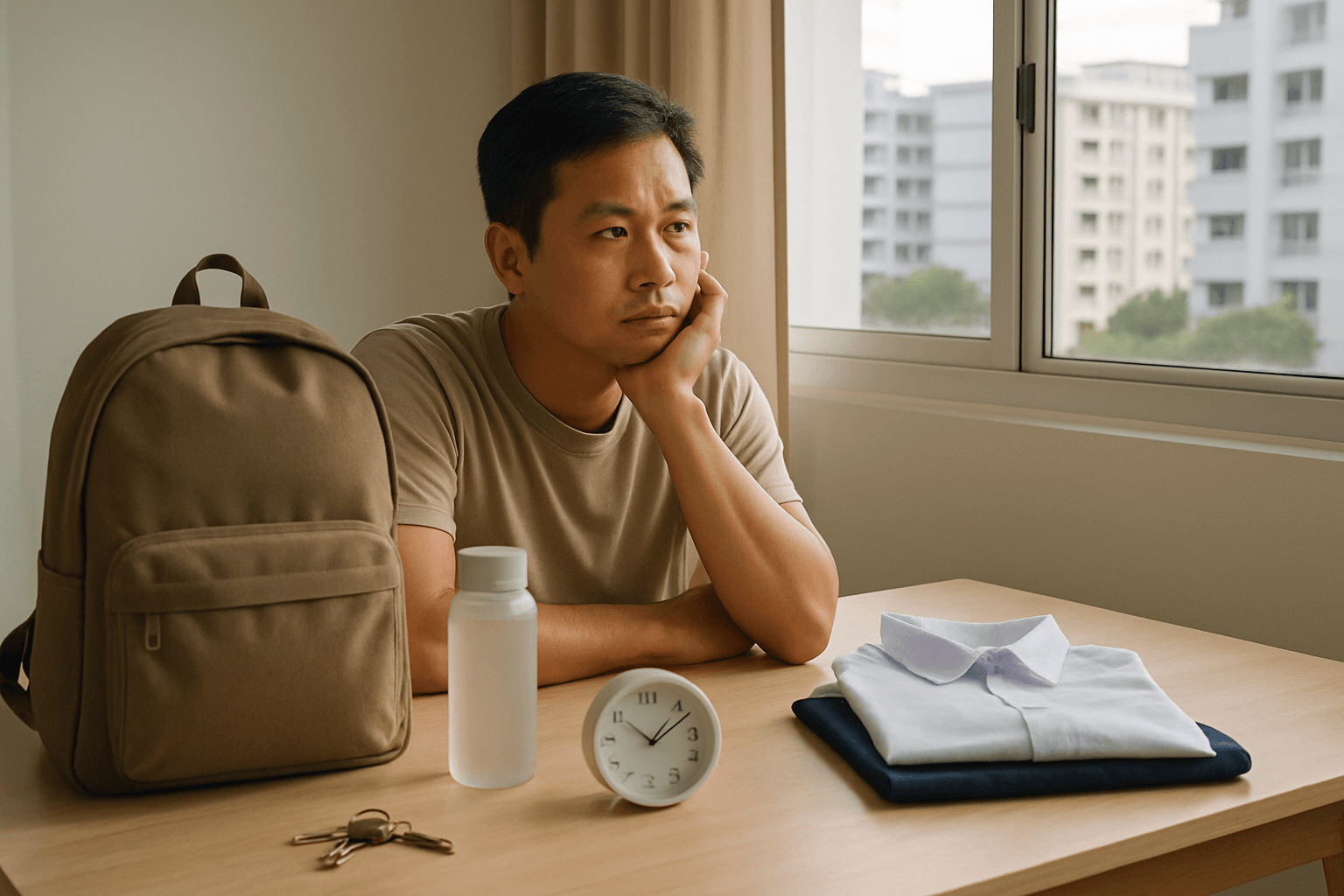
A disappointing Primary 1 posting can make parents want to keep trying for another school. Before you do, ask a simpler question: will the posted school create a real daily burden for your child or family, or is this mostly the pain of not getting your preferred choice? That distinction usually tells you whether an appeal is worth the effort.
What should you do first after getting your Primary 1 posting result?
Pause before reacting. First check whether the posted school is genuinely unworkable by looking at the real commute, care arrangements, and your child's likely adjustment.
Do not decide on appeal in the first emotional hour. First test whether the posted school is actually unworkable. Check the real travel route at school-start timing, not just the distance on a map. See how long the trip takes, whether it needs multiple transfers, who will do drop-off and pick-up, and what happens when one adult is unavailable. Then look at your child, not just the school name. A child who tires easily, gets anxious with change, or needs a very predictable morning routine may feel the strain more than parents expect.
It helps to separate three different reactions. One is simple disappointment that a preferred school did not happen. Another is a real logistics problem that will show up every weekday. The third is uncertainty because you have not yet looked properly at whether the posted school could work. Parents often mix these up and call all of it "reasons to appeal". They are not the same thing.
A useful first test is this: if you had never heard of your preferred school's reputation, would the posted school still feel unmanageable? If the answer is no, you may be dealing more with disappointment than a strong appeal case. If you want to step back and review the bigger system before deciding, see our Primary 1 Registration in Singapore guide and what happens if you do not get your preferred school.
Appeal Secondary One Posting
I believe the answers you seek are a couple of pages back. You can choose not to buy school uniform first, but you would have to wear your primary school uniform in the first week.
Appeal Secondary One Posting
Report to posted school and can still wear primary school uniform or just buy 1 set first incase appeal successful
When is it reasonable to appeal the posted primary school?
Appeal makes more sense when the posted school creates a concrete daily burden for the child or family, not when the reason is mainly preference or reputation.
An appeal makes more sense when there is a clear child- or family-specific problem, not just a preferred school you still want. Stronger real-world reasons usually involve a burden that will keep affecting daily life. Examples include a commute that is likely to drain the child every day, a caregiving arrangement that falls apart if the child attends the posted school, sibling pick-up and drop-off logistics that are genuinely hard to sustain, or a medical or practical need that makes another school much more manageable. These are examples of stronger situations, not official guaranteed approval grounds.
A helpful way to think about it is this: appeal when you are trying to fix a daily problem, not when you are trying to improve a school label. For example, "Grandma can reliably bring my child to the nearby school but cannot manage two buses and a transfer" is a much more practical reason than "many people say the other school is better". Likewise, "our work schedules make this route unsafe or unstable every morning" is stronger than "our friends' children are in the other school".
This matters because popular schools remain highly competitive. Reporting on oversubscribed primary schools during P1 registration is a useful reminder that demand is real. Appeal is usually not a realistic second round of school shopping. For a broader overview, see Primary 1 Registration Unsuccessful: What Happens If You Do Not Get Your Preferred School.
When do you appeal?
As allocation of schools during S1 Centralized Posting is based on merit, if you don't get your 1st choice school, you'll be given your 2nd choice etc... before the student whose PSLE aggregate is lower than yours. So, you should place the school of your choice as 1st choice in the S1 posting exercise. Some schools will not entertain appeals before the posting results are out. What's there to appeal for if you haven't applied yet? What you might want to think about is getting a TRANSFER in the e
Appeal Secondary One Posting
Appeals can be filed at your posted secondary school on the next day after the posting results have been released. If you are seeking a transfer due to other reasons, you may approach the school of choice directly . You will not lose your seat in current school (refer sentences in green below). How soon the appeal results will be known depend on the school so you need to check with the school on the status. It’s important to keep the following in mind: Your child’s PSLE aggregate score should me
Have More Questions?
Get personalized guidance on schools, tuition, enrichment and education pathways with AskVaiser.
Try AskVaiser for Free →When is it usually better to settle into the posted school?
If the posted school is workable, reasonably near home, and likely to support a calm Primary 1 start, settling is usually the smarter choice.
If the posted school is workable, reasonably near home, and likely to give your child a steady start, settling is usually the better decision. Accepting the posting is not settling for less. In MOE's parliamentary reply, the ministry makes a clear point: there is no single right primary school for every child, and several schools may be suitable if they can meet the child's needs and are reasonably close to home.
MOE has also said that studying in a school near home is in a child's educational interest because it reduces commuting and gives families more convenience and time, as noted in this forum reply on nearby school places. That matters more than many parents admit in the week after posting results. A school with a manageable route, calmer mornings, and enough stability for your child's first year often beats a more desired school that creates strain from day one.
In practice, settling is often the better move when the route is direct enough, the handover plan is realistic, and your child can start school without a household full of uncertainty. If you are still torn between school name and daily fit, our guide on popular primary school vs neighbourhood school can help you think more clearly. For a broader overview, see Primary 1 Registration Distance Priority: How Home-School Distance Works.
Appeal Secondary One Posting
Can I know if an appeal is successful, is it auto-transfer from posted school to the school you successfully appealed for or do you still get to decide after appeal is successful? As the results of appeal will only be out in January, school would have already started in the posted school, I’m not sure will child feel settled in and not want to transfer after that (if the appeal is successful). No bashing please…
Appeal Secondary One Posting
Hi! You may want to read this post by local writer Monica about the appeal process in her blog http://hedgehogcomms.blogspot.sg/2012/1 ... s.html?m=1 I understand some schools have online forms for you to download and print. Some even accept appeals one day BEFORE posting day. I read from an old 2004 MOE press release that principals from indep schs can withhold up to 10% of vacancies for discretionary admission. Autonomous schools up to 5% of vacancies. Not sure if this is still the current pra
How should you weigh appeal odds against emotional and practical cost?
Ask whether the likely benefit is big enough to justify the uncertainty, adult stress, and delay in moving forward with the posted school.
Start with a simple trade-off. If your reason for appealing is weak, the possible gain is small and the cost in stress is high. If your reason is concrete and affects daily life, an appeal may be worth trying, but you should still move ahead with the posted school as your main plan.
There are no official appeal success rates in the source material here, so parents should be careful not to act as though an appeal is likely just because it feels important to the family. A popular or oversubscribed target school is not suddenly easy to enter after posting results. If your appeal hope depends mainly on "maybe something will open up", that is usually a sign to lower expectations.
A useful question is this: if the appeal fails, will you wish you had already spent this week planning transport, routines, and your child's transition? Many parents underestimate the cost of staying emotionally stuck. If you want a more realistic sense of how competition works before pinning hopes on a popular school, our guide on how to read past balloting data before chasing a popular primary school may help. For a broader overview, see Popular Primary School vs Neighbourhood School in Singapore: Which Is Better for Your Child?.
2011 PSLE - Appeal for Sec School
Best to call the school you want to appeal to and ask for procedures. I have called number of schools and most are very forthcoming with information. One principal from school in the west, enlightened me and even changed my mind about appeal. The school has to be first choice- as many other parents have already mentioned. Shows ‘commitment’ and higher chances of successful appeal. Transfer after appeal is only possible if students posted there, request transfer out. Depending on school procedure
Appeal Secondary One Posting
My kid took PSLE this year. It's true that many are affected by posting results this year. Hearsay, one girl didn't even turn up for the orientation that day. In the end, the family has decided to send her to Int school instead. Don't bother seeking for opinions here, just go and submit the appeal!! Got appeal got chance, no appeal no chance and I suspect there will be a big Musical Chair happening soon, so your kid's chance of success in appealing should be more than 1% lah. Appeal to a few sch
How much should travel time and daily routine matter in this decision?
Treat commute as a real daily cost. If the route strains sleep, punctuality, handovers, or your child's energy, it should weigh heavily in the appeal decision.
A lot. Commute is not a side issue. It is a daily cost paid in sleep, time, mood, punctuality, and parent bandwidth. A school can look attractive on paper and still be the harder choice if getting there means an earlier wake-up, more transfers, less breakfast time, or a fragile pick-up arrangement that collapses when one adult is delayed.
There is no official fixed threshold for when a school is too far, so use the real routine rather than a magic number. For one family, a direct journey may be very manageable. For another, even a similar travel time may become exhausting if it involves two young children, a helper handover, or a grandparent who can only handle a short route. A 25-minute direct trip and a 25-minute trip with a transfer do not feel the same over a school year.
If possible, test the journey at the time your child would actually travel. If the route already feels tiring, rushed, or brittle to an adult, it is unlikely to feel easier to a six- or seven-year-old. This is also why distance matters in the broader system. In this MOE reply on the distance-based criterion, the ministry explains why home-school distance has long been treated as meaningful. If you want to sense-check how much distance should matter in your case, read our explainer on how home-school distance works. For a broader overview, see How to Read Past Balloting Data Before Chasing a Popular Primary School.
Appeal Secondary One Posting
For appeal cases : First, Your P6 child MUST meet the Cut off point Admission for the Secondary school you're applying for, AND 2nd : provided vacancies arise, whereby students transfer out to another school, hence creating a vacancy. If don't meet the Cut-off-point : schools won't entertain appeal. If no vacancy arise : also no chance If really got vacancy, arise : then school will select the best candidate, amongst the list of applications submitted, for an appeal. If this Secondary school is
Appeal Secondary One Posting
Appeal is applicable for non-DSA students only. If another student from the sch is seeking a transfer out, vacancy is created. Main reasons for seeking appeal. - Students posted out of their 6 choices due to unusual huge increased in this year COP for neighborhood schools. The need to appeal arises when (i) a child’s tscore and the COP of the posted sch show a significant gap. Example - a 228 student posted to a 188 sch. (ii) Certain languages such as HCL / HTL are not available at the posted sc
Why does your child's adjustment matter as much as school reputation?
A stable, manageable start often matters more in Primary 1 than getting a school with a stronger reputation.
Because Primary 1 is a transition, not just a placement. Your child is learning to follow a longer routine, manage new adults, handle classroom expectations, make friends, and cope with a more structured day. A child who starts with enough sleep, a predictable route, and calmer mornings often has more emotional capacity to settle well than a child who begins the year already tired or stressed.
Parents often focus on school label right after posting results, but the lived experience of the first year may depend more on whether school feels manageable. A child who likes routine may thrive in a nearby school that was not the family's first-choice brand. A child who is already nervous about starting school may benefit more from a stable daily rhythm than from attending a school that creates longer travel and more adult anxiety at home.
That broader transition lens is reflected in Schoolbag's piece on what matters when children start primary school. A calm start is not a consolation prize. For many six- and seven-year-olds, it is the foundation that makes the rest of Primary 1 go better.
Appeal Secondary One Posting
Looking at this thread, I can’t help but feel a tinge of anxiousness, as my boy is taking his PSLE this year. With the new ruling, all the more we need to exercise all 6 choices prudently, as there is a good chance that the child may be posted to any of them. As the name suggest, these are choices, which should mean that the kid is equally happy if he/she gets into any of them. I will have to bring him to more open houses this year, to get a good sense of the schools, and to choose wisely and pr
All about Transferring to Other Primary Schools
It is not surprising to hear that the top students in some primary schools are aiming to go to better-name schools. Nothing wrong with transferring school but must bear in mind that there is a 1% risk that the child will not fit into school culture. Usually, those who get the first few positions in class or are in the so called best class for high ability learners will tend to transfer out. With this cycle, the more famous primary schools will have no lack of top potential students to bring glor
What is the biggest misconception parents have about Primary 1 appeals?
The biggest misconception is thinking a Primary 1 appeal is a realistic second shot at a better school.
Many parents treat an appeal like a second lottery ticket with decent odds. A safer mindset is the opposite: treat the posted school as the default plan, and treat appeal as an exception worth trying only when there is a real practical problem. Most families overestimate what an appeal can fix and underestimate what a calm routine can do.
Appeal Secondary One Posting
But this year, even those who chose schools 5 points below cut off points were disappointed as many neighbourhood schools went up as 5,6-8 points higher. I believe many parents made realistic choices but due to the big jump in cut-off point which was never the trend in the past decade, many were posted out of their 6 choices. Like someone mentioned earlier if a child with cut-off point of 228 and posted to a 188 school, wouldn’t any parents would try to appeal? Especially when their children wen
Appeal Secondary One Posting
Actually, why is there even a need for appeals when the score is above the COP? Only if the score happens to be at the COP and the kid unfortunately got balloted out, then there would be a case for appeal. The posting system is such that it is totally based on merit, and nil consideration for the ranking of the choice, why parents just can't put the most preferred choice as the first choice?? eliminate all the hassles for appeal.. Unless MOE is practicing something that is contradictory to what
What do parents most often regret after deciding too quickly?
Parents often regret appealing for weak reasons, and regret not appealing when the daily burden was clearly serious from the start.
Parents who regret appealing usually realise later that the reason was never strong enough. The decision came from brand disappointment, comparison with other families, or the hope that one more try might somehow change the outcome. Looking back, they often wish they had used that energy to visit the route, sort out uniforms and care arrangements, and help the child feel positive about the posted school.
Parents who regret not appealing tend to have ignored a burden that was obvious from the start. The route was clearly exhausting, the grandparent handover was shaky, or the whole family timetable only worked on paper. They told themselves to cope first and think later, then found that the strain showed up every day.
The common thread is this: regret usually comes from misreading practical reality, not from failing to chase the most impressive school name. If your family is still processing the disappointment of not getting the original plan, our guide on what happens if you do not get your preferred school may help you make the next decision more calmly.
2011 PSLE - Appeal for Sec School
Sorry to hear of the terrible experience!!! Are you still waiting for appeal results from any school? If not successful in any appeal, take heart that your dd probably might do really well in the school she's posted to. My ds' classmate was with him in an IP school in Sec 1 last year, but hated the programme. He applied to be transferred to a neighbourhood school for Sec 2 and became the top student. Our ds' school principal also said that of his own son who went to a neighbourhood school(and th
Appeal Secondary One Posting
Hi. How is appealing done by a school and why there is appealing? Can a school add on students based on appeal or it is solely based on pure vacancy created by the previous students posted to the school? Pls advise. Thanks.
If you do appeal, how can you avoid putting your child on hold?
If you appeal, keep preparing for the posted school at the same time so your child is not left in limbo.
Appeal in parallel with preparing for the posted school. Do not let the household behave as if real school life only begins if the appeal succeeds. Work out transport, care arrangements, and morning routines. Speak about the posted school calmly and respectfully. If your child asks, a simple message works best: this is your school for now, and we are getting ready for a good start.
This matters because children pick up adult uncertainty quickly. If parents keep saying, "We hope you don't have to go there," the child may start school already feeling that the assigned school is second-best or temporary. That makes adjustment harder whether the appeal works or not.
Preparing in parallel also protects you from last-minute panic. If your appeal thinking depends heavily on distance or address questions, it may help to review our guides on which home address counts and distance priority. The goal is not to stop you from appealing. It is to make sure your child is never left in emotional limbo while adults wait for a different outcome.
All about Transferring to Other Primary Schools
Hi, from MOE website: “3. Receive outcome and report to school You will receive the outcome of your child's application through SMS sent to the local mobile number you have provided during your application. You may also log on to the online system using your Singpass. Microsoft Edge is recommended for optimal use of this online system. If you choose to accept the school offered, follow these steps to complete the transfer process: Report to the current school to initiate the process. Report to t
Appeal Secondary One Posting
Understand from MOE new ruling that you need to meet COP before you can appeal. The appeal process will only happen after the S1 posting results is out. At that time, you will need to get the appeal application form from the school, put in all the details and documents, then submit for appeal. During that time, you probably need to report to the S1 posting school. Results for the appeal may be around last week or Dec or even up to 1st 2 weeks of Jan. Must say that it will be an unsettling proces
Have More Questions?
Get personalized guidance on schools, tuition, enrichment and education pathways with AskVaiser.
Try AskVaiser for Free →