
What If My Child Leaves GEP After Primary School?
A practical Singapore parent guide to what changes after Primary 6, what stays the same, and how to choose the right next school environment.
Leaving GEP after Primary 6 does not mean your child has failed or fallen behind. Because GEP is a primary-level programme, your child still progresses to secondary school, and the more important parent decision is choosing a school environment that fits their learning pace, confidence, and wellbeing.
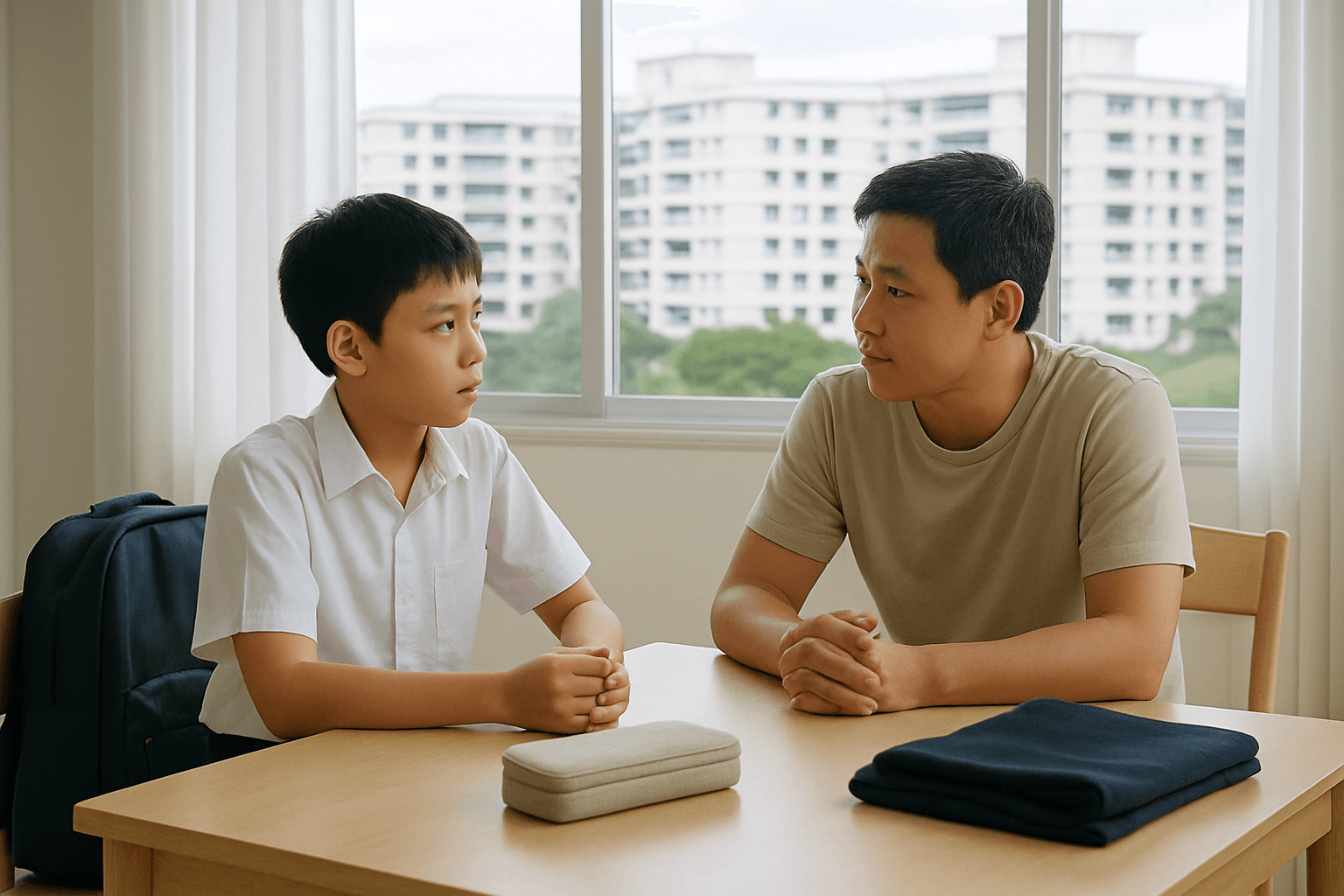
If your child leaves GEP after primary school, they do not lose their path forward. GEP is a primary-level programme, so after Primary 6 the focus shifts to the next secondary school environment, not to staying on a separate gifted track.
That is the key mindset change for parents. A label ends; your child's education does not. The useful questions are practical ones: what kind of school pace suits your child now, how much structure they need, and whether the next step will help them stay capable, curious, and emotionally steady.
What happens if a child leaves GEP after primary school?
If your child leaves GEP after Primary 6, they still continue on to secondary school. The real decision is which next school environment fits them best.
The short answer is simple: your child still moves on to secondary school. The official material describes GEP as a primary-level programme, so after Primary 6 the question is not how to stay inside GEP, but what kind of secondary school setting will suit your child next.
In practice, this means families shift from thinking about programme status to thinking about school fit. A child who was tired by constant stretch may do better in a steadier school culture. A child who still wants challenge may look for a secondary school with strong subject departments, a good academic environment, or room to pursue interests more deeply. Another child may simply want a fresh start where they are not measuring themselves against a very narrow peer group.
The main thing parents often miss is this: leaving GEP is a transition, not a dead end. Your child's pathway continues. What changes is the learning environment and the way you judge the next step. Instead of asking, "How do we keep the label?" ask, "Where will my child learn well every day?". For a broader overview, see Gifted Education Programme (GEP) in Singapore: A Parent's Guide.
Is your child happier in GEP school or his/her old school?
DS did not change school when he got into GEP. He wasn’t unhappy in his old class, although he was bored most of the time. (He wasn’t never the top student either, although he was in the top 5-10%). In the GEP, he feels academically stretched by new ideas and teaching formats, and definitely some pressure in keeping pace with assignments and deadlines. But he is still happy! I know someone else who had consistently been the top student in an all-girls’ school throughout lower primary levels, in
GEP kids and their parents
For the secondary section, GEP started off in RGS and RI in 1984. Later on, secondary GEP became available in ACSI, DHS, HCI, NYGH and VS. Secondary school GEP was phased off a few years ago in view of more GEP students opting for IP schools.
Leaving GEP is not a failure or a downgrade
Treat the move as a fit decision, not a verdict on your child's ability.
The most unhelpful framing is "dropping down". Many bright children leave a high-stretch programme because of fatigue, stress, social mismatch, or a simple change in fit. Fit matters more than status, and a healthier environment often leads to better long-term learning. For a broader overview, see GEP vs High Ability Programme in Singapore: What’s the Difference?.
All About GEP
It appears that many folks equate GEP to \"more stress\", \"longer school hours\", \"leaving friends\", \"giving up [fill-in yourself]\", etc. Having one child completing the GEP (P6) and another still in the programme (P4), I personally find GEP a more suitable learning experience for my children. They enjoy the challenges and find the programme more interesting than stressful. In fact, I have never heard them complain about \"stress\". They did not have to give up any of their hobbies. Both co
All About GEP
My eldest got into gEP in 2017 but we didn transfer him out. Reason was because we didn wan to stress him and location of school was so far from my house. Many would say it wad a waste as we had a good chance to get into elite school. However we preferred current school as it was just 5mins walk from home. By changing the school I must ensure I had someone to help me to fetch him if school had any activities after school hours. By not transferring him, he had more time to zzz, play and revise. N
Have More Questions?
Get personalized guidance on schools, tuition, enrichment and education pathways with AskVaiser.
Try AskVaiser for Free →What is GEP, and how is it different from the mainstream route?
GEP uses the same curriculum and exams as mainstream primary school, but with more depth, added learning experiences, and a faster, more open-ended classroom style.
GEP is a programme for academically gifted pupils at the primary level. As summarised in this TODAY report on MOE's explanation of GEP, pupils follow the regular curriculum and sit the same national examinations as mainstream pupils, but they also get more depth, additional subjects, and richer learning experiences such as project work and field trips.
For parents, the clearest differences are pace, depth, and classroom style. GEP lessons are often more discussion-based, more open-ended, and more demanding in how they expect children to think. Mainstream classes are not a weaker route. They usually serve a broader range of learners, so the pace and structure often feel more even and predictable.
This matters during transition. A child coming from GEP may be used to exploratory discussions, abstract questions, and tasks without one neat answer. In a mainstream setting, the child may initially notice more structure and a broader peer mix. For some children, that feels less stimulating. For others, it feels calmer and more manageable. MOE has also said in a parliamentary reply on the profile of GEP students that pupils from three in five primary schools had students in GEP each year over the past five years, which is a useful reminder that high-ability learners are spread across the system. If you want the wider background first, see our Gifted Education Programme (GEP) in Singapore: A Parent's Guide and What Is the Gifted Education Programme in Singapore?. For a broader overview, see GEP vs Mainstream Primary School: What Is Different?.
All About GEP
GEP Status in Secondary Levels 1.What happens after the primary GEP? After Primary 6, retention of the GEP status and promotion to the next level of gifted education is based on: ■performance in the GEP from Primary 4 to 6, including a pass in Social Studies ■attitude towards work and the enrichment programme ■performance at the PSLE 2.What percentage of the Primary 6 GEP pupils meets the criteria for retaining the GEP status? Each year approximately 99% of the pupils meet the criteria. For more
All About GEP
Well to me, GEP is a programme to further stretch and nurture the 'higher ability' kids. It is a programme to see how far can these group of students be stretched and of course those kids who are able to cope well will be those that are able to benefit from this programme the most. As at for Primary School Leaving Exam, it is to test how well P6 students have understand the school education syllabus and how well they have prepared for it.. ..nevertheless also the student academic ability..
How does GEP compare with the High Ability Programme?
GEP and the High Ability Programme are related to the same broad area, but they are not interchangeable. Compare the day-to-day learning experience, not just the programme name.
Parents often assume GEP and the High Ability Programme are one continuous pipeline, but that is too neat a picture. GEP is the older primary-level gifted programme that many families know. As MOE changes how it supports stronger learners, parents may hear newer terms and newer programme structures instead.
The practical takeaway is to compare the actual learning setup, not the label. MOE has said GEP is being discontinued and replaced with new programmes, as explained in this Straits Times overview of the transition. So when a school or programme sounds similar in name, ask what your child's week will actually look like. How fast do lessons move? How much independent work is expected? Is there close teacher support? Will your child be stretched in a healthy way or simply feel constantly on edge?
Do not shop by acronym. Shop by fit. If you want a fuller comparison, read GEP vs High Ability Programme in Singapore: What’s the Difference? and Why Singapore Is Moving from GEP to HAP. For a broader overview, see What Is the GEP Workload Like?.
All About GEP
Based on the following criteria: 1. Are you already in that GEP school; 2. Do you already have a sibling in that GEP school; 3. Distance from the GEP school; 4. The type of school the child was from (SAP, mission, or single-gender school) which is similar to the GEP school; The large majority gets their first choice. You yourself have to decide whether HCL is for your child. I think there are some schools that cannot drop HCL. Not sure whether this is still true. All the GEP schools now practice
All About GEP
The top 5 % of the 1st round GEP test goes into the 2nd round Out of those in the second round, about 1/5 will make it to be the selected GEP students, hence the GEP cohort is about 1% of the overall cohort I believe the schools have certain details of performance of the 1%, and the 4% who made the 2nd round but not selected. School will use the data to form the top class and second top class (mainstream). Some GEP schools have started the High Ability class which are formed by these 4% candidat
How does GEP selection work, and what do parents usually misunderstand?
Selection is meant to identify learning fit at a point in time, not to give a child a permanent label of superiority.
Under the current setup described in available reporting, Primary 3 pupils sit standardised tests involving English, Mathematics, and general abilities as part of GEP identification. MOE has also said the process is changing, with a new one-stage identification exercise for Primary 3 pupils planned from August 2026 and a stronger focus on aptitude for English and Mathematics rather than school-based curriculum performance, as summarised in this Straits Times explainer and reflected in the MOE FAQ.
What many parents misunderstand is what selection means. It is not a permanent verdict on who is "meant" to stay ahead forever. It is better understood as a point-in-time judgment about learning fit. A child may suit GEP at Primary 4 and still prefer a different environment by Primary 6. Another child may miss selection because they are anxious in test settings yet still do extremely well later in mainstream.
Parents also sometimes turn selection into a status story. That can distort later decisions. MOE's parliamentary reply noted that two in five GEP pupils lived in public housing flats, which is a useful reminder not to reduce the programme to a social badge. If you want the old identification process explained more clearly, our article on GEP Selection Process in Singapore: Stage 1 and Stage 2 Explained breaks it down.
All About GEP
Just curious… If a child is selected to join GEP but decides not to go for it. Later, the child does reasonably well in PSLE. Will the child be selected to join GEP again in secondary school or GEP is a once in a lifetime chance?
All About GEP
From what i understand from the briefing, Gep is not the stepping stone for DSA nor a ticket to post Gep classes. If the child qualifies for IP school (via DSA or PSLE scores), the child would hve to compete for post GEP secondary places with all mainstream students on its merit. Selection criteria via various IP schools differ. I believe that if Gep students can get through IP school n meet 70% benchmark during primary Gep, the IP schools would very likely to give them a place. Having said that
What are the practical differences in workload and curriculum during primary school?
Expect more depth, more independent thinking, and more enrichment, not simply more homework.
The main difference is depth, not just volume. GEP pupils still cover the core curriculum, but the work often goes further, asks for more independent thinking, and includes richer experiences such as projects, discussion, and field-based learning.
At home, parents do not always see this as simply more homework. What they often notice is a different kind of workload. A child may spend longer thinking through an open-ended task, revising a piece of writing several times, or getting stuck because there is no single tidy answer. Some children enjoy that kind of stretch. Others find it mentally draining even if they are capable of doing it.
This is one reason leaving GEP can make sense. A child who is consistently tired, perfectionistic, or unusually tense about schoolwork may not need less ability. They may need a better daily rhythm. If that sounds familiar, our guide on What Is the GEP Workload Like? may help you put words to what your child has been experiencing.
Bright kids not selected into GEP - please give ideas on how to engage them outside of school syllabus
Hi cutepandabear Do you have an elder gep child? My elder child was gep and younger one was not selected. She is very high ability thus teachers were surprised she was not selected. Teachers who taught both children feedback they have similar ability but very different learning attitude. From P4-6, I did not do anything extra or special for the younger one, I left her alone. The school would pick her for all sorts of enrichments and sent her for competitions, thankful to the school. Sometimes sh
How to coach and support your GEP child?
Agree. There's no need to coach them, leave that to the GEP teachers. Support is OK esp if your kid is the disorganised type, maybe teach them how to organise and manage time. Sit back and watch how they grow & mature during these 3 years.
What are the likely advantages of GEP, and what are its limits?
The main benefit is stronger challenge and peer fit; the main limit is that even very able children do not all thrive in the same high-stretch environment.
The strengths of GEP are clear. It can give a child stronger intellectual stretch, peers who think at a similar pace, and learning experiences that go beyond routine textbook coverage. For some pupils, that is exactly what keeps them engaged. They enjoy faster-moving lessons, richer questions, and classmates who like thinking deeply too.
Its limits matter just as much. A programme can be impressive on paper and still be a poor daily fit. Some children become more anxious when the comparison group gets narrower. Some tie their identity too tightly to being one of the "smart" students. Some are perfectly capable of the work but do not enjoy living in a constant high-stretch environment.
Bright and well is better than bright and burnt out. That is why leaving can be a sensible choice. A child who is exhausted may do better in a good mainstream school. A child who wants more time for sport, the arts, or simply rest may become more balanced and more confident once school life feels sustainable. If you are still weighing the trade-offs, see Is GEP Better Than Mainstream Primary School?, GEP vs Mainstream: What Is the Real Advantage?, and How Do I Know If GEP Is a Good Fit for My Child?.
All About GEP
I know a couple of kids who were selected but didn’t want to change schools, so they stayed on in their current school. Some of the reasons were as you have listed. The peaks of the program, could be more project work and exploration. Some kids are also really bored in their current curriculum. The child might also be selected for leadership positions in new school, make more friends.
All About GEP
If your child is selected for the Primary school GEP, I strongly recommended to go for it becos the selection process is very stringent n your child is deemed to be suitable for the program. The syllabus is also more challenging (initially its a bit tough but you will adapt to it) n it has a lot of advantages when you go up to Sec School. I also understand that Pri School GEP students have priority to enter top Sec Schools based on their GEP status via DSA.
Will my child cope in a mainstream secondary school after GEP?
Yes, many children cope well after GEP, especially when the secondary school is a good fit for their pace, confidence, and support needs.
Usually, yes. Many children move from GEP into mainstream secondary settings and adjust well, especially when the next school matches their pace, interests, and support needs.
Parents sometimes imagine this as a backward move, but that is the wrong mental model. A child who found GEP tiring may actually do better once the environment is broader and more balanced. Another child may still want challenge and do well in a strong secondary school without needing the old GEP label. Coping is not just about raw ability. Confidence, study habits, sleep, commute, social comfort, and how pressured the child feels day to day all matter.
A useful way to think about the first stretch of secondary school is this: watch function, not prestige. Is your child keeping up with routines? Are they calmer or more wound up? Do they still have energy for friends or CCAs? A child who is learning steadily and feels more emotionally settled is often in a better-fit school, even if the name sounds less impressive to adults.
GEP Student admit to Mainstream Secondary School
Such case is possible. The GEPers can opt to go to 'IP' track and also the 'O' track. These schools offer 'IP' track for GEPers : (1) Anglo-Chinese School (Independent) (2) Dunman High School (3) Raffles Instituition (4) Raffles Girls' School (Secondary) (5) Hwa Chong Institution (6) Nanyang Girls' High School (7) NUS High School of Maths & Science These schools offer 'O' track for GEPers : (1) Anglo-Chinese School (Independent) (2) Catholic High SChool (3) Methodist Girls' School (4) Singapore
Advice needed for GEP parent and child
My child is in GEP P6. They got in without enrichment. I would say that GEP is not only challenging in terms of the curriculum, but also needs a strong sense of ownership and independence from the kids. It is more difficult for parents to keep track of their work (many in loose worksheets) and catch them in time if they miss deadlines (so many of them). They also need to make sure the very nitty gritty stuff, like filing being done timely and neatly (necessary for revising). More challenging for
How can parents support a child who is leaving GEP?
Frame the move as a normal transition and a fit decision, then help your child name what was actually difficult rather than treating it as a judgment on ability.
Start with your language. If you describe the move as "dropping out" or "moving down", your child will hear that as a loss of worth. A steadier message works better: "We are choosing the environment where you can learn well." That keeps the focus on fit instead of status.
It also helps to ask more specific questions than "Are you okay?" Ask what felt hard. Was it the pace, the amount of independent work, the social pressure, the fear of comparison, or just constant tiredness? Children often say "I'm not good enough" when what they really mean is "I'm exhausted" or "I hate feeling under pressure all the time." Parents who hear the difference can respond more helpfully.
Practical support matters too. Prepare your child for a different peer mix and a different classroom rhythm in secondary school. Do not overpromise that everything will suddenly be easy; that can make normal adjustment feel like failure. Instead, tell your child that transitions take time and that the goal is not instant comfort but a better long-term fit. If your child keeps worrying about whether they have disappointed you, address that directly. That emotional question usually matters more than any programme label.
All about Transferring to Other Primary Schools
It is not surprising to hear that the top students in some primary schools are aiming to go to better-name schools. Nothing wrong with transferring school but must bear in mind that there is a 1% risk that the child will not fit into school culture. Usually, those who get the first few positions in class or are in the so called best class for high ability learners will tend to transfer out. With this cycle, the more famous primary schools will have no lack of top potential students to bring glor
All about Transferring to Other Primary Schools
For parents looking to transfer their children to another primary school, the best time (year) would be when the child is in P3. Call up the school you wish to transfer to and put in your child’s name in the waiting list. The transfer could take place for the next academic year of P4 where schools would have some movement of existing pupils due to being selected for GEP. (for non GEP primary schools) Of course, the academic results of your child matters alot for a successful transfer.
What should parents think about when choosing the next secondary school path?
Pick the school that your child can function well in every day, not the one that simply sounds strongest on paper.
Choose the school your child can live and learn well in every day. The official material here does not set out a special post-GEP secondary route, so your energy is usually better spent on ordinary but important school-choice questions. What will your child's day actually feel like there? How long is the commute? How much structure does the school provide? Is the culture intensely academic, broadly balanced, or somewhere in between?
Try to picture your real child, not your idealised child. A bright student who needs predictability, sleep, and close teacher support may struggle in a school that expects constant self-direction and long travel time. Another child may genuinely enjoy a more demanding environment and have the temperament to handle it well. Both can be making good choices.
The best parent questions are concrete. Can my child sustain this routine five days a week? Will they still have energy left to think clearly, join activities, and recover? Is this school likely to stretch them in a healthy way or keep them permanently on edge? Prestige can be emotionally loud, but it is a weak decision tool. The better school is usually the one where your child is most likely to stay curious, capable, and well.
All About GEP Schools
Which is better? Why? What do you think should be the selection criteria when choosing a GEP school? Appreciate your feedback
What goes into choosing a suitable Secondary School
Saw this being shared in the parents groupchats. https://www.thewackyduo.com/2022/11/how-to-choose-secondary-school-guide.html https://i.imgur.com/fDkJSy6.png\"> https://www.thewackyduo.com/2022/11/how-to-choose-secondary-school-guide.html It's time to choose a secondary school. Choosing a secondary school is a completely different process than primary school. One tends to choose a primary school based on distance or affiliation. Picking a secondary school is a different ball game. Grades play a
Have More Questions?
Get personalized guidance on schools, tuition, enrichment and education pathways with AskVaiser.
Try AskVaiser for Free →