
What to Do If Your Child Gets a Lower-Choice Primary School After P1 Registration
A practical Singapore parent guide to your next steps, realistic appeal thinking, and how to judge school fit beyond ranking.
If your child gets a lower-choice primary school after P1 registration, treat the posted school as the confirmed outcome first. Read the official next steps, check the commute and care arrangement in real life, and only explore appeal options if there is a concrete, practical reason. Then judge the school by daily fit, not by choice order alone.
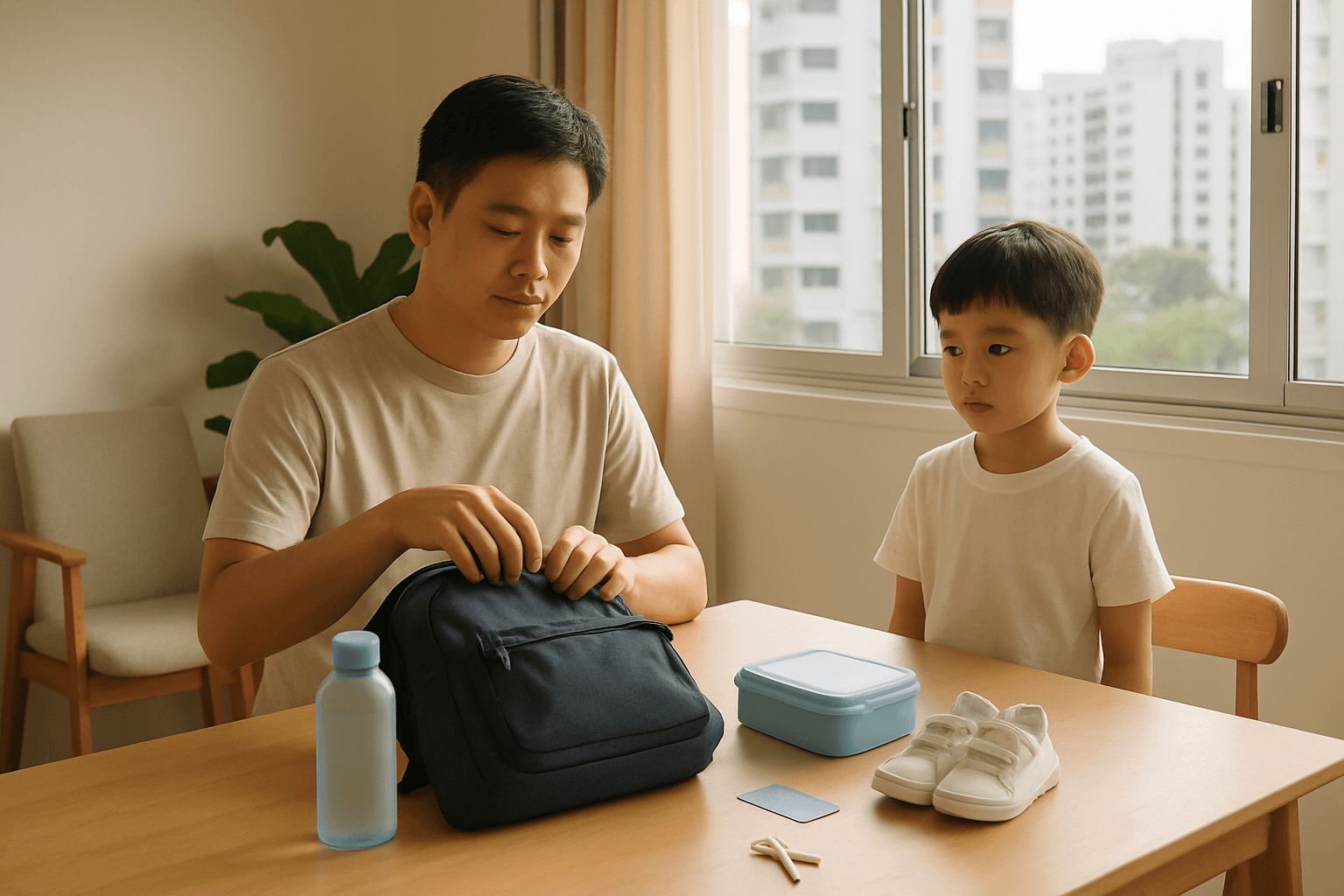
Getting a lower-choice school after P1 registration can feel disappointing, but the next step is usually practical, not dramatic. In most cases, your child has a school place. That means the immediate job is to confirm the official instructions, sort out the family logistics, and decide whether the school is simply not your first choice or a genuine fit problem.
This guide focuses on what parents can do now: how to respond in the first 24 hours, when an appeal is worth exploring, and how to judge school fit based on daily life instead of school ranking. The key mindset is simple: work from what is already confirmed before you build plans around what might change.
What should I do in the first 24 hours after my child is posted to a lower-choice school?
Start with the official instructions and your family logistics. The first day is for clarity, not panic.
- ✓Save the posting result and check the school name exactly as shown.
- ✓Read the MOE or school instructions that came with the posting result, especially any reporting, document, or response steps.
- ✓Put every deadline into your calendar immediately, with reminders if needed.
- ✓Check the actual commute, including morning traffic, transport changes, sibling drop-offs, and after-school care handovers.
- ✓If you are thinking about an appeal, keep planning around the posted school unless the official instructions for your case say otherwise.
Should I accept the posted primary school or wait and appeal?
Treat the posted school as the safe default while you decide whether you have a strong practical reason to explore an appeal.
For most families, the best starting point is certainty. The posted school is the place your child has actually secured. An appeal, where there is an official route for that year and case, is still an uncertain request. It is not a second round where your original ranking gets replayed.
A practical mistake many parents make is putting the rest of family life on hold as if the result is temporary. That usually creates more stress than the posting itself. A better approach is to keep the posted school as your working plan while you ask whether there is a real, concrete reason to explore appeal options.
For example, if the commute is still manageable and student care can work, many families decide to proceed and focus on settling in. If the posting creates a serious daily problem, such as a very long journey, fragile caregiver handovers, or a routine that is likely to wear down a six-year-old, then it may be worth asking about the official route more carefully.
Insight: a workable school every day is usually more valuable than a preferred school that remains only a possibility. For a broader overview, see Primary 1 Registration in Singapore: How It Works, Balloting Risk, and How to Choose a Realistic School Plan.
Appeal Secondary One Posting
Hi, would like to know if a child is selected for the 1st choice school with higher COP, is it still possible to appeal to change to another school with lower COP? Both schools are listed in the 6 choices.
Appeal Secondary One Posting
Don't need to be one of your choices. But the school may ask you the reason you did not select it (or put it as X choice). https://beta.moe.gov.sg/secondary/s1-posting/results/appeal-for-school-transfer/ Note: If you are seeking a transfer due to other reasons, you may approach the school of choice directly. It’s important to keep the following in mind: Your child’s PSLE aggregate score should meet the school’s cut-off point of the posting year. Your child should meet the school’s admission crit
Have More Questions?
Get personalized guidance on schools, tuition, enrichment and education pathways with AskVaiser.
Try AskVaiser for Free →What parents often misunderstand about a lower-choice posting
Not first choice does not mean poor quality, and an appeal is not something you should build your whole plan around.
A lower-choice school is not automatically a poor school. It simply means your higher-ranked options did not work out in that exercise.
The real question is not "Was this our first choice?" but "Can this school work well for our child every day?" Also, do not treat an appeal as a backup plan you can count on. For a broader overview, see Primary 1 Registration Unsuccessful: What Happens If You Do Not Get Your Preferred School.
Choosing Secondary school
Hi, Wonder if anyone knows what happens in this Secondary School selection scenario : If there are 10 places left in School A and 20 pupils with EXACTLY the same PSLE score apply, how does MOE decide which 10 to take into the school. Does it matter in this case whether the child had put School A as the first choice? This impacts what schools to put as 1st and 2nd choice - whether the common advise of putting the dream school which is just out of range of the child’s mark is a wise thing to do. P
If you have a child in lower primary
Dear parents, I just stumbled on to this forum! My apologies if I seem to intrude. What I will post from today are just my opinion and nothing more! Probably i'll find time to try to post some things that may be of use to some of you. Just disregard if you are not interested. Here goes. If you child has just gone to p1 from 2011, you may want to take note of some of the following. 1. P1 and P2 are foundation years for your child, so it is imperative that you pay close attention to your darlings'
How realistic is a P1 appeal in Singapore?
Do not treat a P1 appeal as a likely backup plan. Plan as if the posted school is the school your child will attend unless official guidance for your case clearly says otherwise.
Usually, less realistic than parents hope. The source material here does not show a broad MOE promise that every family can appeal a P1 posting and get another shot at a preferred school. MOE’s published guidance focuses more on vacancy realities, informed school choice, and the fact that children who do not secure their preferred options may be posted to schools with available places.
That is why the safest planning assumption is simple: the posted school may remain the final outcome. If you do ask about appeal possibilities, separate disappointment from a concrete problem. "We liked another school more" is very different from "our current posting creates an unmanageable journey and student care arrangement." Keep your reasons factual, ask early if there is an official route, and avoid making transport or childcare plans that only work if a change happens.
MOE’s P1 registration guidance encourages parents to make informed choices using vacancy realities and tools such as SchoolFinder. Its FAQ on vacancies and informed school choice points parents back to the same practical mindset. That is the right frame now too: plan around what is confirmed, not what might still change. For a broader overview, see Primary 1 Registration: Should You Pick a Popular Dream School or a Safer Nearby School?.
Share with us your kid's P1 registration experience
First thing to do after being balloted out, is to put your child's name under the school's wait list. After then, I've wrote in to MOE, called/met the school's Principal for discussion. Telling them all my problems and how the registration system had affected us (because I have only 1 school within 2km and NO school within 1km). With this factual, MOE has verified and consulted the school. My son was then placed on the highest priority in the waiting list .. and fortunately by early Nov, we were
2011 PSLE - Appeal for Sec School
Sorry to hear of the terrible experience!!! Are you still waiting for appeal results from any school? If not successful in any appeal, take heart that your dd probably might do really well in the school she's posted to. My ds' classmate was with him in an IP school in Sec 1 last year, but hated the programme. He applied to be transferred to a neighbourhood school for Sec 2 and became the top student. Our ds' school principal also said that of his own son who went to a neighbourhood school(and th
Why do some parents still accept a lower-choice school?
Many families keep the posted school because the routine is more sustainable, the commute is kinder, and the child may actually settle better there.
Because daily fit often matters more than ranking. Once the posting result is out, many families realise that the lower-choice school may still make weekday life easier. A shorter trip can mean less rushing, fewer transport changes, and a child who reaches school calmer and less tired. A school closer to home can also make student care, enrichment, and sibling pick-up much simpler.
This matters most in families where mornings already run tight. A school that lets one parent do drop-off without a major detour may be more sustainable than a more popular school that looks better on paper but creates daily strain. The same goes for children who find transitions hard. A simpler route and steadier routine can matter more than a stronger school label.
Parents often discover this only after the result. If you are still weighing prestige against practicality, our guides on how to choose a realistic school plan and popular primary school vs neighbourhood school can help you reframe the decision.
How your kid's performance in P1 if attended gd Pre-sch?
Dear Members Can anyone of you feedback how your kid/kids doing in P1 if they attended pre-school as follows: 1)\tPat school 2)\tMontessori 3)\tMy First School or Normal child care centre 4)\tHalf day in CC or in Kindergartens I have heard so much about how good /strong or poor academically the pre -school can be. But ultimately are kids really perform better when go to Pri i.e. (e.g. with Montessori they do have their special techniqe in their learning path, half day CC or Kindergarten as they
Top Primary school?
Yup... you are absolutely right about what we want as parents... that all schools are equal in standards and procedures, etc. But in practice, just as everyone is not born equal, schools are also not equal, even if they are all teaching the same curriculum. Simple reason - teachers are all different. And teachers are the most critical element in a primary school. I was lucky to have a great P1 teacher during my time - she made an ENORMOUS difference in how I turned out - from being last the kind
What school-fit questions should I ask beyond popularity and reputation?
Judge the school by daily life: commute, handovers, after-school care, and whether the routine suits your child’s temperament and support needs.
Ask questions about your child’s actual day, not the school’s label. How long is the journey from your front door to the school gate at real morning timing, not just on a map estimate? Will your child need multiple bus or MRT changes? If a grandparent, helper, or student care arrangement is part of the plan, is that handover stable enough to last the whole year?
Then look at your child, not other parents’ rankings. If your child is shy, easily tired, slow to warm up, or likely to need extra help with reading or routines, a school that leaves more time and emotional bandwidth at home may be the better fit. A child who gets home earlier, eats properly, and still has time for rest or reading support may do better than a child who spends that same time commuting.
A useful parent test is this: can we picture this school day working not just on a good day, but on an ordinary weekday when everyone is rushed? If the answer is yes, the school may fit better than you first thought. For a broader overview, see Primary 1 Registration Distance Priority: How Home-School Distance Works.
What goes into choosing a suitable Secondary School
Saw this being shared in the parents groupchats. https://www.thewackyduo.com/2022/11/how-to-choose-secondary-school-guide.html https://i.imgur.com/fDkJSy6.png\"> https://www.thewackyduo.com/2022/11/how-to-choose-secondary-school-guide.html It's time to choose a secondary school. Choosing a secondary school is a completely different process than primary school. One tends to choose a primary school based on distance or affiliation. Picking a secondary school is a different ball game. Grades play a
Top Primary school?
Honestly I am not sure if there is such a thing as a top primary school based on the efforts of the school. All schools have the same mission set by MOE to deliver the same thing. If you hear from them, even teachers they have no control, it's all from MOE. So what then would you consider as top primary school? It definitely cannot be results alone because results are typically parents-driven in today's context in some schools. Every school has the best cream of the crop and the worst performers
When is a lower-choice school actually a better fit than a higher-choice one?
It is a better fit when it gives your child a calmer, more manageable school day, even if it was not the option you ranked highest.
A lower-choice school can be the better fit when it improves the child’s everyday experience. A closer school may reduce fatigue, shorten mornings, and make it easier for your child to start the day calm instead of already tired. That matters more than many parents expect in Primary 1, when children are still adjusting to a longer, more structured routine.
It can also be the better fit for the household as a whole. If one school requires a long detour, depends on a fragile pick-up arrangement, or creates clashes with sibling schedules, the higher-ranked option may only be better in theory. By contrast, a lower-choice school that fits the family’s week can give the child a steadier start.
This is also where temperament matters. A child who is sensitive to change may do better in a situation that is logistically simple and emotionally less intense. If that is the trade-off you are wrestling with, our guide on dream school versus safer nearby school can help you think it through.
Top Primary school?
in my opinion, I do not believe in ranking primary schools as these are totally nonsense… Primary school is an early stage of education for young kids especially from P1-P3. We should not emphasis too much on academic results. By ranking schools, it put pressure to the principals to emphasis on results & thus favours better students than the average students. This will have negative effect on the average students… Education have to be fair to ALL students… this is just my opinion and i hope pare
Top Primary school?
for me, there is only one school within 1km from my place...it is a good one, but...i don't have any girls. i will need to ballot for a place for one sch within 1-2km from my place (next nearest school). if *touch wood*, balloting is unsuccessful, i will go for the next nearest neighbourhood school. for this, i am wary that this school focus its resources on the 'diamond' class and streaming starts as early as end of P1! getting him into such class will be my next best bet. so neighbourhood scho
What should I do if I am unhappy but decide to keep the posted school?
Help your child settle as if this is fully their school, and keep your own disappointment from becoming their first impression of it.
Your main job is to help your child start cleanly. It is fine for you to feel disappointed, but try not to let the child hear the school described as a loss or a second-best outcome. A child who absorbs that message may enter school expecting something to go wrong. A calmer message works better: this is your school, we are getting ready for it, and we will help you settle in.
Once you decide to keep the posting, shift your energy from outcome to preparation. Test the route, settle drop-off and pick-up, label belongings, and talk through what a school day will feel like. In the first few weeks, watch practical signs rather than chasing perfect feelings. Is your child sleeping reasonably well, coping with mornings, sharing at least a little about school, and recovering fine after the commute? Those are usually more useful indicators than whether you still wish another result had happened.
If you want a practical prep aid, some parents also use this non-official starting primary school checklist to organise routines and supplies. The goal is not forced excitement. It is steadiness.
All about Transferring to Other Primary Schools
It is not surprising to hear that the top students in some primary schools are aiming to go to better-name schools. Nothing wrong with transferring school but must bear in mind that there is a 1% risk that the child will not fit into school culture. Usually, those who get the first few positions in class or are in the so called best class for high ability learners will tend to transfer out. With this cycle, the more famous primary schools will have no lack of top potential students to bring glor
All about Transferring to Other Primary Schools
I suppose before august, u will still be living in Punggol? Perhaps you still need some time to renovate, move/pack or settle down. Think it’s easier to transfer to TPY schools when your new premise is ready and settled.. perhaps register your child where your p2 is first and apply for transfer later. Better to start in a fresh year, say p3 and p1. If you have a caregiver for your p1 near TPY, u can try register p1 under that address...
What are the red flags that the school may not be a good fit?
Red flags are repeated daily problems such as an exhausting commute, failing logistics, or persistent child distress, not simply regret about missing a higher-choice school.
Look for problems that are serious and repeated, not just regret about the posting result. A real red flag might be a commute so long or fragmented that your child is likely to start each day exhausted. It might be a caregiver arrangement that already looks fragile before school begins, such as handovers that no adult can realistically sustain. It could also involve a child with clear emotional, attention, learning, or medical needs where the family already knows the routine will be unusually hard to manage.
After school starts, patterns matter more than isolated bad days. Ordinary adjustment can include nerves, quietness, tired afternoons, or some resistance in the first phase. Stronger concern starts when distress stays intense, the commute clearly drains the child week after week, or the family’s logistics are breaking down almost every day. For example, one difficult morning is normal. Repeated meltdowns linked to an exhausting journey or a handover plan that keeps failing is a different picture.
A useful distinction is this: a bruised preference hurts feelings, but a bad fit disrupts the child’s functioning or the family’s ability to cope.
How your kid's performance in P1 if attended gd Pre-sch?
My son is in P5 next year too. He didn't attend Pat School House, Montessori, CC or PAP. Hubby & I didn't really know how to prepare him for P1. However, we did get those EPH K2 assessment books to coach him for English & Maths. He attended group tuition conducted by his K2 Chinese teacher. Daughter just finished K2 this year...going to P1 next. She attended the same kindy as son. 听写 and Spelling words were very much tougher in Term 3 and daughter struggled. :siao:...compared to the time son was
What goes into choosing a suitable Secondary School
Hi there, Recently a relative asked me how I choosed my kid’s Secondary School and I kind of got a shock, I had no answer. It was simply just based on the results. My relative came then with a list of important factors that he thought would be helpful to help his kid cope with the stresses of school. I thought that I would help him make this post to help him make a better decision (the kid will be going into the Secondary School in next year). So here goes, considering grades what else should he
What should I avoid doing after getting a lower-choice school?
Avoid panic, social comparison, and plans built on hearsay. Focus on confirmed information and whether the school is genuinely workable for your child.
Avoid turning disappointment into panic. Parents often make the situation harder by comparing constantly with other families, assuming prestige equals fit, or speaking about the posted school as if the child has been shortchanged. That can cloud your own judgment and shape the child’s expectations before school even starts.
It is also worth avoiding hearsay-based planning. Chat groups, friends, and old forum posts may talk about appeal outcomes or school reputation, but they are not a substitute for current official guidance. Do not build transport, childcare, or later transfer plans around the assumption that changing schools will be easy. Work from what is confirmed now, and only explore next steps further if there is a concrete reason to do so.
If you want to ground yourself again in how posting works and why vacancy realities matter, read our full P1 registration guide, what happens if you do not get your preferred school, and how home-school distance affects P1 registration. Clear information usually reduces stress faster than speculation does.
All About Preparing For Primary One
Starting primary school? This is a big milestone. Do enjoy the journey with your child! :rahrah: https://www.straitstimes.com/singapore/education/the-st-guide-to-preparing-your-child-for-primary-1 Parents often confuse being ready for school with being academically capable in skills like reading and counting. Instead of focusing solely on academic progress, it is more important to make learning an enjoyable process, and help your child have a swift and happier adjustment to primary school. Here
How to Prepare For Primary School
You have to start teaching your child one to one and start from scratch. This is crucial year to prepare your child. Your child MUST be able to recognise high frequency words, can read, can spell some simple words, comprehend questions and answer logically, write neatly etc. please start preparing now before he goes P1. Share a personal experience with you. My friend has a son who enrolled in a new kindergarten in K2 this year. The boy's new teacher was shocked to discover that he could not reco
Have More Questions?
Get personalized guidance on schools, tuition, enrichment and education pathways with AskVaiser.
Try AskVaiser for Free →