
Can a Step-Parent Register a Child for Primary 1 in Singapore?
A step-parent can help with Primary 1 registration, but they are usually not the default adult MOE recognises unless their authority is clear. Here is how blended families can prepare.
A step-parent is not automatically the adult MOE recognises for Primary 1 registration in Singapore. The safest approach is for the legal parent or legal guardian to take the lead, or for the family to be ready with documents showing why the step-parent is authorised to act.
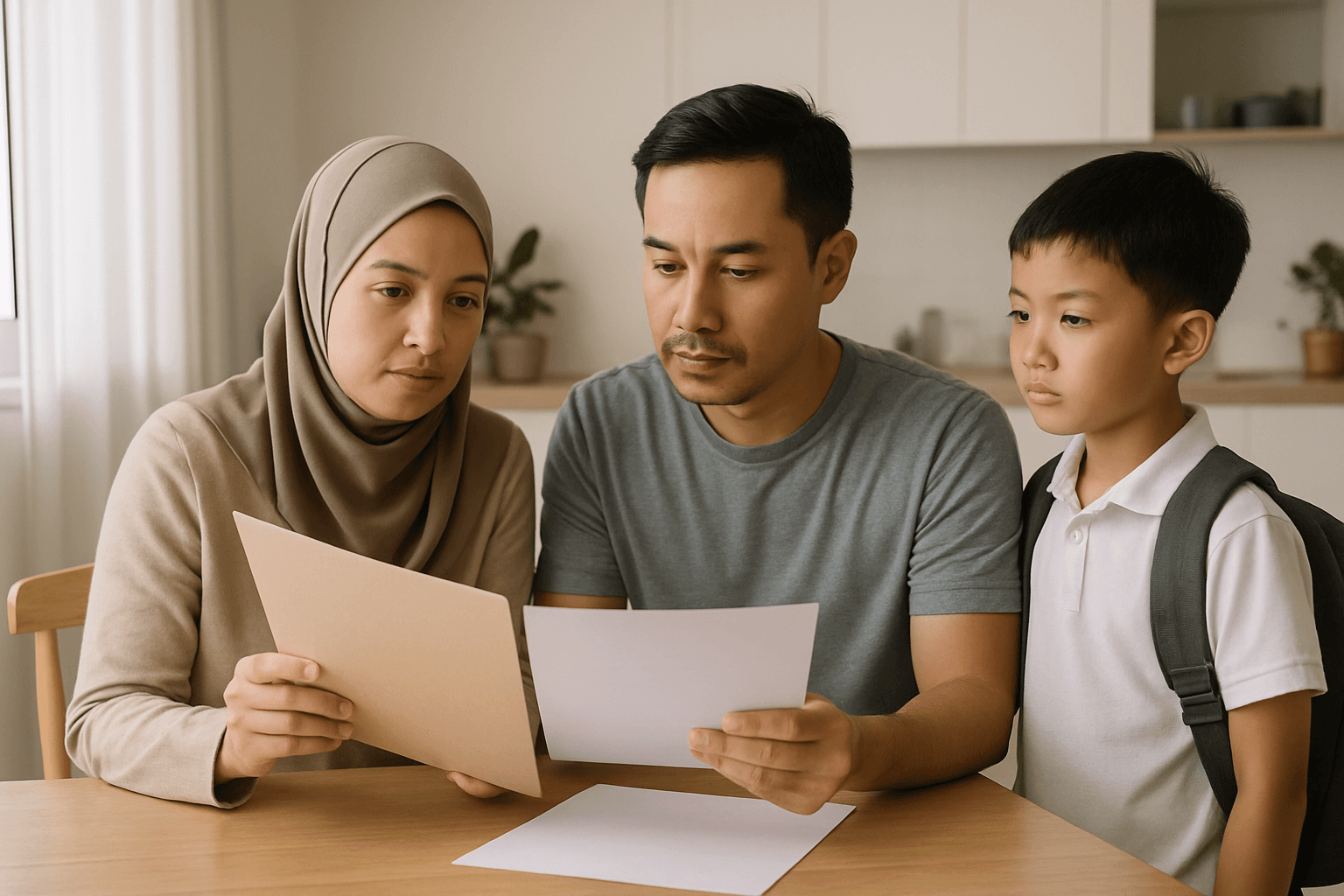
The practical answer is usually no, not automatically. A step-parent may be involved in Primary 1 registration, but MOE and the school are unlikely to treat that adult as the recognised parent just because they handle the child’s daily care. In most cases, registration follows the legal parent, legal guardian, or another adult whose authority is properly documented. If your family is blended, remarried, divorced, separated, or guardian-led, sort this out before the registration window opens so the process does not stall over avoidable paperwork.
Can a step-parent register a child for Primary 1 in Singapore?
Usually not by default. A step-parent can help, but Primary 1 registration normally follows the legal parent, guardian, or another adult whose authority can be shown.
Usually not by default. A step-parent can help with the process, but MOE does not publicly list step-parents as an automatic category for Primary 1 registration just because they care for the child day to day. In practice, registration is usually handled by the legal parent, legal guardian, or another adult whose authority is clear in the records.
MOE’s Primary 1 registration guidance says registration is done through the P1 Registration Portal during the relevant phase, and schools may contact families if they need clarification or extra documents. That is where many parents get caught out. The issue is often not whether the step-parent is genuinely involved, but whether the school can verify that the adult has authority to act for the child.
A simple way to think about it is this: caregiving and registration authority are not the same thing. If the step-parent is not the legal parent or legal guardian, the safest plan is usually for the legal parent to submit the registration while the step-parent helps with preparation and follow-up. If you want the full process first, start with our Primary 1 Registration in Singapore guide.
Give citizens priority in Primary 1 registration
Ha.ha. maybe next time the P1 registration phase can propose like that, just a suggestion: Phase 1 – Existing siblings in the Primary school except PR siblings. Phase 2A(1) – No Change Phase 2A (2) – No Change Phase 2B – No change Phase 2C – Singapore Citizenship Only. Phase 2C Supplementary - Singapore Citizenship Only Phase 3A – Permanent Residents Phase 3A Supplementary - Permanent Residents Phase 4 – Non Citizen.
Preparing Your Child for Primary School:Parent Seminar - MOE
Preparing Your Child for Primary School: A Parent Seminar by MOE Starting primary school is a big step in your child's life. To help you better understand primary school programmes and enable you to make key education decisions, the Ministry of Education will be conducting a seminar on Primary School Education. At the seminar, parents can look forward to sharing sessions by the school principal and a parent volunteer, as well as view the various programmes our primary schools provide. The Primar
Who is usually recognised for Primary 1 registration: parent, guardian, or caregiver?
MOE registration is usually about legal responsibility, not simply who looks after the child every day.
For registration, the key question is usually who has legal responsibility, not who manages the child’s daily routine. A biological or adoptive parent is often the clearest case. A legal guardian may also be able to act if that status is formally recognised. A caregiver such as a step-parent, grandparent, or relative may be central to the child’s life but still not be treated as the decision-maker unless the records support that role.
This matters most when the family structure is not straightforward. MOE’s guidance for divorced or separated parents shows that care and control arrangements can affect school matters. That is a strong signal that schools look beyond household labels and focus on who is legally entitled to act.
A useful shortcut for parents is this: the adult doing the school runs is not always the adult the school can rely on for registration decisions. If your family has remarriage, separation, or guardianship arrangements, assume the school may want to understand both the legal setup and the day-to-day living arrangement. For a broader overview, see Primary 1 Registration Documents Checklist: What Singapore Parents Commonly Prepare.
All About Preparing For Primary One
Starting primary school? This is a big milestone. Do enjoy the journey with your child! :rahrah: https://www.straitstimes.com/singapore/education/the-st-guide-to-preparing-your-child-for-primary-1 Parents often confuse being ready for school with being academically capable in skills like reading and counting. Instead of focusing solely on academic progress, it is more important to make learning an enjoyable process, and help your child have a swift and happier adjustment to primary school. Here
Share with us your kid's P1 registration experience
Hi parents, I've gone through 2 rounds of registration for my kids - Phase 2B 5 years ago (2006) and Phase 2A2 (2010). For son's P1 registration at Pei Hwa then, there was just 1 stop - ie to submit documents for verification. No guarantee at Phase 2B, just a high chance of getting in. Today's registration for daughter is slightly longer - 3 'stops'. Station 1 is at ground floor where a lady will make sure we are eligible for Phase 2A2. If so, then we proceed to the hall on 2nd floor. Station 2
Have More Questions?
Get personalized guidance on schools, tuition, enrichment and education pathways with AskVaiser.
Try AskVaiser for Free →When can a step-parent help with registration in practice?
A step-parent can usually help when the legal parent still leads the registration, or when the step-parent’s authority is clearly documented.
A step-parent can often help when the legal parent remains the recognised person behind the registration. For example, the child’s mother may submit the form through the portal while the step-father gathers the birth certificate, checks the address documents, and speaks to the school about logistics. In that setup, the step-parent is supporting the process rather than replacing the legal parent’s role.
Another common scenario is when the step-parent attends together with the legal parent, or the school already knows the family arrangement from preschool or childcare records. That can make communication smoother, but it still does not mean the step-parent automatically becomes the recognised registration adult if the school needs a formal confirmation.
The clearest case is when the step-parent also has a recognised legal role, or when the family has documents that explain why that adult can act for the child. Then the authority is not assumed; it is shown.
The safest default is simple: let the legal parent lead and let the step-parent support, unless you already know the step-parent’s authority is properly documented. Most registration friction starts when families assume the school will treat a step-parent exactly like a parent without needing any explanation. For a broader overview, see Primary 1 Registration Phases in Singapore: What Each Phase Means for Your Chances.
All About Preparing For Primary One
Dear parents, I hope parents could share your experience regarding the preparation for primary school and time schedule spend with your kids everyday. I have a son of 6 this year going to P1 next year. I would like to find out with parents things that you are doing with your child prior going P1, cos I do not want to react too kan-jiong or too relax in front of my child. I am particularly concerned about the 3 main subjects being taught in P1 and wonder should I expect him to be able to do the a
All About Preparing For Primary One
hi, for parents with kids in pre-nursery / nursery, these two initial years are “honeymoon” years, usually quite relaxed. But for parents with kids in k1, k2, where you are stepping on the final last lap accelerator for more oil to speed up momentum, help yr child prepare Pri 1, it is always good to attend - one year ahead in advance, the parents’ briefing on detailed Pri 1 curriculum. do not wait until the year when your child has started Pri 1, then come to attend such parents’ briefing. why ?
What if my child is mainly cared for by a single parent or step-parent?
What matters most is who has legal authority to act for the child, not only who cares for the child most often at home.
Start with legal authority, not household visibility. In many single-parent families, the answer is straightforward because the single parent is also the legal parent on record and can handle registration directly. Where parents are divorced or separated, the practical answer may depend on who has custody, care and control, or the recognised authority to deal with school matters.
In remarried households, the step-parent may be the adult doing most of the school communication, forms, and transport. That is common, but it does not settle the registration question on its own. The family should still work out whose details should be used, whether any other parent’s involvement matters, and whether court or guardianship papers may be relevant.
Guardian-led households are similar. A guardian may be the child’s main adult at home, but the school will usually need that role to be clearly supported by records rather than inferred from living arrangements.
One thing parents should not overlook is timing. If your child is eligible for this year’s exercise, do not wait and hope the family paperwork issue can be sorted later. Our guide on who is eligible for Primary 1 registration explains why families should be ready within the correct registration year. For a broader overview, see Which Home Address Counts for Primary 1 Registration in Singapore?.
All About Preparing For Primary One
the standard of kindergarten and child care centres in SG varies from one another. Some kindy prepare kids well for P1, but other kindy not sufficient. The standard varies. moreover, P1 standard is getting higher and higher, each year. that is why some parents still prefer to send kids for P1 Prep course. if you think you come from a kindy where then standard is reasonable, then ok.
All About Preparing For Primary One
You should have seen the way the mum drilled the poor child, depriving him of food till he completed his revision. Obviously, an uninterested child will only retain the information into his short term memory. Preparing a child for primary 1 is more than just the academics. There are several areas that parents have to take note of. Does your child know how to clean up after himself if he does a big business in the toilet? Does your child know how to wash his hands correctly and rinsed his hands p
What documents should families prepare if the legal parent is not attending?
Prepare identity documents and proof of authority, plus anything that helps the school see who can act for the child.
- ✓These are common examples parents prepare, not a guaranteed official list.
- ✓The child’s birth certificate or other identity document relevant to the registration.
- ✓The attending adult’s NRIC or identification document.
- ✓The legal parent’s or legal guardian’s details if that person is not the one attending or speaking to the school.
- ✓Any custody, care-and-control, or guardianship papers that help explain who can act for the child.
- ✓A short authorisation letter or written consent from the legal parent if the step-parent is helping on that parent’s behalf.
- ✓Any email, portal message, or school correspondence asking for specific supporting documents.
- ✓Any additional records the school tells your family to prepare after reviewing the case.
What usually goes wrong when the registration adult is not the legal parent on record?
The main risk is delay while the school checks identity and authority, not necessarily a refusal on the spot.
The biggest risk is usually delay, not an immediate rejection. If the school sees one parent’s details in the system but another adult appears without a clear explanation, staff may pause to verify who that adult is and whether they can act for the child. That can lead to a request for extra documents, a follow-up call to the legal parent, or a request to resubmit information more clearly.
A common friction point is when the child and step-parent have different surnames or the family arrangement is not obvious from the first set of records. Another is when the family assumes the step-parent can sign or confirm everything because that adult manages daily care. Schools do not usually work from household assumptions; they work from records they can verify.
The practical consequence is often simple but inconvenient: more emails, more clarification, or another trip later. This is why many parents find it easier to prepare a small file of supporting documents in advance. If you want a broader document guide, our Primary 1 registration documents checklist is a useful next step. For a broader overview, see Who Is Eligible for Primary 1 Registration in Singapore?.
Give citizens priority in Primary 1 registration
http://www.guidemesingapore.com/permanent-residence/singapore-pr-pros-and-cons.htm Quote from above : If your children are school-aged, they are high on the priority list, behind citizens, to enter public schools of your own choosing. Non PRs are at the bottom of the list and are often left with no choice when it comes to schools.
Give citizens priority in Primary 1 registration
BTW I wrote ths to ST but it never got posted: In her letter, Mrs Agawal have hit the gist of why PR students should not be given equal chance for Primary 1 registration. She says that if her children were unable to secure a place in a good public school, why would her family to stay? A Singpore citizen will never be able to say that. We are here to stay and as such deserve the right to choose before a permanent resident. My son, a 4th generation Singaporean, was not able to secure a place in a
How should parents confirm the right person to register before registration day?
Confirm early with the school or MOE if the adult handling registration is not the legal parent on record.
Start earlier than you think you need to. First, confirm your child’s registration year and phase through MOE’s how to register page and our guides to Primary 1 registration phases and who is eligible for Primary 1 registration. That tells you how much time you have and avoids last-minute confusion.
Next, identify which adult’s details are likely to be treated as the key parent or guardian details for the child. If the family situation is simple, that may be obvious. If it is not, contact the school early and explain the arrangement plainly: who the child lives with, who the legal parent is, whether a step-parent will be involved, and whether there are any custody, care-and-control, or guardianship documents.
The most useful question is usually not, “Can my step-parent come?” It is, “If my child’s step-parent is the one handling the practical side, what would you need to see from us?” That usually gets a clearer answer faster. Even if the school reviews the case individually, early clarification is much better than discovering a documentation gap during the registration window.
Seeking advice for P1 registration for daughter and son
Hi, just checking 2027 to enter P1, hence P1 registration for my girl is 2026, is it 2025 I should register for Parent Volunteer?
Share with us your kid's P1 registration experience
Hi Spies, Er...did you know your son is due for P1 registration ? In any case, you are lucky to have a hubby to attend to this VERY important matter. Congrats, your child confirmed a place.
What should divorced, remarried, or blended families pay attention to?
Check custody, care-and-control, consent, and address details early, especially if a step-parent is the adult managing school matters.
These families should pay close attention to custody, care-and-control, and consent arrangements before registration starts. The adult living with the child is not always the adult who should submit the registration or answer the school’s questions. MOE signals this clearly by maintaining separate guidance for divorced or separated parents.
For example, a child may live with the mother and step-father, but the mother is still the person who should take the lead because the step-father’s daily involvement does not replace parent status. In another family, the father may have care and control while the step-mother manages the child’s school life day to day. That can work smoothly only if the school can clearly see how the adults fit into the arrangement.
Blended families should also be careful about address assumptions. If more than one household is involved, do not assume the step-parent’s address or the home where the child spends most nights is automatically the address used for priority. If that is relevant to your situation, read Which Home Address Counts for Primary 1 Registration in Singapore? and Primary 1 Registration After Moving House: Should You Use Your Old or New Address?.
What many parents overlook is adult alignment. Before registration opens, make sure everyone involved agrees on who is submitting, what address is being used, and what documents explain the family arrangement if the school asks.
All About Preparing For Primary One
Was surfing around on understanding if I am well prepared on behalf of my DD1 for Primary 1 Chanced upon a few websites, thought to share though it could have been mentioned before Tips For Parents ◦Work on independent reading skills. ◦Set up a study area and regular study times that are not interrupted. ◦Learn to follow a routine with a lot of sleep and early mornings. ◦Practice organisation and planning by packing a daily bag with essentials for the day. ◦Talk about social skills and communica
All About Preparing For Primary One
My girl is in P1 this year. Based on my experience, I think you are doing a fine job so far... As long as kids go to pre school, they are more or less ready for P1 because topics cover in first semester are very similar to what they will be learning in K2... I did buy some assessment books for my girl when she was in K2 because she had so much free time after school. Whether to draw up a time table is subjective... it definitely incultivate good habits which may be ideal when he starts P1. Prepa
Is a step-parent the same as a legal guardian for MOE registration?
No. A step-parent may be deeply involved in the child’s care, but that does not automatically make them the child’s legal guardian for registration.
No. Being a step-parent does not automatically make someone a legal guardian for MOE registration.
A step-parent may live with the child, pay for the child’s expenses, and handle school routines every day, but that is different from having a formally recognised legal role. If the step-parent will be the one speaking to the school or helping with registration, the safer approach is to verify the setup early and prepare documents that explain why the step-parent can act if needed. When families are unsure, it is usually best for the legal parent or legal guardian to take the lead and let the step-parent support the process.
All About Preparing For Primary One
according to MOE, no need for P1 preparatory class, they stress many times, and they said all kindergarten should be able to prepare the child to primary 1… but parents are too kiasu they prepare them for P1… by the time these kids go to P1, they know most things so those din go to such classes, felt left out and their parents also will send them to classes… never ending… sigh…
Share with us your kid's P1 registration experience
First thing to do after being balloted out, is to put your child's name under the school's wait list. After then, I've wrote in to MOE, called/met the school's Principal for discussion. Telling them all my problems and how the registration system had affected us (because I have only 1 school within 2km and NO school within 1km). With this factual, MOE has verified and consulted the school. My son was then placed on the highest priority in the waiting list .. and fortunately by early Nov, we were
Have More Questions?
Get personalized guidance on schools, tuition, enrichment and education pathways with AskVaiser.
Try AskVaiser for Free →