
Can You Use Your Grandparents' Address for Primary 1 Registration in Singapore?
What MOE looks at, when a grandparent's home may count, and why using an address on paper only is risky.
You can use a grandparent's address for Primary 1 registration only if it reflects your child's actual living arrangement. MOE verifies declared addresses under the proximity policy, so a paper-only address strategy is risky. If your child does not genuinely live there, plan around your real home address instead.
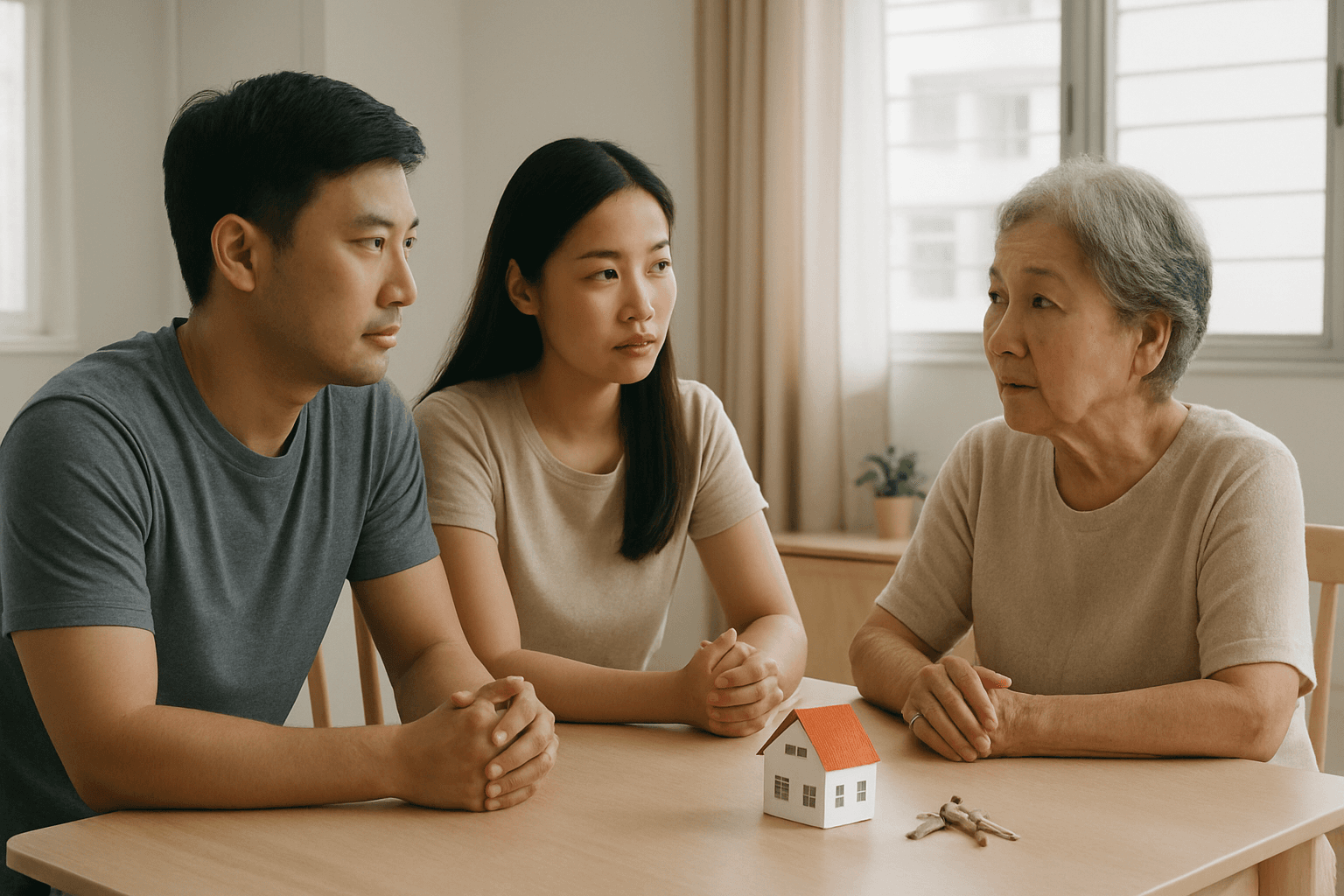
The short answer is yes, but only if your child genuinely lives there. For Primary 1 registration, the key question is not whether the address belongs to a grandparent. It is whether that home is truly your child's main residence. If the address is being used mainly to improve your chances at a popular school, that is where the risk starts.
Can you use your grandparents' address for Primary 1 registration?
Yes, but only if the grandparent's home is genuinely your child's home. It is not a safe shortcut if the child does not really live there.
Yes, but only if it is your child's real home. A grandparent's address is not automatically disallowed just because it belongs to a relative, but it should not be used as a paper-only workaround to improve school chances.
The practical test is simple: real home versus better address. If your family genuinely lives with the grandparents, or your child is actually based there as part of daily family life, that is very different from listing the address only because it is closer to a popular school. MOE says it verifies declared addresses under the proximity policy in this parliamentary reply.
Think of this as a residence question, not a family-relationship question. The fact that the home belongs to grandparents does not help by itself. What matters is whether that address is genuinely your child's home. For a broader overview, see Primary 1 Registration in Singapore: How It Works, Balloting Risk, and How to Choose a Realistic School Plan.
Give citizens priority in Primary 1 registration
Ha.ha. maybe next time the P1 registration phase can propose like that, just a suggestion: Phase 1 – Existing siblings in the Primary school except PR siblings. Phase 2A(1) – No Change Phase 2A (2) – No Change Phase 2B – No change Phase 2C – Singapore Citizenship Only. Phase 2C Supplementary - Singapore Citizenship Only Phase 3A – Permanent Residents Phase 3A Supplementary - Permanent Residents Phase 4 – Non Citizen.
2B Primary one registration question
Hi, Hope all is well. I have been serving as an active community leader in one GRC for over 2 years. Just before primary one registration, if we move to a new address, are we able to register the child in 2B phase for schools within 2km in the new address?
What address does MOE usually look at for Primary 1 registration?
MOE looks at the address declared for registration and may verify it. The key question is whether that address reflects your child's actual home.
MOE looks at the address you declare in the Primary 1 Registration Portal, and it may verify whether that address is real. If your current address is not shown in the portal, MOE says in its FAQ that parents can register using a new address through an online form.
That matters because the issue is not whether an address is pre-filled. The issue is whether the address you declare matches where your child actually lives as a home. A long-term multi-generational household is one clear example. A temporary stay during renovation or while waiting for a flat can also be genuine if your child's daily life is truly based there. But if your child only visits the grandparents after school, for childcare, or on weekends, that is much harder to treat as the main home address.
Many parents mix up distance priority with freedom to choose any address. They are not the same thing. If you want the bigger picture, start with our guide to Primary 1 registration in Singapore and this explainer on which home address counts for Primary 1 registration.
For Reference for P1 registration: MOE Official Letters
http://www.kiasuparents.com/kiasu/forum/viewtopic.php?p=293646#p293646 Dear Sir/Madam, Thank you for writing to us on 12 November 2010. We wish to clarify that parents using address of rented apartment will not be at a disadvantage if the school should conduct balloting. We would like to share with you that the registration is done based on the NRIC address that is reflected on the parents' NRIC at the time of registration and the address used for the registration of a child (assuming Singapore
[Ang Mo Kio] Primary Schools
@boyz Do take note that if you are using a caregiver's address to register, you will be considered to be in the 1 - 2 km category, even if the actual distance is within 1km. Taken from http://www.moe.edu.sg/education/admissions/primary-one-registration/statutory-declaration/ : If statutory declaration is used, children who are registered using either the grandparent’s or the parent’s sibling’s address and residing within 1 km or between 1 km and 2 km of the school of choice are balloted together
Have More Questions?
Get personalized guidance on schools, tuition, enrichment and education pathways with AskVaiser.
Try AskVaiser for Free →When can a grandparent's address be relevant in real life?
A grandparent's address can matter when the child truly lives there as part of normal family life, not just when the family wants a better school address.
A grandparent's address can be relevant when it is genuinely part of the child's daily living arrangement. This is common in Singapore, especially in multi-generational households or during housing transitions.
For example, some families live in the grandparents' flat full-time, with the child sleeping there every night and daily caregiving shared across the household. Some parents move in with grandparents while waiting for a new home to be ready, and the child's routines, belongings, and meals are all based there. In other cases, a child may live mainly with grandparents because one or both parents work overseas or are based elsewhere.
These are not special approval categories. They are just real-world situations where a grandparent's home may genuinely be the child's home. A useful test is this: if someone asked where your child lives, would the honest everyday answer be the grandparents' address? For a broader overview, see Primary 1 Registration Distance Priority: How Home-School Distance Works.
Address for P1 Registration (Phase 2B)
Hi Parents, May I check if anyone has encountered this situation and managed to register successfully under Phase 2B? I am currently an active GRL (Grassroots Leader) in the Punggol area, but I intend to shift to another area in June 2026. My questions are: Do I need to update my address before receiving the Phase 2B verification letter, or can I update it after receiving the letter? For Phase 2B registration, will MOE base eligibility on the residential address shown on my NRIC? is it ok if the
Share with us your kid's P1 registration experience
Hi parents, I've gone through 2 rounds of registration for my kids - Phase 2B 5 years ago (2006) and Phase 2A2 (2010). For son's P1 registration at Pei Hwa then, there was just 1 stop - ie to submit documents for verification. No guarantee at Phase 2B, just a high chance of getting in. Today's registration for daughter is slightly longer - 3 'stops'. Station 1 is at ground floor where a lady will make sure we are eligible for Phase 2A2. If so, then we proceed to the hall on 2nd floor. Station 2
What do parents often misunderstand about using a grandparent's address?
A grandparent's address does not create priority just because it belongs to family. The address still has to reflect the child's real home.
The most common misunderstanding is thinking any relative's address can be used to gain a school advantage. It cannot. A grandparent's address does not create special priority by itself, and it does not replace the need for a genuine home arrangement.
Parents also sometimes confuse proximity with registration phases. For example, living within 1km of a school does not place a child into Phase 1. MOE's FAQ says Phase 1 is for children with older siblings already studying in the school.
Insight line: proximity helps only when the home is real. It is not a family-address bonus. For a broader overview, see Primary 1 Registration After Moving House: Should You Use Your Old or New Address?.
*** READ ME FIRST !!! - P1 Registration FAQ ***
For Singaporean - The child’s Singapore Birth Certificate - The child’s Singapore Citizenship Certificate for those who are not Singapore Citizens at the time of birth - Singapore NRIC of both parents or Entry / Re-entry Permits of parents if they do not possess Singapore NRIC - The child’s Immunisation Certificates For PR - The child’s Birth Certificate - The child’s Entry/Re-entry Permit - Singapore NRIC of both parents or Entry/Re-entry Permits of parents if they do not possess Singapore NRIC
*** READ ME FIRST !!! - P1 Registration FAQ ***
2A need to apply at school , so withdrawal also need to be at school. Then go over to school B for registration. Consider time for travel, withdrawal take 5-10min. Buffer 1.5 hours would be safe if driving. If you can let us know your 2C choice , we can tell you the risk. It might be worth just to go 2C
What proof may be needed if your child is registered at the grandparents' home?
Parents may be asked for documents that support the child's real residence, but there is no fixed official checklist in the source material here. Treat common documents as preparation examples, not guaranteed requirements.
MOE may ask parents to support a declared address, but the source material here does not provide a full official checklist for grandparent-address cases. That means parents should not assume there is one magic document that settles everything. What matters more is whether your documents and your child's actual living arrangement point to the same home.
In real life, parents commonly prepare examples such as identity records showing the address, ownership or tenancy papers for the home, utility bills, and other correspondence linked to that address. In a multi-generational arrangement, it also helps if the adults' records, the child's routines, and the declared home address are broadly consistent. These are examples only, not a guaranteed acceptance list.
The practical takeaway is simple: consistency matters more than quantity. If your paperwork says one thing but your child's day-to-day life clearly points somewhere else, that mismatch is likely to be the problem. If you want to organise what you already have, our article on Primary 1 registration documents parents commonly prepare is a useful starting point. For a broader overview, see Primary 1 Registration: Should You Pick a Popular Dream School or a Safer Nearby School?.
Give citizens priority in Primary 1 registration
http://www.guidemesingapore.com/permanent-residence/singapore-pr-pros-and-cons.htm Quote from above : If your children are school-aged, they are high on the priority list, behind citizens, to enter public schools of your own choosing. Non PRs are at the bottom of the list and are often left with no choice when it comes to schools.
Give citizens priority in Primary 1 registration
Not sure if this has been mentioned in KSP forum? From 2010, Singapore Citizens (SCs) will be given an additional ballot slip (i.e. two chances instead of one), while Permanent Residents (PRs) will retain one ballot slip whenever balloting is conducted by any school during the P1 Registration Exercise. SCs will therefore have a higher chance of securing a place for their child in a school of choice when there is balloting. Giving Singaporeans two chances during balloting will retain the underlyi
What are the risks of using a grandparent's address only to gain priority?
Using a grandparent's address only to improve admission chances is risky because false address declarations may be checked and treated seriously.
The risk is not just that the strategy may fail. MOE has said it verifies addresses under the proximity policy and takes a serious view of intentional false declarations, as noted in its parliamentary reply on address verification and its reply on Primary 1 registration non-compliance.
For parents, the practical point is this: a weak address story can unravel later, not just on registration day. If the address exists mainly to gain proximity and does not match where the child truly lives, that is not a harmless shortcut. It creates avoidable risk in a process that is already stressful enough.
Insight line: if the address would not survive a basic check, it is not a strategy. It is a gamble.
*** READ ME FIRST !!! - P1 Registration FAQ ***
Can someone tell me if this rule is new starting from this year or was it around before? Extracted from MOE FAQ under Proximity to School FAQ 4. How long do we need to stay in the address used to register our child during the P1 Registration Exercise? In a small number of cases, there may be situations where the families are unable to remain at the address for the entire duration of the primary school studies. Even so, a child who gains priority admission into a school through his/her distance c
*** READ ME FIRST !!! - P1 Registration FAQ ***
Hi! This is extracted from MOE's website: \"Under the Compulsory Education Act, Singapore Citizens born after 1 January 1996 and residing in Singapore are required to attend national primary schools regularly. Thus, a child who is at least 6 years old on 1 January of the year of admission to Primary One has to register at the Primary One Registration Exercise the preceding year. If a child is assessed as being not ready or suitable for Primary One on medical grounds, a parent may seek approval f
If the grandparent's address is not a safe option, what are your realistic alternatives?
Use your real home address, shortlist schools honestly, and keep a backup option instead of relying on a weak address strategy.
The safest alternative is to plan around your child's true home address and choose schools realistically. That may feel less exciting than chasing one popular school, but it is usually the more durable decision.
Start by looking at the schools you can honestly claim from your real address, then consider demand, distance, and logistics together. A family living more than 2km from a highly competitive school may be better off shortlisting a less oversubscribed nearby school where admission is more realistic. Another family may decide that childcare arrangements, transport time, and after-school routine matter more than squeezing into a brand-name school.
What many parents overlook is that a weak address strategy does not remove competition. It just adds risk. A better use of energy is to build a realistic shortlist and a backup plan. These guides on distance priority, choosing between a dream school and a safer nearby school, and what happens if you do not get your preferred school can help you plan that more calmly.
[Punggol] Primary Schools
Hi parents, I am originally staying in Tampines and am moving to Punggol this month. As I am planning to register my child in P1 at Punggol next year, what are the steps I need to do, in order to register? Is it just popping by the Police Station to update my address will do?
[Punggol] Primary Schools
similar predicament as mine, i stay at SK, already brought punggol new flat ready only in 2015, but my child is need to enrol in 2014? So can i apply for punggol school within 1km? showing proof of purchased address?
How should parents decide whether using the grandparents' address is worth pursuing?
Use the grandparents' address only if the child truly lives there, your records support that reality, and the arrangement still makes sense if someone checks it.
A good decision test is whether the grandparents' home is truly your child's main home in everyday life. Ask where your child sleeps most nights, where most clothes and school items are kept, where the adults responsible for day-to-day care are based, and whether the arrangement would still make sense even if school admission were not part of the picture.
Then stress-test the address story. Could you explain the arrangement clearly without patching together exceptions? Do your records, routines, and family setup all point to the same home? If yes, the address is more likely to reflect reality. If the arrangement only makes sense for a short period around registration season, or only works when described very carefully, that is a warning sign.
The most useful parent rule is simple: if you would feel uneasy explaining the arrangement plainly to MOE or the school, it is probably not a strong enough basis for registration.
Questions on new rules of P1 registration
With the announcement of the new rules of P1 registration - that citizens now have advantage over PRs, I have 2 questions: 1. Does the living distance to the school matter (ie 1 km away)? 2. If the PR has an older child in the school already, is priority given to the child’s younger sibling? Thanks!
Share with us your kid's P1 registration experience
Hello all......I think it would be great if mummies/daddies can share their personal experience while going through the P1 registration. This would really help those who would be going through the same process for the very 1st time next year. To start off...let me share mine..... My hubby n I decided to register our gal into Beacon Pri. So both of us took A/L for the registration on the 1st day. We were No. 146 and the school has only 204 plcs available! So the next few days became a very stress
We stay with my parents a few nights a week. Can I use their address for Primary 1 registration?
Part-time stays may not be enough if the grandparents' home is not your child's main residence. Focus on where your child is actually based most of the time.
Maybe, but part-time stays alone may not be enough if your parents' home is not really your child's main residence. The practical question is not whether your child spends some time there. It is whether that home is genuinely the child's main base.
Look at the pattern of daily life. Where does your child sleep most nights, keep most clothes and school items, and receive day-to-day care? If weekdays are spent at your own home and weekends are at the grandparents' place, most parents would recognise that the grandparents' address is not the child's true home base. If the arrangement is more mixed because of work schedules, caregiving, or a temporary move, be careful not to stretch the definition just because one address gives better school options.
When families are unsure, the safer move is usually to use the address that best matches the child's actual living situation and plan school choices from there. If your family is also in the middle of moving, this related guide on using an old or new address after moving house can help frame the decision more clearly.
Give citizens priority in Primary 1 registration
BTW I wrote ths to ST but it never got posted: In her letter, Mrs Agawal have hit the gist of why PR students should not be given equal chance for Primary 1 registration. She says that if her children were unable to secure a place in a good public school, why would her family to stay? A Singpore citizen will never be able to say that. We are here to stay and as such deserve the right to choose before a permanent resident. My son, a 4th generation Singaporean, was not able to secure a place in a
Share with us your kid's P1 registration experience
My P1 registration story.... My dd was due for P1 registration 4 yrs ago and since I also have a ds (2 yrs apart), it makes sense to choose a co-ed school. The best co-ed sch around my neighbourhood (1-2km) is Rulang Pri Sch. Cos dd is the 1st born and having no experience whatsoever with the pre-P1 registration exercise, I was too late in being a PV for the school. Then i started to pull all strings (my great grandfather helped to start the sch during the pre-war, kampung days, my late father h
Bottom line: how should parents think about grandparents' addresses in Primary 1 registration?
Use a grandparent's address only if it is your child's real home. Do not treat it as a loophole for school admission advantage.
A grandparent's address can matter for Primary 1 registration only when it reflects a real home arrangement. It is not a hidden shortcut, and it is not something parents should rely on casually because they heard of someone else doing it.
The simplest way to think about it is this: if the grandparents' home is genuinely where your child lives, the address may be relevant. If it is mainly a better address for school access, build your plan around your actual home instead. That usually leads to clearer choices, fewer document problems, and less last-minute stress.
The safest Primary 1 plan is the one you can stand behind even if the address is checked.
Share with us your kid's P1 registration experience
Funtastic4, RGPS finally had 117 applicants >2km fighting for 51 places under phase 2C (after 26 applicants <2km admitted). For my case, I had a daughter borned in year 2002. From 2005 onwards, we were closely monitoring the P1 registration stats, keeping all the records ourselvs as MOE dont retain them. Since my mil stayed near HPPS, we decided to enrol our child there. We were prepared to move <1km of the school. However after studying the stats, we discovered that HPPS needs balloting under p
Give citizens priority in Primary 1 registration
Agree with what you say..as a father, i would also wan my son to study in a school near home and not subject him to the journey to and fro from a school 10KM away.... courtesy of MOE. Their existing policy of Primary School Registration is a total disgrace. Why give equal rights to non-citizens?? Those within the PAP party and working senior management level MOE staff can easily get school under Phase 2B, do we citizens have such luxury? My son lost both ballots in Phase 2C and Phase 2C Supp. MO
Have More Questions?
Get personalized guidance on schools, tuition, enrichment and education pathways with AskVaiser.
Try AskVaiser for Free →