
How Many Backup Primary Schools Should You Shortlist for P1 Registration in Singapore?
A practical way to decide whether you need one, two, or three real backup schools without making P1 planning more complicated than it needs to be.
Most parents should shortlist one to two backup schools, not a long list. One backup is often enough if you already have a realistic second choice you would be comfortable accepting. Two backups make sense when your preferred school feels more competitive or your family wants more breathing room. Three only makes sense when uncertainty is higher and each option is still genuinely workable for daily life.
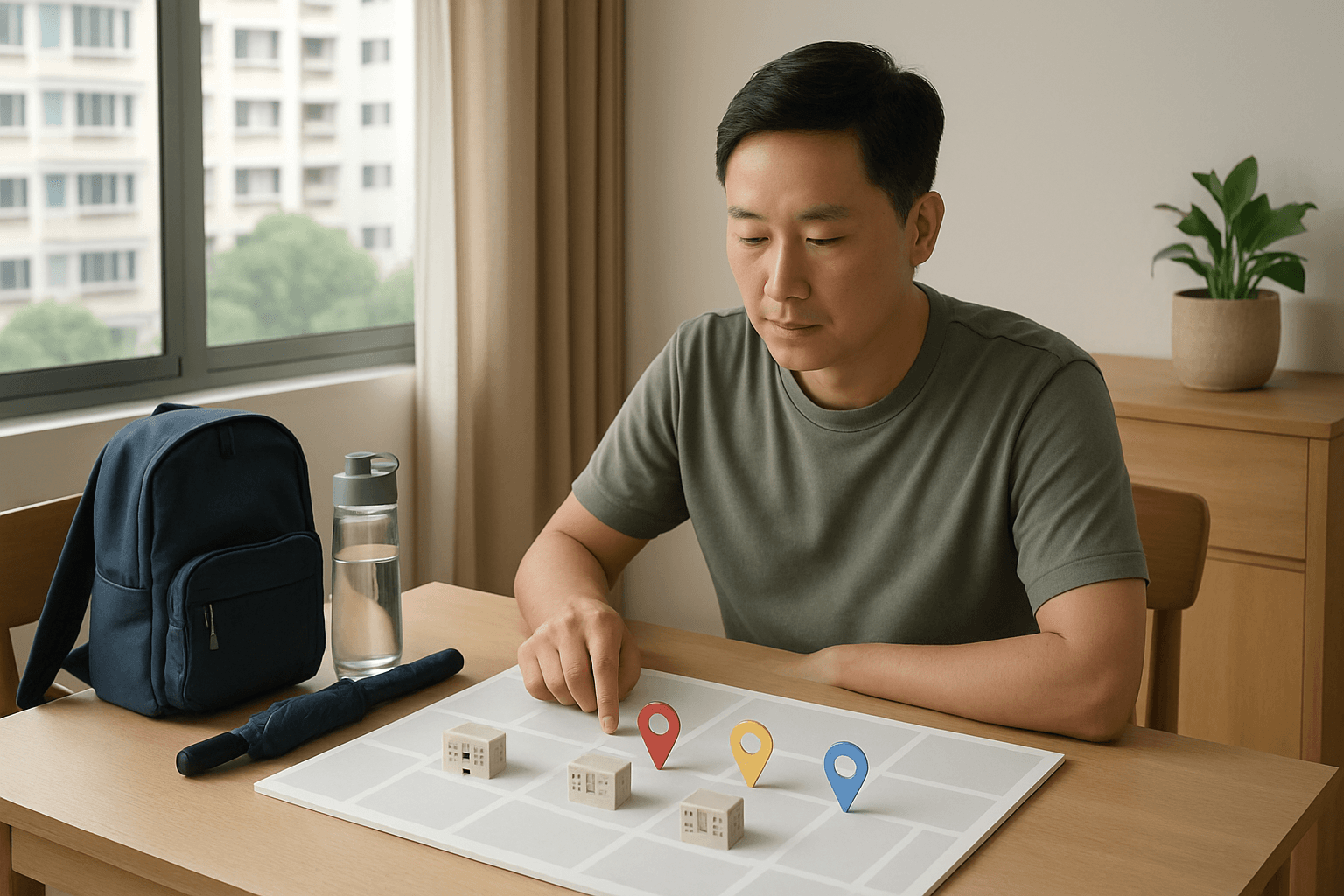
There is no official rule that every family must shortlist a fixed number of backup schools for Primary 1 registration. For most families in Singapore, one to two real backup primary schools is enough. The goal is not to collect names. It is to identify schools that are close enough, workable enough, and acceptable enough that you would genuinely enrol your child there if your first choice does not work out.
What is the practical answer: how many backup primary schools should you shortlist?
Most parents only need one to two real backup schools. Keep three only when entry risk or family logistics are less predictable.
For most families, the practical default is one to two backup primary schools. That is usually enough to give you a real safety net without turning P1 planning into a long research project. If you already have one school you would genuinely accept if your first choice fails, one backup can be enough. If your preferred school feels more competitive or your family wants more breathing room, two backups is usually the stronger plan. Three is reasonable only when uncertainty is meaningfully higher.
There is no official universal rule that says every family must shortlist exactly one, two, or three schools. This is a planning judgment, not a policy requirement. The useful test is simple: if your first choice does not work out, do you already know where you would turn next without panic? If yes, your shortlist is probably doing its job.
Think of your shortlist as a decision tool, not a collection exercise. A short list works better because you can compare the schools properly, talk through transport and caregiver arrangements, and avoid rushed decisions later. If you want the broader context around how this fits into the full process, start with our Primary 1 Registration in Singapore guide.
[Punggol] Primary Schools
On your qn, Horizon -30 Mee Toh -51 Punggol green -96 Punggol view -8 Overall vacancy in the area should be able to absorb all. Pick near ones and avoid balloting. Based on pure numbers, oasis should be slightly riskier for balloting but it's very likely everyone is sick of balloting and may be a case of no balloting for the area in 2CS.[/quote]I heard edgefield primary not bad... but too far from my house so I cannot choose edgefield... I will go for waterway primary instead cos nearer to my ho
[Punggol] Primary Schools
On your qn, Horizon -30 Mee Toh -51 Punggol green -96 Punggol view -8 Overall vacancy in the area should be able to absorb all. Pick near ones and avoid balloting. Based on pure numbers, oasis should be slightly riskier for balloting but it's very likely everyone is sick of balloting and may be a case of no balloting for the area in 2CS.
A backup school is not a placeholder
If you would not realistically enrol there, do not count it as a backup.
If you would not seriously send your child there, it is not a real backup yet. A backup school may become your child’s actual school for six years, so it has to work in daily life, not just look safer on paper. A school with lower demand but an exhausting commute, awkward pickup arrangements, or no real family buy-in is not giving you security. It is giving you false comfort. For a broader overview, see Primary 1 Registration Phases in Singapore: What Each Phase Means for Your Chances.
[Bedok] Primary Schools
My back up is st. anthony connossian pri school but that’s further away, Temasek is still the next nearest to my place. The nearest is bedok green but I never consider it as I’ve called in to ask about their psle result twice but nobody come back to me. The next preferred is YuNeng but compared to Temasek, it’s further away so St. Anthony is my backup. I think no need ballot for 2C… I’m so stressed!
Choosing Secondary school
I think you have to watch out for point 3 in the chart - 3. Pupils from primary schools which has an affiliation will take priority in posting to its affiliated secondary school if they have opted for that school as the first choice. If you have the \"privilege\", take advantage of it. Otherwise, consider its impact on the number of available vacanies left for \"non-affiliated\" students.
Have More Questions?
Get personalized guidance on schools, tuition, enrichment and education pathways with AskVaiser.
Try AskVaiser for Free →How do you decide between one backup school or two?
One backup is enough when your second choice is already clear and practical. Two is better when your first choice feels less certain or your family wants a stronger safety net.
Choose one backup if your second-best option is already clear and workable. This usually fits families who like their first-choice school, already know which nearby alternative they would accept, and do not need a wider safety net to feel calm. In that situation, adding more names often creates more noise than protection.
Choose two backups when your first-choice school feels less predictable, when your route into that school feels less secure, or when your household logistics are not simple. Two backups can also help when different schools solve different practical problems. For example, one school may be better for a parent doing morning drop-off, while another may be easier for grandparents to manage at pickup.
Past demand patterns can help you judge risk, but they are only signals. Community tracking such as Phase 1 results and Phase 2A analysis shows why parents should not assume a school will behave the same way every year. The safer move is not trying to predict perfectly. It is keeping one or two alternatives you can actually live with. If you need help reading competition more realistically, see How to Read Past Balloting Data Before Chasing a Popular Primary School and Primary 1 Registration Phases in Singapore. For a broader overview, see Primary 1 Registration Distance Priority: How Home-School Distance Works.
What goes into choosing a suitable Secondary School
Saw this being shared in the parents groupchats. https://www.thewackyduo.com/2022/11/how-to-choose-secondary-school-guide.html https://i.imgur.com/fDkJSy6.png\"> https://www.thewackyduo.com/2022/11/how-to-choose-secondary-school-guide.html It's time to choose a secondary school. Choosing a secondary school is a completely different process than primary school. One tends to choose a primary school based on distance or affiliation. Picking a secondary school is a different ball game. Grades play a
SOS - Advice needed for secondary school selection
Hi all Need urgent advice on secondary school selection for my boy who scored 234; we are thinking of the following schools in north area: 1. Xinmin Sec 2. Zhonghua Sec 3. Chung Cheng Yishun 4. Maris Stella High 5. Presbyterian High 6. Ang Mo Kio Sec Can anyone provide advice if the above choices make sense? Thanks in advance! :thankyou:
When does it make sense to shortlist three backup schools?
Shortlist three only when the uncertainty is genuinely higher and all three alternatives are still realistic for your family to use.
Three backups make sense when uncertainty is genuinely higher and each option is still a school you would accept. This often happens when a family is aiming for a very sought-after school, when the likely path into that school feels less secure, or when there are several nearby schools that are all practical enough to keep on the table.
A common example is a family targeting a popular school but living near two or three other schools that are all within manageable reach. Another is a household where transport arrangements may change because one parent travels often, work hours shift, or grandparent support is helpful but not fixed. In those cases, a third option can reduce last-minute stress because it gives you another realistic route rather than another abstract name.
What usually does not help is building a list of four, five, or six schools you barely know. After a point, extra names stop reducing risk and start reducing clarity. More options are only better when they are real options. For a broader overview, see How to Read Past Balloting Data Before Chasing a Popular Primary School.
2024 Secondary 1 posting - short listing of secondary schools with historical cut off point and more
These are 2 secondary schools shortlisting webpages that help in selecting secondary schools for the coming S1 posting exercise. View these webpages on computer. May not display in full when viewed on mobile devices Shorting listing of Sec. Sch. with historical cut off point, location, any JC affiliation, single gender or not, and more: https://public.tableau.com/app/profile/sg.parent/viz/SingaporeSecondarySchoolSearch/Search Listing of secondary schools with 2021-2023 cut off point: https://pub
Schools selection... how to select?
Need some advices on the following school if AL between 15 to 20. Which school to choose? Or better? 1) Compassvale secondary school 2) Punggol Secondary school 3) Greendale Secondary school 4) North vista secondary school 5) Pei hwa secondary school 6) Yusok isak secondary school - New
How should distance and transport shape your backup school choices?
A good backup school should be manageable every school day. If the route creates regular stress for parents or caregivers, it is probably not a strong backup.
Distance and transport should matter almost as much as admission risk. A school that looks easier to enter can still be a poor backup if it turns every weekday into a difficult school-run problem. The best backup is the one your family can actually run on a normal Monday morning.
This is where many parents are too optimistic. A plan may look manageable when you imagine one adult doing the full trip every day, but real life is messier. Work meetings run late, a sibling has a different dismissal time, rain changes the route, or the usual caregiver is unavailable. A ten-minute walk or one direct bus that grandparents can handle is often a stronger backup than a farther school that seems safer but needs multiple transfers or a daily car trip.
When comparing schools, do not ask only whether your child can get there. Ask whether your whole household can keep doing it for years. If you can, test the route at the time your family would actually travel. A school that looks fine on a map can feel very different at school-run hours. If distance priority is also part of your planning, our guide on how home-school distance works helps you separate admissions priority from daily commute reality. For a broader overview, see Primary 1 Registration Unsuccessful: What Happens If You Do Not Get Your Preferred School.
[Punggol] Primary Schools
Published on Jun 19, 2015 Oasis of learning in Punggol, to fill young minds source http://mypaper.sg/top-stories/oasis-lea ... s-20150619 THREE new primary schools will open in Punggol next year to help meet the growing demand in the area. The schools - Oasis Primary in Edgefield Plains, Punggol Cove Primary in Sumang Walk and Waterway Primary in Punggol Drive - will be able to take in 210 pupils each . They are located near a number of housing projects. Waterway Primary, for instance, is locate
[Punggol] Primary Schools
Thank you mummyofthree for your reply! :snuggles: Just to share, my current arrangement is, I sent my daughter to a kindergarten in Simei in the morning. Then my parents will fetch her along her cousin who is in the same class as her. In fact she has been growing up with her 3 other cousins. (Luckily my parents' pl is huge compare to mine). Then evening, I will fetch her back to Punggol. so if she goes to Changkat, the routine will be same. Except it is much earlier. There are days where I strug
Should backup schools be chosen only for admission chances?
No. A backup school should be judged by both entry realism and everyday liveability, not by admission chances alone.
No. Admission chances matter, but they are only half the decision. A useful backup school passes two tests: could we realistically get in, and could we realistically live with it for six years?
Parents often over-focus on the first test because it feels measurable. They compare popularity, past demand, or perceived balloting risk and assume the school with easier odds is automatically the smarter backup. But a school with slightly better chances can still be the weaker choice if it is far away, hard for caregivers to manage, or simply not a school your family feels comfortable committing to. On the other hand, a backup with firmer demand may still be the better option if it is near home, easier to reach, and a school you would accept with peace of mind.
The strongest backup is not the easiest school to enter. It is the school you can actually live with. If you are also weighing school fit more broadly, Popular Primary School vs Neighbourhood School in Singapore can help you separate branding from daily reality.
What goes into choosing a suitable Secondary School
Hi there, Recently a relative asked me how I choosed my kid’s Secondary School and I kind of got a shock, I had no answer. It was simply just based on the results. My relative came then with a list of important factors that he thought would be helpful to help his kid cope with the stresses of school. I thought that I would help him make this post to help him make a better decision (the kid will be going into the Secondary School in next year). So here goes, considering grades what else should he
Beyond AL/PSLE scores - Choosing Secondary School
Hi everyone, I’ve noticed a lot of discussions here about PSLE posting and how tough it can be to shortlist secondary schools — especially when trying to consider more than just the cut-off points. I recently built a free website called School Advisor SG that might be useful for parents going through this process. It helps you explore schools holistically, by combining publicly available data on: PSLE cut-off points (2024) Sports & CCA performance (from national competitions) Primary–secondary a
What are the most common mistakes parents make when shortlisting backup primary schools?
Parents usually go wrong by shortlisting schools that are unrealistic, too far away, or never properly discussed as real options.
The biggest mistake is treating backup schools as generic placeholders instead of real schools their child may attend. That leads to weak planning. A parent may name a school because it seems less competitive, then later realise the trip is too long for a six-year-old or impossible for grandparents to manage. Another parent may shortlist a school that nobody in the family actually likes, which means the backup never felt emotionally acceptable in the first place.
A second mistake is building too long a list. Parents sometimes keep adding names because it feels safer, but in practice they end up researching none of them properly. A short, serious list is better than a long, vague one. A third mistake is assuming a lower-demand school is automatically the right safe option. Lower demand may reduce pressure, but it does not solve poor transport, awkward schedules, or a family routine that falls apart once school starts.
A fourth mistake is leaving the uncomfortable conversation too late. If you have not already discussed what happens if the preferred school does not work out, your backup plan is probably weaker than it looks. Our article on what happens if you do not get your preferred school and our guide to choosing between a popular dream school or a safer nearby school can help you pressure-test that decision early.
[Punggol] Primary Schools
Hi all kiasu mummy, I’m new here, I need some advise from all of you. My girl will be register her primary school end of July under phase 2C. Within 1km Compassvale primary school Edgefield primary school Punggol view primary school Punggol green primary school Rivervale primary school Which one would you recommend and why?very urgent !! Thanks
[Punggol] Primary Schools
hmm… the most impt thing is your child must be happy. This must come from supportive parents in their learning. My boy enjoys his class and gamely contribute and am glad teachers (Chinese and form teacher) have been responsive in his learning. As he was a transferred student, I was also concern of him blending to his school but such were unfound. Phew! All in all, in a primary school, be it a popular, a top or mediocre school (in others’ opinion) you can still “control” a child’s learning habits
How can parents build a shortlist without overresearching every school?
Keep the process simple: narrow by travel practicality first, then keep only schools you would genuinely accept if needed.
Start narrow. First, look at schools your family can realistically reach without daily strain. That one filter removes many options immediately and keeps your energy focused on schools that matter. Then ask the harder question: if your first choice fails, would you actually accept this school without feeling trapped or resentful? If the honest answer is no, remove it.
Next, compare the remaining schools through the lens of real family logistics. Think about who handles drop-off, who does pickup, what happens when work runs late, and whether the route still works if your usual plan breaks. This step matters more than many parents expect because a school can look fine on a map but fail in actual weekday life.
Once you are down to a few realistic options, stop. You do not need an exhaustive survey of every school nearby. You need a small set of schools you understand well enough to act on. After that, use MOE's official FAQs to confirm current operational details for your registration year, while keeping your shortlist grounded in what your family can actually manage.
[Punggol] Primary Schools
Hihi, I'm also interested in knowing about the punggol schools as will be moving there next year, just in time for P1 registration! - Edgefield Primary - Horizon Primary - Mee Toh Our preference is Mee Toh coz it's a buddhist school but based on the previous stats, it is really popular and always has balloting for 2C (purely luck then!) I was wondering should we risk it or should we go for the other 2 schools instead as it seems mostly SC within 1km should be able to get in (even with balloting,
2014 PSLE - Final 6 Choices for 2015 Sec 1 School Selection
Some of last year’s selection of secondary school by parents after PSLE which might be useful.
What does a sensible backup shortlist look like in common Singapore family scenarios?
One backup may suit a simple case, while two or three may be better when competition, transport, or caregiving arrangements make planning less straightforward.
A straightforward case is a family aiming for one popular school but already happy with one nearby alternative. In that situation, one backup may be enough because the second choice is clear, close, and emotionally acceptable. They do not need more names. They need confidence in one real fallback.
A second case is a household with one car, two working parents, and grandparents helping with pickup. Here, two backups often make more sense because transport feasibility can differ sharply between schools. One school may be easier for the morning rush, while another may work better for the afternoon handover. Both may be worth keeping because logistics, not just admission risk, will shape the final decision.
A third case is a family targeting a highly sought-after school while juggling less predictable caregiving arrangements. They may keep three backups because each solves a different practical problem and all are still realistic schools to attend. The point is not to hedge emotionally. It is to reduce the chance of a rushed choice under pressure.
These are examples, not official categories. They simply show the pattern many parents miss: the right number of backups depends less on fear and more on how many schools your family could genuinely use if the result goes another way.
Have More Questions?
Get personalized guidance on schools, tuition, enrichment and education pathways with AskVaiser.
Try AskVaiser for Free →