
How PR Families Should Shortlist Primary 1 Schools in Singapore
Use a dream, target, and safe list so one disappointing outcome does not derail your P1 plan.
PR families should shortlist P1 schools in three tiers: one or two dream schools, a few realistic target schools, and at least one safe school they would truly accept. This helps you balance aspiration, distance, competition, and daily family logistics without relying on one outcome. A good shortlist is not the most impressive one. It is the one you can still live with after registration results are known.
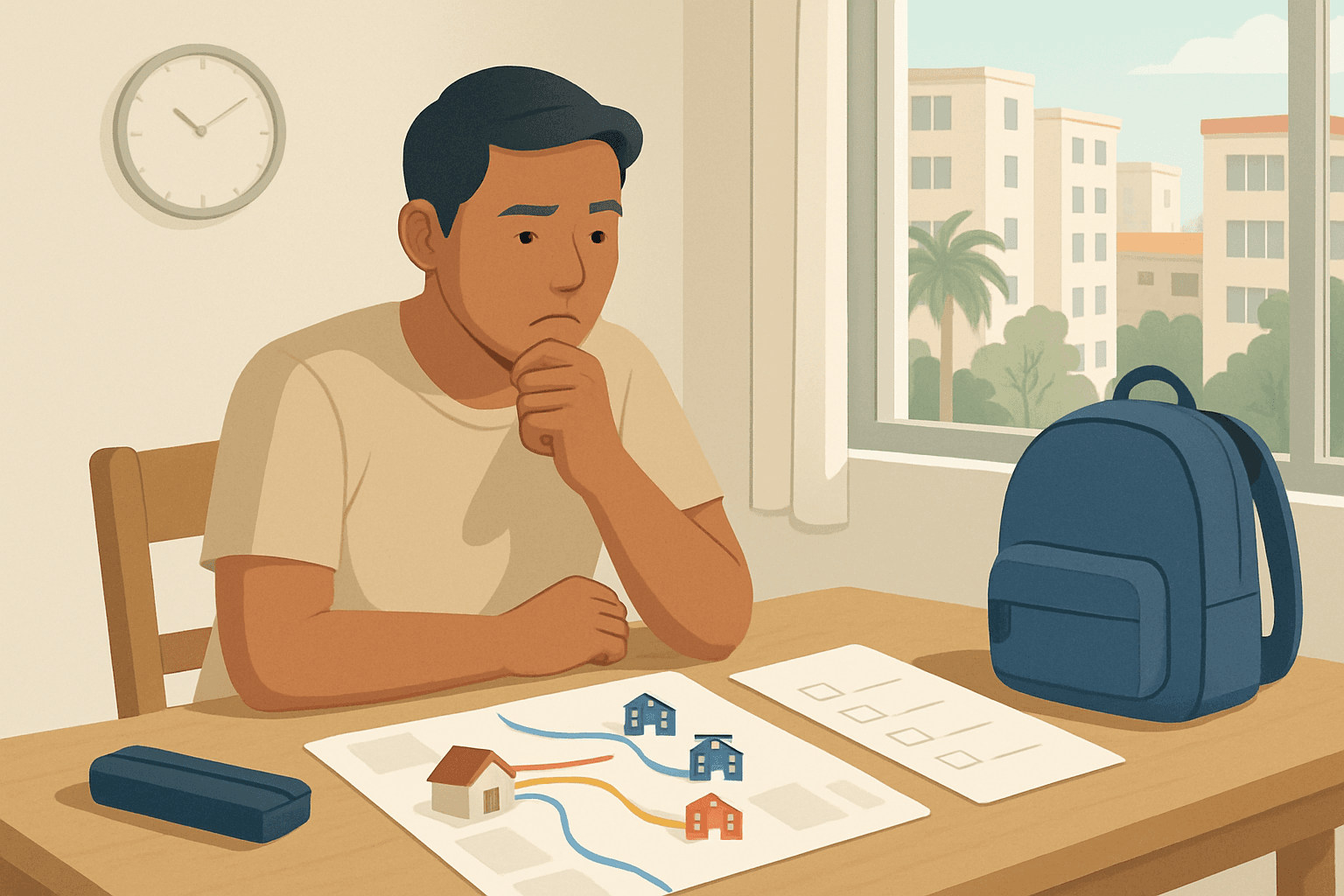
PR families should not build a Primary 1 plan around one preferred school. A stronger approach is to shortlist schools in three tiers: dream schools you would love to get, target schools that feel realistic enough to pursue, and safe schools you would genuinely accept if competition goes against you. The goal is not to predict admission perfectly. It is to avoid ending up with no workable backup after results are out.
What should PR families try to achieve when shortlisting Primary 1 schools?
Build a shortlist that still works if your first-choice school does not. Use dream, target, and safe tiers instead of betting everything on one school.
PR families should build a shortlist that still works if the first-choice school does not happen. In practice, that means using three tiers: one or two dream schools, two or three target schools, and at least one safe school you would honestly accept.
This matters because Primary 1 registration is not only about preference. Competition, distance, and applicant mix can all affect the outcome, and parents do not control all of those factors. If you are still getting oriented, our Primary 1 Registration in Singapore guide explains the wider system before you start comparing schools.
Think of the shortlist as a risk plan, not just a wish list. Dream, target, and safe are not official MOE categories. They are planning labels that help parents separate aspiration from realism. For example, a family might keep one popular school that feels like a great fit in the dream tier, two schools with a workable commute and a believable chance in the target tier, and one nearby school they already feel comfortable with as the safe option.
A useful mindset is simple: do your backup thinking before emotions run high. The best shortlist is the one that still feels workable when results are not ideal.
[Punggol] Primary Schools
hmm… the most impt thing is your child must be happy. This must come from supportive parents in their learning. My boy enjoys his class and gamely contribute and am glad teachers (Chinese and form teacher) have been responsive in his learning. As he was a transferred student, I was also concern of him blending to his school but such were unfound. Phew! All in all, in a primary school, be it a popular, a top or mediocre school (in others’ opinion) you can still “control” a child’s learning habits
[Punggol] Primary Schools
Published on Jun 19, 2015 Oasis of learning in Punggol, to fill young minds source http://mypaper.sg/top-stories/oasis-lea ... s-20150619 THREE new primary schools will open in Punggol next year to help meet the growing demand in the area. The schools - Oasis Primary in Edgefield Plains, Punggol Cove Primary in Sumang Walk and Waterway Primary in Punggol Drive - will be able to take in 210 pupils each . They are located near a number of housing projects. Waterway Primary, for instance, is locate
What is the difference between a dream school, target school, and safe school?
Dream schools are aspirational, target schools are competitive but plausible, and safe schools are options you would honestly be comfortable accepting.
A dream school is a school you would love to get, but should not quietly assume is likely. It may be popular, well regarded, or simply feel like an excellent fit, but there is enough uncertainty that your plan should not depend on it.
A target school is competitive but still plausible. It is a school you would continue to pursue after looking at recent competition patterns, your home location, and your family routine. If you would be disappointed to miss it but not shocked, it is probably a target school rather than a safe option.
A safe school is a school you would genuinely accept if the more competitive choices do not work out. It is not a "lower" school. It is the school that keeps your family out of panic mode because the route is manageable, the environment is acceptable, and the result would not feel like a forced compromise.
A simple way to think about it is this: a dream school is about hope, a target school is about informed optimism, and a safe school is about low regret. A school across the island may stay in the dream tier if you admire it but know the travel and competition make it hard to rely on. A school near home with a direct route and solid fit may be a target. A school your family already feels at ease with, and can sustain for six years, is what usually belongs in the safe tier. For a broader overview, see Primary 1 Registration Distance Priority: How Home-School Distance Works.
[Punggol] Primary Schools
Hihi, I'm also interested in knowing about the punggol schools as will be moving there next year, just in time for P1 registration! - Edgefield Primary - Horizon Primary - Mee Toh Our preference is Mee Toh coz it's a buddhist school but based on the previous stats, it is really popular and always has balloting for 2C (purely luck then!) I was wondering should we risk it or should we go for the other 2 schools instead as it seems mostly SC within 1km should be able to get in (even with balloting,
[Punggol] Primary Schools
Hi Charmaine_chong, If you don't mind trying new schools, you may want to consider Punggol View. It looks promising. The principal of PV is from current Keming Pri Sch. Visit the Keming parent network and read the comments, quite positive. Don't forget to visit the PV school website too. Being the pioneer batch has its advantage too. eg. The teachers will focus on ur kids. Look at Horizon, they have the HOD teaching their first batch of PSLE. (now P5) Just my 2cts. :xedfingers:
Have More Questions?
Get personalized guidance on schools, tuition, enrichment and education pathways with AskVaiser.
Try AskVaiser for Free →How many schools should a PR family keep on the P1 shortlist?
Keep the list focused, usually around four to six schools, with a real mix of aspiration, realism, and fallback.
Most PR families do best with a focused shortlist of about four to six schools across the three tiers. That is not an official rule, but it is usually enough to give you real options without turning the process into a vague, oversized list.
Too few schools leaves you exposed if you are emotionally attached to one popular choice. Too many schools often creates false comfort because the family has not really decided what it would accept. If you list eight schools but would be unhappy with half of them, that is not a strong shortlist. It is delayed decision-making.
A better test than the number is balance. If all your choices are highly competitive, you do not have a shortlist. You have a wish list. If all your choices are there only because they seem easier, you may be overcorrecting and ignoring fit. For many families, one or two dream schools, two or three target schools, and one or two safe schools is enough.
If your list is top-heavy with competitive schools, add one more safe option. That small step often lowers stress more than hours of guessing which popular school might be easier this year. For a broader overview, see How to Read Past Balloting Data Before Chasing a Popular Primary School.
Info on what your child learns in P1 and how you can help
Dear parents, in case you're wondering what your child will be learning when he goes into P1, here's an article which you may find useful. http://sg.theasianparent.com/what-your-child-is-learning-in-primary-1/ The article covers tips which you can do to help your child with literacy and numeracy skills. Hope it helps! Sincerely Junior Wonders Tuition Centre
How your kid's performance in P1 if attended gd Pre-sch?
hi, sorri, can't provide any advice, as it really depends on individual child, how much in depth the absorption can be. my gal went to pats preschool, and i would say that i need'nt worry abt her studies at all from P1 to P2 in fact, i din even coach her any single subjects till P3......... and she was doing very well throughout .
What should PR parents compare first when weighing schools?
Prioritise commute, competition, and fit before reputation. Prestige should not outrank daily practicality.
Start with daily commute, recent competition, and family fit before reputation. Reputation matters, but it should not outrank whether your child can manage the route, whether the school has been hard to get into, and whether the environment suits your family's real routine.
Commute is often the hidden cost parents notice too late. A school can look excellent on paper and still be a poor choice if it requires early wake-ups, multiple transfers, or complicated handovers between parents and grandparents. School fit matters too. Some families care more about language environment, student culture, or how structured the school feels. Others need a school that works smoothly with childcare, work schedules, or a sibling's route.
Competition is where many parents become unrealistic. Before getting attached to a school, sense-check whether it has recently been a difficult option. Our guides on Primary 1 registration phases and how to read past balloting data can help you interpret that more calmly. For official school information entry points, the MOE sitemap is a useful place to start.
A practical example makes this clearer. One family may choose a less famous school ten minutes away because grandparents do pickup and the route is simple. Another may keep a farther school on the list because one parent works nearby and can handle both drop-off and pickup. The better school is not automatically the more famous one. It is the one your family can sustain from January to November, not just admire during shortlisting. For a broader overview, see Primary 1 Registration Unsuccessful: What Happens If You Do Not Get Your Preferred School.
How your kid's performance in P1 if attended gd Pre-sch?
Dear Members Can anyone of you feedback how your kid/kids doing in P1 if they attended pre-school as follows: 1)\tPat school 2)\tMontessori 3)\tMy First School or Normal child care centre 4)\tHalf day in CC or in Kindergartens I have heard so much about how good /strong or poor academically the pre -school can be. But ultimately are kids really perform better when go to Pri i.e. (e.g. with Montessori they do have their special techniqe in their learning path, half day CC or Kindergarten as they
Preschools prepared your kids well for Singapore primary?
For parents who have already been through the pre-school days and with kids now in primary schools (Singapore schools), can you share your comments on your kid's previous preschool and their curriculum - specifically if they have prepared your child properly for the Singapore education system ? (not discussing the international or foreign schools system here) Nowadays, there are so many pre-schools and childcare centres with many learning methods. Parents currently at the pre-school stage will b
How much should distance affect a PR family's shortlist?
Use distance as both an admissions consideration and a six-year routine check, not as a promise of admission.
Distance should shape your shortlist in two ways: as an admissions factor in some situations, and as a daily lifestyle factor for the next six years. It is useful, but it is not a guarantee.
Parents often make one of two mistakes. Some assume living near a school makes it safe. Others ignore distance because they are focused on prestige and only later realise the route is too punishing. A better approach is to test the route honestly. Check the weekday morning journey, the transfer points, and who will handle drop-off and pickup when work gets messy.
For example, a 15-minute direct bus ride may be perfectly manageable for one family, while a 45-minute train-and-bus route may become exhausting by the first term. Another family may accept a farther school only because one parent drives past it daily. Distance is not just about eligibility logic. It is about whether your child can keep doing the journey without burning out.
If you are moving house or using a different address for planning, settle that question early. Our articles on which home address counts for Primary 1 registration and how distance priority works are the right next reads.
The key question is not only "Can we get in?" It is also "Will this still feel sensible by March of Primary 1?"
Share with us your kid's P1 registration experience
First thing to do after being balloted out, is to put your child's name under the school's wait list. After then, I've wrote in to MOE, called/met the school's Principal for discussion. Telling them all my problems and how the registration system had affected us (because I have only 1 school within 2km and NO school within 1km). With this factual, MOE has verified and consulted the school. My son was then placed on the highest priority in the waiting list .. and fortunately by early Nov, we were
Share with us your kid's P1 registration experience
Funtastic4, RGPS finally had 117 applicants >2km fighting for 51 places under phase 2C (after 26 applicants <2km admitted). For my case, I had a daughter borned in year 2002. From 2005 onwards, we were closely monitoring the P1 registration stats, keeping all the records ourselvs as MOE dont retain them. Since my mil stayed near HPPS, we decided to enrol our child there. We were prepared to move <1km of the school. However after studying the stats, we discovered that HPPS needs balloting under p
How can parents tell whether a school is a realistic target rather than just a hopeful pick?
Use recent competition patterns, your address, and your tolerance for uncertainty to decide whether a school is a realistic target.
A realistic target is a school that still feels worth applying for after you look at recent competition patterns, your address situation, and your own tolerance for uncertainty. It is not guaranteed, but it is not a pure long shot either.
Start by checking how the school has looked in recent registration cycles. Past patterns are useful for calibration, not prediction. Our guide on reading past balloting data explains how to use that information carefully, and community references such as this KiasuParents balloting probability article should be treated only as rough context, not as a forecast.
Then compare those patterns with your own situation. If a school has often been heavily contested and your confidence is based mostly on "maybe this year will be easier," that school is probably a dream, not a target. If the school has been competitive but your commute is good, your family would genuinely welcome the outcome, and you already have a solid fallback, it may belong in the target tier.
A simple emotional check helps. If missing the school would disappoint you but not surprise you, it is probably a target. If you have already started mentally treating it as almost certain, you may be underestimating the risk.
[Punggol] Primary Schools
dear parents, my daughter born on 2009 and looking to P1 register few months later. I am staying within 1km to MT, Horizon and PV, history show all school required ballot for SC within 1km in phase 2c. Dun think I will register MT as chance is low, any idea/comment/advise to choose between Horizon and PV?
School Placement Exercise for returning S'porean children
Additional considerations: if u convert his citizenship to sg, he will have to serve NS. But if he is not an sg citizen or PR, he may not be able to enter a popular primary school, and will have to take the leftover slots like other foreigners.
What makes a school genuinely safe for P1 planning?
A safe school is one you would genuinely accept, with a manageable route and no need to rely on later fixes.
A safe school is one that gives your family a believable path to an outcome you can live with. It is not about picking a lesser school. It is about reducing the chance that your shortlist collapses if the more competitive options do not work out.
In practice, safer usually means a manageable commute, acceptable school fit, and fewer optimistic assumptions. The route should be workable, the family should be able to picture daily life there without dread, and the school should still match your child's needs reasonably well. If you already know you would be desperate to leave immediately after getting it, it is not really a safe choice. It is just a placeholder.
It helps to think of a safe school as a low-regret school, not a low-ambition school. For one family, that may be a nearby neighbourhood school with a simple route and steady routine. For another, it may be a slightly farther school that both parents and child already feel positive about because the language environment or learning style seems right.
Some parents quietly assume they can fix a weak initial choice later through transfer. That is not a sound planning strategy. MOE does have a Primary School Transfer Service FAQ for certain situations, including eligible students who have changed residential address, but that is not a substitute for building a solid shortlist now.
If your list has only one safe school and you are not actually comfortable with it, you do not yet have a safe school.
Share with us your kid's P1 registration experience
My P1 registration story.... My dd was due for P1 registration 4 yrs ago and since I also have a ds (2 yrs apart), it makes sense to choose a co-ed school. The best co-ed sch around my neighbourhood (1-2km) is Rulang Pri Sch. Cos dd is the 1st born and having no experience whatsoever with the pre-P1 registration exercise, I was too late in being a PV for the school. Then i started to pull all strings (my great grandfather helped to start the sch during the pre-war, kampung days, my late father h
Sengkang/punggol primary school - input from parents of kids in schools in these area?
~ starting to think about primary school registration (applying this year, 2025) and it’s giving me a headache. The schools my kid has a good chance of getting in (2B - 1km) are: 1)Nativity primary 2)Mee Toh 3) Rivervale primary My kid is really quite nerdy and has a hard time finding friends because of her subject-specific interests (usually science-related). Has expressed a preference for co-ed, but I don’t know how seriously to consider her input. Nan Chiau (phase 2b) seems impossible because
What do PR parents most often get wrong when choosing schools?
The main traps are prestige chasing, commute denial, assuming near means safe, and having no real fallback.
The biggest mistakes are usually strategic, not technical. Parents often chase only famous schools, assume a nearby school is automatically safe, or underestimate how tiring the daily route will feel once school starts. Another common mistake is calling a school a backup even though the family has never really accepted it.
The deeper problem is that many parents plan for the ideal outcome and only think seriously about fallback options when stress is already high. A better shortlist assumes that the first-choice school may not happen and still leaves the family with options they respect. If you are weighing aspiration against practicality, our articles on popular primary school vs neighbourhood school and what happens if you do not get your preferred school are useful next reads.
[Punggol] Primary Schools
hi blitze u can check on the open house somewhere from june to july, cos aug will start to P1 reg for phase 2 onwards (if i remember). my colleague’s girls are in Changkat (Simei). Seems not a bad sch. but like you, i stay in punggol. but i chose Horizon due to below reasons (my girl in P2 now): 1) i did not do any PV (parent volunteer) even i stay opp of Meetoh. I don want to stress myself for the ballating. 2) Horizon has student care center (SCC) inside the school. this is more safer than to
[Punggol] Primary Schools
Clue no. 1 : https://www.moe.gov.sg/admissions/primary-one-registration/vacancies Clue no. 2: https://www.kiasuparents.com/kiasu/article/punggol/ The popular schools are red hot like fire.
What should families do before they finalise the registration list?
Do one last realism check so every school on the list has a clear role and is actually livable.
- ✓Put each shortlisted school into one tier only: dream, target, or safe.
- ✓Remove any school with a route your family would struggle to sustain on a normal weekday.
- ✓Compare each school's recent competition pattern with your own address situation and comfort with uncertainty.
- ✓Check that every school left on the list is one your family could honestly accept if it becomes the final placement.
- ✓Add another safe option if your list is still dominated by highly competitive schools.
- ✓Rank the final list by both preference and realism, not by reputation alone.
Have More Questions?
Get personalized guidance on schools, tuition, enrichment and education pathways with AskVaiser.
Try AskVaiser for Free →