
How to Plan for a Popular Primary School When You Have Sibling Priority
Sibling priority can improve your younger child's chances, but it does not remove balloting risk at oversubscribed schools. Here is how Singapore parents can plan with more realism and less last-minute stress.
Parents should usually treat sibling priority at a popular primary school as a helpful advantage rather than a guarantee. It can improve your younger child's position when applying to the same school as an older sibling, but if the school is still oversubscribed at that stage, balloting may still happen. The practical strategy is to use the sibling link, review recent demand patterns, factor in distance and family logistics, and decide on at least one backup school before registration begins.
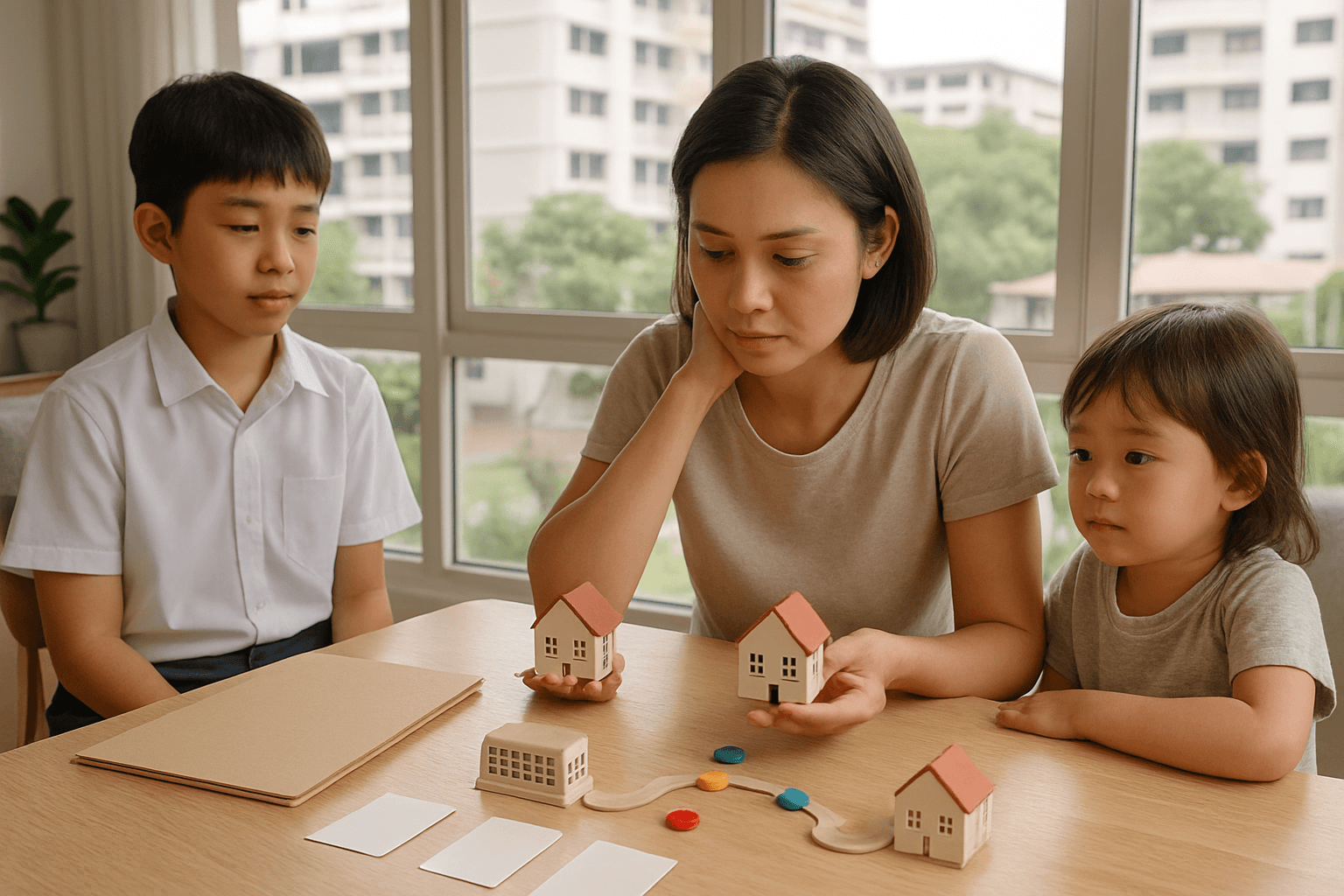
If you have sibling priority, the safest mindset is simple: treat it as a real advantage, not a promised seat.
That matters most when the target school is popular. Once a school becomes oversubscribed in the relevant admission stage, balloting can still happen. So the practical question is not just, "Do we have sibling priority?" It is, "Is this school still risky even with that advantage, and what will we do if it is?"
A good plan usually includes four checks before registration starts: how much demand pressure the school usually faces, whether home-school distance or address details may still matter, whether the school genuinely suits your younger child, and which backup school you would actually accept. This guide walks through that decision clearly.
What does sibling priority actually do for Primary 1 admission in Singapore?
Sibling priority can improve your younger child's chances at the same school, but it does not guarantee admission.
Sibling priority usually improves your younger child's position when applying to the same school as an older sibling, but it does not create an automatic place. In parent terms, it can move a school from "unlikely" to "possible," especially if keeping both children in one school would simplify transport, routines, and after-school care.
What many families misunderstand is that priority only helps within the number of places available. If the school still has more applicants than vacancies at that stage, the school may still need to ballot. So the right mental model is not "seat reserved." It is "stronger queue position."
That distinction matters most at sought-after schools. A family with an older child already in the school may be in a better position than a family with no school link at all, but the final outcome still depends on demand pressure in that admission stage. If you want the bigger picture on how phases and vacancies interact, start with our Primary 1 Registration in Singapore guide.
All About Primary Schools' Balloting History
I see the wealth effect playing a larger role for popular schools. If you are alumni, you had better get yourself within 1km if you have the means, unlike now. As alumni ‘dilution’ will occur, this opens the door to new money who can afford the move at 2C.
All About Primary Schools' Balloting History
I don't think that new citizens and PRs are the sole reason for increased competition in popular schools. I believe parents are generally more well-informed and place more emphasis on education nowadays. So many parents are willing to try for schools that they deem are better than others, hence the increased competition. I doubt MOE will mandate popular schools to increase their intake. There are x number of places in primary schools throughout Singapore, and increasing the places in popular sch
When can sibling priority still face balloting risk?
If the school is oversubscribed at that stage, balloting can still happen even for sibling-linked applicants.
Sibling priority still faces balloting risk whenever the school has more applicants than vacancies in that admission stage. This is why very popular schools can remain risky even for families with a child already inside the school.
The useful question is not just whether you have priority. It is whether the school is still under heavy pressure when your child applies. If you need a clearer view of how that plays out across stages, our guide to Primary 1 registration phases in Singapore explains why balloting can still happen at heavily subscribed schools.
All about Transferring to Other Primary Schools
There is, frankly, no strategy in getting a successful transfer for lower primary. You just have to apply and hope for the best. The number one consideration for a successful transfer is vacancy which is out of your control. If no one leaves, then there’s no space available and for popular schools, there could be up to 20 or 30 parents eyeing one vacancy. Schools may also give priority to applicants based on whether they have been balloted out from earlier phases and distance to home.
All about Transferring to Other Primary Schools
You can put him down in the waitlist for all 3 schools, see which gets back to you first. If there’s no opening from now till 2022 registration, then just register your girl for balloting at whichever of the 3 schools you prefer. If she gets in, then immediately update that school of the new circumstances (sibling will be attending that school) - to expedite the boy’s transfer prior to P5. They will probably let him start in P5 when sister starts in P1. If she does not get in, then hopefully his
Have More Questions?
Get personalized guidance on schools, tuition, enrichment and education pathways with AskVaiser.
Try AskVaiser for Free →How should parents judge whether a popular school is still worth targeting?
Use recent demand patterns, not school brand alone, to decide whether the school is a realistic target or a high-risk choice.
Do not judge the school by reputation alone. Judge it by demand pattern.
A school may be well known every year, but the more useful question is whether it repeatedly comes under pressure in the stage most relevant to your family. If it often becomes oversubscribed at that point, you should treat it as a risk-managed target, not a safe assumption. If demand pressure appears only occasionally, the school may still be worth trying for, but you should not plan as though admission is certain.
Past data will never tell you exactly what will happen in your year, but it is still one of the best ways to separate hope from probability. For example, if a school has shown repeated ballot pressure while another nearby school has steadier demand, those two schools should not sit in your shortlist as though they carry the same risk. Our guide on how to read past balloting data before chasing a popular primary school can help you read that more clearly.
Broader reporting shows how common this pressure can be. The Straits Times reported that popular schools can face ballot pressure early, while another report on Phase 2C ballot pressure shows that oversubscription is not limited to just a few famous names.
Insight line: a school's name tells you desire; its applicant pattern tells you risk. For a broader overview, see If Your Older Child Is Already in the School, Does Your Younger Child Automatically Get In?.
How Do Secondary Schools Choose Their Students
Hi angel2005, Have you read the MOE booklet on choosing your secondary school that’s distributed to all P6 students? The booklet describes very clearly the process the S1 Central Posting Exercise. In brief, all P6 students will be ranked according to their PSLE scores. Each student has 6 choices. The MOE computer will consider the student ranked #1 first. They will give Student #1 the school of his choice. Next they will consider the student who’s ranked #2. And so on and so forth all the way to
Competition among primary schools
I think that if a child can learn more advanced techniques or knowledge in a good school, then he should be given the chance. But if he/she is already struggling in K1/K2, he should learn learn at a moderate pace, and thus not advisable to go to a “high pressure” school. My personal observation is that Primary School education is all about foundation, going into a good school does not mean success and to a neighbourhood school does not mean lower chance of success. The crunch time will come when
What should you check before relying on sibling priority?
Before you rely on sibling priority, check demand history, distance, address details, and whether your backup plan is truly usable.
- ✓Check whether the school has shown repeated ballot pressure in the admission stage most relevant to your family, using our guide on [how to read past balloting data before chasing a popular primary school](/blog/how-to-read-past-balloting-data-before-chasing-a-popular-primary-school).
- ✓Check whether home-school distance may still matter if the school needs to separate applicants further, and compare your situation with our guide on [Primary 1 registration distance priority](/blog/primary-1-registration-distance-priority-how-home-school-distance-works).
- ✓Check which home address is likely to count if you have moved or plan to move, especially with our guides on [Primary 1 registration after moving house](/blog/primary-1-registration-after-moving-house-old-or-new-address) and [which home address counts](/blog/which-home-address-counts-for-primary-1-registration-in-singapore).
- ✓Check that you are choosing the school for a real family reason, such as fit, routine, or sibling convenience, and not only because the older child is already there.
- ✓Check that you already have at least one backup school you would genuinely accept, not a placeholder you have not properly researched.
- ✓Check practical planning tools parents commonly use, such as MOE SchoolFinder for school comparison and OneMap School Query for estimating distance before registration opens.
How should you plan if your older child is already in the school?
Use the sibling link because it helps, but do not build your whole plan on the assumption that the place is already secured.
If your older child is already in the school, it is completely reasonable to aim for the same school for the younger one. For many families, the appeal is not just prestige. It is logistics. One route to school, one set of dismissal timings, one parent communication channel, and often easier coordination with grandparents or after-school care can make daily life much simpler.
The mistake is not wanting the same school. The mistake is assuming that the sibling link removes the need to plan. Families often feel emotionally reassured because the school is already familiar, but familiarity does not reduce oversubscription. A safer approach is to use the sibling advantage while planning calmly for the possibility that the school is still contested.
A realistic example is a family whose older child is thriving in a sought-after school and whose younger child is entering a few years later. The sensible move is usually to try for the same school if it still suits the family, but also to review recent demand, think through distance and address issues, and settle on a fallback before registration starts. Our companion article on whether a younger child automatically gets in if an older child is already in the school unpacks that common misunderstanding more directly. For a broader overview, see How to Read Past Balloting Data Before Chasing a Popular Primary School.
Choosing Secondary school
I think you have to watch out for point 3 in the chart - 3. Pupils from primary schools which has an affiliation will take priority in posting to its affiliated secondary school if they have opted for that school as the first choice. If you have the \"privilege\", take advantage of it. Otherwise, consider its impact on the number of available vacanies left for \"non-affiliated\" students.
All About Primary Schools' Balloting History
Good post! For what it’s worth, I agree that [U]the rest of the primary school journey[/U] is far more important than just getting into the school/not getting into the school. Some people may die-die be aiming for a certain school, for whatever own preference. If religion, I can understand. But apart from that, there is not much difference between a super popular school & its balloting-free alternative “twin” in 2C. If u can secure a confirmed seat in 2C this year, I really think you should. The
What backup school strategy makes sense if the preferred school is still risky?
Choose at least one backup school that works for commute, routine, and child fit, not just one that looks acceptable on paper.
The best backup strategy is not to collect random alternatives. It is to choose at least one school that your family would genuinely be willing to accept if the preferred school does not work out.
That usually means looking beyond school reputation. A strong backup might be a nearby school with steadier demand, a school that fits grandparents' pick-up arrangements, or a school whose daily commute is far more manageable. For some children, a less pressured environment may also be a better fit than a more sought-after school. The point of a backup is not to settle for something unknown. It is to remove panic from the decision.
A useful way to think about it is this: do not build a list of schools you admire. Build a shortlist of schools you can actually live with. Many parents do better when they frame the decision as one aspirational school and one realistic school, rather than one dream school and no true plan. If you want help comparing that trade-off, read our guides on dream school versus safer nearby school, what happens if you do not get your preferred school, and popular versus neighbourhood school. A useful outside perspective is Neighbourhood schools are worthy too.
Top Primary school?
Honestly I am not sure if there is such a thing as a top primary school based on the efforts of the school. All schools have the same mission set by MOE to deliver the same thing. If you hear from them, even teachers they have no control, it's all from MOE. So what then would you consider as top primary school? It definitely cannot be results alone because results are typically parents-driven in today's context in some schools. Every school has the best cream of the crop and the worst performers
Top Primary school?
As always, the annual ritual of flustered parents trying to make up lost time in going for the “best” primary school has begun. IMO, while the school and its staff is an important criteria for the success of students, all schools offer the same minimum opportunities for students to succeed. In other words, even if your child goes to the most “ulu” school, he/she will still be given enough learning to do well in the exams. It all boils down to parents themselves. Parents of children in the better
What mistakes do parents make when they assume sibling priority is enough?
The main errors are overconfidence, ignoring oversubscription, and failing to prepare a genuine second choice.
The biggest mistake is turning a meaningful advantage into a mental guarantee. Parents hear "sibling priority" and quietly convert it into "same school secured." That often leads to weak backup planning, late decision-making, and unnecessary stress when a ballot becomes possible.
Another common mistake is checking the school name but not the pressure point. A school may feel attainable because the older child is already there, but if it remains heavily oversubscribed, that familiarity does not protect you from competition. Some families also overlook distance or address issues until very late, even though those practical details can matter when a school is hard to enter.
There is also a softer but important mistake: choosing mainly for school brand. MOE's broader advice to consider the child's interests, abilities, and school culture still matters here. A school's popularity is not the same as suitability. Parents who need a reality check on long-term outcomes may find Can a primary school determine your child's future success? useful.
Insight line: a strong advantage is still not a seat assignment.
All About Primary Schools' Balloting History
Even if we are not kiasu and subscribe to the \"every school is a good school\" mantra, if we are unlucky enough to be staying right beside a really popular school, parents would be in for a very difficult time. So it is important to understand how popular those neighbouring schools are, in order to avoid the shock later.
All About Primary Schools' Balloting History
Popular schools will remain popular…then PRs arrive and ask around about schools, they will join the queue too. In order to have better chance, either one will then convert to SC for that 2 ballot slip. Easier said, enjoy the long weekend first.
How should families think about convenience versus school preference?
Same-school convenience matters, but it should still be weighed against commute, daily routine, and whether the school fits the younger child well.
Same-school siblings can make family life noticeably smoother, and that is a valid reason to prefer one school. One drop-off pattern, one school calendar, and fewer split routines can reduce daily friction for years. Parents sometimes downplay this, but convenience is not superficial. It affects sleep, travel time, work schedules, and after-school arrangements.
Still, convenience should be judged across the whole family routine, not just the fact that both children would be in one place. If the popular school is far from home, if the family has moved, or if the younger child may cope better with a quieter nearby option, the same-school plan may not be the best overall choice. Two children in one school is only a clear win if the daily rhythm is sustainable.
A simple test helps: if the school name were hidden, would you still choose it for the commute, routine, and fit for your younger child? If the answer is no, the sibling link may be making the decision feel easier than it really is.
All about Transferring to Other Primary Schools
It is not surprising to hear that the top students in some primary schools are aiming to go to better-name schools. Nothing wrong with transferring school but must bear in mind that there is a 1% risk that the child will not fit into school culture. Usually, those who get the first few positions in class or are in the so called best class for high ability learners will tend to transfer out. With this cycle, the more famous primary schools will have no lack of top potential students to bring glor
All about Transferring to Other Primary Schools
(Based on anedectodal stories) chances are good. Sibling already inside is high on the waitlist. Move first, then update the school. Walking distance to school is + another rung up on the waitlist. (You might need to wait ~another year till he is going to P3 before a vacancy comes up.)
What is a practical sibling priority strategy for popular primary schools?
Use sibling priority as part of a broader plan: choose for fit, assume some risk if the school is popular, and decide on your backup before registration starts.
A practical sibling priority strategy is to aim with intention, stress-test the risk, and settle your fallback early. If the same school genuinely suits your younger child and makes family life easier, use the sibling link. Then look carefully at recent demand patterns, think about whether distance or address details may still matter, and assume that a popular school can still produce balloting risk.
The final step is the one many parents leave too late: decide now which backup school you would accept. That way, if the preferred school becomes oversubscribed, you are making a prepared decision rather than an emotional one. Parents usually feel calmer when they have already discussed the fallback and agreed that it is a school the family can support with confidence.
Smart planning matters more than optimism. Sibling priority can improve your odds, but the stronger strategy is to pair that advantage with realistic school selection and a backup you trust. If you want to continue from here, the best next reads are our main Primary 1 Registration in Singapore guide, our breakdown of Primary 1 registration phases, and our guide to what happens if you do not get your preferred school.
All About Primary Schools' Balloting History
If can avoid balloting, avoid. If cannot avoid then must have a good & solid backup plan.
All About Primary Schools' Balloting History
Just to add, which is actually saying the same thing, that a popular pri sch does not guarantee the student would turn out good. I know a boy who did 6 years in Maha B, and 6 years in Manjusri (NA plus one year repeat). Got into MBS through 2C balloting. Another one from HW, ended up in Manjusri NA also. Choose the pri sch because of other things it can offer, eg Chinese culture related activities, values, accessibility, certainly not by its registration popularity. Or if it is by its popularity
Have More Questions?
Get personalized guidance on schools, tuition, enrichment and education pathways with AskVaiser.
Try AskVaiser for Free →