
What Makes a Primary School Popular in Singapore? And Does It Matter?
Popularity usually means stronger demand, stronger name recognition, or tougher P1 registration pressure — not an official MOE ranking.
A popular primary school in Singapore is usually one with strong parent demand, high visibility, or tougher P1 registration competition. Schools become popular for different reasons, including reputation, location, alumni and sibling links, language profile, and word-of-mouth, but popularity alone does not prove better teaching or a better fit for your child.
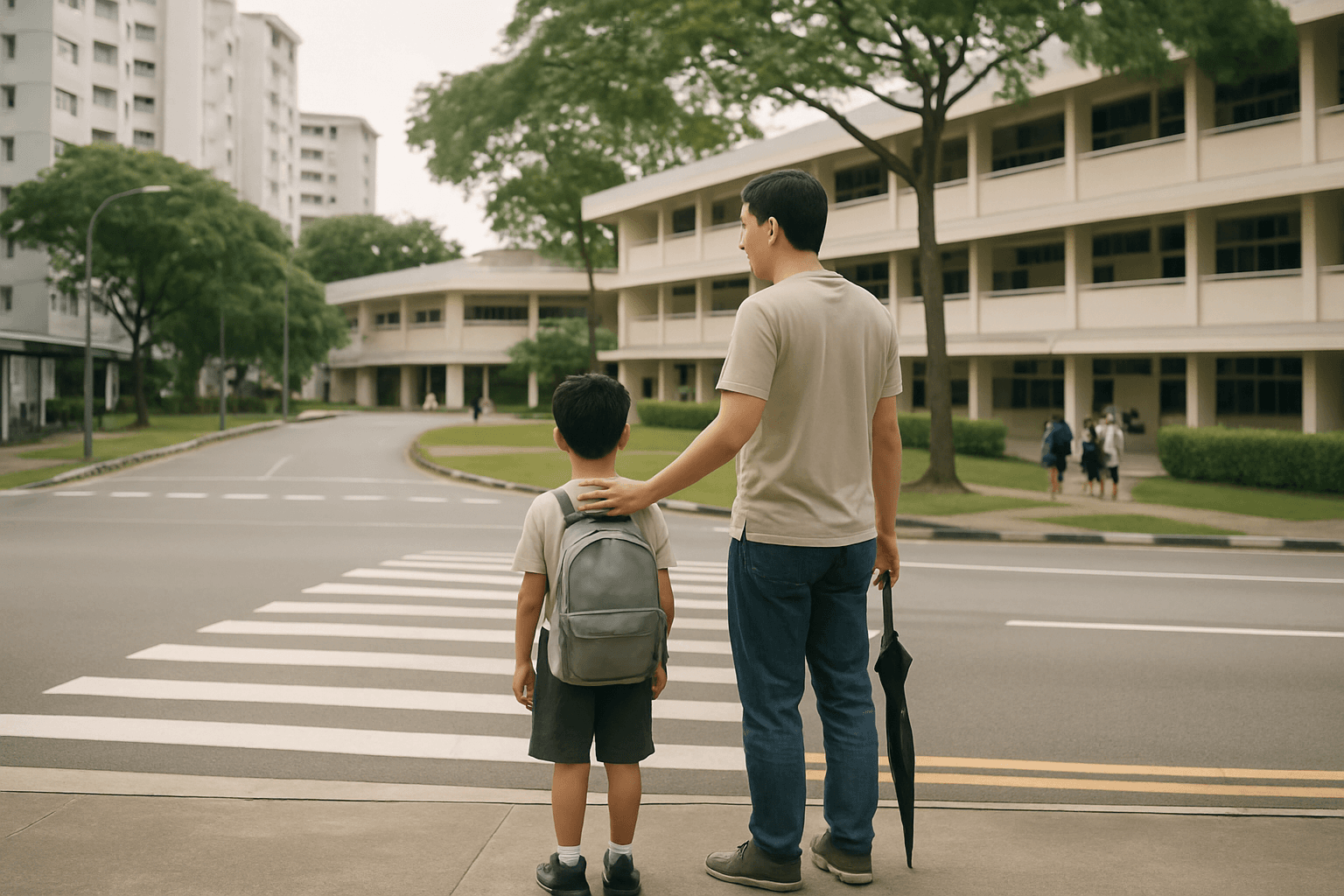
In Singapore, a "popular" primary school usually means a school that many parents want, talk about, or expect to be harder to enter. That popularity may come from reputation, location, alumni pull, sibling demand, a specific language environment, or the belief that the school delivers stronger outcomes. It is not an official MOE label, and it does not automatically mean the school is better for every child.
The more useful question is not "Is this school popular?" but "Why is it popular, and does that reason matter for my child and my registration chances?" This guide breaks down the real drivers of demand so you can shortlist schools with a clearer head and fewer assumptions.
What does a "popular primary school" mean in Singapore?
In Singapore, a popular primary school usually means a school with stronger parent demand, visibility, or registration competition, not a formal MOE category.
In parent conversations, a popular primary school usually means a school with high demand. It is often widely known, frequently discussed, or harder to enter during P1 registration. That is not the same as an official quality label. MOE does not classify schools as "popular" or "unpopular" in this way.
The simplest way to think about it is this: popularity is a demand signal, not a certificate. A school may be popular because it has a long-standing name, because many families live nearby, or because parents believe it offers stronger academics, bilingual exposure, or a more structured culture. Those are different reasons, and they matter differently.
For example, one school may be famous across Singapore because of its history and alumni base. Another may be less famous nationally but still heavily oversubscribed because it sits in a dense estate with many young families. Both can feel competitive in registration, but for very different reasons.
That distinction helps you ask a better question: not "Is this a popular school?" but "What is driving the demand, and does that actually matter for my child?". For a broader overview, see Primary 1 Registration in Singapore: How It Works, Balloting Risk, and How to Choose a Realistic School Plan.
[Geylang] Primary Schools
For primary schools, I recommend going for convenience than popularity. Reason is the kids are still young, and travelling time should not be long enough to tire them out, even for those driving. Have you seen children dozing off in the parents car (some in an awkward position, especially straining their necks) because they have to wait up earlier than their peers to reach these “better” schools to feed their parents “ego”. Please note that the above is just my PERSONAL view as I have gone throu
[Geylang] Primary Schools
May I understand why MBS is such a popular school? There must be good reasons for it to be the most popular school in Geylang. Is a popular school a good school? Is the popularity driven by academic results or its all rounded education? Does the school teach or expect parents to send their children for enrichment? I understand that the school focuses a lot on Chinese which may or may not be a good thing for the kid. More important, is it done at the expense of other subjects? Would appreciate co
Why are some primary schools more popular in Singapore?
Schools usually become popular because of reputation, word-of-mouth, alumni and sibling demand, language profile, and repeated parent preference.
Most popular schools become popular through a mix of reputation, repeated parent preference, and network effects. Once enough families see a school as desirable, more families apply, more people talk about it, and the school's image gets reinforced year after year.
Reputation is one driver. Some schools have strong name recognition and become default first choices for parents, even before the family studies the school closely. Word-of-mouth is another. When preschool parents, relatives, or neighbours keep mentioning the same few schools, those schools gain momentum.
Family ties also matter. If many parents are alumni, or if older siblings are already enrolled, demand can keep renewing itself. Some families are also looking for a particular language environment, especially a stronger Chinese language setting, which is why explanations of what a SAP school is in Singapore often matter in school choice.
Parent perception of outcomes matters too. Some schools are seen as academically strong, disciplined, or better connected socially. Whether every part of that perception is accurate is a separate question, but perception alone can still drive demand.
A useful insight for parents: popularity is often self-reinforcing. Once a school is widely seen as a "good choice," the competition itself becomes part of its reputation. For a broader overview, see Primary 1 Registration Distance Priority: How Home-School Distance Works.
Top Primary school?
Honestly I am not sure if there is such a thing as a top primary school based on the efforts of the school. All schools have the same mission set by MOE to deliver the same thing. If you hear from them, even teachers they have no control, it's all from MOE. So what then would you consider as top primary school? It definitely cannot be results alone because results are typically parents-driven in today's context in some schools. Every school has the best cream of the crop and the worst performers
Top Primary school?
To be fair, I think people should not tag “good” or “bad” to a school. I don’t think there is really a “bad” school in Singapore. To me, the most important thing is the teacher your child gets. You can have very lousy teachers in the popular “good” schools as well. Or you can have very good teachers in the normal neighbourhood schools. Academic excellence is not the only thing to look for in primary school education, what about character building ? team work ? All these should be equally importa
Have More Questions?
Get personalized guidance on schools, tuition, enrichment and education pathways with AskVaiser.
Try AskVaiser for Free →How much does location affect a school's popularity?
Location matters a lot because nearby schools are easier to manage and often attract heavier local demand.
A lot. In Singapore, popularity is often shaped as much by geography as by reputation. Parents do not only choose schools with a strong name. They also choose schools that are manageable every school day.
A nearby school is easier for morning routines, after-school pickup, student care transitions, enrichment planning, and sick-day logistics. That makes it attractive even before parents compare culture or results. In estates with many young families, several households may be targeting the same nearby schools at the same time, which naturally increases demand.
This is why a school in a mature estate or a dense housing cluster can become highly sought after even if it is not treated as a prestige school. Local demand alone can make a school competitive. In other words, a school's popularity may reflect neighbourhood pressure more than islandwide status.
Parents often underestimate the daily cost of distance. A school that looks fine on a map can feel very different when it means an early start, crowded transport, and a tired seven-year-old five days a week. A 15-minute journey may be sustainable for six years. A much longer one may not be.
If location is a major factor for your family, compare realistic door-to-door travel time and read our guide to Primary 1 registration distance priority. For a parent perspective on nearby school selection, how to choose the best primary school near you is also a helpful read. MOE’s SchoolFinder and OneMap School Query are useful tools for checking options and distance. For a broader overview, see Primary 1 Registration: Should You Pick a Popular Dream School or a Safer Nearby School?.
Top Primary school?
Yup... you are absolutely right about what we want as parents... that all schools are equal in standards and procedures, etc. But in practice, just as everyone is not born equal, schools are also not equal, even if they are all teaching the same curriculum. Simple reason - teachers are all different. And teachers are the most critical element in a primary school. I was lucky to have a great P1 teacher during my time - she made an ENORMOUS difference in how I turned out - from being last the kind
[Geylang] Primary Schools
First of all, I am not sure why some schools, such as, MBS, do not published these important info on their website...which i think they are very important info in deciding which sch is good for your child. But most schs that are proud of their results should put them up... Tao Nan, St Hilda, CHIJ, Kong Hwa,... all have it. Don't you think these data are important, instead of letting it to speculation? Next is, if you are looking for popularity in choosing schs for your child, then you are really
Why do alumni and family ties make some schools harder to enter?
Alumni ties, sibling demand, and family loyalty can create repeat demand, which helps explain why some schools stay competitive year after year.
Schools with strong family and alumni attachment often stay competitive because demand keeps renewing itself. Former students may want their own children to attend the same school. Families with one child already enrolled often prefer to keep siblings together. That creates a steady base of committed applicants before other families even enter the picture.
This does not mean entry is automatic. It does mean some schools begin each registration cycle with stronger built-in demand. For outside parents, that can make the school feel consistently difficult to get into even when the school's reputation is only part of the story.
A common misunderstanding is to treat this as purely a prestige issue. In practice, many parents repeat the same school choice for practical reasons too. One school means one route, one set of announcements, one uniform system, and one school community. That matters a lot to working families.
If your target school has strong sibling or alumni demand, it is worth understanding the wider process instead of focusing on brand alone. Our Primary 1 Registration in Singapore guide gives the big picture, and if your older child is already in the school, does your younger child automatically get in? helps clarify one of the most common assumptions parents make. For a broader overview, see How to Read Past Balloting Data Before Chasing a Popular Primary School.
Are All Primary Schools The Same?
I saw an online article that many parents want their children to enter popular/famous primary schools because it is very difficult for a primary school to produce MANY academically strong PSLE scorers. Why? Primary school children come from all walks of life. Enrollment into a primary school has absolutely zero link to the K2 child's academic ability. There is no entrance test to do BEFORE enrolling into a Primary School. Priority phases include the child's parents' alumni links, the child's par
Are All Primary Schools The Same?
A lot of people underestimate the role parents play in the education landscape. In every school, the “parent support group” synergy can be a powerful source of strength for further improvements. A school with a better track record attracts parents who want the same for their children. Higher expectations will also lead to higher demands on the school teachers. In some schools, it is not uncommon for parents to voice their concerns to the school leaders, even to the ministry if teachers or exam p
Does a popular school always mean a better school?
No. A popular school may be in high demand, but that does not automatically mean better teaching or a better fit for your child.
No. Popularity is not the same as quality, and it is definitely not the same as fit. Some popular schools may look stronger partly because their students enter with more enrichment, tutoring, or stronger preschool preparation. That does not prove the teaching is better across the board.
A school can be in high demand and still be the wrong choice if the commute is draining, the culture feels too intense, or your child needs a gentler and more supportive environment. A school's results may reflect who enters, not just what happens inside the classroom.
Think of popularity as a demand signal. It is not proof of the best outcome for your child.
Are All Primary Schools The Same?
Maximum class size for P1 and P2 is 30. Maximum class size for P3 to P6 is 40. But some of the less popular schools, class is only 3/4 filled. So they have better teacher:student ratio which translates to more attention per child. Also, teachers can request to be posted to a school nearer their dwelling, for logistics reason. Furthermore, plenty of mission schools’ or famous schools’ alumni can request to be posted back to their Alma mater, so that they can “give back” to their roots. Need the p
Is PSLE really needed in Singapore?
:goodpost: I don't subscribe to the \"escalator theory\" and I agree with your theory! Just for the sake of discussion and to get the parents thinking, if we switch all the students from a \"branded\" school to another non-branded school, which group of students will perform better at O/A level, and have higher university entry rate? Like you, I am not saying good teachers don't matter. But I think the difference between teachers and facilities in branded and non-branded schools are not that muc
What do parents usually look for when they call a school "good"?
Parents usually mean a mix of academics, teacher care, discipline, values, language environment, CCAs, and overall school culture.
Parents usually mean a mix of academic, cultural, and practical factors. Results matter to some families, but they are rarely the whole picture. Many parents also care about teacher warmth, discipline, communication, character-building, CCAs, language environment, and whether the school feels nurturing or high-pressure.
This is why two parents can look at the same school and judge it very differently. One may like a school because it feels structured and achievement-focused. Another may avoid the same school because the child is anxious, needs a gentler transition, or would do better in a steadier environment.
A useful framing is this: a good school is often a value match before it is a brand name. Good for whom is the question that matters.
There is also evidence that many parents value more than grades alone. Reporting by TODAY highlighted that personal growth matters strongly to parents. So when someone says a school is "good," ask what they mean. Good for academics, good for pastoral care, good for bilingual development, or good for family logistics are not interchangeable.
If you want a broader parent lens beyond rankings and hearsay, 6 alternative ways to assess a school is a useful reminder of what families often overlook.
Preschools prepared your kids well for Singapore primary?
For parents who have already been through the pre-school days and with kids now in primary schools (Singapore schools), can you share your comments on your kid's previous preschool and their curriculum - specifically if they have prepared your child properly for the Singapore education system ? (not discussing the international or foreign schools system here) Nowadays, there are so many pre-schools and childcare centres with many learning methods. Parents currently at the pre-school stage will b
[Geylang] Primary Schools
Hi, There are always such talks about a particular school std has dropped,etc… and personally I wonder what is used as a benchmark to determine if the std has really dropped. I wonder if the following criterias represent the school std is “intact” : * Consistently produce top 15 PSLE students? * Improvement year on year results? * If they have more than 1 top 15 students in the previous ranking, they must continue to produce that? * Any others My kids attend a SAP school and it was my pri school
How does popularity affect P1 registration for parents?
Popularity usually means stronger competition, possible balloting pressure, and a bigger need for backup planning during P1 registration.
In practical terms, popularity usually means more competition and less room for casual decision-making. If many families want the same school, the registration process can become tighter and more stressful, especially for parents without stronger priority routes.
A common mistake is to focus only on reputation and forget the mechanics. Some schools face heavier demand because many nearby families are applying. Some are squeezed because family-linked applicants take up more places earlier. Some simply have smaller P1 intakes than other schools, which can make the competition feel sharper even if the school is not a household name.
You do not need to predict exact odds to use this information well. Treat popularity as a planning signal. Check whether your family has any realistic advantage tied to distance or family links. Compare the school against at least one backup that you would genuinely accept. If you are looking at a school with a history of strong demand, review past patterns carefully without assuming this year's outcome will be identical.
Our guide on how to read past balloting data before chasing a popular primary school can help you use old data sensibly, and what happens if you do not get your preferred school explains the next-step reality many parents only think about too late.
The key mindset is simple: popularity matters most when it changes your practical chances, not when it just flatters the school's image.
[Punggol] Primary Schools
hmm… the most impt thing is your child must be happy. This must come from supportive parents in their learning. My boy enjoys his class and gamely contribute and am glad teachers (Chinese and form teacher) have been responsive in his learning. As he was a transferred student, I was also concern of him blending to his school but such were unfound. Phew! All in all, in a primary school, be it a popular, a top or mediocre school (in others’ opinion) you can still “control” a child’s learning habits
Competition among primary schools
Hi Parents, I'm just another worried mum who is now worrying about P1 registration for my girl next year. As quoted by ChiefKiasu, \"Students and outsiders love to lambast parents for being kiasu and creating the competitive culture in Primary school....... So who's fault is it that the Primary schools are so competitive?\" How do we as parents, label a school being \"good\", \"average\" or \"not so good\" ? From a parent perspectives, why do (must) we, by all means try to get our children into
Should you choose a popular school or a school that fits your child?
Choose fit first. A school's daily suitability for your child and family usually matters more than popularity alone.
If you have to choose between reputation and fit, fit should usually win. Primary school is a daily lived experience, not a one-time label. The right school affects your child's adjustment, confidence, travel routine, sleep, and family stress over several years.
A useful rule of thumb is this: prestige is occasional, but commute is daily.
Consider a child who is cheerful but slow to warm up in new environments. A highly sought-after school with a longer commute and a more intense reputation may look attractive on paper, but the child may struggle with the pace and the daily fatigue. A closer school with a steadier environment may lead to a much better first few years. In another case, a family may care deeply about a stronger Chinese language setting and decide that higher demand is worth it because that school characteristic genuinely matches their goals. That is a fit decision, not a prestige decision.
MOE's broad advice to parents is also practical: consider your child's abilities and interests, the school's culture, home-school distance, Mother Tongue options, and any learning support needs. Popularity should sit below those fundamentals, not replace them.
A less famous school may still offer strong care, solid opportunities, and a happier daily routine. Neighbourhood schools are worthy too and Can a primary school determine your child's future success? are useful reminders to keep the long view. If you are weighing this tradeoff directly, our article on whether to pick a popular dream school or a safer nearby school goes deeper.
The best school is usually the one your child can attend consistently and grow in, not just the one other parents recognise instantly.
What goes into choosing a suitable Secondary School
Saw this being shared in the parents groupchats. https://www.thewackyduo.com/2022/11/how-to-choose-secondary-school-guide.html https://i.imgur.com/fDkJSy6.png\"> https://www.thewackyduo.com/2022/11/how-to-choose-secondary-school-guide.html It's time to choose a secondary school. Choosing a secondary school is a completely different process than primary school. One tends to choose a primary school based on distance or affiliation. Picking a secondary school is a different ball game. Grades play a
[Geylang] Primary Schools
From what you've described, it appears that GMPS may be a better overall school than Haig Girls. But could it be that GMPS has more obvious credentials (given its a government-aided school) and therefore more of what it does is known? And Haig Girls, being a much smaller school (in terms of physical size) does not have so much publicity, and less of what it does is actually known to the public (except of course its PSLE results which of course doesn't look that fantastic)? :idea: So would anyone
What is a smarter way to shortlist primary schools in Singapore?
Build your shortlist around fit, practicality, and realistic registration chances, not reputation alone.
- ✓Start with daily practicality: compare realistic door-to-door travel time, not just map distance.
- ✓Check whether the school offers the Mother Tongue Language and learning support your child may need.
- ✓Read the school’s culture through open house materials, SchoolFinder, and parent impressions, then ask whether your child will cope well with that environment.
- ✓Separate why the school is in demand: national reputation, local neighbourhood pressure, sibling demand, or alumni pull.
- ✓Be honest about your likely registration route and whether the school is realistic enough to deserve emotional weight.
- ✓Keep at least one backup school that you would genuinely be comfortable with, not one you already resent.
- ✓Compare schools by fit, routine, and child needs before comparing them by name recognition.
- ✓Use your shortlist to make a calm plan, not to collect impressive names.
Have More Questions?
Get personalized guidance on schools, tuition, enrichment and education pathways with AskVaiser.
Try AskVaiser for Free →