
How to Find Lower Balloting Risk Primary Schools Near You in Singapore
A practical parent guide to shortlisting realistic primary schools using location, commute, likely registration phase, and past demand signals.
The best way to find lower balloting risk primary schools in your area is to start with nearby schools, rule out options that are hard to manage daily, check your likely registration phase route, and then use past registration trends as a pressure signal rather than a promise. A school is only low-risk if it looks manageable for the phase your family can realistically use.
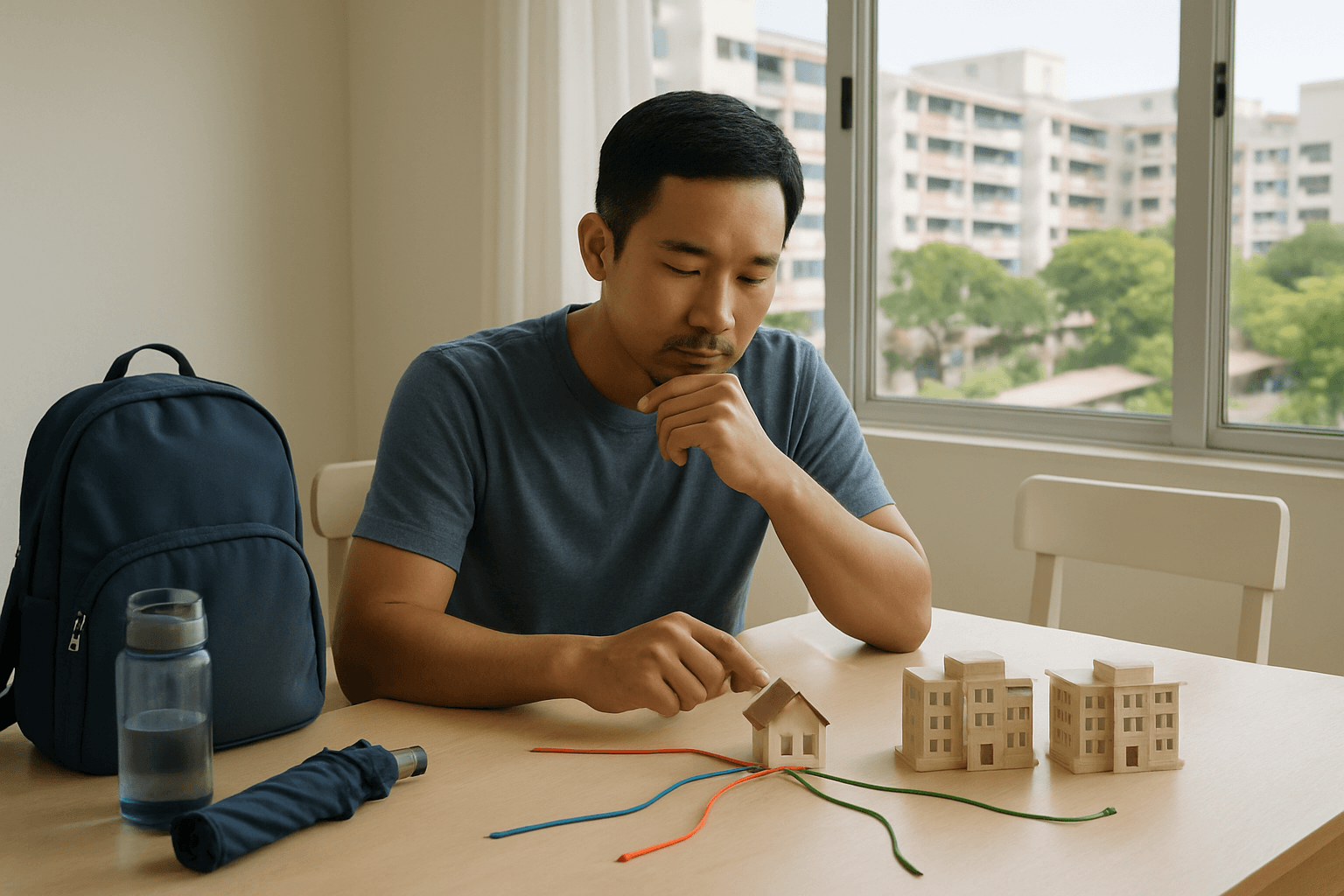
If you are searching for low ballot primary schools near me in Singapore, the most practical method is simple: begin with nearby schools, cut any that do not work for your daily routine, check which registration phase your family is realistically likely to enter, and then study past demand patterns for repeated pressure. Do not treat school reputation, one calm year, or distance alone as the answer. Balloting risk changes from year to year, so the real goal is not certainty. It is a sensible shortlist you can actually use.
What does "lower balloting risk" actually mean for a primary school parent?
A lower-risk school is one that looks less likely to be oversubscribed in the phase your child can realistically enter, not a school that never ballots.
Lower balloting risk does not mean a school never has a ballot. It means the school looks less likely to be oversubscribed in the registration phase your family can realistically enter.
That distinction matters more than many parents expect. A well-known school may still be realistic for a family with a stronger entry route, while a quieter school may still be risky if most places are usually taken before your turn. The useful question is not simply, "Is this school popular?" It is, "Is this school still realistic at my likely point of entry?"
Think of balloting risk as pressure at your stage of the process, not as a general popularity ranking. If you want the bigger picture first, our Primary 1 Registration in Singapore guide explains how balloting fits into the full process.
[Pasir Ris] Primary Schools
Schools Conducting Balloting (as at 4 August 2014) Source : http://www.moe.gov.sg/education/admissions/primary-one-registration/balloting/ Elias Park Primary School: \tAll SC children are admitted to the school in this phase. Balloting will be conducted for PR children residing between 1km and 2km of the school. Pasir Ris Primary School: \tBalloting will be conducted for SC children residing within 1km of the school. White Sands Primary School: \tBalloting will be conducted for SC children resid
All About Primary Schools' Balloting History
Have you check out this http://www.kiasuparents.com/kiasu/content/singapore-primary-1-registration-school-balloting-history ?
Which nearby schools are most likely to have lower ballot pressure?
The nearby schools most likely to have lower ballot pressure are usually neighbourhood options that attract less spillover demand and have shown lighter pressure or vacancies in recent cycles.
Start with nearby neighbourhood schools that are less heavily chased by families outside the immediate area and that have shown lighter pressure or vacancies in recent cycles. These are often more realistic than the obvious "dream school" in the same district.
Geography gives useful clues before you even look at trend data. A school beside a large housing cluster, transport node, or especially sought-after estate may attract applications from many directions. Another school a short drive away may face much less pressure simply because fewer parents place it at the top of their list. Near you does not mean equally competitive.
MOE has also said that when a popular school is not accessible, parents can consider nearby schools that still have vacancies, as noted in this MOE parliamentary reply. That is often the more practical move for families who care more about certainty and daily routine than chasing a school name.
A good way to remember it is this: lower ballot often means less chased, not less good. For a broader overview, see Primary 1 Registration Phases in Singapore: What Each Phase Means for Your Chances.
All About Primary Schools' Balloting History
With the latest https://www.moe.gov.sg/news/press-releases/20210909-changes-to-the-primary-one-registration-framework-to-ensure-our-schools-remain-open-to-all announcement wef 2022 registration, you may like to know the following: Had the new changes applied to the 2021 registration: 2A would have another 16 schools joined the ballot: Yu Neng Primary School Chongzheng Primary School Fairfield Methodist School Red Swastika School Henry Park Primary School Riverside Primary School Westwood Primary
[Bukit Timah] Primary Schools
2012 Phase 2C Balloting took place within 1 km , for 5 schools :- 1. Nanyang primary Balloting was conducted for SC children residing within 1km of the school. (33 applicants, 25 places) 2. Pei Hwa Presbyterian primary Balloting was conducted for SC children residing within 1km of the school. (42 applicants, 27 places) 3. Henry Park primary Balloting was conducted for SC children residing within 1km of the school. (43 applicants, 15 places) 4. Raffles Girls’ primary Balloting was conducted for S
Have More Questions?
Get personalized guidance on schools, tuition, enrichment and education pathways with AskVaiser.
Try AskVaiser for Free →How do you use past registration trends without overreading them?
Past data is best used to spot repeated pressure in your likely phase, not to guess the exact outcome of the next registration exercise.
Use past registration data to spot repeated pressure, not to predict the exact result of the next year. The most helpful question is whether a school often runs tight in the phase that matters to you, not whether it happened to ballot once.
Look across several recent cycles and focus on patterns. If a school repeatedly ends up close to full before your likely phase, or often needs balloting at the same stage, that is a stronger warning sign than one unusually busy year. On the other hand, one spike or one calm year can happen because of cohort size, shifting local demand, or parents moving away from another nearby school.
Community analyses can help parents read those patterns, but they are not official forecasts. For example, 2022 Phase 2C(S) and 2023 Phase 2C(S) commentaries flagged schools with very few places left as likely ballot cases, while this 2021 Phase 2C analysis treated schools that were already more than 90% filled as likely to face pressure. Those are useful ways to read demand, but they are examples of parent analysis, not official MOE rules.
What parents often get wrong is assuming one easy year means a school is now safe, or one difficult year means it is permanently impossible. A better takeaway is simpler: repeated pressure matters more than isolated drama. If you want a deeper walkthrough, see How to Read Past Balloting Data Before Chasing a Popular Primary School. For a broader overview, see Primary 1 Registration Distance Priority: How Home-School Distance Works.
All About Primary Schools' Balloting History
Schools' balloting history can be found here : http://www.kiasuparents.com/kiasu/content/singapore-primary-1-registration-school-balloting-history?page=8
All About Primary Schools' Balloting History
Hi all, if u want to check for history of ballot you can try this website: https://elite.com.sg/primary-schools Came across this when I was checking on balloting history as well. Hope it helps.
How important is commute time when choosing a lower-risk school?
Very important. A lower-risk school is only a good option if the daily commute and after-school routine are workable for your family.
It is very important. A school that looks safer on paper can still be the wrong choice if the daily trip is tiring, fragile, or hard to coordinate.
Parents usually make better decisions when they test the real routine instead of just checking map distance. Ask whether the route still works during the morning rush, on rainy days, or when the usual adult is unavailable. A 12-minute drive for one parent may become a difficult multi-leg public transport journey for a grandparent, helper, or backup caregiver. That matters more than many shortlists reflect.
After-school arrangements matter too. MOE states that every primary school has a school-based Student Care Centre, and parents can approach the school after enrolment to find out the centre's application procedure and criteria, as noted in this MOE FAQ. That does not make every school equally convenient, but it does mean you should compare the full weekday setup, not just registration odds.
A simple parent rule works well here: a school that is easy to enter but hard to live with may still be the wrong school. If distance is a major part of your plan, our guide on home-school distance priority can help. For a broader overview, see How to Read Past Balloting Data Before Chasing a Popular Primary School.
All About Primary Schools' Balloting History
Phase 2C Supplementary , for 2016 P1 intake (born 2009) Schools Conducting Balloting, at P2C (Supp) (as at 14 August 2015) 1) CHIJ (Kellock) Balloting will be conducted for SC children residing outside 2km of the school. 2) Clementi Primary School Balloting will be conducted for SC children residing outside 2km of the school. 3) Concord Primary School Balloting will be conducted for SC children residing between 1km and 2km of the school. 4) Corporation Primary School Balloting will be conducted
All About Primary Schools' Balloting History
end of Phase 2B , as at Wednesday, 24 July 2013 (for 2014 P1 intake - born 2007, year of golden piggy) Balloting at Phase 2B - will be conducted on Friday, 26 July 2013. \t30 schools conducting Balloting (as at 24 July 2013)\t 1.\tAi Tong School \tBalloting will be conducted for SC children residing within 1km of the school. 2.\tAnglo-Chinese School (Junior)\t The school has places for only SC children residing within 1km of the school. No balloting will be conducted. 3.\tAnglo-Chinese School (P
How do registration phases affect your real chance of getting in?
Your effective ballot risk depends on the phase you are realistically likely to use, not just on whether the school is famous or near your home.
Your real chance depends less on the school's general reputation and more on the registration phase you are realistically likely to enter. A school may sound manageable in broad parent discussion, but if many places are usually taken before your phase, the risk for your family can be much higher than it first appears.
This is where parents often misjudge a shortlist. One family may feel safe because they live near the school, but if they are relying on a later phase, distance may not solve their actual problem. Another family may assume a popular school is out of reach, even though their likely phase route makes it more realistic than expected. The school's name matters less than your entry route.
Before calling any school safe or risky, ask a sharper question: what is my probable phase path for this school? That one check usually changes the shortlist quickly. If you want a clearer explanation of the stages, read Primary 1 Registration Phases in Singapore. If sibling status affects your options, see If Your Older Child Is Already in the School, Does Your Younger Child Automatically Get In?. For a broader overview, see Primary 1 Registration: Should You Pick a Popular Dream School or a Safer Nearby School?.
[Bukit Timah] Primary Schools
end of Phase 2C Day 3 5 schools enter balloting :- 1.\tHenry Park Primary School\t Balloting will be conducted for SC children residing within 1km of the school. 2. Nanyang Primary School\t Balloting will be conducted for SC children residing within 1km of the school. 3. Pei Hwa Presbyterian Primary School \tBalloting will be conducted for SC children residing within 1km of the school. 4. \tRaffles Girls’ Primary School\t Balloting will be conducted for SC children residing within 1km of the sch
All About Primary Schools' Balloting History
http://www.moe.gov.sg/education/admissions/primary-one-registration/balloting/ If there are no withdrawals, these 24 schools listed below will be conducting balloting at Phase 2B on Wednesday, 28 July 2010. The schools have informed parents concerned of the balloting time. Parents are welcome to witness the conduct of the balloting.
What should parents shortlist first: geography, school profile, or past ballot history?
Shortlist by geography first, then practical fit, then demand history.
Start with geography first, then practical fit, and only then compare demand history. That order helps you avoid spending time on schools that look attractive but do not actually work for your weekday life.
Your first cut should remove schools that are too far, awkward to reach, or hard to manage for drop-off and pick-up. After that, look at practical fit: the kind of school environment you want, whether the routine feels manageable for your child, and whether your after-school setup is realistic. Only then should you use past ballot history to separate realistic options from higher-pressure ones.
Many parents reverse this. They start with reputation, online chatter, or school brand, then discover later that the commute is poor or their likely phase route is weak. A school you can live with every day usually beats a school that only looks good on paper. If you are still weighing school name versus daily fit, Popular Primary School vs Neighbourhood School in Singapore is a useful next read.
[Geylang] Primary Schools
See the link below. https://www.kiasuparents.com/kiasu/article/singapore-primary-1-registration-school-balloting-history/
All About Primary Schools' Balloting History
You could try this: http://www.kiasuparents.com/kiasu/content/singapore-primary-1-registration-school-balloting-history It is from this site. Hope it helps.
What is a practical shortlist method for "low ballot primary schools near me"?
Use a simple four-part filter: nearby schools, commute reality, likely phase access, and recent demand signals.
- ✓Start with nearby schools in your area using MOE SchoolFinder and each school's contact details.
- ✓Remove any school that does not work for real daily travel, not just map distance.
- ✓Check your family's likely registration phase route before calling a school realistic.
- ✓Compare recent demand patterns and look for repeated oversubscription pressure rather than one dramatic year.
- ✓Keep at least one nearby lower-pressure option on your shortlist, even if you also want to try for a more competitive school.
- ✓Treat the shortlist as a planning tool, not as a promise that a ballot will or will not happen.
What do parents often overlook when trying to avoid balloting?
Parents often overlook their likely phase, daily logistics, and whether a school is repeatedly near full before their turn.
The most common mistake is treating distance as the whole strategy. Distance can matter, but it does not replace checking phase reality, recent demand pressure, and whether the school actually works for your household. Parents also often over-focus on branded schools, ignore after-school logistics, or assume one calm year means the school is now permanently easy to enter. The safest school on paper is not always the safest choice for your family.
All About Primary Schools' Balloting History
check below link https://www.kiasuparents.com/kiasu/article/singapore-primary-1-registration-school-balloting-history/
All About Primary Schools' Balloting History
if fail in balloting at Phase 2B (for Catholic schools like CHIJ Toa payoh primary), SC children can still ballot under Phase 2C, less than 1 km radius. can refer past historical trend, for CHIJ Toa Payoh primary :- https://www.kiasuparents.com/kiasu/article/toa-payoh/
How should you balance a lower ballot risk school against one that is more desirable but harder to enter?
Pick the school that is realistic to enter and workable to live with every day, then decide how much risk you truly want to take for a more desirable option.
Choose the school you can realistically get into and manage every day, not just the one with the strongest brand. That does not mean you should never try for a more competitive school. It means the tradeoff should be deliberate.
For some families, the harder-to-enter school is worth trying because they have a stronger entry route and enough flexibility if the plan fails. For others, especially households with tight pick-up timing or limited transport flexibility, a nearby school with lower pressure may be the better choice because it reduces both registration stress and daily strain. A common middle-ground approach is to keep one aspirational choice and one realistic nearby backup instead of treating the process as all or nothing.
The best way to make this decision is to define your non-negotiables before comparing school names. If routine stability, commute reliability, and lower uncertainty matter most, the lower-risk school may be the smarter pick. If you are comfortable with a harder path and have thought through the fallback plan, a more desirable school may still be worth considering. If you are weighing that tradeoff now, Should You Pick a Popular Dream School or a Safer Nearby School? and What Happens If You Do Not Get Your Preferred School are the two next guides most parents find useful.
All About Primary Schools' Balloting History
The most important thing is which school you can realistically get in. No point discussing the merits of each school but can’t get in. Mee Toh will ballot for SC < 1km, with odds close to or exceed 3 to 1. For Waterway, you should get in without needing to ballot < 1km. Horizon is a little unknown this year, probably safe for SC < 1km. Therefore, the real question the kind of stress level you can endure during balloting, and do you realistically have a backup for Phase 2Cs.
All About Primary Schools' Balloting History
First check your second choice school, that can guarantee you a seat, if they are likely to have vacancies left in Phase 2C supp. If no, you may want to seriously consider going for second choice school cos balloting case in Henry Park n Fairfield does not guarantee you a seat - ie if you are risk-adverse. If you are game enough for balloting and willing to take the risk, monitor the stats during the last day of Phase 2C ie call up the school to check the no. of applicants <1km vs the no. of vac
Have More Questions?
Get personalized guidance on schools, tuition, enrichment and education pathways with AskVaiser.
Try AskVaiser for Free →