
Primary 1 Registration for Non-Citizens in Singapore: What School Choice Usually Looks Like
A practical guide to realistic school options, key limits, and backup planning for non-citizen families.
Primary 1 registration for non-citizen families in Singapore is possible in some situations, but school choice is usually more limited than many parents expect. The practical approach is to confirm your child’s registration route early, focus on schools with a realistic path based on distance, vacancies, and demand, and keep backup options ready because popular schools can be highly competitive and may ballot when oversubscribed.
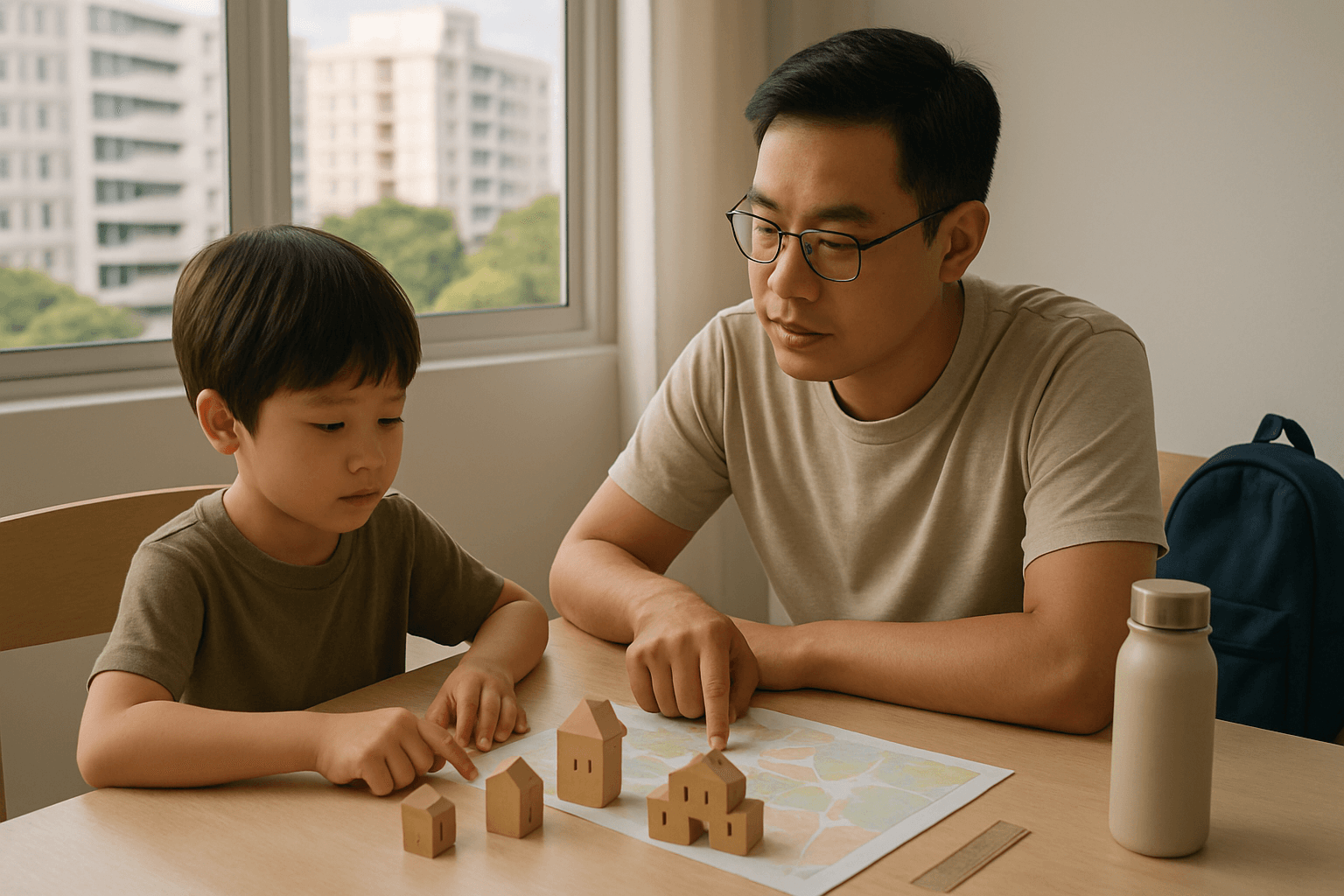
Yes, some non-citizen families may be able to register a child for Primary 1 in Singapore. The harder question is usually not whether you can try, but how many schools are realistically within reach once eligibility, vacancies, demand, and home-school distance are taken into account. For most families, the safest approach is to confirm the registration route early, shortlist nearby schools that are actually workable, and decide on a fallback before registration opens.
What does Primary 1 registration for non-citizens in Singapore usually involve?
It works more like a school-allocation process than a free-choice application. For non-citizen families, realistic options are shaped by route, vacancies, demand, and home-school distance.
Think of Primary 1 registration as a school-allocation process, not a free-choice application. Parents may indicate a preferred school, but the outcome is still shaped by whether the child can use that registration route, how many places are left at the school, how many other families apply, and how home-school distance is treated. If applications exceed vacancies within a stage or distance category, balloting can happen.
For non-citizen families, that means the first job is not to rank schools. It is to work out which schools are actually realistic before you get attached to one name. In recent cycles, the process has generally been handled online rather than school by school, as noted in this 2024 parent overview. The practical takeaway is simple: submitting the form is the last step, not the first. The real work is building a shortlist you can actually use. If you want the wider system first, start with our Primary 1 Registration in Singapore guide, then return here with your family situation in mind.
Give citizens priority in Primary 1 registration
Ha.ha. maybe next time the P1 registration phase can propose like that, just a suggestion: Phase 1 – Existing siblings in the Primary school except PR siblings. Phase 2A(1) – No Change Phase 2A (2) – No Change Phase 2B – No change Phase 2C – Singapore Citizenship Only. Phase 2C Supplementary - Singapore Citizenship Only Phase 3A – Permanent Residents Phase 3A Supplementary - Permanent Residents Phase 4 – Non Citizen.
Give citizens priority in Primary 1 registration
http://www.guidemesingapore.com/permanent-residence/singapore-pr-pros-and-cons.htm Quote from above : If your children are school-aged, they are high on the priority list, behind citizens, to enter public schools of your own choosing. Non PRs are at the bottom of the list and are often left with no choice when it comes to schools.
Can non-citizen families apply for Primary 1 registration?
Some non-citizen families may be able to apply, but you should not assume the same access or school options as citizen and PR families.
Some non-citizen families may be able to take part in the MOE Primary 1 process, but parents should not assume the route works the same way as it does for every citizen or PR family. The practical first move is to confirm whether your child can use the relevant registration pathway before you build a shortlist around a specific school.
This matters because the school question comes after the access question. Many parents start with, "Which school should we aim for?" The more useful question is, "What local-school options are realistically open to us?" Once that is clear, you can spend time comparing schools that are genuinely worth considering. If you need the broader starting point first, our guide on who is eligible for Primary 1 registration in Singapore is the best next read. If your family expects uncertainty even after that, make your backup plan early rather than waiting until the final weeks.
Give citizens priority in Primary 1 registration
Sharing with you the below blog entry from http://mrwangsaysso.blogspot.com/ on the same topic. Education, and Even More Discrimination Against Citizens ST Aug 20, 2009 Thanks, being a PR is good enough IN RESPONSE to letters by Mr Jimmy Loke ('The PR difference', last Saturday) and Mr Chia Kok Leong ('No school, no Singapore', last Saturday), I would only ask them to refer to Minister Mentor Lee Kuan Yew's speech reported last Friday ('MM: Foreign talent is vital'), where he gave an idea of the
Give citizens priority in Primary 1 registration
Not sure if this has been mentioned in KSP forum? From 2010, Singapore Citizens (SCs) will be given an additional ballot slip (i.e. two chances instead of one), while Permanent Residents (PRs) will retain one ballot slip whenever balloting is conducted by any school during the P1 Registration Exercise. SCs will therefore have a higher chance of securing a place for their child in a school of choice when there is balloting. Giving Singaporeans two chances during balloting will retain the underlyi
Have More Questions?
Get personalized guidance on schools, tuition, enrichment and education pathways with AskVaiser.
Try AskVaiser for Free →How much school choice do non-citizen families usually have?
Usually less than many parents expect. Your realistic school list is often shaped more by access, distance, and daily practicality than by preference alone.
Usually less than many parents expect, especially if they begin with popular schools. On paper, Singapore has many primary schools. In practice, a family’s workable list is often much shorter because vacancies differ by school, demand is uneven, and distance can quickly turn a school from "possible" into "not worth relying on." Parent analyses of capacity, such as this overview of available Primary 1 places, help show how uneven school availability can be.
A useful way to plan is to keep three lists in mind. First is the wish list: schools you like. Second is the realistic list: schools you would actually accept and have a plausible path to. Third is the fallback list: what protects the family if the first two do not work out. For example, a family in Bukit Panjang may like one high-demand school, but their realistic list may end up being one nearby neighbourhood school plus one or two acceptable alternatives with manageable transport. That is not settling. It is planning around the system as it actually works. If you are torn between prestige and likelihood, our guide on dream school versus safer nearby school can help. For a broader overview, see Primary 1 Registration Distance Priority: How Home-School Distance Works.
School Placement Exercise for returning S'porean children
Additional considerations: if u convert his citizenship to sg, he will have to serve NS. But if he is not an sg citizen or PR, he may not be able to enter a popular primary school, and will have to take the leftover slots like other foreigners.
Give citizens priority in Primary 1 registration
BTW I wrote ths to ST but it never got posted: In her letter, Mrs Agawal have hit the gist of why PR students should not be given equal chance for Primary 1 registration. She says that if her children were unable to secure a place in a good public school, why would her family to stay? A Singpore citizen will never be able to say that. We are here to stay and as such deserve the right to choose before a permanent resident. My son, a 4th generation Singaporean, was not able to secure a place in a
What kinds of schools are non-citizen families most likely to consider?
Start with nearby local schools, then widen your search only if the commute, fit, and likelihood of admission still make sense.
For most families, the most realistic starting point is nearby local schools, not famous schools across the island. A school that is close enough for a manageable morning routine is often the stronger option because distance matters in the registration process and the daily commute matters for six years. If your child needs a particular Mother Tongue Language offering, learning support, or a school environment that feels more suitable, those filters should shape the shortlist early.
This is also where parents often overrate reputation and underrate fit. MOE-aligned parent guidance points families to look beyond school name alone, and this parent FAQ on choosing a primary school is a useful reminder of the factors parents commonly overlook. The best school on paper is not always the best school for daily life. A neighbourhood school ten minutes away may be a better long-term choice than a more famous school that needs a long commute, more fragile logistics, and a much less certain admission path. If you are comparing reputation against fit, our guide to popular primary school versus neighbourhood school is a helpful companion read. For a broader overview, see Primary 1 Registration Unsuccessful: What Happens If You Do Not Get Your Preferred School.
Malaysian coming S'pore for Secondary School Education
You can choose to register with MOE, so they’ll conduct a placement test. Be warned: Your child may end up not going to S1 if they do not do well for the test. Or you can choose to go to the school direct to enquire and different schools will have different requirements. Some strictly refer you back to MOE.
Give citizens priority in Primary 1 registration
How about a scheme where advantage points will be given. Such that if both parent are citizen, then awards like 20 points, then if completed NS, some more points, and etc. Scheme can be defined to include like sibling same school, PV, community work, stay near home, and etc and etc. . The more points you get put you higher for prioirty for the school of your choice. . .anymore new ideas, we have to help those civil servants to think I guess. .
Why should non-citizen parents plan a backup before choosing a school?
Because a preferred school can close off quickly, so one choice is a hope, not a full plan.
Because one preferred school is not a plan. A school can look possible at first and still become unrealistic once demand, vacancies, or distance are factored in. The calmest approach is to decide early what your first-choice school is, which nearby alternatives are genuinely acceptable, and what separate fallback route you would use if a local place remains uncertain. A six-year commute is part of the decision, not an afterthought. For a broader overview, see Primary 1 Registration: Should You Pick a Popular Dream School or a Safer Nearby School?.
Give citizens priority in Primary 1 registration
Think about it, if her husband or herself cant get a job here ,do you think she can or will stay? For these ppl, jobs & money are the main priorities before education. I dont believe that they will go for a lower paying job or less prospective jobs so that their children can have better education in a foreign country. They will go to where there are greener grass & if it packages with good education, why not. And at the same time get to enjoy same priviledge as citizens like us. For one thing, m
Give citizens priority in Primary 1 registration
I have the exact same thought few weeks ago during the \"heat\" of the P1 registration in July. Made this comment to some friends including DH after seeing so many parents in this forum getting stressed over their children P1 registration. All of them said cannot lah, discrimination, etc. etc. I know my comment would be politically incorrect and I don't think the government or MOE will ever implement it, but I really think in Phase 2C, there should be a distinction made between Singaporeans and
What should parents prepare before registration opens?
Confirm the route, settle the address, check the distance, shortlist realistic schools, and gather common details early.
- ✓Confirm early whether your child can use the relevant Primary 1 registration route so you do not build a shortlist on the wrong assumption.
- ✓Decide which residential address you may use for registration and make sure it reflects where the registering parent and child actually live.
- ✓Check home-school distance for every shortlisted school using OneMap School Query, because distance can affect how realistic a school is.
- ✓If parents have different NRIC addresses, read the relevant MOE FAQ and compare it with our guides on [which home address counts](/blog/which-home-address-counts-for-primary-1-registration-in-singapore) and [how distance priority works](/blog/primary-1-registration-distance-priority-how-home-school-distance-works).
- ✓Build a shortlist with a realistic first choice, acceptable alternatives, and one fallback plan rather than only one dream school.
- ✓Gather the child’s core details early, such as birth certificate number, date of birth, and parent contact information.
- ✓Keep common supporting records ready as examples, not an official exhaustive checklist, such as identity documents, proof of address, and any health or immunisation records you may be asked to provide.
- ✓Check whether each shortlisted school fits your child’s Mother Tongue Language needs, any learning support needs, and your daily transport arrangements.
- ✓Test the commute at actual school-start timing if a school is not very near home, because a route that looks fine on a map can feel very different in the morning rush.
- ✓If you want a broader prep list, use our [Primary 1 registration documents checklist](/blog/primary-1-registration-documents-checklist-what-singapore-parents-commonly-prepare) as a parent planning guide.
What common mistakes do non-citizen parents make when choosing a school?
The biggest mistakes are focusing only on school brand, ignoring distance, and underestimating how competitive a popular school can be.
The biggest mistake is choosing by school brand alone. A well-known school may sound attractive, but if the access path is already tight and the commute is long, it may be a weak family decision even before you know the outcome. Another common mistake is treating distance as a small admin detail. In reality, distance can affect both admission chances and everyday life, which is why our guides on distance priority and which address counts matter so much.
Parents also sometimes confuse eligibility with likelihood. Being allowed to apply does not mean a school is realistically within reach. Nearness can help, but it does not remove competition. Balloting is not a rare edge case for sought-after schools. Another blind spot is ignoring fit issues such as Mother Tongue offering, support needs, childcare handover, or whether grandparents can realistically manage pickup. A school that is hard to enter can also be hard to live with for six years if the daily travel is unrealistic. If a school is known for strong demand, it is worth reading how to read past balloting data before treating it as a serious first choice.
Give citizens priority in Primary 1 registration
A rebutal.. .. http://www.straitstimes.com/ST+Forum/Online+Story/STIStory_419729.html Priority in education for citizens and non-citizens is an either-or option MRS Sweta Agarwal, in her letter on Thursday ('Thanks, being a PR is good enough), has rightly pointed out that taking citizenship is a personal choice. Again, she is right that 'every child has the right to get the best education possible'. However, she is plainly misguided in believing that while in Singapore, a non-Singaporean child s
Give citizens priority in Primary 1 registration
Agree with what you say..as a father, i would also wan my son to study in a school near home and not subject him to the journey to and fro from a school 10KM away.... courtesy of MOE. Their existing policy of Primary School Registration is a total disgrace. Why give equal rights to non-citizens?? Those within the PAP party and working senior management level MOE staff can easily get school under Phase 2B, do we citizens have such luxury? My son lost both ballots in Phase 2C and Phase 2C Supp. MO
How should families plan if a local school place is uncertain?
Move from one preferred school to a tiered plan that covers both admission risk and daily family life.
Move from one preferred school to a tiered plan that keeps daily life workable. Start by identifying the local schools that are actually acceptable to your family, not just the one you would ideally like. Then test the real-world details early: the morning journey, after-school pickup, Mother Tongue fit, any support needs, and whether both parents can still manage work routines if the school is not the nearest one.
A practical example helps. One family may keep two nearby local schools on the table because both are manageable and grandparents can help with pickup. Another family may decide that if the local-school route remains too uncertain, they will widen the search area only slightly rather than accept an exhausting commute. Some non-citizen families also keep an international school or another education arrangement open in parallel, simply because they do not want to be making that decision under time pressure. Uncertainty becomes much easier to handle when the fallback is already decided. If you want to think through the downside properly, read what happens if you do not get your preferred school.
2013 School Placement Exercise for Returning Singaporeans
School Placement Exercise 1) The 2013 School Placement Exercise for Returning Singaporeans (SPERS) is open for registration from 17 July 2013 for Singaporean children who are returning from overseas and wish to join our secondary schools, junior colleges (JC) or Millennia Institute (MI) at the beginning of academic year 2014. 2) SPERS is a centralised placement exercise held at the end of the year for Returning Singaporeans (RS). With SPERS, Singaporean parents working abroad can look forward to
International students applying to Singapore Pr schools
I'm pretty sure they cannot approach a school/MOE for a place mid-year at this point in time. If arriving March +/-, I think the two options are: a) Get kid and one parent temporarily here in Feb for S-AEIS. If pass, I assume entry starts in Term 3 (after June holidays). If unsuccessful, probably need to enroll in int'l school for Aug-Sept and can try AEIS again in Sept. b) Arrive in March +/- and take AEIS in Sept for entry the following year. Outcome probably won't be known until very late in
Can a non-citizen child realistically get into a popular primary school in Singapore?
Yes, it can happen, but most families should treat a popular school as a long-shot option rather than the main plan.
It is possible, but it is not something most parents should count on. Popular primary schools are competitive for everyone, and they are especially poor choices for families who need certainty. If a school already has strong demand, treat it as a long-shot option unless your family is comfortable with the risk and already has a realistic fallback.
A simple test helps. Ask yourself whether you would still feel calm if that school does not work out. If the answer is no, it should not be your only serious plan. A better approach is to apply with clear eyes, read competition signals from past years where relevant, and keep one or two workable alternatives ready from the start. Our articles on past balloting data and dream school versus safer nearby school can help you make that call more calmly.
[Kallang] Primary Schools
http://www.moe.gov.sg/education/admissions/primary-one-registration/vacancies/#kallang
[Kallang] Primary Schools
Think you better check out the MOE website http://www.moe.edu.sg/education/admissions/primary-one-registration/phases/ P2C - 27-29 July
Have More Questions?
Get personalized guidance on schools, tuition, enrichment and education pathways with AskVaiser.
Try AskVaiser for Free →