
Primary 1 Registration Without School Ties: How to Build a Realistic School List
A practical Singapore P1 planning guide for parents without alumni, sibling, staff, affiliation, or confirmed volunteer advantages.
The best Primary 1 registration strategy without school ties is a risk-managed shortlist, not a dream-only list. Start with schools your family can realistically manage, use home-to-school distance as a major filter, treat past demand as a risk signal rather than a promise, and keep only one stretch choice unless you are fully comfortable with the fallback.
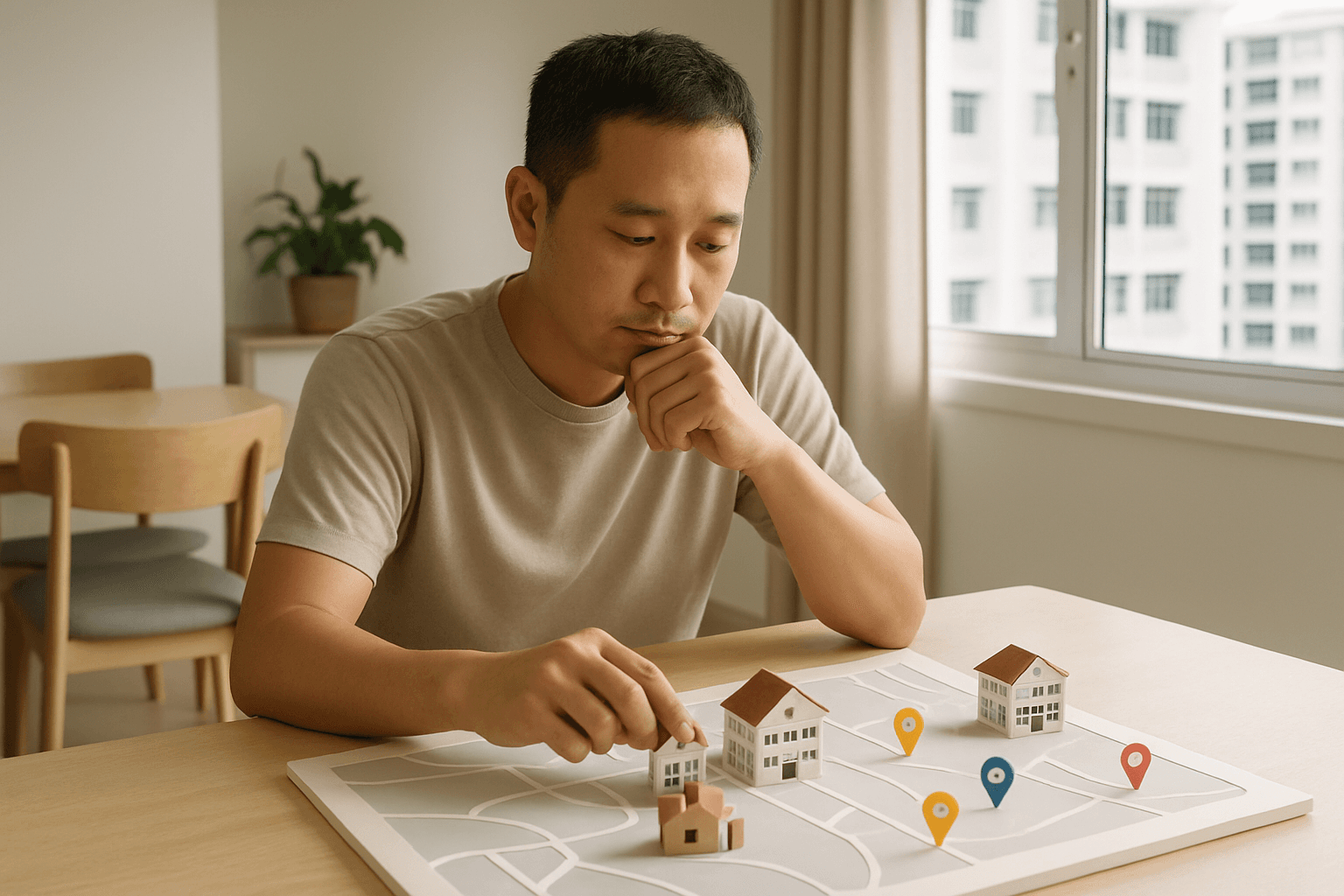
If you are doing Primary 1 registration without school ties, plan around entry risk and daily family fit, not reputation alone. The most practical approach is to shortlist one stretch school, two or three realistic options, and at least one safer backup that still works for your child, commute, and caregiving routine.
What does a realistic Primary 1 registration strategy look like if you have no school ties?
Build a risk-managed shortlist: one stretch school, several realistic options, and at least one backup you would genuinely accept.
A realistic Primary 1 registration strategy without school ties is a risk-managed school list, not a reputation-led wish list. If you do not have sibling, alumni, staff, affiliation, or a confirmed school-recognised volunteer route, your biggest controllable advantage is the quality of your shortlist. For most families, the safest structure is one stretch school, two or three realistic schools, and at least one safer backup you would honestly accept.
Think in bands, not brands. A sensible stretch school might be a popular school near home that you like enough to try for, knowing it may not work out. Your realistic choices are schools that still suit your child and routine, but do not look permanently over-pressured. Your safer backup is the school you can picture managing on ordinary Tuesdays, not just on registration day. If you need the wider process first, start with our Primary 1 Registration in Singapore guide. It also helps to keep MOE's broader message in mind from its Committee of Supply response: school choice should be about fit and practicality, not just brand.
All about Transferring to Other Primary Schools
I suppose before august, u will still be living in Punggol? Perhaps you still need some time to renovate, move/pack or settle down. Think it’s easier to transfer to TPY schools when your new premise is ready and settled.. perhaps register your child where your p2 is first and apply for transfer later. Better to start in a fresh year, say p3 and p1. If you have a caregiver for your p1 near TPY, u can try register p1 under that address...
Share with us your kid's P1 registration experience
First thing to do after being balloted out, is to put your child's name under the school's wait list. After then, I've wrote in to MOE, called/met the school's Principal for discussion. Telling them all my problems and how the registration system had affected us (because I have only 1 school within 2km and NO school within 1km). With this factual, MOE has verified and consulted the school. My son was then placed on the highest priority in the waiting list .. and fortunately by early Nov, we were
What counts as "no school ties" in Singapore Primary 1 registration?
If you do not have a confirmed sibling, alumni, staff, affiliation, or school-recognised volunteer route, plan as a no-ties family.
In practical terms, no school ties means no recognised priority route you can rely on. That usually means no older sibling route, no alumni advantage you can actually use, no staff link, no official affiliation route, and no volunteer arrangement that the school currently recognises for registration purposes.
Parents often misread weak connections as useful ones. Having relatives who once studied there, attending a nearby place of worship, or planning to ask about volunteering later is not the same as having a confirmed route. Because volunteer schemes differ and do not guarantee a place, they should be treated as a bonus only when the school clearly offers them and you have already met the school's conditions. Our guide to Primary 1 registration phases in Singapore helps you understand where recognised priorities usually matter, and this parent volunteering article is a useful reminder that volunteering is not an automatic way in. A simple rule helps: if your plan depends on hope rather than a confirmed route, shortlist as a no-ties family.
All About Preparing For Primary One
Starting primary school? This is a big milestone. Do enjoy the journey with your child! :rahrah: https://www.straitstimes.com/singapore/education/the-st-guide-to-preparing-your-child-for-primary-1 Parents often confuse being ready for school with being academically capable in skills like reading and counting. Instead of focusing solely on academic progress, it is more important to make learning an enjoyable process, and help your child have a swift and happier adjustment to primary school. Here
Preparing Your Child for Primary School:Parent Seminar - MOE
Preparing Your Child for Primary School: A Parent Seminar by MOE Starting primary school is a big step in your child's life. To help you better understand primary school programmes and enable you to make key education decisions, the Ministry of Education will be conducting a seminar on Primary School Education. At the seminar, parents can look forward to sharing sessions by the school principal and a parent volunteer, as well as view the various programmes our primary schools provide. The Primar
Have More Questions?
Get personalized guidance on schools, tuition, enrichment and education pathways with AskVaiser.
Try AskVaiser for Free →How should parents without priority advantages shortlist schools?
Shortlist schools your family can actually manage first, then compare fit, culture, programmes, support needs, and daily routine.
Start by filtering for schools your family can sustain every day. Then compare the schools that remain. Good parent questions are simple: can we handle the commute for six years, does the school offer the Mother Tongue, CCAs, or support our child may need, and does the school environment seem more structured or more relaxed? MOE advises parents to consider their child's abilities and interests, and SchoolFinder is useful for narrowing options by programmes and activities.
This is where many shortlists become more realistic. A well-known school may drop out because the journey needs two buses and no backup caregiver can do pick-up. A quieter nearby school may move up because it offers the right Mother Tongue and a calmer morning routine. If two schools seem similar, compare the ordinary details parents often skip: travel time at school-hour traffic, who can do drop-off on busy days, and whether your child is likely to cope better in a bigger or smaller setting. If you are torn between prestige and practicality, our guide on popular primary school vs neighbourhood school can help you think more clearly, and this parent FAQ on choosing a primary school is useful for the comparison questions families commonly ask. For a broader overview, see Primary 1 Registration Distance Priority: How Home-School Distance Works.
All About Preparing For Primary One
Was surfing around on understanding if I am well prepared on behalf of my DD1 for Primary 1 Chanced upon a few websites, thought to share though it could have been mentioned before Tips For Parents ◦Work on independent reading skills. ◦Set up a study area and regular study times that are not interrupted. ◦Learn to follow a routine with a lot of sleep and early mornings. ◦Practice organisation and planning by packing a daily bag with essentials for the day. ◦Talk about social skills and communica
All About Preparing For Primary One
Dear parents, I hope parents could share your experience regarding the preparation for primary school and time schedule spend with your kids everyday. I have a son of 6 this year going to P1 next year. I would like to find out with parents things that you are doing with your child prior going P1, cos I do not want to react too kan-jiong or too relax in front of my child. I am particularly concerned about the 3 main subjects being taught in P1 and wonder should I expect him to be able to do the a
How much should home-to-school distance influence your choices?
Distance should strongly shape your list because it affects both daily family life and your risk if a school is oversubscribed.
For families without ties, distance should be one of your strongest filters. It matters for two separate reasons. First, it shapes your child's daily life. A school that looks impressive on paper can become draining if the commute is long, fragile, or dependent on complicated caregiver arrangements. Second, distance matters when a school is oversubscribed. As MOE notes in its FAQ, you may register at any primary school of your choice, even if it is more than 2km from home, but distance can affect balloting outcomes if demand exceeds vacancies.
That means two common parent assumptions are both wrong. Being more than 2km away does not stop you from applying, and being nearby does not make a place safe. Use OneMap School Query to check the distance properly rather than guessing from a casual map view. The official measurement is based on the school land boundary and the shortest distance from the boundary to your home, so a school that feels close on a driving route may not fall within the band you assumed. Practical takeaway: check the official distance early, then ask the second question parents often forget to ask, which is whether your family can live with that commute every weekday. If this is a major factor for you, read our guides on how home-school distance works and which home address counts. For a broader overview, see How to Read Past Balloting Data Before Chasing a Popular Primary School.
[Central] Primary Schools
@qms : thanks for the advice didn't knew that Primary School registration will be such a stressful and competitive \"game\" for the parents I have heard from other parents in my son's kindergarten with elder siblings that the parents will each station at different Sch to do registration together on P2C and live update each other on the latest \"battle\" status. Then they will choose and withdraw application of their plan B sch should they get into their first choice sch... Something like that ri
All about Transferring to Other Primary Schools
There is, frankly, no strategy in getting a successful transfer for lower primary. You just have to apply and hope for the best. The number one consideration for a successful transfer is vacancy which is out of your control. If no one leaves, then there’s no space available and for popular schools, there could be up to 20 or 30 parents eyeing one vacancy. Schools may also give priority to applicants based on whether they have been balloted out from earlier phases and distance to home.
How do you judge whether a school is realistically accessible?
Use past demand, neighbourhood context, and distance to judge risk, but treat them as signals of accessibility, not guarantees.
Judge accessibility the way you would judge traffic: by patterns, not promises. A school should usually be treated as a stretch if it is repeatedly heavily subscribed, draws applicants from beyond the immediate neighbourhood, or sits near dense housing with many young families. A school becomes more realistic when it still suits you but does not seem to face constant pressure year after year.
Past demand is useful because it shows where risk probably lives. It does not tell you what will happen this year. A practical reading is enough: if a school is always discussed as a high-stakes target, assume it is one; if a nearby school has a solid everyday reputation but less chronic pressure, it may be the better realistic option. That matters even more when the quieter school also solves your morning routine, transport, or caregiver logistics better. Our guide on how to read past balloting data explains how to use historical patterns without overtrusting them, and this article on spotting a good safety school is helpful for thinking through backup choices. For a broader overview, see Primary 1 Registration: Should You Pick a Popular Dream School or a Safer Nearby School?.
All About Preparing For Primary One
My son is going primary 1 next year and I am eligible for phase 2b under a good school but it took two hours of time of bus transport to n fro from home. The kid have to be at the bus stop at 6am waiting for bus. That school have proven track record for the past many years because of it’s strict standards. Now, my headache is there Is a relatively new school which is only a few years old n has not proven track records n the highest psle scores is 230plus. This school is just downstairs my home b
All about Transferring to Other Primary Schools
Parents, do take note of which primary school, u are attempting to seek Transfer into, for your P2 kid. 1) if is not a popular, just an ordinary neighbourhood school, vacancies may still arise at end of P2, for those seeking Transfer. 2) But, if is a highly popular GEP school like Raffles Girls' Primary (for example), If any vacancies (if any) were to arise during the course of entire P2, the school will rather \"keep\" or reserve these vacancies, wait until ... the end of P3, before start to co
Should you still apply for a popular school if you have no affiliation?
Yes, if it is your one stretch choice and you are comfortable with the fallback. No, if it crowds out realistic schools.
Yes, but usually as your one stretch choice. A popular school can still be worth trying if it genuinely fits your child, is workable from home, and you can accept not getting it. The healthier question is not "Can we try?" but "Will our overall plan still make sense if this school does not work out?"
A good stretch choice still passes the practicality test. For example, a popular school a short distance from home may be worth keeping on the list even if demand is strong. A poor stretch choice is a school chosen mainly for brand name, with a long commute and no solid backup schools behind it. If your shortlist has three different long shots and no school you would gladly accept, the problem is not courage. It is list design. If you are weighing ambition against safety, our guide on whether to pick a popular dream school or a safer nearby school can help you decide more calmly.
Pre-school/Kindergarten affiliated to Primary School
Some kindergartens do have affiliation with the Primary Schools (eg. Barker Road Methodist Church Kindergarten is affiliated to ACSP & ACSJ) BUT that affiliation isn’t going to help the parent during Pr 1 registration as putting ur child in that kindergarten will not give you any priority in any of the phases! The affiliation that matters during Pr 1 registration is through churches or clans. Thankfully too or like what chiefkiasu said, there will be hoards of kiasuparents signing up their kids
All about Transferring to Other Primary Schools
I would advise you not to tell untruths, whether or not the school demands proofs for what you tell them. In popular schools, other parents (or parents who were unsuccessful in requesting transfers) may later accuse you of lying, and the school may then take action. There have been parents prosecuted for falsehoods in P1 registration in the past. Give your real reason, whatever it might be. I am curious though - if you are a SAHM and your younger child is in full-day cc, why have your child in a
What are the common mistakes parents make when they have no school ties?
The biggest mistakes are over-chasing reputation, overtrusting hearsay, and underestimating commute and backup planning.
- ✓Treating the school list like a wishlist instead of a risk plan; the fix is to keep only one stretch school and protect the rest of the list with workable options.
- ✓Assuming last year's hearsay, forum talk, or social media chatter tells you this year's outcome; the better use of past information is to spot which schools are chronically high-risk.
- ✓Believing distance alone will save the application; nearby schools can still be oversubscribed, so distance must be read together with demand.
- ✓Underestimating the commute; a school that feels worth it in June can feel very different on a rainy Monday at 6.30am.
- ✓Waiting for an unconfirmed volunteer route or informal connection to rescue the plan; if the route is not clearly recognised, build your list as though it does not exist.
How should you rank schools in your registration strategy?
Rank by both desirability and realism, with each step after your stretch choice becoming more secure and more livable.
Even if the process does not ask you to submit a long ranked list all at once, you still need a private order before registration starts. Put your most wanted school first only if you can accept not getting it. After that, each next choice should reduce risk, not repeat it.
A strong order usually moves from stretch to increasingly secure while staying honest about fit. For example, your first choice may be a popular nearby school you genuinely like. Your next two may be slightly less competitive schools with shorter commutes or stronger caregiver support. Your final backup should not be the school you resent. It should be the school that lets you say, "We can do this well." That is also why it helps to read our guide on what happens if you do not get your preferred school before registration begins. The best ranking is not the most ambitious one. It is the one that still makes sense when the first choice fails.
Top Primary school?
Actually, based on your arguments, it could be more important to have the primary school ranking so that you can AVOID the \"good\" schools, in case you accidentally choose one that is so pressurizing Or you can choose one that is good in sports or character development. Without such ranking, how do we know which school is good for what other than by hearsay?
Top Primary school?
in my opinion, I do not believe in ranking primary schools as these are totally nonsense… Primary school is an early stage of education for young kids especially from P1-P3. We should not emphasis too much on academic results. By ranking schools, it put pressure to the principals to emphasis on results & thus favours better students than the average students. This will have negative effect on the average students… Education have to be fair to ALL students… this is just my opinion and i hope pare
What is the one mindset shift parents should make before starting registration?
Build a list you can live with, not a list you hope to win.
Build a list you can live with, not a list you hope to win.
That one shift changes the whole process. Parents without school ties rarely struggle because they missed a clever trick. They usually struggle because every option on the list depended on the same optimistic assumption. A calm, workable shortlist beats a glamorous one.
Share with us your kid's P1 registration experience
Sorry, I thought this thread is suppose to discuss on the experience of P1 registration, but I think it had somehow been drifted away by some of the discussions. Anyway, I had gone through the P1 registration last year. Being a P2C applicant, it was extremely stressful and unpleasant. Pre-registration, was worry-some and many sleepless nights After registration, was tough and sleepless due to the balloting wait Post-balloting, for me & spouse … was a total breakdown (balloted OUT) My spouse and
All About Preparing For Primary One
You should have seen the way the mum drilled the poor child, depriving him of food till he completed his revision. Obviously, an uninterested child will only retain the information into his short term memory. Preparing a child for primary 1 is more than just the academics. There are several areas that parents have to take note of. Does your child know how to clean up after himself if he does a big business in the toilet? Does your child know how to wash his hands correctly and rinsed his hands p
Have More Questions?
Get personalized guidance on schools, tuition, enrichment and education pathways with AskVaiser.
Try AskVaiser for Free →