
Primary 1 Registration for PR Families in Singapore: How to Choose Schools and Build a Backup Plan
A practical Singapore guide for PR parents on school choice, oversubscription risk, and realistic backup planning
PR families should be more conservative in Primary 1 planning because oversubscribed schools are harder to enter when priority is tight. In practice, that means treating popular schools as stretch options unless the odds look workable, weighing commute and demand more heavily, and preparing at least one realistic backup before registration starts.
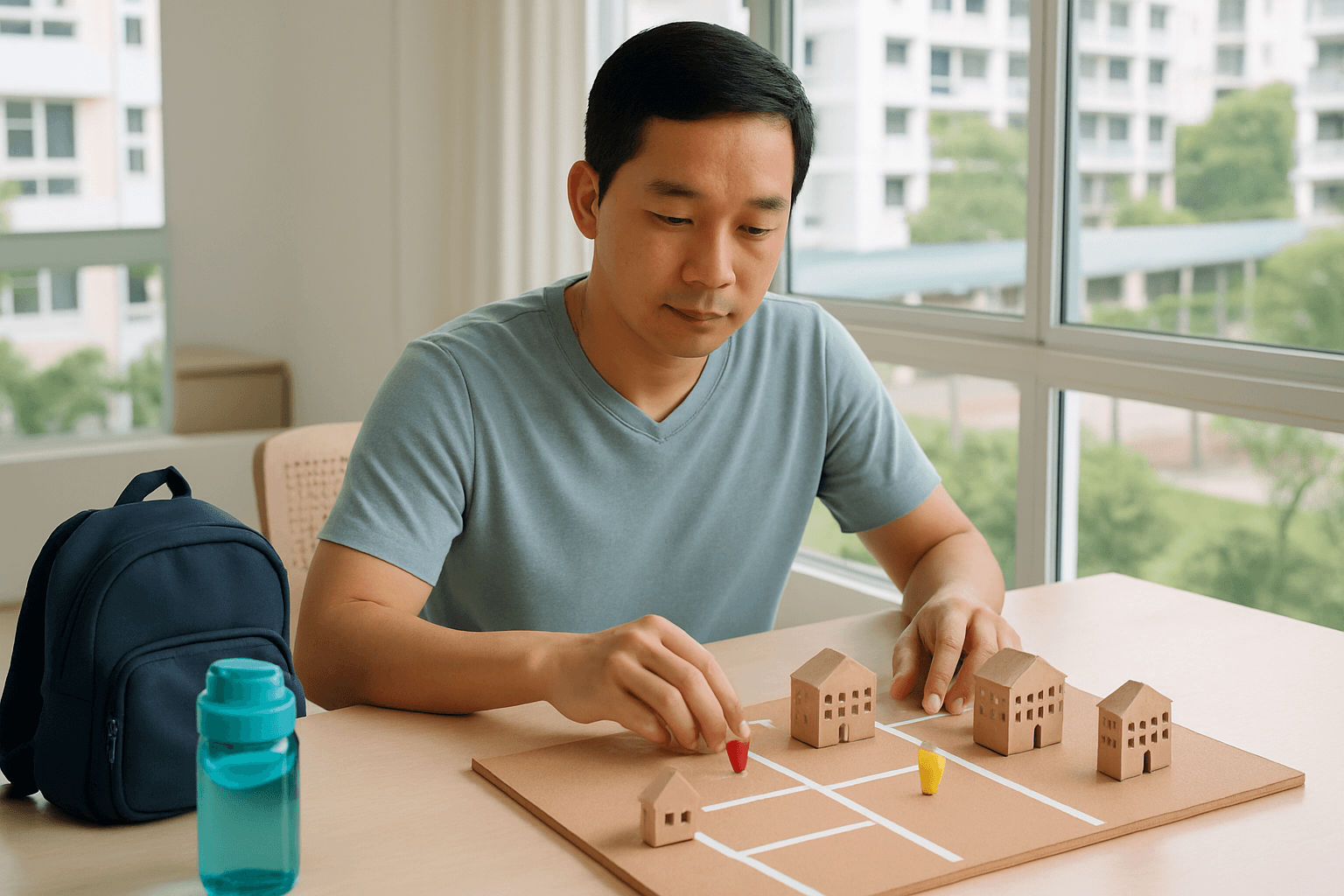
If you are a PR family, approach Primary 1 registration with probability in mind, not just preference. You do not have to give up on a strong school, but you do need a shortlist that reflects real chances, a commute your child can live with, and a backup plan you can use without panic if your first choice does not work out.
What does PR status change in Primary 1 registration?
PR status matters most when a school is oversubscribed, so PR families should plan with lower admission odds in mind.
The practical change is simple: PR families should usually plan with lower odds at oversubscribed schools. That does not mean a PR child cannot get into a popular school. It means you should assume the margin for error is smaller when places are tight and priority matters.
Primary 1 registration is a priority-based process, not just a preference list. At a school with steady demand, that may not feel very different. At a school that fills quickly, the difference becomes much more obvious. That is why PR parents often need to think about risk earlier than they expected.
A few common scenarios make this clearer. If you are considering a well-known school in a dense, highly sought-after area, treat it as a stretch choice rather than your only plan. If you are choosing between two acceptable schools and one is closer, less crowded, and easier to reach every day, that school usually deserves more weight than parents first give it. If you have an older sibling already in the school, that can change the strategy materially because sibling-linked entry is handled earlier in the process. MOE also notes in its FAQ that if you miss a phase you were eligible for, you may still register later, but without priority.
If you want the full registration structure first, start with our Primary 1 Registration in Singapore guide or our explainer on Primary 1 registration phases, then come back to this PR-specific planning lens.
Give citizens priority in Primary 1 registration
http://www.guidemesingapore.com/permanent-residence/singapore-pr-pros-and-cons.htm Quote from above : If your children are school-aged, they are high on the priority list, behind citizens, to enter public schools of your own choosing. Non PRs are at the bottom of the list and are often left with no choice when it comes to schools.
Give citizens priority in Primary 1 registration
Ha.ha. maybe next time the P1 registration phase can propose like that, just a suggestion: Phase 1 – Existing siblings in the Primary school except PR siblings. Phase 2A(1) – No Change Phase 2A (2) – No Change Phase 2B – No change Phase 2C – Singapore Citizenship Only. Phase 2C Supplementary - Singapore Citizenship Only Phase 3A – Permanent Residents Phase 3A Supplementary - Permanent Residents Phase 4 – Non Citizen.
How should PR families choose schools differently from citizen families?
PR families should shortlist schools by entry chance and commute first, then use reputation as a secondary filter.
Build your shortlist around three filters: chance of entry, daily commute, and school fit. Reputation can still matter, but for PR families it is usually a tie-breaker, not the starting point.
A practical shortlist often works best in three buckets. Keep one stretch school if you genuinely want to try. Then anchor your plan with one or two realistic schools and at least one fallback you would honestly accept. That structure matters because some citizen families can afford to lead with aspiration and tidy up the risk later. PR families usually need the risk work done first.
For example, one family may live near a famous school that attracts heavy demand every year. Their sensible plan may be to try it only if they are already comfortable with a nearby alternative that has a shorter commute and a more manageable risk profile. Another family may decide that a less talked-about school with a reliable bus route and a better chance of entry is the better main target, even if it was not their emotional first choice.
A useful test is simple: if your first choice does not work out, would the rest of your shortlist still feel workable today? If the answer is no, the shortlist is not ready. Our guide on dream school versus safer nearby school can help you pressure-test that decision.
Give citizens priority in Primary 1 registration
BTW I wrote ths to ST but it never got posted: In her letter, Mrs Agawal have hit the gist of why PR students should not be given equal chance for Primary 1 registration. She says that if her children were unable to secure a place in a good public school, why would her family to stay? A Singpore citizen will never be able to say that. We are here to stay and as such deserve the right to choose before a permanent resident. My son, a 4th generation Singaporean, was not able to secure a place in a
Give citizens priority in Primary 1 registration
Not sure if this has been mentioned in KSP forum? From 2010, Singapore Citizens (SCs) will be given an additional ballot slip (i.e. two chances instead of one), while Permanent Residents (PRs) will retain one ballot slip whenever balloting is conducted by any school during the P1 Registration Exercise. SCs will therefore have a higher chance of securing a place for their child in a school of choice when there is balloting. Giving Singaporeans two chances during balloting will retain the underlyi
Have More Questions?
Get personalized guidance on schools, tuition, enrichment and education pathways with AskVaiser.
Try AskVaiser for Free →Which school factors matter most when you are PR?
Prioritise admission chance, distance, and likely demand before school reputation.
For most PR families, the most useful factors are chance of admission, distance from home, and how intense demand tends to be for that school. Many parents start with prestige. In practice, that often leads them to overweight schools that are hardest to enter and hardest to travel to.
Distance matters in two ways. First, home-school proximity can be relevant within the registration framework. Second, and just as importantly, it shapes daily life for six years. A school that is easier to reach usually means less morning stress, less transport uncertainty, and a routine your child can sustain. If you are comparing addresses or trying to understand how distance works, see our guide on Primary 1 registration distance priority.
Existing school ties also matter more than many parents assume. MOE makes clear that Phase 1 is for children with older siblings already studying in the school, and living within 1km does not create the same entitlement. That is why parents should not confuse address advantage with sibling advantage. If you do have an older child in the school, read whether a younger sibling automatically gets in before making assumptions.
A good decision frame is this: famous but far and crowded, or less famous but near home and more realistic. For many PR families, the second option is not settling. It is choosing the school plan that is more likely to work in real life. For a broader overview, see Primary 1 Registration Unsuccessful: What Happens If You Do Not Get Your Preferred School.
All About Preparing For Primary One
Starting primary school? This is a big milestone. Do enjoy the journey with your child! :rahrah: https://www.straitstimes.com/singapore/education/the-st-guide-to-preparing-your-child-for-primary-1 Parents often confuse being ready for school with being academically capable in skills like reading and counting. Instead of focusing solely on academic progress, it is more important to make learning an enjoyable process, and help your child have a swift and happier adjustment to primary school. Here
Preparing Your Child for Primary School:Parent Seminar - MOE
Preparing Your Child for Primary School: A Parent Seminar by MOE Starting primary school is a big step in your child's life. To help you better understand primary school programmes and enable you to make key education decisions, the Ministry of Education will be conducting a seminar on Primary School Education. At the seminar, parents can look forward to sharing sessions by the school principal and a parent volunteer, as well as view the various programmes our primary schools provide. The Primar
Should PR families still try for popular schools?
Yes, but only as a stretch attempt with a real backup already chosen.
Yes, but only if you are treating the school as a stretch choice rather than the foundation of your plan. A popular school can still be worth trying if your family understands the risk clearly and already has another school you would genuinely accept.
This is usually sensible when three things are true. The school is not your only acceptable outcome. The commute would still make sense if you got in. And your backup choices have already been thought through, not left for later. It becomes unwise when the choice is driven mainly by prestige, social pressure, or the hope that an appeal will rescue the situation.
A realistic example is a family that likes a well-known school for its reputation but also finds a nearby school with a good fit and much stronger day-to-day practicality. If they apply to the famous school while fully prepared to move on to the nearby option, that is controlled risk. If they reject every realistic option because they cannot imagine not getting the famous school, that is not strategy. It is wishful planning.
Insight line: a popular school is only a good stretch choice if the non-stretch outcome still works for your family. For a broader overview, see How to Read Past Balloting Data Before Chasing a Popular Primary School.
Share with us your kid's P1 registration experience
First thing to do after being balloted out, is to put your child's name under the school's wait list. After then, I've wrote in to MOE, called/met the school's Principal for discussion. Telling them all my problems and how the registration system had affected us (because I have only 1 school within 2km and NO school within 1km). With this factual, MOE has verified and consulted the school. My son was then placed on the highest priority in the waiting list .. and fortunately by early Nov, we were
Give citizens priority in Primary 1 registration
Sharing with you the below blog entry from http://mrwangsaysso.blogspot.com/ on the same topic. Education, and Even More Discrimination Against Citizens ST Aug 20, 2009 Thanks, being a PR is good enough IN RESPONSE to letters by Mr Jimmy Loke ('The PR difference', last Saturday) and Mr Chia Kok Leong ('No school, no Singapore', last Saturday), I would only ask them to refer to Minister Mentor Lee Kuan Yew's speech reported last Friday ('MM: Foreign talent is vital'), where he gave an idea of the
How many backup schools should PR parents consider?
Have more than one backup, and make sure at least one is a school you already see as a workable outcome.
More than one, and at least one of them should be clearly realistic. There is no official fixed number for backups, but the planning rule is straightforward: do not let your whole outcome depend on one high-risk school.
For many PR families, a healthy shortlist looks like this in practice: one stretch option, one realistic option, and one safer fallback. In more competitive areas, it can be wise to think through two realistic alternatives instead of assuming your second choice is automatically safe. A school can be your backup emotionally and still be competitive in reality.
The most useful way to judge a backup is not whether it looks acceptable after disappointment. It is whether you would still choose it calmly today if your stretch school disappeared tomorrow. That is the difference between a real plan and a placeholder.
If you want to make this less emotional, compare schools using past demand patterns instead of reputation alone. Our guide on how to read past balloting data can help you test whether a so-called backup is actually realistic.
All About Preparing For Primary One
Dear parents, I hope parents could share your experience regarding the preparation for primary school and time schedule spend with your kids everyday. I have a son of 6 this year going to P1 next year. I would like to find out with parents things that you are doing with your child prior going P1, cos I do not want to react too kan-jiong or too relax in front of my child. I am particularly concerned about the 3 main subjects being taught in P1 and wonder should I expect him to be able to do the a
All About Preparing For Primary One
Was surfing around on understanding if I am well prepared on behalf of my DD1 for Primary 1 Chanced upon a few websites, thought to share though it could have been mentioned before Tips For Parents ◦Work on independent reading skills. ◦Set up a study area and regular study times that are not interrupted. ◦Learn to follow a routine with a lot of sleep and early mornings. ◦Practice organisation and planning by packing a daily bag with essentials for the day. ◦Talk about social skills and communica
What kinds of schools are often more realistic options for PR families?
Schools that are less oversubscribed, closer to home, and outside the hottest competition clusters are often more realistic targets.
Schools with steadier demand, shorter commutes, or less intense competition are often more realistic. This is about admission probability, not school quality.
In real life, parents often notice a few patterns. Schools in highly sought-after residential pockets may attract heavier demand. Schools with strong name recognition across the island may draw applicants from well beyond the immediate neighbourhood. By contrast, schools that are well regarded locally but are not constantly discussed as must-get schools can sometimes be more practical targets.
Another pattern parents underestimate is the value of the good nearby school. A school ten minutes away may be the better family decision than a school forty minutes away, especially if the farther school is also more crowded. Over six years, the daily routine often matters more than first-choice branding.
If you are torn between reputation and everyday fit, our article on popular primary school versus neighbourhood school can help reframe the choice. The useful question is not whether a school is famous. It is whether it is realistic, reachable, and suitable for your child.
Give citizens priority in Primary 1 registration
2nd generation PRs need to serve NS so their kids and our kids are sort of on equal stand on this point. We do have families who give up citizenship and move to another country because of NS too. Yes, the PRs may not stay…the citizens may not stay too. If you are the government, you just got to try your best to make your citizens happy(tough challenge) and yet not penalise the PRs too much Let say we don’t have many ‘foreign talents’…our birth rates are impressive…and our children are balloted o
All About Preparing For Primary One
hi, for parents with kids in pre-nursery / nursery, these two initial years are “honeymoon” years, usually quite relaxed. But for parents with kids in k1, k2, where you are stepping on the final last lap accelerator for more oil to speed up momentum, help yr child prepare Pri 1, it is always good to attend - one year ahead in advance, the parents’ briefing on detailed Pri 1 curriculum. do not wait until the year when your child has started Pri 1, then come to attend such parents’ briefing. why ?
What is the most common mistake PR families make during registration?
The biggest mistake is choosing only by preference and not by realistic chance of entry.
They treat registration like a wish list instead of a probability exercise. The usual mistake is spending all their energy ranking dream schools and almost none deciding what they will do if those schools fill up. A strong PR strategy can include ambition, but it must also include a backup you have already accepted emotionally and practically.
All About Preparing For Primary One
You should have seen the way the mum drilled the poor child, depriving him of food till he completed his revision. Obviously, an uninterested child will only retain the information into his short term memory. Preparing a child for primary 1 is more than just the academics. There are several areas that parents have to take note of. Does your child know how to clean up after himself if he does a big business in the toilet? Does your child know how to wash his hands correctly and rinsed his hands p
Share with us your kid's P1 registration experience
P1 registration experience… On the 1st day, went to the 1st choice school in the morning of 2/Aug to register… Actually I wanted to go on the last day to better gauge the chances as I was staying between 1-2km but the other half keep pestering me to go early… many parent still don’t understand the concept of balloting and priority and 3 days registration period… no sure why they always have the belief of 1st-come-1st-serve go later no place misconception even after much much explanation… No choi
What should PR families prepare before registration opens?
Prepare your shortlist, address plan, family details, and backup decision before the registration window opens.
- ✓Build a shortlist with one stretch school, one or two realistic schools, and one safer fallback you would genuinely accept.
- ✓Compare each school by actual travel time, not just reputation, and talk through what the daily commute would feel like for your child.
- ✓Confirm which home address you plan to use, especially if you have moved or expect to move, and read our guides on [which home address counts](/blog/which-home-address-counts-for-primary-1-registration-in-singapore) and [registration after moving house](/blog/primary-1-registration-after-moving-house-old-or-new-address) if your case is not straightforward.
- ✓Gather the child and parent particulars you are likely to need early, such as identity details and contact information, so you are not searching for them under deadline pressure.
- ✓If you have a sibling already in the school or another school tie that may matter, prepare the relevant supporting details in advance.
- ✓Check the immunisation-related requirements and follow the official process; MOE notes in its FAQ that these requirements form part of registration and parents can check details through the National Immunisation Registry.
- ✓Use our [documents checklist](/blog/primary-1-registration-documents-checklist-what-singapore-parents-commonly-prepare) as a parent-prep guide, while remembering it is not an official exhaustive list.
- ✓Decide now which school you will move to immediately if the first choice does not work out.
- ✓If you are relying on proximity, make sure your address declaration is accurate and supportable; MOE has also addressed address verification and action on fraudulent declarations.
If my child does not get our first-choice school, what should we do next?
Go straight to your backup plan and do not assume an appeal will reverse the outcome.
Move to your backup plan quickly and calmly. In most cases, the best next step is to proceed with the realistic school you identified earlier, not to freeze and hope an appeal will solve the problem.
This is exactly why backup planning matters more for PR families. If you already shortlisted schools you can live with, the next decision becomes practical rather than emotional. Review the remaining options by commute, child fit, and family routine. A school that was your second choice before disappointment may still be the better long-term option than a last-minute scramble toward something less suitable.
Appeals do exist, but they should be treated as limited exceptions, not the main plan. MOE has said that it receives appeals for places near home, but the numbers are small relative to total P1 enrolment, as noted in this parliamentary reply on P1 appeals. If you are facing that situation, read our guide on what happens if you do not get your preferred school and focus first on the best workable place still available.
How to Prepare For Primary School
You have to start teaching your child one to one and start from scratch. This is crucial year to prepare your child. Your child MUST be able to recognise high frequency words, can read, can spell some simple words, comprehend questions and answer logically, write neatly etc. please start preparing now before he goes P1. Share a personal experience with you. My friend has a son who enrolled in a new kindergarten in K2 this year. The boy's new teacher was shocked to discover that he could not reco
All About Preparing For Primary One
My girl is in P1 this year. Based on my experience, I think you are doing a fine job so far... As long as kids go to pre school, they are more or less ready for P1 because topics cover in first semester are very similar to what they will be learning in K2... I did buy some assessment books for my girl when she was in K2 because she had so much free time after school. Whether to draw up a time table is subjective... it definitely incultivate good habits which may be ideal when he starts P1. Prepa
Have More Questions?
Get personalized guidance on schools, tuition, enrichment and education pathways with AskVaiser.
Try AskVaiser for Free →