
How to Build a Backup Plan Even with Sibling Priority for P1
Sibling priority helps, but parents should still prepare a backup school plan that works in real life.
A good backup plan with sibling priority for P1 registration treats sibling priority as an advantage, not a guarantee. Shortlist one or two backup schools that are realistic on both admission risk and daily logistics, then agree in advance how your family would handle the commute, pickup, care arrangements, and routine if your first-choice school does not work out.
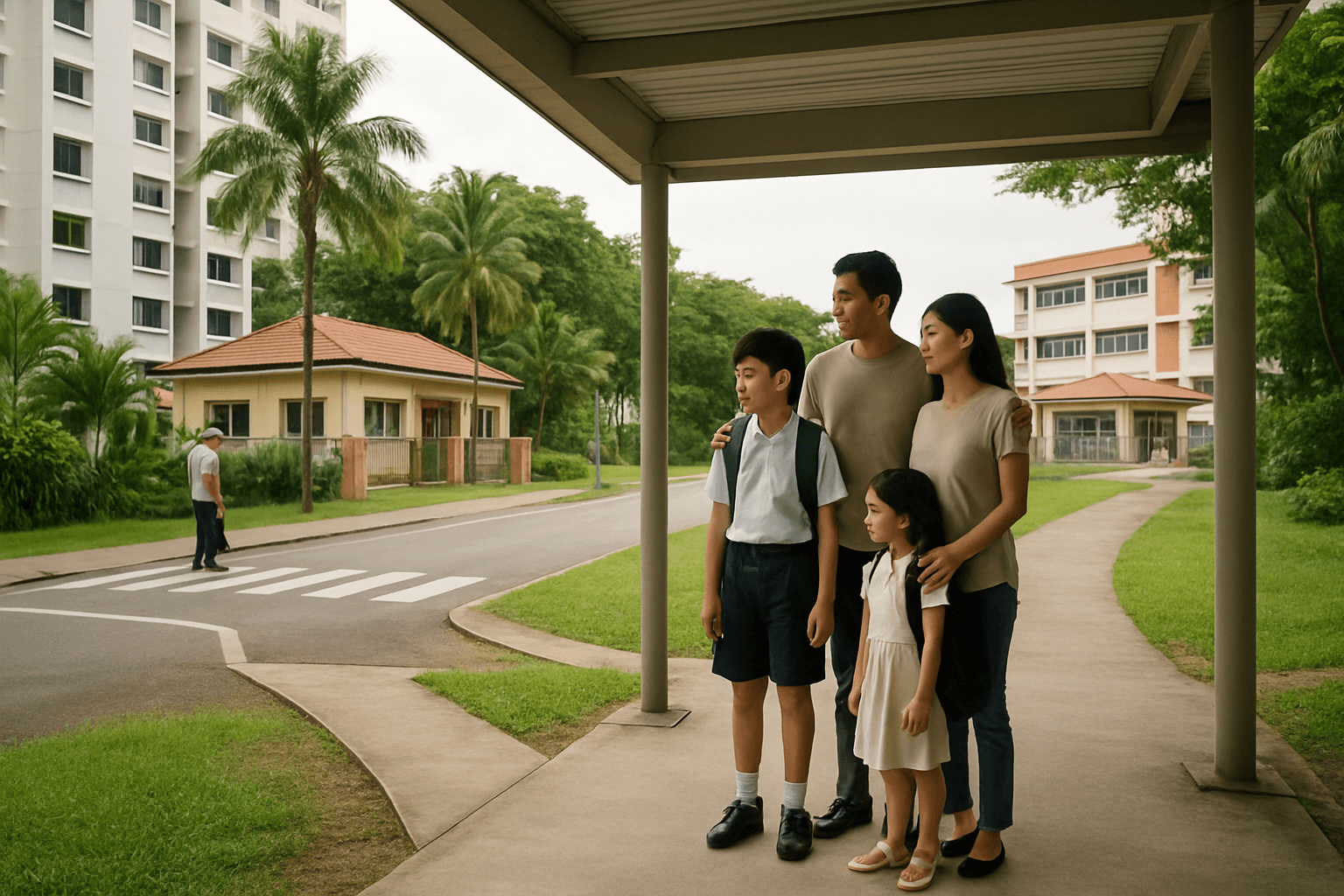
Yes, you should still have a backup plan even if your older child is already in the school. In Singapore's P1 registration process, sibling priority can improve your position, but it should not be treated as certainty. The practical mistake is not choosing one preferred school. The mistake is stopping there. A stronger plan is to decide early which backup school or schools would still work for your family on a normal weekday, not just on registration day.
Why sibling priority still needs a backup plan
Sibling priority helps, but it does not guarantee admission, so you should still prepare a real fallback school plan.
Sibling priority reduces risk, but it does not remove it. That is the mindset parents need at the start. A common assumption is that if the older child is already in the school, the younger one is basically safe. In reality, P1 registration still depends on demand, available places, and how many families apply in that year.
That last point matters more than many parents realise. School demand is not fixed. A school that felt comfortable before can become tighter. Another school that used to look impossible can become less pressured. You do not need to predict the year perfectly. You just need to avoid building your whole plan around one hopeful outcome.
Think of sibling priority as a head start, not a finish line. If your family only talks about one school, the stress usually arrives late, when you have less time to compare alternatives calmly. Parents then end up choosing a backup school in a rush, often based on reputation, hearsay, or whichever option seems easiest to explain to others.
A backup plan is not pessimism. It is basic planning. If you want the wider context first, AskVaiser's Primary 1 Registration in Singapore guide explains how the overall process, balloting risk, and school choice fit together.
All About Getting Priority Registration
Karl If u failing ballot in dream sch u will be in later phase later on but in your backup sch as dream sch no more vacancy for later phase aka p2cs. U will have priority over PR in registration in backup sch in p2cs but bear in mind that u may need to ballot it out with other citizens if your back up sch vacancy is limited in p2cs as a result of their popularity increase in the PR community as PR turn to these sch to secure a place at p2c to avoid balloting . Do note that there may only be a ha
All About Getting Priority Registration
Yes. Don't quite understand your question. Priority only applies for balloting within the phase. So, if all the vacancies in your backup school are taken up in P2C (regardless by SC or PR), there will be no P2CS for this school. Hence, there will not even be balloting, let alone talk about whether you will have priority over PRs.
What sibling priority can and cannot do in P1 registration
Sibling priority is an advantage in the process, not a guaranteed admission route.
What sibling priority can do is improve your position within the registration process. What it cannot do is remove the need for decision-making. If a school stays heavily sought after, parents should still be ready for the possibility that the preferred option may not work out.
The safest way to think about it is simple: priority helps; it does not replace a plan. That keeps you from over-reading the word "priority" as if it means automatic admission.
Because phase details and current rules should always be read carefully from official sources, it is sensible to confirm the latest framework through MOE's FAQ page and AskVaiser's guide on what each P1 registration phase means. If your current assumption is that a younger sibling is effectively guaranteed a place, it is also worth reading AskVaiser's article on whether your younger child automatically gets in before you finalise your shortlist.
All About Getting Priority Registration
Yes, parent volunteers fall under 2B phase 2A(1) : for registered alumni members phase 2A(2) : for ex students phase 2B : all parent volunteers (PV) hence, PV ( lower priority) - have to wait for all the (phase 2A(1) + phase 2A(2)) members to complete their registration first, wait patiently for their turn in 2B to come, before can start to register.
Questions on new rules of P1 registration
With the announcement of the new rules of P1 registration - that citizens now have advantage over PRs, I have 2 questions: 1. Does the living distance to the school matter (ie 1 km away)? 2. If the PR has an older child in the school already, is priority given to the child’s younger sibling? Thanks!
Have More Questions?
Get personalized guidance on schools, tuition, enrichment and education pathways with AskVaiser.
Try AskVaiser for Free →What a realistic Plan B looks like for a Singapore parent
A good Plan B is a school your family could accept and manage in real life if the first choice does not work out.
A realistic Plan B is a school your family could genuinely live with for the next six years. That means it is not just easier to name on paper. It is acceptable in daily life, manageable to travel to, and good enough that you would not spend the first year feeling trapped by a rushed decision.
For most families, a useful Plan B is one or two backup schools, not a long list. Too many options usually create more noise, not more control. A short list works better when every school on it passes three tests. First, the school is practically reachable from home, work, or a caregiver's home. Second, the routine works for drop-off, pickup, and after-school care. Third, it is a school you can sincerely accept, not one you would only choose in panic.
For example, one family's backup might be a nearby school that gets less attention from other parents but is easy for grandparents to help with. Another family's backup might be a slightly further school on a direct bus route, because both parents leave home early and need a predictable morning routine. The best backup is not the school that sounds impressive in conversation. It is the school that still works when ordinary life starts.
If you are also preparing for the registration process itself, AskVaiser's P1 registration documents checklist can help you avoid a last-minute scramble. For a broader overview, see Primary 1 Registration Unsuccessful: What Happens If You Do Not Get Your Preferred School.
All About Getting Priority Registration
Hi, I am referring to the Singaporean priority system now. If I am balloted out from phrase 2C and I ended up in 2C supp for another school, will I still have priority over PR for the alternative school? Or that alternative school will admit the PR first in phrase2C and the remaining places in 2C supp will be whatever is left after PR got in in phrase 2C? Am trying to have back up plans in case I am balloted out of my preferred school. If 2C supp is the remaining places after PR got their places
All About Getting Priority Registration
If your child qualifies under P2B, he or she will still have to wait till all Singaporeans who qualify under P2B get their places in the school.
How to choose a backup school that still makes sense for your family
The best backup school balances admission risk, travel practicality, and whether your family can live with the choice long term.
Choose a backup school by balancing likelihood, distance, and fit. Parents often focus on only one of those. That is how weak backup plans happen. A school may look safer from an admission point of view, but if the commute is draining and pickup is unclear, it may be a poor real-world choice. On the other hand, a very convenient school that is also highly competitive may not reduce your risk much at all.
A useful test is to imagine an ordinary Tuesday, not registration day. Who takes the child to school in the morning? Who handles pickup if there is a later dismissal or an after-school activity? Will the child need student care? If your older child remains in another school, can the household cope with two routes and two sets of timings? Those questions often matter more than a school's reputation.
Practical comparisons usually make the answer clearer. One nearby school may still be somewhat competitive, but the route is easy and both parents can share the school run. Another school may feel safer, but it adds forty minutes a day and makes afternoon care much harder. A third option may not be the closest on the map, yet it sits on a direct MRT or bus route and ends up being far more workable.
If distance is likely to affect your options, read AskVaiser's guide on how home-school distance works before deciding which backup schools are truly sensible. For a broader overview, see How to Read Past Balloting Data Before Chasing a Popular Primary School.
Should your backup school be nearer, less popular, or simply more realistic?
Your backup school should usually be the option that is practical to attend and realistic enough to reduce risk.
Usually, the best backup is the school that is both workable and reasonably achievable. That is why "more realistic" is often the better test than simply "nearer" or "less popular."
A nearer school can be an excellent backup if it makes daily life easier and is not just another high-risk choice. A less popular school can also be sensible if your family genuinely likes it and the routine is manageable. Problems start when parents choose by only one factor. The nearer school may still carry enough pressure that it does not really function as a fallback. The less popular school may reduce anxiety during registration but create daily fatigue for years.
This is really a tradeoff between admission risk and family strain. The sweet spot is usually a school that reduces stress in both areas, even if it is not perfect in either one. That same practical thinking shows up in Schoolbag's article on secondary school choice considerations: fit and routine matter, not just label or popularity.
If your shortlist is currently split between a dream school and a safer option, AskVaiser's article on whether to pick a popular dream school or a safer nearby school can help you think through the tradeoff more clearly. For a broader overview, see Primary 1 Registration Distance Priority: How Home-School Distance Works.
What to do if your first-choice school is still oversubscribed despite sibling priority
If your first-choice school could still be oversubscribed, decide your next acceptable option early and treat past demand only as background.
Prepare as though the school could still fill up. That mindset keeps you calm and useful. It stops you from wasting time hoping that family connection alone will carry the outcome.
The practical move is to settle your next acceptable option before the registration window opens. Check the route, likely travel time, and who will manage the afternoon routine. If student care may be needed, think that through early as part of the school decision, not after the result. A backup plan works best when everyone in the household already understands it.
Past demand can give you context, but not certainty. Historical pieces such as KiasuParents' 2019 Phase 2A(1) analysis and 2022 Phase 2A predictions are useful mainly as reminders that demand patterns shift and that old comfort levels can change. They should not be used as a forecast for your child's year.
A stronger question than "Will sibling priority be enough?" is "If it is not enough, which school would we choose without regret and without chaos?" If you want help reading historical demand without over-trusting it, AskVaiser's guide on how to read past balloting data is a useful next step. You can also read what happens if you do not get your preferred school so the fallback path feels less abstract.
All About Getting Priority Registration
As you mentioned, typically CHS has little or no dropouts, hence subsequently to be able to get a place and transfer him to CHS will be a problem as well... What if I give out my priority for Ai Tong at phase 2A and try my luck with CHS for phrase 2B? If elder son managed to get in, perfect! If not, problem is he will have to try out other schools in phase 2C. Any good schools to recommend near Bishan/amk/novena area which has reasonable chance still in phase 2C? Then when my 2nd boy register fo
All About Getting Priority Registration
Distance priority applies to all phases, but usually the number of vacancies is enough to cater for all applicants in Phase 2A. For your case, you don't need to volunteer as PV because if you can't get in under Phase 2A(1), your chance to get in under Phase 2B will be lower. It will be better to volunteer as PV in a different school, if you anticipate that Phase 2A will require balloting.
How early to prepare your backup options before P1 registration starts
Prepare your backup options before registration starts, while you still have time to compare schools and test daily logistics calmly.
Start before the registration window opens. If you wait until the process is underway, you are far more likely to choose reactively instead of sensibly.
Early preparation does not need to be complicated. It usually means researching a small number of plausible schools, testing the route at realistic times, and talking through tradeoffs with your spouse or caregiver. One parent may care most about keeping both children on a similar route. Another may care more about a shorter journey to student care or grandparents' support. Those priorities are better settled while everyone is calm.
School visits and open houses can help because they turn an abstract backup into a real option. Parents often find that a school they barely considered at first actually feels calm, welcoming, and manageable once they visit. That practical mindset is similar to the one described in Schoolbag's article on choosing a secondary school and what paid off: seeing the environment and imagining daily life often leads to better choices than relying on reputation alone.
If your family may move house or may be using a different address from before, prepare even earlier and verify your assumptions. AskVaiser's articles on which home address counts and whether to use your old or new address after moving are especially relevant in that situation.
What most parents overlook when they rely on sibling priority
The common oversight is focusing on admission chances while forgetting whether the family can manage the school routine every day.
The biggest blind spot is solving admission risk while ignoring daily life risk. Even if sibling priority improves your chances, you still need a working plan for school-run timing, after-school care, different dismissal times, and what happens if your children end up in different schools for a period.
A useful question is not just "Can we get in?" It is also "Can we sustain this every weekday?" Parents who ask both questions usually make steadier choices.
Preparing kids for P5 in 2011
Hi janet_lee88, You have a P1 child too right? Well, I think you should focus on your son more as P5 is very crucial. My sister is P1 too this year my school do not have exams for P1 this year :rahrah: :rahrah: :rahrah: :boogie: :boogie: :boogie: if not very busy liao.
All About Getting Priority Registration
I was just wondering… Is there any priority for the child if the grandparent is from that particular school? Or only for the parents?
A simple sibling-priority backup plan checklist
Use this quick checklist to test whether your backup plan is genuinely workable.
- ✓Identify one preferred school and at least one backup school you can genuinely accept.
- ✓Make sure the backup is realistic for daily life, not just a name on paper.
- ✓Check how the morning route and afternoon pickup would work for each option.
- ✓Decide in advance what matters more to your family if you must trade off, such as proximity, lower risk, or school fit.
- ✓Talk through the fallback plan with your spouse, caregiver, or grandparents before registration starts.
- ✓Treat past demand as context only, and avoid assuming this year's outcome will follow the same pattern.
- ✓If distance or address issues may affect your choices, verify those assumptions early.
- ✓Keep your Plan B short and clear so you can act calmly if your first choice does not work out.
Have More Questions?
Get personalized guidance on schools, tuition, enrichment and education pathways with AskVaiser.
Try AskVaiser for Free →